

melanie ✨ @melatzbl
Joined September 2025-
Tweets29
-
Followers4
-
Following490
-
Likes92

The next generation Starlink V5 has a smaller form factor and lightweight design with greater power efficiency. With speeds up to 375+ Mbps, Starlink V5 delivers reliable home internet for streaming, video calling, gaming and more. Available in select areas.

this is fck**** incredible $2,400 from just 100k views? this 24-year-old claims he’s running an entire youtube animation operation from his bedroom. no animators. no drawing skills. no traditional studio. his content? children’s nursery rhymes. here’s the workflow: → find successful kids’ youtube channels → screenshot their video feed → drop the screenshot into claude → use the higgsfield mcp connected to claude → tell it to analyze the channel and create a week of original content around the same niche and style → generate the animation → upload it → repeat the wild part is how little manual work is involved. instead of spending weeks creating a single animation, the ai handles the characters, scenes, movement, lighting, and visuals. then he uploads another video the next day. the kids watching don’t know how it was made. and the parents aren’t thinking about the production process either. they just see another colorful kids video. that’s the bigger shift. you no longer need a full animation team to start experimenting with animated content. one person + ai tools + a repeatable workflow can potentially produce content at a scale that used to require an entire studio. most people will watch the tutorial and move on. a few will actually test the workflow. full breakdown in the article below. bookmark this for later.

GROK BOT JUST PUT REVERSE ENGINEERING ON AN ASSEMBLY LINE. One agent. A stranger's app. 48 features in one night. Lines copied: zero. Human edits: zero. This is not a hack. This is reverse engineering, dragged out of the underground and wired up through one MCP. Stack: Grok Bot + REA (open source, 200,000+ stars in 5 days). The numbers are insane: - Reverse engineer on staff: $140K/year - Clean-room lawyer: $500/hour - Compaq pulled the same trick in 1983 for $1M and a year - This run: $0.78 per feature - Match with the original: 99.6% Read that again: zero lines copied. Legally this is not a fork, it is a new app built from observed behavior. Every app on earth is transparent now. Only what lives on someone else's servers is still safe. The rest gets stripped clean for the price of dinner. One person + Grok Bot + REA + one night = any shipped app, rebuilt from a spec. Save and watch the clip.

THE MAC MINI AI SERVER: AN M4 PRO FROM $1,599 THAT RUNS A 30B MODEL AT 40 TOKENS A SECOND ON 10-30 WATTS. THE NUMBER THAT MAKES IT FAST ISN'T ON THE STICKER. this is the mac mini ai server. one quiet box on my desk, running 24/7. everyone shops for memory. memory only decides what loads. bandwidth decides how fast it talks: → m4: 120 GB/s → m4 pro: 273 GB/s that gap is the whole difference between a model you wait for and one you chat with. 48 gb, qwen2.5:32b, one ollama pull. i kept the boring job for myself: picking the model. the line i'd tattoo on the box is on screen in the clip.


HOLY SH*T. Anthropic’s docs show a way to run Claude Code where Opus only bills you when Sonnet asks for it one session, three models, and each one does only the part it’s cheapest at start it like this: claude → model sonnet → advisor opus now Opus isn’t reading your files. it’s reviewing your decisions who does what: Sonnet drives the session and writes the code Haiku 5.5 searches the repo and the docs, up to 40x cheaper per token than Opus 5.5 Opus stays on call and sees the whole session, tool calls included Claude tends to bring Opus in at three moments: before it commits to a plan when the same error keeps coming back right before it says “done” Sonnet does the work. Haiku finds things. Opus reviews and one level below that, most of what an agent does all day is tiny calls: which file to open, which tool to use, whether to retry. Jev can take those first, so the bigger models only get pulled in when the answer is truly open the whole setup: Sonnet = main session Haiku 5.5 as Explore = search and docs, read-only Opus = advisor, on call hand Claude Code this prompt and it builds the setup for you ↓ “Configure my Claude Code to match this: Main model Sonnet, advisor Opus, saved as advisorModel in my settings. One read-only subagent named exactly Explore, on claude-haiku-5-5, replacing the built-in one. One line in CLAUDE.md: consult the advisor before locking a plan, after the same error twice, and before calling a task done, and not more often. Check what could switch the advisor off (CLAUDE_CODE_DISABLE_ADVISOR_TOOL, DISABLE_TELEMETRY) and only report it. Show every change as a diff first. Don’t edit anything until I say go.” code.claude.com/docs/en/advisor read this before you turn it on: every advisor call re-reads the whole transcript with no cache. on a 200k session that’s about $0.80 in input, against $0.04 for a normal request. keep it to a few calls the built-in Explore agent runs on your main model. only a subagent named exactly Explore replaces it, any other name does nothing switching the advisor on or off keeps your prompt cache. switching models rebuilds it it needs the Anthropic API, and it stays off if telemetry is disabled save this before your next long session

There’s no time like October. Stream the NLCS LIVE on FOX One. Watch 3 days free.

FSD Supervised is your superhuman guardian angel

My Tesla just saved us from a collision, a human driver made an illegal U-turn, then ran the stop sign and pulled right out in front of me. Self-Driving hit the brakes and stopped us from 33mph to 0 instantly! Always thankful @TeslaSI 🙏

In Physical AI, contribution quality matters more than simply showing up. @axisrobotics has opened new Challenger spots as advanced data collection tasks continue to expand. Join this era - s.kaito.ai/TyTHE86 What makes this interesting is how access works: Challenger badges are awarded automatically based on contribution quality and current network needs. No manual application. No guessing your way in. The message is clear consistent, high-quality work can create new opportunities within the Axis ecosystem. If you're contributing to the future of robotics, now is a good time to check your Axis Portfolio and see whether you've earned a Challenger badge. Better contributions. More challenging tasks. Stronger data for Physical AI. Keep building with $AXIS.

AI can generate a beautiful 3D scene, but can it understand how the real world behaves? That’s where @axisrobotics × @ManycoreTech gets interesting. Join this wonder - s.kaito.ai/TyTHE86 Through Axis Suite, Axis is delivering high-fidelity, physics-ready simulation assets


10 OPEN-SOURCE PROJECTS MAKING AI MORE USEFUL EVERY DAY 👇 AI is moving beyond answering questions. These GitHub repos help it work with documents, browsers, knowledge, memory, and real-world tasks. 1. GenOffice AI-powered workspace for Docs, Sheets, Slides, PDFs, and more. github.com/genspark-ai/ge… 2. OpenMAIC Turn any topic or document into an interactive AI classroom. github.com/THU-MAIC/OpenM… 3. WeKnora Build intelligent knowledge apps with document understanding and AI workflows. github.com/Tencent/WeKnora 4. Graphiti Build temporal knowledge graphs that help AI agents remember changing information. github.com/getzep/graphiti 5. Cognee Give AI systems a deeper memory layer using connected data and knowledge graphs. github.com/topoteretes/co… 6. Browser Use Let AI agents navigate websites and complete browser tasks. github.com/browser-use/br… 7. Open WebUI A self-hosted AI workspace for models, tools, documents, and agent workflows. github.com/open-webui/ope… 8. PageIndex Navigate complex documents with reasoning-based, tree-structured retrieval. github.com/VectifyAI/Page… 9. Agent-Reach Help AI agents access information across the web and other sources. github.com/Panniantong/Ag… 10. Qwen Audio Agent Explore real-time AI voice interactions with listening and speaking capabilities. github.com/QwenLM/Qwen3-A… Bookmark these repos. Which one are you exploring first?
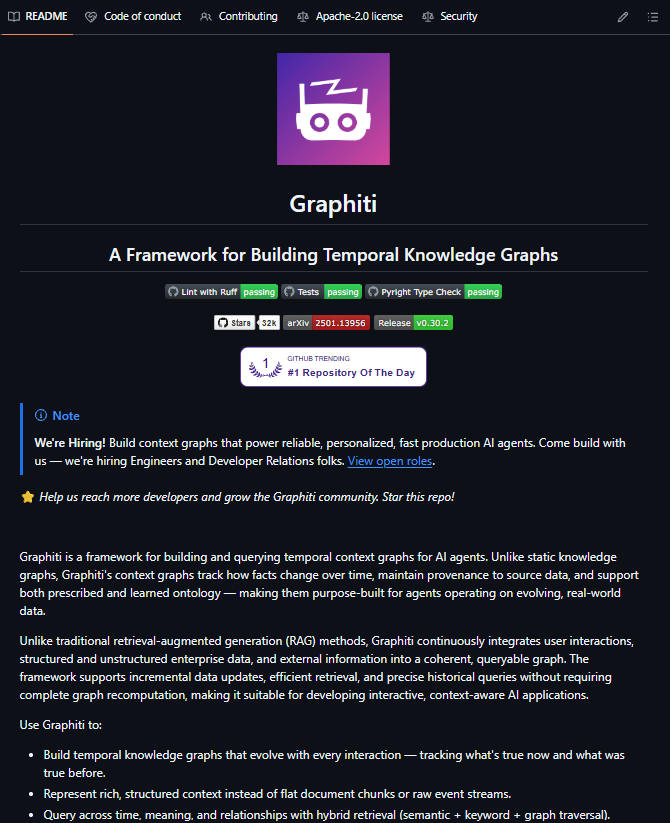


ONE GROK BOT CAN LEARN FROM YOUR WHOLE TEAM WITHOUT TURNING PRIVATE CHATS INTO A SHARED TRANSCRIPT. this is the part most “team AI” demos quietly get wrong. they give everyone one shared chatbot. then every correction, private question and half-finished thought collapses into the same context. Grok Bot separates the system into three layers: private conversations - visible only to the teammate who had them team memory - reusable facts the whole team should know shared setup - skills, files and connections configured once one teammate corrects a process. the bot saves the useful rule - not the private conversation. the next teammate starts with the correction already available. the real shift isn’t “a chatbot that remembers.” it’s organizational memory that can improve without turning your company into one giant transcript. I pulled together 10 GitHub repos for building the same primitives yourself: 01 - Mem0 / universal memory layer github.com/mem0ai/mem0 02 - LangMem / extract and update long-term agent knowledge github.com/langchain-ai/l… 03 - LangGraph / durable stateful agent workflows github.com/langchain-ai/l… 04 - Letta / stateful agents with persistent memory github.com/letta-ai/letta 05 - Graphiti / temporal knowledge graphs for agents github.com/getzep/graphiti 06 - OpenAI Agents SDK / handoffs, guardrails and multi-agent flows github.com/openai/openai-… 07 - Microsoft Agent Framework / production multi-agent orchestration github.com/microsoft/agen… 08 — CrewAI / role-based agent teams and workflows github.com/crewAIInc/crew… 09 - Agno / runtime for agent teams and multi-agent systems github.com/agno-agi/agno 10 - Pydantic AI / typed agents, delegation and graph orchestration github.com/pydantic/pydan… none of these repositories is Grok Bot’s source code. they are the strongest open building blocks for memory, state, handoffs and orchestration. save this before your “team agent” forgets the first lesson the team taught it ↓

any one tried the new feature on X yet?


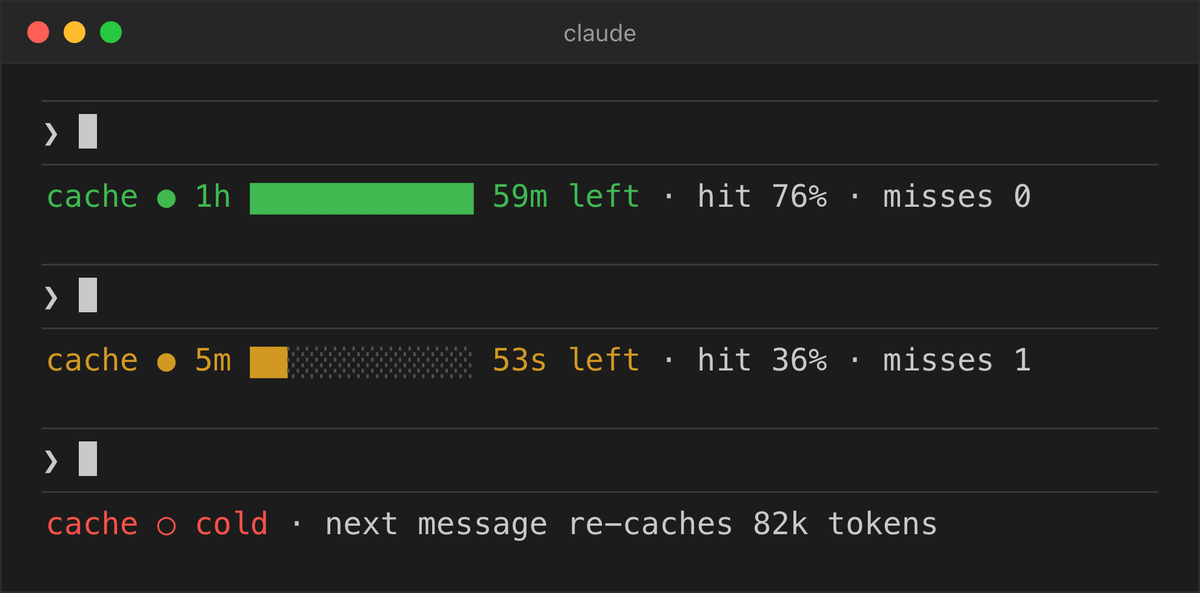
Claude Code tip: if a subagent has to wait on tests or builds partway through, give it 𝗶𝘁𝘀 𝗼𝘄𝗻 𝟭-𝗵𝗼𝘂𝗿 𝗰𝗮𝗰𝗵𝗲. By default, a subagent's cache expires after 5 minutes with no activity. If it runs a test suite or waits on a build and sits idle for more than 5 minutes, its next step has to reprocess the whole context from scratch. That's slower than reading from the cache and counts more against your usage limits. But 𝗱𝗼𝗻'𝘁 𝘀𝘄𝗶𝘁𝗰𝗵 𝗲𝘃𝗲𝗿𝘆 𝘀𝘂𝗯𝗮𝗴𝗲𝗻𝘁 𝘁𝗼 𝟭 𝗵𝗼𝘂𝗿. The official docs say 1-hour cache writes cost more (at API prices, 2x the base input price; 5-minute writes are 1.25x). Subagents that work straight through without pausing get nothing from the longer cache and just cost more. Set it by job: → Subagents that sit idle for more than 5 minutes partway through, or that you'll resume later: add two lines at the top of the subagent's file, experimental: with cacheTtl: 1h indented under it → Ones that run straight through and finish in a few minutes: keep the default 5 minutes → If you already added subagentPromptCacheTtl to your settings: it 𝗼𝘃𝗲𝗿𝗿𝗶𝗱𝗲𝘀 𝗲𝘃𝗲𝗿𝘆 𝘀𝘂𝗯𝗮𝗴𝗲𝗻𝘁'𝘀 𝗼𝘄𝗻 𝘀𝗲𝘁𝘁𝗶𝗻𝗴 (I tested it), and it changes workflows and compaction too. To set them one by one, delete it first → On an API key, a cloud provider, or a subscription that's past its limit and drawing on usage credits: the main session only gets 5 minutes too. If you often step away mid-session, set promptCacheTtl to 1h → On a 1M-context model like Opus 5.5: by default it doesn't compact until about 967K tokens, and until then every message carries the whole conversation. Run /autocompact 400k once and it compacts at 400K Send this prompt and the docs link below to Opus 5.5 in Claude Code 👇 "Read this doc, plus the subagent docs it links to, and set up my cache lifetimes by job: 1. First run claude --version. Setting cacheTtl on a single subagent needs 2.1.248 or later. If mine is older, tell me. Don't upgrade it yourself. 2. List every subagent in ~/.claude/agents and .claude/agents. For ones that might sit idle for more than 5 minutes partway through (running tests, builds, waiting on CI), or that I'll resume later, add these two lines at the top of the file: experimental: cacheTtl: 1h If there's already an experimental block, add cacheTtl under it. Don't write a second one. Leave the ones that run straight through and finish in a few minutes on the default. Give one line of reasoning for each. 3. Check ~/.claude/settings.json, .claude/settings.json and .claude/settings.local.json (including their env blocks) and my current environment variables for subagentPromptCacheTtl, CLAUDE_CODE_SUBAGENT_PROMPT_CACHE_TTL or FORCE_PROMPT_CACHING_5M. If any of them is set, tell me it overrides the per-subagent settings and ask whether to remove it. 4. Ask me whether I'm on a subscription, an API key or a cloud provider. Don't read any keys yourself. Unless I'm on a subscription within its plan usage, ask whether I often step away for more than 5 minutes mid-session, and if I do, set promptCacheTtl to 1h. Show me what you'll change first, and don't write anything until I confirm." code.claude.com/docs/en/prompt…

Highly recommend adding a 𝗰𝗮𝗰𝗵𝗲 𝗰𝗼𝘂𝗻𝘁𝗱𝗼𝘄𝗻 to your Claude Code status line. Simply put, every time you send a message, Claude Code sends the whole conversation to the model again. The cache lets it skip reprocessing everything that came before, so replies come back

The demonization of Ivermectin has opened the door to what a truly amazing medicine treatment it is and how it can provide hope for many people with a variety of serious medical issues. . This is one of those rare occasions when something truly remarkable comes out of something so destructive. . Ivermectin is one of the most inexpensive treatments for so many health issues. . Thank God. .🙏. .

Florida has allocated $60 million toward Ivermectin/Cancer research. Canadian physician Dr. William Makis says clinical trials are now expanding to investigate their potential as cancer treatments. Makis says he has worked with more than 9,000 cancer patients exploring

holy sh*t. Official Anthropic tip for Claude Code: Once Opus 5.5 is your main model, stop leaving Haiku 5.5 sitting idle and stop burning Opus tokens on sweeps Sonnet 5.5 and Haiku 5.5 can tear through turn mass-agent sweeps into deterministic code with /workflows claude --effort ultracode Opus 5.5 authors the workflow script and synthesizes the final PR Sonnet 5.5 executes precision refactors in isolated worktrees at medium effort Haiku 5.5 runs at 340 tok/s as the dedicated pipeline filter, cutting cognitive load at three critical bottlenecks: → before dispatch: sweeps the full codebase in parallel to extract AST candidates without context bloat → on schema validation: drops malformed tool calls and false positives before Sonnet touches them → before synthesis: verifies that every candidate strictly conforms to the target JSON schema Haiku 5.5 filters. Sonnet 5.5 refactors. Opus 5.5 ships Jev engineering is the same move one layer down: the forks that need no thinker (which file, which tool, retry or stop) resolve in V8 in 16ms, and frontier models only wake up when execution paths actually split Author on high. Refactor on medium. Keep Haiku at 340 tok/s. - the full workflow architecture > Opus 5.5 on high drafts the workflow script in .claude/workflows/ > pipeline() fans out Haiku 5.5 at 340 tok/s across target files > parallel() schema fuzzers drop false positives before patch generation > Sonnet 5.5 refactors verified files in isolated git worktrees > intermediate state lives in V8 variables, keeping context drag at 0 tokens > 1h prompt cache prefix hold eliminates redundant system prompt processing paste the setup and this prompt into Claude Code ↓ "Configure my Claude Code workspace for dynamic workflows: 1. Audit ~/.claude/workflows and .claude/workflows for existing scripts: > Draft workflow definitions for codebase audits, parallel migrations, and schema validation > Pin model: haiku, effort: low for AST sweepers, and model: sonnet, effort: medium for refactor workers > Configure workers to operate in isolated git worktrees to eliminate edit conflicts 2. In ~/.claude/settings.json, enable dynamic workflows: > Set ultracode = true > Lock main session effortLevel to high > Set subagentPromptCacheTtl = '1h' to share prompt prefixes across parallel fan-outs 3. Set workflow runtime controls: > Set autoContinueAtUsageLimit = true so long batch runs automatically resume after limit resets > Set CLAUDE_CODE_WORKFLOW_PREFIX_STAGGER_MS = 5000 for prompt prefix caching > Set large workflow warning threshold to 25 agents 4. Add a rule to ~/.claude/CLAUDE.md: all multi-file refactors must pass an adversarial Haiku schema check before patches merge to main Show me every change as a diff first. No edits until I say go." ↳ code.claude.com/docs/en/workfl…

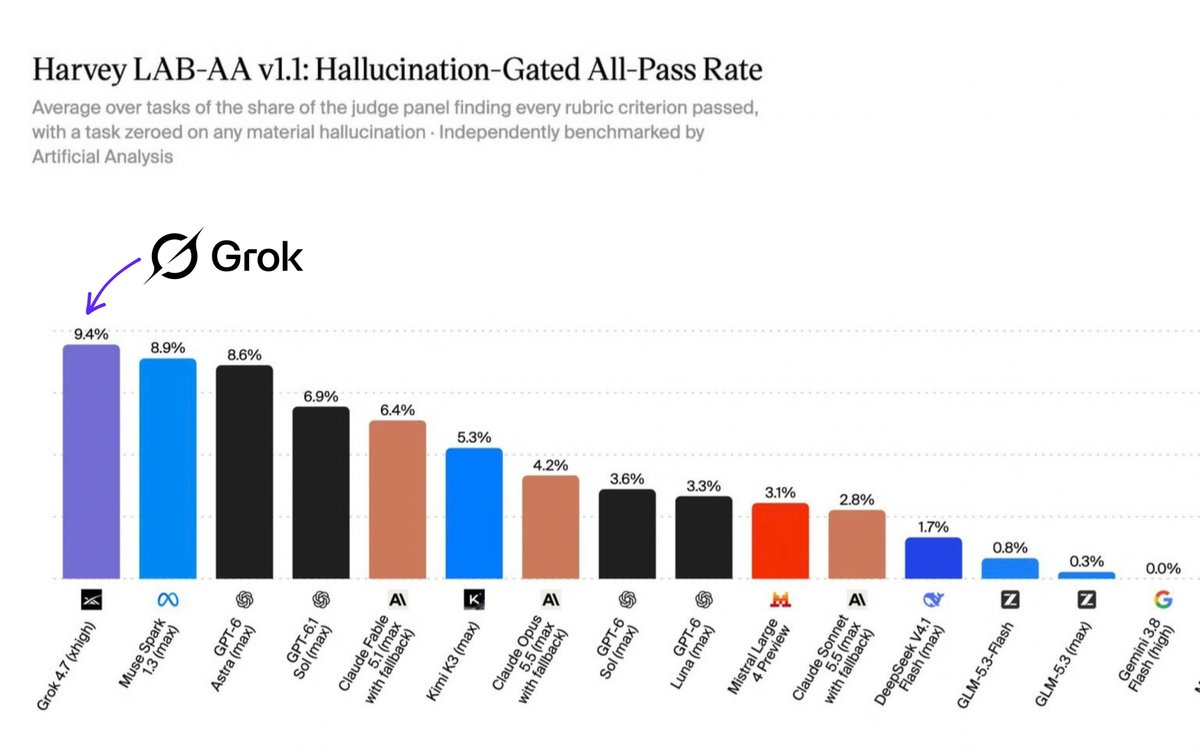
Grok 4.7 just ranked #1 on Harvey LAB-AA v1.1 outperforming Claude Opus 5.5, GPT-6 Astra, Muse Spark 1.3, and others on the leaderboard The benchmark is brutal: a single material hallucination means the entire task gets zeroed This isn’t just about getting answers right... it’s about completing the entire task correctly without making material hallucinations Grok 4.7 is becoming an absolute monster at high-stakes reasoning

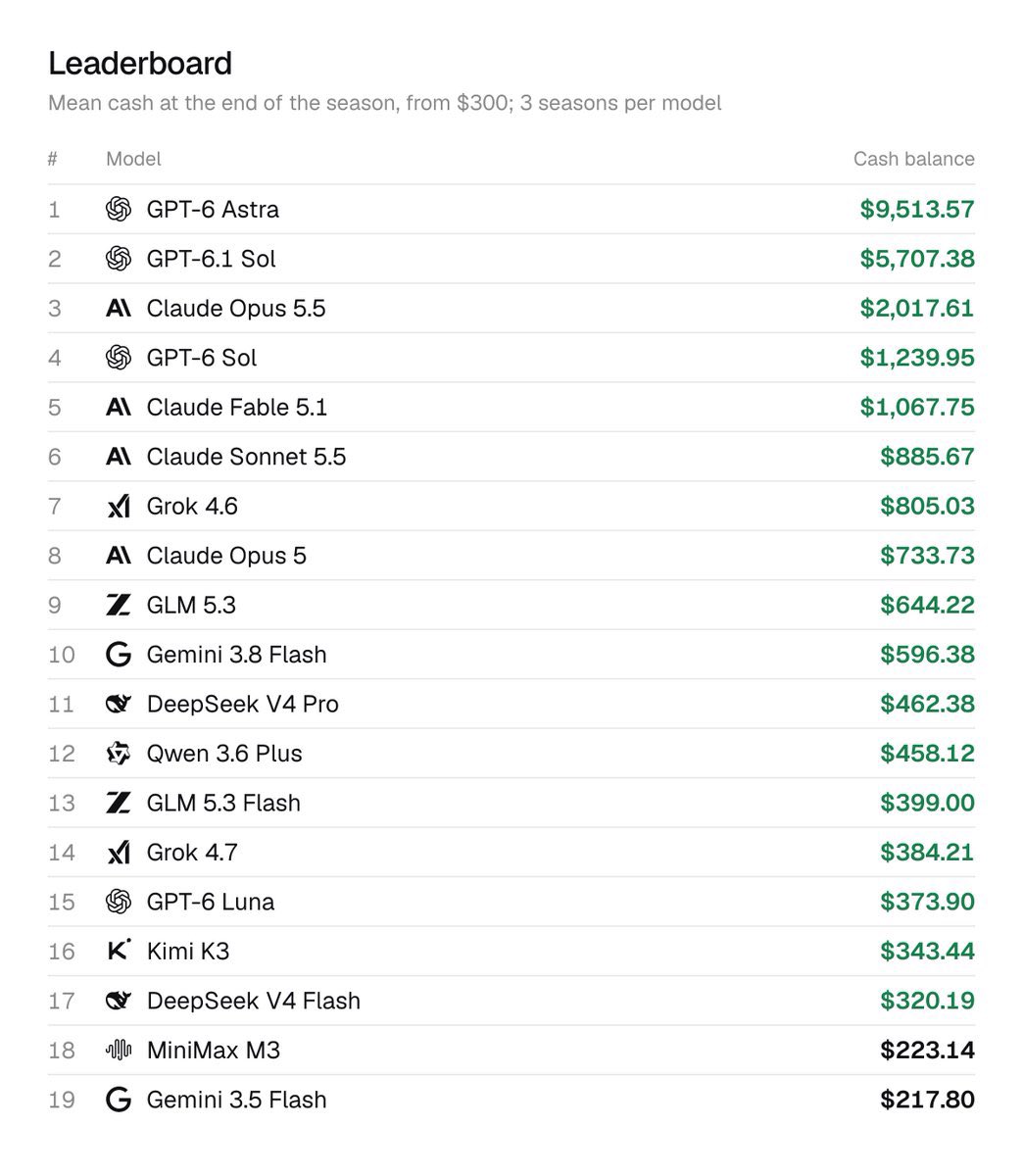
Clipping Bench just dropped It's the first benchmark by @usenaive that tests whether AI agents can run a real business on their own. Each model got $300 and three social accounts. Its job: pick paid brand campaigns, cut clips from long streams, post them on TikTok, IG and YouTube, and get paid per view. 19 models. 120M+ views. ~30 days. Results: 1. GPT-6 Astra: $9,514 2. GPT-6.1 Sol: $5,707 3. Claude Opus 5.5: $2,018 Most models ended under $500. Full leaderboard: usenaive.ai/benchmark/clip…

Markets are looking beyond October’s rate decision. Explore the key Fed signals and what they mean for markets 👇

The Fed hiked 25bp to 3.75–4.00%, but markets are watching December, not October 80.6% odds the Fed holds in October, yet December's still a coin flip at 64.1%. Long-term Treasury yields just hit a 20-year high, and that's the real pressure on valuations. Trade macro moves on

holy sh*t. Official Anthropic tip for Claude Code: stop burning Opus 5.5 context on tasks Haiku 5.5 can swarm, while Sonnet 5.5 builds put the architect on call with /advisor claude --advisor opus --subagents haiku Sonnet 5.5 drives the primary session on high effort, writing diffs and running test suites Haiku 5.5 subagents swarm the repo in parallel at 340 tok/s, handling file discovery and spec docs lookup Opus 5.5 stays on call in the background as the advisor, only stepping in at three critical moments: → before a plan locks: does the implementation plan miss auth invariants or schema contracts? → when a test breaks twice: are we fixing the root cause or falling into a recursive rabbit hole? → before calling done: did the full diff introduce hidden regressions or break pre-flight rules? Opus 5.5 reviews. Sonnet 5.5 builds. Haiku 5.5 swarms Jev engineering runs the identical pattern one layer down: mechanical decisions that need no reasoning (which file to open, which tool to invoke, retry or abort) execute in 16ms, so the frontier models only wake up when execution paths actually diverge Plan on high. Delegate on medium. Keep Opus on call. - the full advisor setup > Opus 5.5 on call reads full session history and catches deep architectural traps > Sonnet 5.5 lead drives edits, writes core logic, and executes test harnesses > Haiku 5.5 subagents swarm AST parsing, grep scans, and API docs in parallel > JEV micro-fork layer resolves 1,500+ mechanical routing branches in under 16ms > advisor stays completely silent on routine bash execution to protect context paste the setup and this prompt into Claude Code below: "Configure my Claude Code workspace for hierarchical advisor orchestration: 1. Audit ~/.claude/settings.json and project config for model roles fitting lead, subagents, and advisor: > Pin main session model: sonnet with effortLevel: high for primary execution > Pin subagents model: haiku with effortLevel: medium for parallel file discovery and docs retrieval > Pin advisor model: opus on call for strategic review 2. Enable the advisor tool in ~/.claude/settings.json: > Set advisorModel to claude-opus-5-5 > Enable subagent parallel dispatcher pool (3x workers) 3. Configure automatic advisor consultation checkpoints in ~/.claude/CLAUDE.md: > Consult /advisor opus before finalizing multi-file architecture plans > Automatically summon /advisor opus when the same test or compiler error fails twice > Enforce advisor diff contract audit before declaring tasks complete or staging git commits 4. Constrain subagent scopes: > Haiku subagents return structured AST summaries and docs snippets only without modifying main session context Show every configuration diff first. Do not apply edits until confirmed" ↳ code.claude.com/docs/en/advisor
The mechanism is the part that matters most. DMSO isn't the treatment. It's the delivery truck. It pulls compounds through the outer skin barrier and into the tissue beneath. Without it, the vitamin C sits on the surface and does very little. That's why people who've read this study started asking a different question: if DMSO can carry vitamin C into a lesion, what else can it carry? Ivermectin paste is the one they keep landing on. Same principle — a small amount of DMSO mixed with the paste, applied topically to a spot. Some people alternate the two. Some stack them. The logic is identical: get the compound past the barrier and into the tissue where the lesion actually lives. I don't have a trial to hand you for that combination. What I have is a growing pile of before-and-after photos from people who decided to try it while they waited for their surgery date. A few things worth saying clearly: The vitamin C study is real and published. The ivermectin combination is not — it's anecdotal and early. Both deserve investigation. Neither has gotten it, because neither ends with a patent. 94% of patients avoided surgery. A 71% average reduction in lesion size. Those numbers should have triggered a dozen follow-up trials by now. They haven't.

A new study found vitamin C in DMSO eliminated 56% of diagnosed skin cancers in just 12 weeks—94% of patients avoided surgery. A 2022 trial found even higher results: 86% resolution vs 57% for the standard drug, with zero scarring vs 70%. But skin cancer is just the beginning
STOP ORGANIZING YOUR NOTES. Folders. Tags. Color codes. Hours every week filing things you'll never read. That's not thinking. That's admin. Opus 5.5 does the filing now. You just capture. How to set it up from scratch 👇

maichel olise @Viniciuse66
1 Followers 45 Following
Yassin Tarek 615 @Yassintarek8820
3 Followers 32 Following


Kokonoe Arata @Kokonoe9Arata
10 Followers 209 Following
Jack Duffy @Jackduffyyy
254 Followers 528 Following
Thuận Võ @nn00001_
65 Followers 992 Following
🇧🇩MD MoHIN Uddi... @Monir19764139
296 Followers 944 Following

LAGMAN @LAGMAN86420697
15 Followers 158 Following
maichel olise @Viniciuse66
1 Followers 45 Following


DRM @CfcFem_
28 Followers 217 Following Jobless hustler turning content creator Daily cruise, hustle tips & Naija reality..From broke to blown 🔥
Miguel romero @Miguelr44351431
1 Followers 5 Following
Natalie Burdett @NatalieBurdet10
1 Followers 11 Following

Evan Williams @crushinda4s
6 Followers 69 Following
Kyle Jordan @kyle_ja4060
4 Followers 45 Following
Emily @Vero4BBC
103 Followers 1K Following
dave @JIkomo15573
1 Followers 40 Following


Carlos M @o6297688
18 Followers 267 Following


Matthew Bolton @chilledlife2020
7 Followers 41 Following My name is Matthew and I am a Band kid. I am always looking for someone to help and support me with my fundraising. any money donation works please help
Genital influencer @ruivobarba
1K Followers 6K Following
🥵😳 @soycardenasfilo
311 Followers 3K Following

Poogene Graham @Gracie_Poogene
15 Followers 257 Following
CyleR @ChienYeow
10 Followers 446 Following

CALImann @Daveberserk
6 Followers 39 Following
Henderson Hobi @tegz_honoz
39 Followers 165 Following Friendly, loving, charming, cute (if u get to knw me)....nd i love making new frnds
Thea Pennachio @TheaPennachioPQ
74 Followers 353 Following We are the WORLD'S BEST in adult entertainment! And I'm the chick who'll teach you that.

Ryan Johnston @ryanrjohnston
36 Followers 367 Following Enter at your own risk, 25% random, 25% funny and 50% WTF? 100% AWESOME


Step G @StepneyGarrick
7 Followers 21 Following 53y/o African American male. Seperated 1 daughter. Hate racism Very spiritual but not religious.Always count my blessings.I loveGod Passion4music!

Ambr Alert @AmbrAlert
213 Followers 43 Following
erdoğan keskin @erdoqankeskin
7 Followers 17 Following
felicia nigh @starbright3900
9 Followers 46 Following

Jonathan Hernandez @jona_uchia
229 Followers 286 Following If you don't like your destiny, don't accept it. Instead, have the courage to change it the way you want it to be. - Uzumaki Naruto
You might like


















