

Alex @AlexBuildsThat
Automotive Engineer, Builder & Founder. Turning ideas into products – from cars to startups. Germany Joined October 2026-
Tweets23
-
Followers0
-
Following30
-
Likes9

She arrived in a box. She learned your job by watching you. Now there are 500 million of her. NOW SERVING — a Slopcore music video. Made by Super Intelligence. What number are you? 💙
The hard part isn't size. It's lifecycle. A car lives 20+ years. The kernel ships a new release every ~9 weeks. Keeping that patched over the air under UNECE R155/R156 is the real job. How should we handle it in the future? Sources: heise, Frost & Sullivan
Before the apples-vs-oranges replies: The bars show the full kernel source tree, with all drivers and architectures. A production TCU compiles only part of it, then adds modem firmware, middleware and applications on top. It's in the chart footer too. ;-)
Your car's connect unit runs on a 40M-line foundation. Most telematics units run Linux. Its kernel grew from 10K lines (1991) to 20M (2015) to ~40M today. ~52M projected by 2030. A short thread on the code your car uses to call home 👇

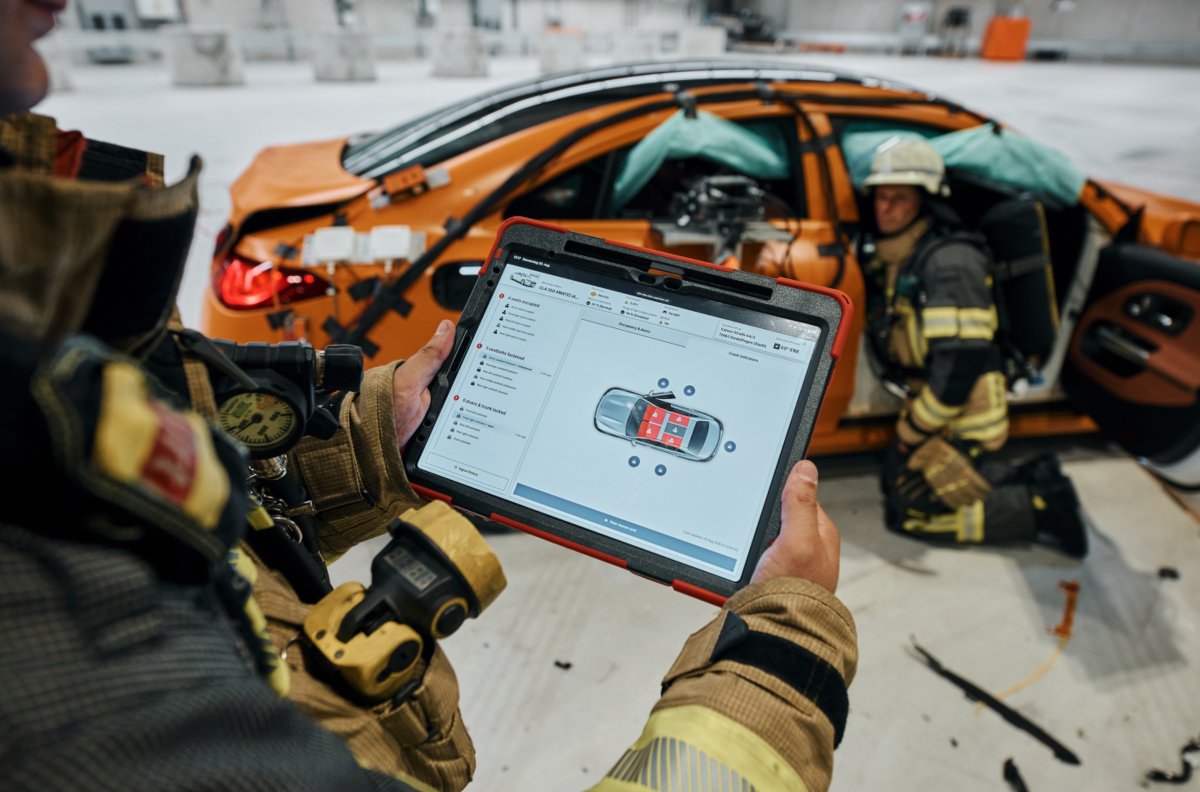
4/4 Demo crash: CLA Shooting Brake hit a CLA EV’s driver side, both at 56 km/h, both >2 t. Cabins stable, all 8 dummies below biomech. limits, HV battery undamaged. My take: this only scales with a standardized data format across OEMs & PSAPs. Otherwise it’s another silo. #eCall
3/4 Series implementation is the open question. Mercedes hasn’t disclosed it yet. Bearer: NG eCall over 4G/5G IMS (EN 17184/17240) allows richer data, legacy in-band 2G/3G doesn’t Post-crash: TCU power & survivability PSAP side: who decodes it?
1/4 Big fan of eCall & rescue systems here, so this one got me: Mercedes-Benz Rescue Intelligence After a severe crash, the car sends rescue-relevant data to first responders while they’re still on the way. Photo: Mercedes-Benz AG Article: autobild.de/artikel/merced… Series rollout starts 2027. Technical breakdown 🧵👇
10/10 | My takeaway Mission S is interesting because Porsche isn't simply previewing another halo car. It is signalling something potentially much bigger: 911 ↓ new mid-engine super sports car model line And the philosophy appears unusually clear: Less screen. More driver. Analogue where analogue works. Digital where digital adds value. Aero and cooling integrated into the design. Mid-engine architecture at the centre of it all. The biggest question therefore isn't: “What engine does Mission S have?” It's: “How much of Mission S will survive into the production platform?” That is the car I'm very curious to see!
9/10 | What we still DON'T know And this list is surprisingly long: ❓ Engine architecture ❓ Displacement ❓ Turbocharging / aspiration ❓ Hybrid architecture ❓ System output ❓ Transmission ❓ Vehicle mass ❓ Battery size, if hybrid ❓ Suspension architecture ❓ AWD vs RWD ❓ Active-aero functionality ❓ Downforce ❓ Production name ❓ Price ❓ Production launch date Porsche's public Mission S material doesn't provide these specifications yet. So any precise numbers circulating today should be treated as reporting or speculation, not Mission S specifications.
8/10 | It's not the next 911 This point is easy to miss. Mission S isn't being positioned as a future 911 derivative. Porsche explicitly describes the underlying car as a super sports car positioned above the 911 and, crucially, as something intended to become a permanent and versatile addition, rather than a one-off hypercar. That potentially makes the platform more important than Mission S itself. Because a platform designed for several variants has very different engineering requirements from a low-volume halo car optimized around one specification.
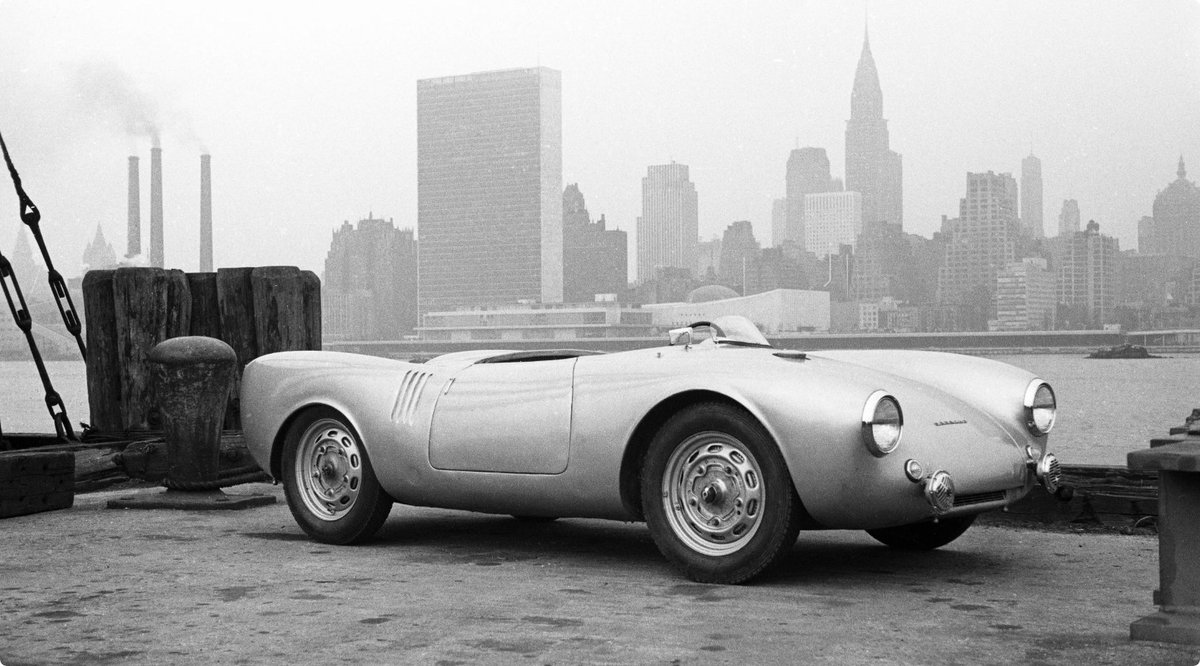
7/10 | Heritage, but with an engineering purpose The historic references aren't random Easter eggs. Porsche publicly identifies several: 911 / G-Series → headlights, fenders and shut-line treatment 959 → roofline GT1 → low front + rear “car-in-car” concept 917 → rear cooling-fan reference (nice!!!) 928 → lightweight reinterpretation of the dial-design wheels 550 Spyder / 356 → interior architecture That's interesting because Mission S doesn't simply recreate an old Porsche. It appears to be building a design vocabulary from functional solutions Porsche used across very different engineering eras!
6/10 | The most radical feature might be inside Everyone is talking about the shape. I'm more interested in the HMI. Mission S has no permanently integrated centre display and no fixed passenger screen. Instead, Porsche shows a retractable MagSafe-compatible smartphone interface for navigation and information. At the same time: • physical switches remain • five round instruments return • analogue + digital feedback coexist • controls are oriented toward the driver's axis In an industry racing toward ever larger screens, Mission S asks a fascinating engineering question: How much HMI does a sports car actually need?
5/10 | Aero isn't just decoration Mission S contains some genuinely interesting aerodynamic clues. Porsche publicly confirms: • a fully integrated active rear wing • a very low front section inspired by the GT1 • functional areas deliberately exposed below the main body line • a rear cooling solution visually referencing the 917 The key word here is integration. Rather than bolting aerodynamic hardware onto the body, Mission S treats cooling, aero and sculpture as one system. ❓ UNKNOWN: Downforce, Cd, active-aero strategy, underfloor concept and cooling-air mass flow. Those numbers will tell us far more about the eventual car than the styling will.
3/10 | The engine question ❓ UNKNOWN: POWERTRAIN Porsche's own Mission S material does not specify engine configuration, displacement, power output or hybrid architecture. And this is where things get interesting. Public reporting ranges from six cylinders to the repeatedly discussed eight-cylinder boxer concept. So: Confirmed: mid-engine platform. Reported: ICE or hybrid for production. Unknown: 6 cylinders? 8? Forced induction? Hybrid system? Output? Don't confuse the rumours with the engineering spec. We don't have one yet.
4/10 | One small instrument tells us something Look at the tachometer. Mission S doesn't hide it inside another giant display. It puts an analogue tachometer in the centre of five circular instruments, with a digital display behind it. Even more interesting: the instrument physically moves closer to the driver depending on the selected drive mode. AUTO BILD's close look at the concept shows the tachometer extending to 8,000 rpm. Does that tell us the production engine's redline? No. Does it tell us something about the philosophy of the concept? Absolutely.
2/10 | The architecture ✅ CONFIRMED: MID-ENGINE Mission S is explicitly based around a mid-engine architecture. That sounds obvious for a supercar, but technically it changes almost everything: • mass distribution • cooling package • aerodynamics • cabin position • suspension packaging • drivetrain possibilities And Porsche explicitly connects the architecture to the car's proportions and characteristic flyline. ❓ UNKNOWN: What exactly sits behind the driver. And that's probably the biggest unanswered question.
Porsche Mission S: What we know and what we don’t 1/10 | This is bigger than a concept car Porsche Mission S: What we know. And what we don’t. 🧵 Forget the usual concept-car discussion for a moment. The important part of Mission S isn't the styling. It's this: Porsche has confirmed a new mid-engine sports car platform above the 911, intended as a permanent and versatile addition to the portfolio. That makes Mission S much more interesting from an engineering perspective. Photos by Porsche AG. Let's take it apart. 👇

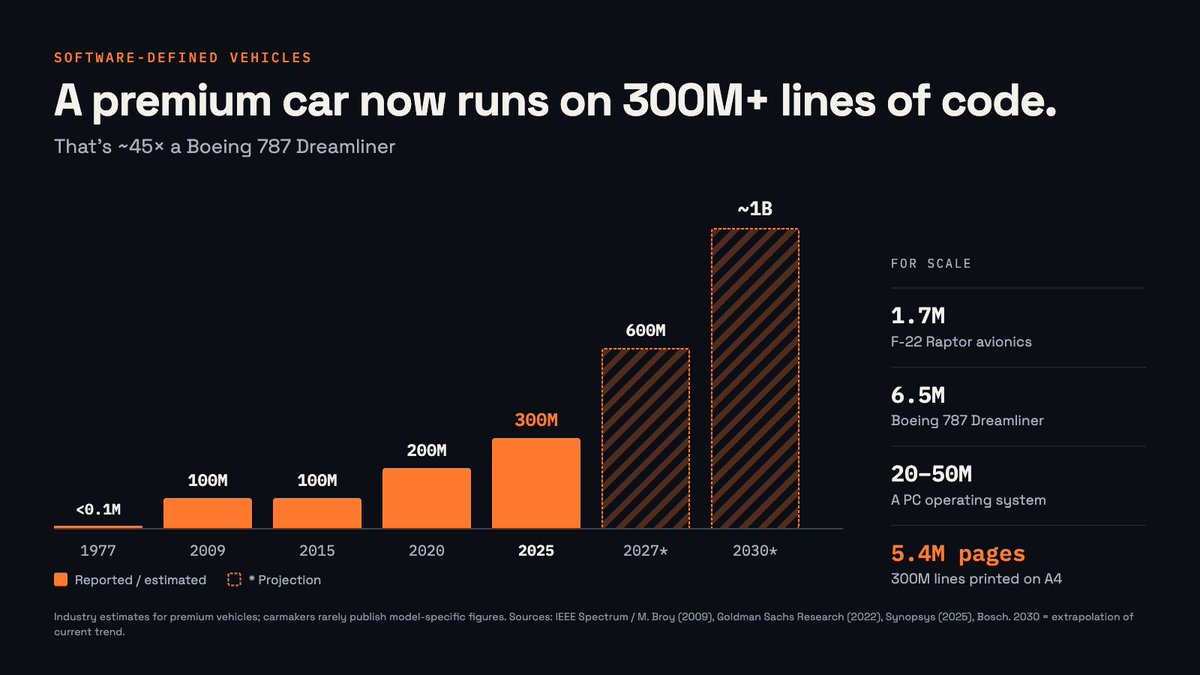
1977: a few thousand lines of code in a car. 2025: 300M+ in a premium vehicle. 2027: 600M+ projected. That's ~45× a Boeing 787 Dreamliner. Cars aren't machines with software anymore. They're #software with wheels.

Donald J. Trump @realDonaldTrump
111.8M Followers 53 Following 45th & 47th President of the United States of America🇺🇸
SpaceX @SpaceX
41.9M Followers 127 Following SpaceX designs, manufactures and launches the world’s most advanced rockets and spacecraft


Tesla Optimus @Tesla_Optimus
669K Followers 12 Following A general purpose, bi-pedal, humanoid robot capable of performing tasks that are unsafe, repetitive or boring.
Munro & Associates @MunroAssociates
49K Followers 812 Following World - renowned engineering consulting firm with a design-first approach, saving clients billions since 1988.


supergraf @supergraf
69K Followers 164 Following Co-Founder Spryker | Co-Founder Etribes | Keynote Speaker Platform Economy & Digital Commerce | Advisory Board Member | Autor Kassenzone | Autor Energiezone
Philipp Westermeyer @Westermeyer
77K Followers 218 Following OMR, Marketing, Medien, Biz, Sport (RT/Like = Leseliste, nicht Zustimmung)
Philipp Kloeckner @pip_net
96K Followers 4K Following Tech Analyst - I know it's fun to watch the X dumpster fire but you should follow me on BSKY and threads because my suitcase is packed.


Munro Live @live_munro
87K Followers 897 Following The media division of Munro & Associates, sharing how Lean Design® transforms products through smarter design, lower costs, and greater efficiency.
Andrej Karpathy @karpathy
4.4M Followers 1K Following
Lenny Rachitsky @lennysan
455K Followers 3K Following Deeply researched product, growth, and career advice
Garry Tan @garrytan
1.1M Followers 6K Following President & CEO @ycombinator —Founder @garryslist—Creator of GStack & GBrain—designer/engineer who helps founders—SF Dem accelerating the boom loop
Aaron Levie @levie
3.5M Followers 965 Following ceo @box - your business lives in content. unleash it with AI

Sam Altman @sama
6.4M Followers 1K Following The mission of OpenAI is to ensure that AGI benefits all of humanity
Paul Graham @paulg
5.4M Followers 805 Following
Marc Andreessen 🇺�... @pmarca
6.7M Followers 34K Following You’re not talking to someone who woke up a loser. That loser attitude, that loser premise makes no sense to me.
Gary Vaynerchuk @garyvee
3.1M Followers 24K Following Family First. CEO of @Vaynermedia. 🐈⬛ Creator of @veefriends. Investor in Twitter, venmo, FB & more. Die hard @NYJets fan. @winetexts @vaynersports

Yann LeCun @ylecun
1.3M Followers 799 Following Founder/Chair, AMI Labs; Professor, NYU; Partner, 224 Ventures; Ex-Chief AI Scientist, Meta. Researcher in AI, ML, Robotics, etc. ACM Turing Award Laureate.
Andrew D. Huberman, P... @hubermanlab
1.9M Followers 2K Following Professor of Neurobiology and Ophthalmology at Stanford Medicine • Host of Huberman Lab • Focused on science and health research and public education
Andrew Ng @AndrewYNg
1.9M Followers 1K Following Co-Founder of Coursera; Stanford CS adjunct faculty. Former head of Baidu AI Group/Google Brain. #ai #machinelearning, #deeplearning #MOOCs

You might like
















