Diogo Lima @DFSL13
Assistant professor at Maastricht University. Macroeconomist. Maastricht, The Netherlands Joined July 2013-
Tweets189
-
Followers148
-
Following217
-
Likes4K
@SakiBigio Aren't we doing it already with, say, Amazon prime?

Frequency domain methods in action via @Shazam
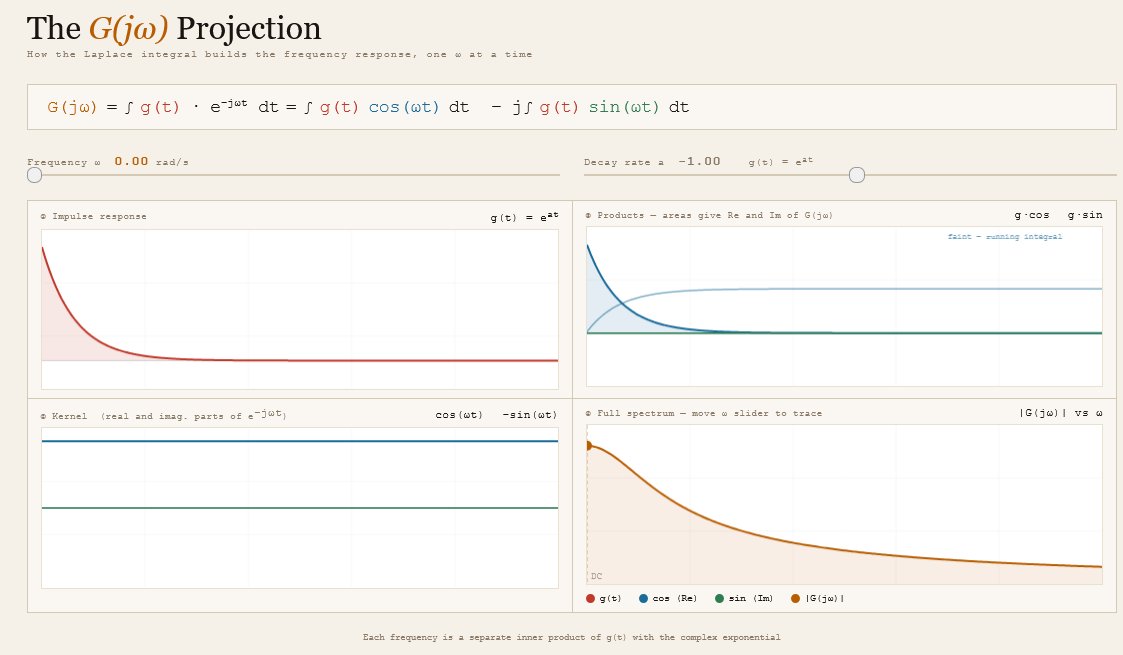
My "Uncertain Network Dynamics" paper uses frequency domain methods, which are uncommon in economics now. So Claude & I came up with a visualization tool. The transfer function G(jω) is the Laplace transform of the impulse response g(t). At ω=0, G(0) is the area under g(t). [1/3]

R.I.P. Christopher Sims (21 Oct. 1942 - 14 March 2026) - a giant in macroeconomics and one of the finest human beings I have ever met -
‘Til the day I die, I will never understand how this wasn’t the end of it, right from the very beginning.
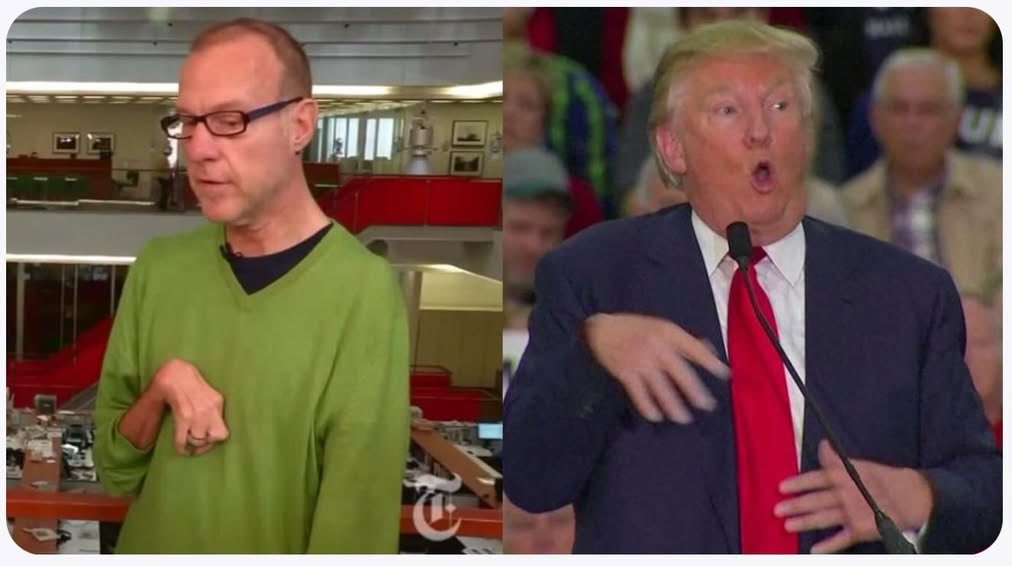


Hang it in the Louvre.


Alex Jeffrey Pretti. White male born in Illinois. University of Minnesota graduate, medical professional employed at the US Dept. of Veterans Affairs, avid outdoorsman & dog dad, legal gun owner with no criminal record. Murdered by his government 01/24/2026

Video message from Federal Reserve Chair Jerome H. Powell: federalreserve.gov/newsevents/spe…
MMT be like

Zelensky made a surprise visit to the frontline city of Kupyansk, which Russia claimed its forces had captured – but now Ukraine's soldiers "are achieving results" and pushing them back, the president said. Zelensky underscored the importance of the shooting war as well as narrative warfare: "Today it is extremely important to achieve results at the front so that Ukraine can achieve results in diplomacy. This is exactly how it works: all our strong positions inside the country become strong positions in discussions about ending the war."

Bessent's Key Square hedge fund at its peak: 10–20 research analysts for $5B. Fed: 411 PhD research analysts for $9T. That's 44–88× more per dollar on Bessent's side. His fund fell from $5B to $0.5B. Perhaps Bessent's most pressing economic problem isn't Fed economists.

BESSENT: “The Fed is turning into universal basic income for PhD economists. I don't know what they do. They're never right … If air traffic controllers did this, no one would get in an airplane.” 🤣
I joined Cambridge Economics in 2011 as an assistant professor. For historical reasons, Cambridge is still a bastion of heterodox economics - not so much in the department, but definitely in the colleges. (The college structure deserves its own thread.) 1/10

Let me explain why I believe modern economics is such a powerful tool for understanding the world. I’ll do this by discussing a great paper by Simone Cerreia-Vioglio, @UncertainLars, Fabio Maccheroni, and Massimo Marinacci, “Making Decisions Under Model Misspecification,” published in the Review of Economic Studies a few months ago. Imagine I want to drive from UC San Diego to UCLA, but I’ve never driven that route before. I need to build a “model of the world” to guide me, which we usually call a map. Maps are simplified representations of reality. They can’t include every detail if they’re to be useful. Borges, in his short story On Exactitude in Science, makes this point beautifully. (In practice, I don’t draw the map myself—I use an app—but someone still had to make it.) Because maps simplify, I can’t fully rely on them. Maybe last night’s storm knocked down a tree and closed a street, or there’s construction and the ramp off the highway in LA is shut down. This uncertainty matters. Suppose I’m driving to UCLA for an important talk at 11 a.m. If the ramp is closed, I might need 15 extra minutes. When should I set my alarm to arrive on time, while still getting enough sleep to give a good talk? The problem is that I can’t assign precise probabilities to all these contingencies. How likely is the fallen tree? Or new roadwork? Even the best traffic apps can’t capture every disruption, and some might happen after I’ve already left. In economic terms, my “model of the world” (the map) is misspecified—and no matter how hard I try, I can’t fully fix that. But sitting down and crying about misspecification doesn’t answer my basic question: when do I set the alarm? Too early, and I’m exhausted. Too late, and I’m late. Simone and his co-authors offer a way to think about this. They start from the idea that we often hold several structured models of an economic phenomenon, grounded in theory. For example, a central bank might use a standard New Keynesian model and a search-and-matching model of money. Yet, aware that each model is misspecified by design, the bank adds a protective belt of unstructured models—statistical constructs that help it gauge the consequences of misspecification. The beauty of the paper is that it provides an axiomatic foundation for this protective belt (and even generalizes it to include a Bayesian approach). It shows that if a decision-maker’s preferences meet certain conditions —reflecting both rational and behavioral features— then those preferences can be represented by an augmented utility function that formally accounts for misspecification. Crucially, we don’t assume that augmented utility function; we derive it. We start with general, plausible properties of preferences and prove that they imply such a representation. That’s real progress. Instead of writing endless critiques of expected utility or rational expectations (as many have done for decades, with little to show), we now have a formal way to reason about misspecification—precise definitions, clear boundaries of validity, and awareness of what we still don’t know. Take, for instance, a brilliant Penn graduate student on the market, Alfonso Maselli economics.sas.upenn.edu/people/alfonso… His job-market paper pushes this frontier further. He studies cases where a decision-maker not only faces model misspecification but is also unsure which model best fits the data and can’t assign probabilities to them—what we call model ambiguity. In my example, the central bank is unsure whether the New Keynesian or the search-and-matching model fits better, and it worries that both might be incorrect. If you read Simone et al. or Alfonso’s paper, you’ll see how misguided—and, frankly, cartoonish—many of the recent criticisms of economics on X have been. First: the idea that economists don’t understand math or have “physics envy.” The math in these papers is subtle and advanced—utterly different from what physicists do (neither better nor worse, just distinct). An engineer transitioning into economics would find these tools unfamiliar. Second: claims of ideological bias are unfounded. I have no idea about the political views of the authors, and I’d be surprised if anyone could infer them from the analysis—beyond vague guesses about typical academics. Third: This has almost nothing to do with what one learns as an undergraduate, or even in first-year graduate school. If your knowledge of economics stops at an intro textbook, it’s best not to pontificate on the field’s frontiers. Fourth: Is this science? Debating that word’s boundaries is pointless; every definition of “science” breaks down somewhere. The Germans solved this long ago with the idea of Wissenschaft—the systematic pursuit of knowledge, whether of nature, society, or the humanities. By that measure, modern mainstream economics is clearly a Wissenschaft: a disciplined, cumulative, and highly useful effort to understand how the world works. Simone and his co-authors have demonstrated that beyond any reasonable doubt.


Friends and students occasionally ask me about the genesis of my 2005 QJE paper with Marc Melitz on “International Trade and Macroeconomic Dynamics with Heterogeneous Firms.” Here is the story, for anyone who may be interested. 1/n


So glad this is out. Our tribute to Bob Lucas at the JPE.
The November issue of JPE is now available at journals.uchicago.edu/toc/jpe/2025/1…. This issue features an In Memoriam to Robert E. Lucas Jr.--a tribute to his lasting impact on economics and as JPE editor. Contributors include T. Sargent, F. Alvarez, B. Jovanovic, and N. Stokey. #econtwitter

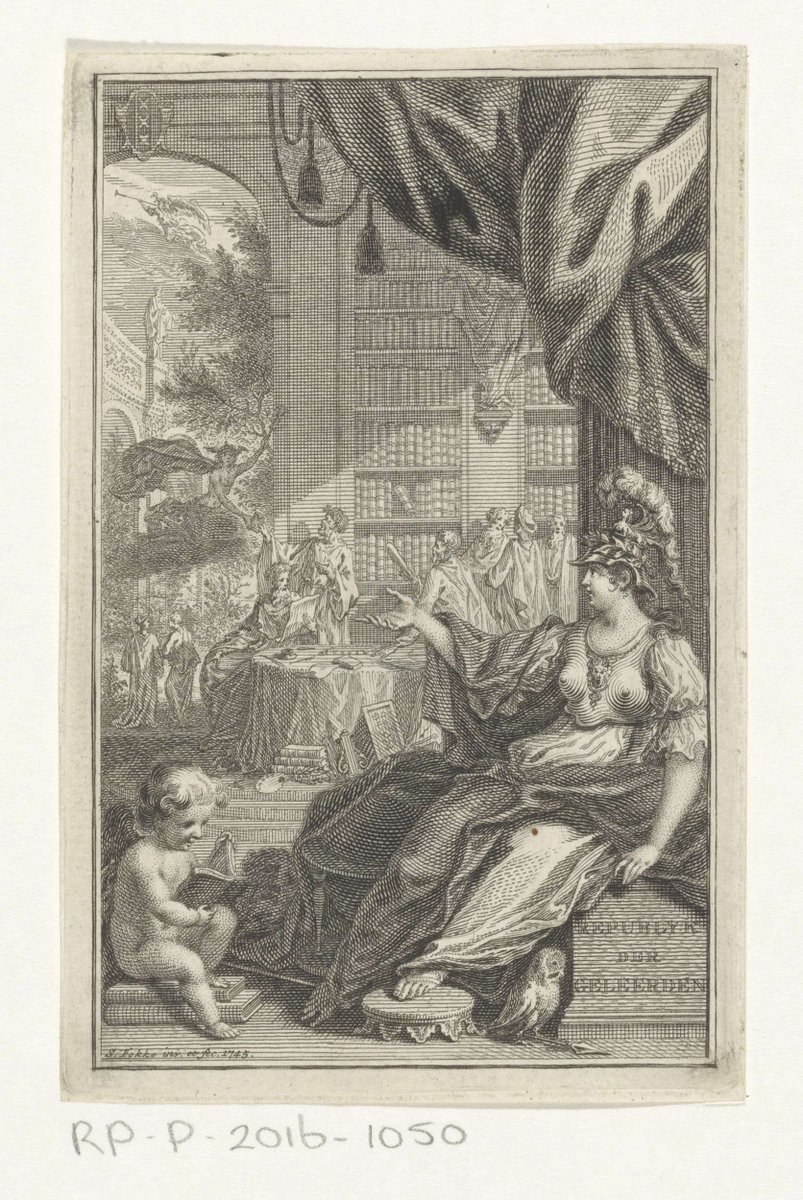
Last Thursday, I had an interesting dinner with two prominent economists. Soon, the conversation turned to Joel Mokyr’s work and its relationship with @danwwang’s recent book, Breakneck: China’s Quest to Engineer the Future. Mokyr has long argued that Europe’s Republic of Letters encouraged broad scientific and technological innovation by providing a setting where new ideas could be evaluated and disseminated. For him, Europe occupied the ideal midpoint between political fragmentation and cultural unity: enough polycentrism to prevent the suppression of ideas by heavy-handed rulers, but enough common ground to sustain serious dialogue and a deep pool of potential patrons and protectors. But what if, as Wang cautiously suggests, the institutions of an open society are no longer necessary for scientific and technological innovation? (To be fair, Wang does not assert this as fact—he only hints at it). Elaborating on Wang, one could construct the following argument: 1️⃣ Yes, the Republic of Letters was essential for the flourishing of the scientific method that had emerged in the late Middle Ages and the Renaissance. 2️⃣ Yes, the institutions of an open society were necessary in the 19th and 20th centuries to create today’s framework of universities, academic societies, and scientific journals. 3️⃣ But no, once the scientific method and its institutional architecture are established, an open society might no longer be needed. 4️⃣ Indeed, China possesses institutions such as Peking University and Tsinghua University, and it performs impressively in mathematics, engineering, and computer science—fields central to scientific and technological progress. 5️⃣ Lack of political freedom likely still harms the social sciences (including economics) and the humanities, but those fields may be of secondary importance for technological innovation. 6️⃣ By limiting the rise of anti-scientific movements—such as the “decolonize science” trend on many Western campuses—or by avoiding resource allocation to “useless” humanities, China might even gain a comparative advantage. 7️⃣ The historical episodes of anti-science in totalitarian regimes (e.g., Deutsche Physik in Nazi Germany or Lysenkoism in the USSR) are not inevitable in a modern, technocratic Confucian state such as China’s, which prizes pragmatism. 8️⃣ In fact, pragmatism might help China avoid some of the West’s current problems: the creeping politicization of the natural sciences, rising bureaucratization, and resource allocation driven more by lobbying than by scientific merit. In short, have science and technology grown so powerful and self-sustaining that they no longer depend on their historical institutional scaffolding? Let me stress that I am not endorsing points 3), 5), 6), 7), or 8). Points 1), 2), and 4) are hard to deny. My regular readers know that I would never call philosophy or history “useless.” Moreover, I believe deeply that the institutions of an open society have intrinsic value—an argument far stronger in their favor than any instrumental one. Still, as a researcher, I must separate what I want to be true (that open societies are better for innovation) from what the evidence actually shows. So, what kind of empirical evidence could one gather to disprove claims 3), 5), 6), 7), and 8)? Finally, it’s worth recalling that similar anxieties haunted the West in the 1950s and 1960s, back then focused on the Soviet Union. Would it surpass the West in economic growth and scientific innovation? It did not. Hence, my prior distribution still places a higher probability on China not overtaking the West than on the opposite outcome. Yet China is not the Soviet Union, and overfacile historical analogies are always dangerous.
The European continent is still very innovative. Time to translate into leading companies.
Good Morning from #Germany, which is no longer among world’s 10 most innovative countries. Acc to World Intellectual Property Organization (WIPO), which measures innovation strength of 139 nations, Germany has fallen to 11th place, overtaken by China. WIPO uses 78 indicators to


What gets me upset about these complaints … every day a different one but all the same, is the subtle sense of wanting to impose their view on economists while claiming that’s what economists do to them. If this economics is bad do the good one - if economists are protective of their discipline, call it socio-physics, call it socio-economics or econo-sociology, or whatever … just go ahead. Do stuff instead of complaining the other guys are bad. Medieval theology is dead because of science, illuminism, not because of crying…. neoclassical economics could be killed by socio-economics. I do not know what Chang does - if he does anything research-wise besides complaining - and I do not like at all the economics (or whatever you call it) that @MazzucatoM does, but she does it with great success … that’s how it works. Chang should do a PhD program (or a sub-program into a program) - and push it to students … not FT journalist who have their own agendas … behavioral economists attacked economics and did it wirh great success - rational expectations macroeconomists did the same before …. they both had ideas, tools, … they pushed and won. Stop asking for neoclassical economics to open up to alternative stuff - do the alternative stuff closing up to neoclassical economics … and see if you can make it. Convince people your research is good by doing research. It takes a model to beat a model Show it.

Ha-Joon Chang wrote in the @FT about the need to rejuvenate economics teaching (as @MazzucatoM and many others have been claiming). Not only does its teaching need to be open to variety, but the economics science itself needs to become interdisciplinary.


Florin Bilbiie 🇪�... @FlorinBilbiie
17K Followers 1K Following Max(Micro in Macro) s.t. Tractable Aggregate Demand w/ Heterogeneity/Inequality Aggregate Supply w/ Entry/Variety Monetary & Fiscal Policy #EconTwitter 1st Gen

Tomer Ifergane @iftomer
477 Followers 738 Following Assistant Professor, Department of Economics - Tel Aviv University Macro, Labour and everything in between.

_Robin Brooks @TheRobinBrooksX
48 Followers 1K Following Senior fellow @BrookingsInst, previously Chief Economist @IIF and Chief FX strategist @GoldmanSachs, Opinions are my own. Email: [email protected].

Valora 🇺🇸 @Varola26271072
145 Followers 2K Following A single mother The Star-Spangled Banner in my heart will always lead me forward! 🇺🇸
Macro Chen @MacroChen2023
24 Followers 609 Following
Slauseauth @SlauseauthuzlL
47 Followers 4K Following
Tathesez @TathesezumAa
53 Followers 4K Following
Cloughd @Cloughd6uTD
33 Followers 4K Following
Warren @haketaasuk90628
65 Followers 7K Following
KittyMoore @n6uY3yJM759j9g
77 Followers 7K Following
Queque que Guincha �... @LuisGMGouveia
2K Followers 4K Following Combate o obscurantismo e o colectivismo sempre que aqui vem
DinahRoger @M2h8Z3983zYGpj
68 Followers 7K Following
Melanie @shitouyuka75218
83 Followers 7K Following
Brooke Eyre @Morrison23323
98 Followers 6K Following Creator of the recycled collar free shirt, we take any shirt remove the collar and make you Free. Blue Check
Mirabelle @DersimLiErsin
15 Followers 349 Following Love life, enjoy traveling, enjoy different landscapes and cultural history (hope to meet friends with common interests)
Sewon Hur @sewonhur
781 Followers 416 Following Economist, Professor, Former Musician, World Traveler, My views, RT≠Endorsement

Benjamin Villena-Rold... @BenVillenaR
207 Followers 2K Following Economist, researcher in labor markets and political economy. Proud husband and father of two children. Affiliations UNAB, LM2C2 MIPP, and co-director of SABE.

Ioannis Kospentaris @ioannis_kospe
638 Followers 3K Following
Mark L. J. Wright @MarkLJWright
2K Followers 1K Following Senior Vice President @StLouisFed. Formerly Research Director @MinneapolisFed. Views are my own. RT ≠ E.
Julian Ashwin @JulianAshwin
436 Followers 826 Following Assistant Professor in Macroeconomics @umsbe. Previously post-doc @LBS, PhD @UniofOxford.

Katharina Bergant @kat_bergant
1K Followers 694 Following Austrian EconomiST @IMFNews. Previously @ecb and @centralbank_ie. PhD from @tcddublin and former fellow @Harvard. Missing the mountains. All views are my own!

Diego Aguiar @Aguiar28D
909 Followers 5K Following Econ MS @ASU, Econ BS @UCUoficial | Uruguayo 🇺🇾 | Homo economicus. He/him
Luca Riva @rivluc
2K Followers 5K Following Ph.D. Economist at @centralbank_ie Research • Adjunct Lecturer @EconomicsUCD • Bocconi, Brown University • On Bluesky • Views are my own 🇮🇪🇪🇺
Carlos Rojas Quiroz @carlos_rojasq
268 Followers 1K Following Economics PhD Student at the @EUI_ECO | Sovereign Risk + Fiscal Policy + Quantitative Macroeconomics
Luca Fornaro @LucaFornaro3
10K Followers 813 Following Researcher @CREIResearch, working on international macroeconomics.
Vinz Petrs @vinz_peters
128 Followers 667 Following
Kathleen (Katie) Brow... @K_J_Brown_
404 Followers 786 Following PhD candidate @PolSciLeiden | IPE, all things sovereign debt | Pittsburgh transplant, nederlander-in-opleiding 🇳🇱
𝙐𝙜𝙤 𝙋𝙖... @upanizza
16K Followers 3K Following Professor & Pictet Chair @GVAGrad, VP @cepr_org & Director ICMB. Before @UNCTAD @the_IDB @AUB_Lebanon @unito. 🇮🇹🇪🇺🇨🇭, 2 daughters, & 🇱🇧 wife FVCG ⛷🏍

Min-Seok Pang @minspang
1K Followers 962 Following Karen A. and William S. Monfre Professor in Business @UWBusiness @UWMadison / Info Syst Res AE / When I procrastinate, I joke about why I procrastinate.

Sahil Ravgotra @sahil_ravgotra
207 Followers 275 Following Macroeconomist @UTAustinEcon | PhD Economics @economicssurrey | Open Economy • Bounded Rationality • Macro • Monetary • Policy

.k @testiculix
24 Followers 547 Following
Omar Rachedi @OmarRachedi1
2K Followers 2K Following Italian macroeconomist, Associate Professor at @ESADE. Previously, professional runner at @_Carabinieri_.
Ricardo Aguiar @R__Aguiar
3 Followers 31 Following
Alex Sweet @sweetstocksblog
2K Followers 3K Following Investor, former Substack writer and international small cap portfolio manager. Archived equity write-ups at link below.
Marta Garcia Rodrigue... @Marta_g_rguez
2K Followers 1K Following Research Economist at @BancoDeEspana | Phd in economics from @UABBarcelona and @bse_barcelona | Interested in macro | Personal views
Tobias Schnabel @CTobiasSchnabel
57 Followers 3K Following
Nithin Nithu @nithinnithu_m
508 Followers 2K Following 🏦Econ PhD, IIT-KGP, Macroeconomics, Dynamic Macro | Run4fun 🎾Tennis🏢R enthusiast Tweets about R programming, Economics and Mathematics.

Clemens Graf von Luck... @ClemensGvL
2K Followers 301 Following Twitter-toddler / Stanford Postdoc / former Advisor to World Bank Chief Economist / former Harvard Fellow

Christopher Spink @ChristophSpink
1K Followers 1K Following Journalist at International Financing Review, part of LSEG (Refinitiv / Reuters Financial), covering sovereign and bank restructuring plus investment banking.
Alejandro C. García @agcintado
1K Followers 2K Following
Vinz Petrs @vinz_peters
128 Followers 667 Following

JUNK BOND ANALYST �... @junkbondanalyst
24K Followers 900 Following leveraged finance & dank memes, in a constant state of distress. satire, DMs open. newsletter @TradingAwayJBA
Anton Gerashchenko @Gerashchenko_en
696K Followers 1K Following Ukrainian patriot. Advisor to Internal Affairs Minister (2021-2023). Institute of the Future founder. Support volunteer translators https://t.co/nWSASMUo29
Boris Julien-Vauzelle @borisjv
401 Followers 1K Following Service public, économie, Europe | secrétaire général @h_gauche | membre du CA de @DemOuverte
Tim Willems @timwillems85
2K Followers 1K Following Economist at the Bank of England (previously with the IMF). Views are my own.
Dennis Essers @DennisEssers
680 Followers 450 Following Economist @NBB_BNB_NL & researcher @IOBUA. Hyped about international economics, sovereign debt, EMs, exotic cuisine & loud techno bass. Personal views. COYR🔴⚪️
Mark Bohlund @Markbohlund
4K Followers 2K Following Senior Credit Research Analyst @ REDDIntelligence, Ex-Africa Economist, Bloomberg, IHS
Daniel Munevar @danielmunevar
5K Followers 1K Following Professional pessimist and sovereign debt enthusiast BOG/HAV/AUS/BRU/GVA/ARN
Gregory Smith @emsovdebt
4K Followers 1K Following Emerging markets. Manager @ifc_org. Former @bondvigilantes. PhD econ. Author of Africa debt book: Where Credit is Due
Katharina Bergant @kat_bergant
1K Followers 694 Following Austrian EconomiST @IMFNews. Previously @ecb and @centralbank_ie. PhD from @tcddublin and former fellow @Harvard. Missing the mountains. All views are my own!
Sciences Po Chair in ... @SovDebtScPo
1K Followers 55 Following Contributing to the policy debate around public debt • Supported by @GlobalSov • Retweets ≠ endorsement
Carlos Rojas Quiroz @carlos_rojasq
268 Followers 1K Following Economics PhD Student at the @EUI_ECO | Sovereign Risk + Fiscal Policy + Quantitative Macroeconomics
Kathleen (Katie) Brow... @K_J_Brown_
404 Followers 786 Following PhD candidate @PolSciLeiden | IPE, all things sovereign debt | Pittsburgh transplant, nederlander-in-opleiding 🇳🇱
MORSE Maastricht @MorseMaastricht
21 Followers 9 Following MORSE works to support science for a responsible, resilient and sustainable future.

Pontus Rendahl @pontus_rendahl
6K Followers 633 Following PhD Economist. Work as professor. Trying to stay out of trouble.
Silvia Marchesi @SilviaMarches12
492 Followers 742 Following Professor of Economics @unimib. Research on Macro Development and International Finance.
Ivan Werning @IvanWerning
237K Followers 3K Following MIT Professor of Economics | Macro, International, Public, Monetary, Taxes, Finance | Boston + Argentina | no AI posting
Klaus Adam @klaus_adam
6K Followers 722 Following Professor of Economics, University of Mannheim & University College London, German Finance Ministry Scientific Adv. Council, Bundesbank Research Professor
Omar Rachedi @OmarRachedi1
2K Followers 2K Following Italian macroeconomist, Associate Professor at @ESADE. Previously, professional runner at @_Carabinieri_.
Jason Corcoran @jason_corcoran
14K Followers 978 Following Author of Leaving Russia published in May 2026 by Quartet. Journalist for Sunday Times (UK), Business Insider (US), Moscow Times, Irish Independent. LFC 🏆
𝙐𝙜𝙤 𝙋𝙖... @upanizza
16K Followers 3K Following Professor & Pictet Chair @GVAGrad, VP @cepr_org & Director ICMB. Before @UNCTAD @the_IDB @AUB_Lebanon @unito. 🇮🇹🇪🇺🇨🇭, 2 daughters, & 🇱🇧 wife FVCG ⛷🏍
Ricardo Aguiar @R__Aguiar
3 Followers 31 Following
Saki Bigio @SakiBigio
9K Followers 824 Following Peruvian Macroeconomist @UCLA English Tweets regard Economics and International Politics. Tweets en Español son sobre la economía y política peruanas.
Marta Garcia Rodrigue... @Marta_g_rguez
2K Followers 1K Following Research Economist at @BancoDeEspana | Phd in economics from @UABBarcelona and @bse_barcelona | Interested in macro | Personal views
Pablo A. Guerron (It'... @pablo_guerron
2K Followers 211 Following Electrical engineer masquerading as macroeconomist. Cat lover. Avid runner. Looking for justice.

Adrien Matray @AdrienMatray
4K Followers 133 Following Economist studying trade policy, finance, and macroeconomic outcomes. Research on tariffs, industrial policy, and global trade.
Chris Mayer @chriswmayer
57K Followers 278 Following Portfolio manager and co-founder, Woodlock House Family Capital. Author of: 100-Baggers, et al. Disclosure: https://t.co/aqMvGMUdGT


the10thman @the10thmanbb
8K Followers 342 Following Investor looking for the dissenting opinion. Author at The 10th Man.
Luis Garicano 🇪�... @lugaricano
123K Followers 766 Following Professor @LSEPublicPolicy. Writing on econ, tech and EU. Substack: https://t.co/08wJlO9hUk "Messy Jobs" on AI, Jobs and Orgs: https://t.co/Sxc9d1fsB6
Liliana Varela @liliana_vvarela
4K Followers 337 Following Economist working at @LSEfinance, mostly international macroeconomics @[email protected]

Andrew Rosenblum @Anrosenblum
7K Followers 557 Following
Ian Cassel @iancassel
295K Followers 663 Following Finding great companies early @MicroCapClub // @PlanetMicroCap // @IntelligentCM // Author of "Stock Picker" https://t.co/SxPFqb5B0P
Mostly Borrowed Ideas @borrowed_ideas
151K Followers 3K Following Equity analyst sharing my investing journal. Daily Dose emails + monthly Deep Dive on one public company. Subscribe: https://t.co/bBHyta1Omy
MicroValue @ValueStalker
2K Followers 530 Following Nothing here should be considered investment advice.
TheReallyReallyReally... @TheRRRGInvestor
1K Followers 387 Following
Nate Tobik @oddballstocks
12K Followers 498 Following Founder: https://t.co/UXoGe2tovO Author: The Bank Investor's Handbook (https://t.co/ppjLxcEGUP)
Alpha Vulture @AlphaVulture
13K Followers 265 Following Value investor, blogging at: https://t.co/bajKBBmxQEYou might like