

-
Tweets47
-
Followers6
-
Following150
-
Likes54
The next trend in “Get Ready With Me,” “Morning Routine,” “Sunday Reset,” and similar content is utilitarian
Someone gather these insane TikTok editors and let them make a movie — not the plot, just the directing and sound design
Buy them together


Watch the Grand Theft Auto VI Launch Trailer, featuring the debut of “Flower in a Hurricane" from original score composers Justice feat. Tame Impala, SZA, and King Gizzard & The Lizard Wizard. Grand Theft Auto VI arrives November 19: rockstargames.com/VI/ps5
A lot of people are criticizing this and arguing that it doesn't even deserve to be called a feature. But I'd say it's the best thing OpenAI has announced in the first nine days of their marathon, at least the most practical
Day 9/ We've rolled out optimizations to how we store state on disk for the chatgpt & codex desktop app that should reduce the amount stored on disk by 60%. Small ship but we've heard enough feedback about power users running out of disk space.
It used to be that small startups were wiped out by new features from OpenAI or Anthropic. Now, even major companies that raised massive rounds — like Monogram, which raised $40M — are simply losing relevance and becoming obsolete. Because the very features that set them apart and around which they built their product are now built right into the interface you’re already using

ChatGPT just got a lot more visual—introducing Intelligent UI. Intelligent UI allows ChatGPT to answer quickly with fully interactive user interfaces that make everyday answers more visual. It makes learning complex topics easier, and it quickly creates tools to solve a task
What is @monogram_ai even for then?

Ever since major tech companies like Meta, xAI, and OpenAI entered the personal agent space, the buzz around smaller alternatives has quieted down significantly. On the surface, what even is an agent? Essentially, it’s a set of instructions and workflows that a small development team can literally dictate in plain words today, turn into a toolset via Claude Code, and assemble an agent around. Looking a bit ahead, however, it becomes clear that building a truly mass-market product is easiest around an existing, massive ecosystem. Meta unveiled new smart glasses and a wearable device, fully integrated with each other and with their personal assistant, Muse—revealed just a few weeks ago and genuinely well-received by users. At OpenAI DevDay, they showcased OpenAI Dots—an analogue to GrokBot—also structured as a team of personal assistants, each responsible for a distinct department of a person’s life. Over time, the average user will likely choose one of these major agents simply because the integration with the services they already use will be seamless, frictionless, and convenient. Because of this, the market for purely utilitarian personal assistants will likely continue consolidating around the big players. Even today, very few notable and actively used independent products remain. Take Instinct, for example: a genuine personal assistant that many use daily for inbox triage and recurring routines—essentially functioning the way these agents were originally envisioned. Or Hermes and OpenClaw as alternatives to Claude Code and Codex for more advanced developers who want to work with open-source models. If this logic holds, the market for general-purpose, feature-rich AI buddies will ultimately be captured by the tech giants. Smaller studios will find it increasingly difficult to compete, whether in multitasking agents or specialized AI companions for health, education, hobbies, and other facets of life. A major platform will almost always be able to embed that exact same user journey directly into the interface someone is already using every day. Yet there is one niche where this logic might not apply: dating. Not necessarily because people won’t trust an AI agent with this part of their lives, but because OpenAI, Meta, and other tech giants may simply stay away from this market for a long time. For them, it is relatively small, inherently complex, and fraught with potential brand and PR risks. Dating stands out as the exact domain that demands a dedicated sub-brand, a focused product, and a rather specific set of features. Though I can easily picture a dating product from Meta deeply integrated into Instagram or Threads, curated by something like Muse—bringing an entirely new approach to AI profiling and matchmaking.
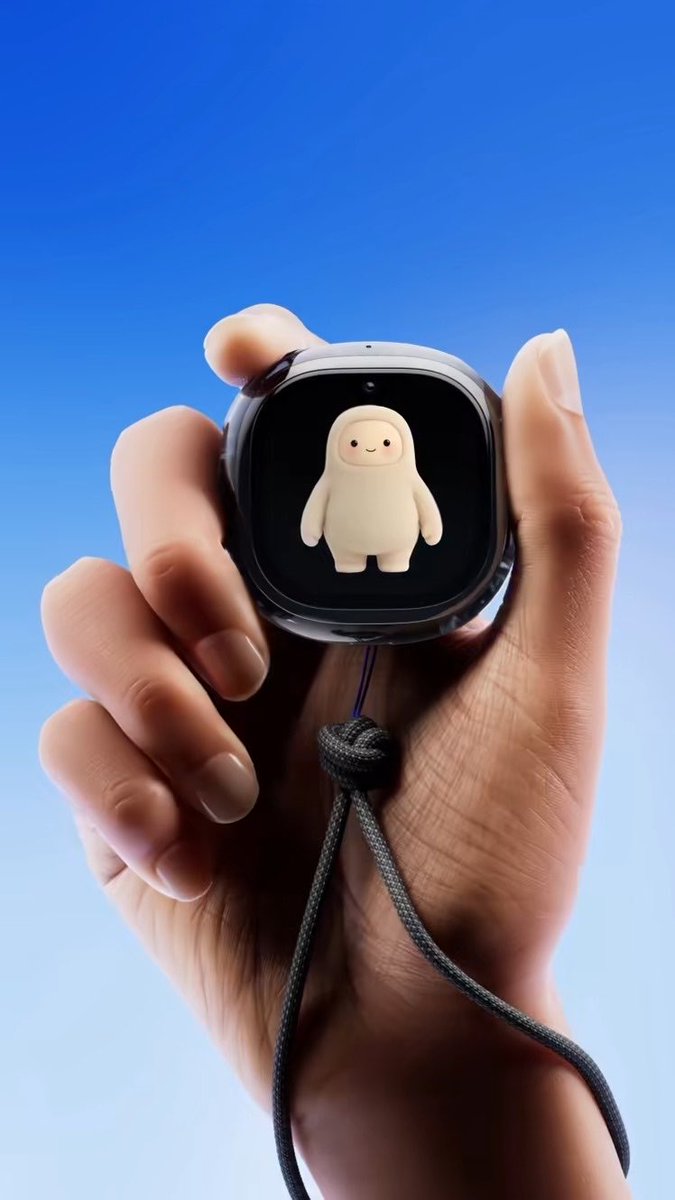
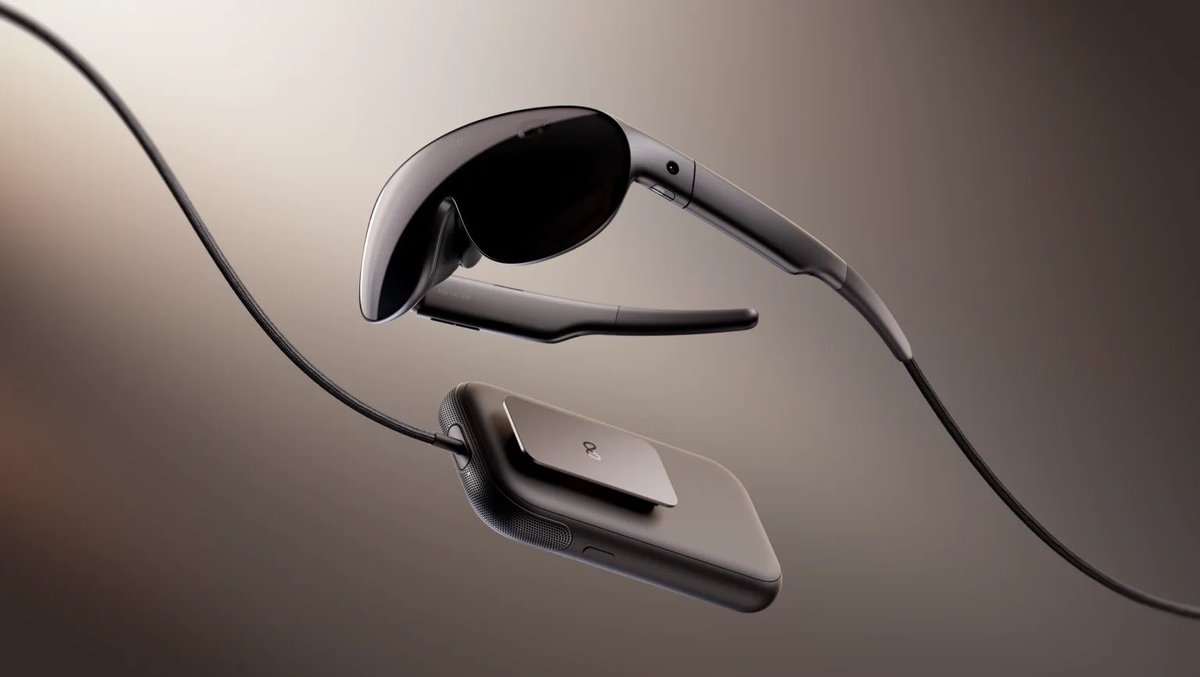
This is the future of AI hardware, guys!! Genuinely one of the best AI projects I've ever seen, where agent built into physical devices Congratulations to Zach and Persona team

Everyone’s been asking what’s next after selling Cal AI. Introducing Persona. Others couldn’t figure out the interface, we did. yourpersona.com/band
I was honestly surprised by how many tokens I was burning on system files My $200 Claude plan could literally get wiped out in a single prompt. The whole 5-hour limit was gone before the task even finished just because the context was clogged right from the start Definitely check how many system files you're feeding it and whether you actually need them If you work with coding agents a lot, this will save you a ton of headache
The dating market is fundamentally broken. I wouldn't go so far as to call it the most broken market, but it's probably one of the most problematic ones today. It's obvious that Tinder, Hinge, and the other popular apps do a pretty poor job of what they're supposed to do. You can see this in the low conversion rate from matches to actual dates, which is usually below 3%, let alone relationships, as well as the demographic imbalance between men and women, which averages around 70/30. But what other solutions are there? One option is a highly involved, professional approach with lots of specialists and significant human involvement: personal matchmakers who conduct long, in-depth interviews and verify real-world information. But that also requires a lot from the person using the service in terms of involvement, time, and, most importantly, money. It's not a mass-market solution. It would be quite expensive, with no guarantee that it would actually work. A faster and simpler solution, such as algorithmic matching, has even more drawbacks. Today, there's no way to understand someone deeply enough within five minutes of signing up, beyond their appearance in photos, which often don't reflect reality very well. So the only real factor we can use to match people is how they look in photos, which we can theoretically score by attractiveness, and perhaps their interests. But things like sense of humor, worldview, mood variability, cleanliness, hygiene, passivity, clinginess, sexual compatibility, addictions, sexual attraction, stubbornness versus agreeableness, talkativeness versus quietness, excessive bluntness, and hundreds of other traits are difficult to assess accurately, even through lengthy interviews or observation. On top of that, people change over time. I think that once a company like Google or Apple seriously enters this market, it could potentially grow several times over, maybe even by an order of magnitude. For context, the market today is worth roughly $10 to $11 billion a year, and people would be willing to pay much more for something that genuinely works. The market is huge. In my view, its current limitations mostly come down to the amount of information we're able to analyze quickly. In theory, it should work something like this: a person downloads an app, or it's already built into their device, whether that's smart glasses, earbuds, or a phone, depending on which device becomes dominant over the next 10 to 15 years. As the person uses it, the system analyzes as wide a range of information about them as possible, from their job and interests to their conversations, health, activity levels, and so on. To produce genuinely good matches, it would need to be an ecosystem product combining things like fitness tracking, the ability to process conversations, some way to understand a person's sense of humor, and much more. And all of that would still have to fit within viable unit economics given the amount of computation involved. That could potentially produce genuinely high-quality matches. But there's one catch. Ultimately, there's still the question of whether a person is willing to actually do something: meet new people, go on dates, invest time and attention, and genuinely take an interest in someone else. Thinking about doing something and actually doing it are two very different things. So the question is whether users will be willing to spend their energy and resources on this at all, especially when, in the near future, possibly even before a service like this kind of personal matchmaking becomes feasible, we'll likely have sex dolls and household robots sophisticated enough to replace human life partners.
The team at Bump figured out the exact thing that once saved Hinge from collapse after its major rebrand and UX overhaul: people always need a natural pretext to break the ice and ease into a conversation. I’ve mentioned before that the real challenge for social and networking apps isn't matching people—that problem was solved ages ago, even if some still struggle with it. The real challenge is keeping that initial spark from dying out right after it starts. In other words: how to help users turn a cold intro into a warm, natural connection. It can be opening prompts like the ones popularized by Tinder or Bumble. Hinge introduced voice prompts and designed interactions so you only start a conversation by reacting to a specific detail on someone’s profile. That makes keeping the dialogue going infinitely easier. A dead-simple mechanic, but it makes a massive difference. Today, Bump combines a messenger, a map, and probably the coolest mechanic I’ve seen for hanging out with friends: in Bump, the context itself is the content. You can see where your friends are in real time, their battery percentage, and what’s currently playing on their Spotify. (Bump integrates with both Apple Music and Spotify to display what you're listening to live). On top of that, it’s packed with fun features and gamified use cases. It genuinely feels like a fresh, top-tier social app for staying connected with your circle.
Good feature, I'm surprised OpenAI hasn't hired this guy as a product designer yet. It would be awesome if there was also a mode where it automatically sends you photos generated by ChatGPT Image 2, showing the entire look or individual items tried on you.

codex for shopping. knows my preferences. multiple merchants. one shopping cart. one checkout.
Do you think it's important to shape your audience around a specific category from the very beginning, through advertising and positioning? Or can this always be corrected later, meaning it's not that critical at the early stage, and it's better to iterate more and try different promotion approaches? I started thinking about this when I noticed I was spending more time researching than actually launching things and creating ads There's still this nagging fear in the back of my mind that your brand could become a favorite among some undesirable customer groups. Your core target audience might slap a stigma on the brand if it starts being used by a category of people they don't want to be associated with Once that happens, it's very hard to wash off: Burberry tried to fix this, and they managed to, though with difficulty. Fred Perry still has a somewhat tarnished status because of communities they were never targeting at all You might think you understand your audience, but there are very subtle things that can wreck your positioning simply because the "wrong" people start using the product. In those cases, you end up having to differentiate through price and advertising channels instead On top of that, demarketing can end up costing you quite a lot, and it's something worth thinking about seriously once you start scaling.

Unfortunately didn’t solve yet
🧩NETWORKING PROBLEM P. 2 Probably the second networking problem (and the main one) — one that even products like Breakfast, the currently very popular Series, or LunchClub don’t solve. They mostly solve the first-contact problem: the ability to find each other in the first

What's your take on using synthetic ICPs for testing hypotheses and new products?
youtu.be/f32W5BEzWN0?si… it's good, simple material for founders to understand the idea of one super-app and one interface for all. The notion that we will use all the possibilities of our devices only through a chat interface (in ChatGPT or Claude via MCP integrations) isn't that good, and it doesn't match with all products. It might belong to professional platforms and tools like Adobe or similar, but it isn't native or useful for people to use for simple interfaces, which we We use them every day and have actually grown accustomed to interacting with them manually. We use intuitive gestures and actions such as drag-and-drop files, zoom on photo, and so on.



Beajee @beajee_me
2 Followers 4 Following Find new way to communicate with https://t.co/cXtYXJ11sw Applied social network for personal AI agents like OpenClaw, Hermes etc.
Charles Noble @CharlesNobleSEO
354 Followers 412 Following Helping SEO agencies & founders earn lasting authority backlinks · Living Links™ · Free link audit → DM
Omuilba @Omuilba862
39 Followers 3K Following
Juli Akter @JuliakterDM7
392 Followers 2K Following My name is Juli Akter. I'm a #digital_marketer, #SEO professional, and #social_media expert.
Iconly Pro | Premium ... @Iconlypro
5K Followers 51 Following 40,000+ Flat, Animated and 3D Icons, Get Full Access 👉https://t.co/HIqNij4nkf
Mark Zuckerberg @finkd
2.5M Followers 759 Following
Kimi.ai @Kimi_Moonshot
387K Followers 138 Following Built by Moonshot AI to empower everyone to be superhuman. PR: [email protected] DC: https://t.co/wBsBTn6fmE


FluidVoice @FluidVoiceApp
3K Followers 441 Following AI Research lab focused on on-device dictation and more. Try out FluidVoice at https://t.co/RRPbdflERx 500K downloads. 12K GitHub stars.
Michael Pfister @pfista
2K Followers 782 Following bootstrapping apps · 𝓵𝓲𝓿𝓲𝓷𝓰 𝓽𝓱𝓮 𝓮𝓷𝓭𝓵𝓮𝓼𝓼 𝓼𝓾𝓶𝓶𝓮𝓻 https://t.co/BvK7CWVP2I · https://t.co/VMu1GIzZUL · https://t.co/LhUXm7aNsA
Riley Brown @rileybrown
260K Followers 3K Following Building an @agentnative_ company. Media: [email protected]
Rahul Singh Bhadoriya @rahulbhadoriiya
29K Followers 2K Following 12 years of Designing Brands + Former @0xpolygon Designer Teaching Design & Built @dacoitdesign & https://t.co/mSCGiL7JyQ
Sankalp Sinha (Left $... @sankalpdomore
5K Followers 230 Following 🛠️ Designer turned solopreneur 🚶♂️ Left $ 15k+ MRR job to bootstrap: ↳ https://t.co/l8tzSQfkIc ↳ https://t.co/nUAV9SuHmE ↳ https://t.co/sdJV6x12aH ↳ https://t.co/68oyQahI1i ↳ https://t.co/Ioxfz7K0Pm


Theo - t3.gg @theo
414K Followers 4K Following Full time CEO @t3dotcodes & @t3dotchat. Part time YouTuber, investor, and developer
Damn Good UI @DamnGoodUI
4K Followers 53 Following Next level UI design inspiration from the best designers 🔥 curated by @joshmillgate
Best Designs On X @bestdesignsonx
16K Followers 836 Following ✨ New posts every hour ⚡️ Editor Picks from X, Instagram, Dribbble, Behance & more 📈 Reaching 320K+ designers monthly


60fps @60fpsdesign
131K Followers 476 Following Endless collection of delightful details from best-in-class apps
Snap Inc. @Snap
88K Followers 11 Following We empower human progress by helping people express themselves, live in the moment, and have fun together through @Snapchat, @LensStudioDev, and @SPECS.




Sahil Lavingia @shl
394K Followers 789 Following now @IRSnews. founder @Gumroad. formerly @Pinterest. in the new Michael Lewis book 🫠
Mario Gabriele @mariogabriele
64K Followers 134 Following Infinite games. Founder of The Generalist. Partner at Hummingbird.
Nikita Bier @nikitabier
1.4M Followers 2K Following unemployed. former head of product @x, ex-founder @thetbhapp (acq by @meta), ex-founder @gasappteam (acq by @discord)

lauren @poteto
220K Followers 911 Following grok @bot at @SpaceXSI. react compiler core team, prev cursor, meta, netflix
Logan Kilpatrick @OfficialLoganK
383K Followers 3K Following Member of technical staff, working on Gemini, @GoogleAIStudio, the Gemini API, & Kaggle. My views!

antimattr (YC F26) @antimattr_one
634 Followers 4 Following building the interface for voice, early access open
Amata @amata_app
8 Followers 26 Following Matchmaking Club. Intentional daters only. Download Amata and get set up on real dates👇
Coffee Meets Bagel @coffeembagel
129K Followers 1K Following ☕💜🥯 The dating app for serious daters. 💌 [email protected]

Karina Repko @karina_repko
4K Followers 452 Following co-founder @getmiora - clinician-led protocols for performance & longevity #healthmaxxing

leo @leodavincs3
11K Followers 188 Following Ne yapıldığı ile değil, nasıl yapıldığı ile ilgileniyorum.
Liubov Tsybulska @TsybulskaLiubov
38K Followers 605 Following hybrid warfare, stratcom expert. Founder of @StratcomCentre Former head of @HWAG_ucmc, advisor to @MFA_Ukraine, @GeneralStaffUA Head of Join Ukraine NGO
Claude @claudeai
2.0M Followers 2 Following Claude is an AI assistant built by @anthropicai to be safe, accurate, and secure. Talk to Claude on https://t.co/ZhTwG8d1e5 or download the app.
Anthropic @AnthropicAI
1.8M Followers 2 Following We're an AI safety and research company that builds reliable, interpretable, and steerable AI systems. Talk to our AI assistant @claudeai on https://t.co/FhDI3KQh0n.
Beajee @beajee_me
2 Followers 4 Following Find new way to communicate with https://t.co/cXtYXJ11sw Applied social network for personal AI agents like OpenClaw, Hermes etc.You might like


















