

United @GnRRF
Joined January 2014-
Tweets12
-
Followers8
-
Following163
-
Likes8
Feynman on the state of "confusion" ✍️ When you're thinking about something that you don't understand, you have a terrible, uncomfortable feeling called confusion. It's a very difficult and unhappy business. And so most of the time you're rather unhappy, actually, with this confusion. You can't penetrate this thing. Now, is the confusion's because we're all some kind of apes that are kind of stupid working against this, trying to figure out how to put the two sticks together to reach the banana and we can't quite make it, the idea? And I get this feeling all the time that I'm an ape trying to put two sticks together, so I always feel stupid. Once in a while, though, the sticks go together on me and I reach the banana. 📷 Caltech Archives Image

Feynman and Magic The subject of quantum gravity came up and Penrose and Feynman got into a heated argument. Penrose said, Feynman was so quick, he was usually about five steps ahead of me at any given point. Sometimes he didn't listen to what I was saying. The whole thing was mentally exhausting. I was completely drained at the end of the session. I have never encountered anyone so quick before. What Penrose and many other physicists didn't realize was the reason that accounted for Feynman's quickness on many matters in physics. Feynman thought about some of these areas in great depth and for long periods of time. A topic like quantum gravity would be one that Feynman had spent countless hours thinking about. It wasn't all off the cuff. infoproc.blogspot.com/2011/02/feynma…

@hsu_steve explaining why Richard Feynman’s seemingly instant genius wasn't magical intuition, but the result of obsessively mulling over a finite set of hard problems long before anyone asked.
Please welcome to the world a beautiful new geometric object, to do with a problem i’ve always loved. claude really contains multitudes:D Does S^6 admit a complex structure? Yup

@ultima_shifl @TheZvi I also think that it’s often useful to focus on small problems where one can meaningfully contribute, rather than trying to tackle the giant problem head on. Perhaps this is something one learns by doing math research ;-P.

I am not a professional mathematician (do have a BSc though :)) Historically math was never just about proofs. Newton treated infinite series and calculus problems before the foundations were made rigorous - centuries later! His route to discovery was often "experimental." Gauss did something similar. As a teenager, he counted primes in blocks, compared the results with logarithms, and noticed that their density looked like (1/\log x). He kept testing the idea whenever new prime tables appeared. A proof arrived only about a century later. This was normal: calculate, draw figures, inspect tables, try examples, make a conjecture, and then search for an argument. A lot of the math (or maybe even all of it) developed in that period ended up directly relevant for physics. The modern ideal of definitions first, perfect rigor throughout, and mathematics as an abstract axiomatic system became dominant mainly in the 20th centuries. Many of my colleagues think it destroyed math. It certainly led to a huge amount of math that has no known application outside the field—and may never have one. The true most important “utility function” of a mathematician is not the number of problems they solve, or the number of counterexamples they find to some random conjectures, but the number of fertile ideas, definitions, and structures they create for other mathematicians. There is no other consumer to most ideas in modern math other than human mathematicians. In this sense, math is not "done" *yet*.

Academia is fascinating. You spend years becoming the world’s expert on something eight people care about, and three of them disagree with you.
@quantum_geoff @ZoharKo I think this discussion is revealing. The real issue is that the question is under-specified. A key part of research is choosing idealizations, adding assumptions, and classifying cases. Current AI can be strong on well-posed problems, but less reliable at this modeling stage
@ThomasVanRiet2 @CburgesCliff You can find the video on PI's official YouTube channel.

Embrace the unique. Perform the unreal. The Nike NOLA Gumbo League Collection, available 2/14.


AD: You could be a VIP at the #BBVARisingStars game courtesy of @BBVACompass NO PURCH NECESSARY.Sweeps ends 1/31/14. bit.ly/LUZT6l



Deglov schiriwavik @Deglovvivaldi
1 Followers 34 Following
Akshat Gairola @akshat_gairola
55 Followers 1K Following
mrkriss angeles @mrkrissangeles
133 Followers 2K Following el amor nos une. sin maldad gracias a dios la vida.y la verdad☆☆

DarciLukanov @DarciLukanov
91 Followers 385 Following Her favorite kind of hug is one from behind when you wraps your arms around her waist when she least expect it.
JolynVenturini @JolynVenturini
117 Followers 576 Following Truth is, if I could be with anyone, it would still be you. Every time.

Grant Sanderson @3blue1brown
461K Followers 374 Following Pi creature caretaker. Contact/faq: https://t.co/brZwdQfdif
The Darkest Matter @Dr_Dark_Matter_
5K Followers 6K Following Royal Society Dorothy Hodgkin Fellow; Senior R Fellow. Prev @LANL Quantum Number Theory: https://t.co/LljeJ2LCCo https://t.co/LpCPfcvPKY
Timothy Nguyen @IAmTimNguyen
12K Followers 477 Following Machine learning researcher at @GoogleDeepMind & mathematician. Host of The Cartesian Cafe podcast. All opinions are my own.
Condensed Matter Theo... @condensed_the
12K Followers 0 Following Condensed Matter Theory Center (CMTC) at @UofMaryland is a research center for condensed matter physics.
Fermat's Library @fermatslibrary
793K Followers 4 Following A platform for illuminating academic papers. We annotate and share a paper every week. Save, annotate and share papers with anyone: https://t.co/0o2Pls3jmo
Alex Kontorovich @AlexKontorovich
39K Followers 850 Following Mathematician (Distinguished Professor of #Math at @RutgersU). Here to learn about research, education, and community. Let’s build something together.
Hal Tasaki @Hal_Tasaki
30K Followers 4 Following book lover, music lover, mathematical physicist / icon by Mari Okazaki 田崎晴明【教員/数理物理学者】メンションは読まないので、ご用のある方はメールをください。アイコンはなんとおかざき真里さんに描いてもらいました!
Donald J. Trump @realDonaldTrump
111.9M Followers 53 Following 45th & 47th President of the United States of America🇺🇸

Unofficial Mirror: Te... @TerryTao31415
493 Followers 35 Following Unofficial automated mirror of https://t.co/Ec0r0Tr1ur Not affiliated with Terence Tao.
刘江/LIU Jiang @turingbook
55K Followers 3K Following Exploring AGI. Co-Founder of Turing Company. ex Meituan, BAAI, CSDN. 图灵联合创始人。曾任:北京智源人工智能研究院副院长,CSDN&《程序员》杂志总编,美团技术学院院长。
Lijie Chen @wjmzbmr1
12K Followers 453 Following Assistant professor at UC Berkeley EECS; reasoning at OpenAI Previously: Miller Postdoctoral Fellow at UC Berkeley, Ph.D. in MIT EECS
Scott Armstrong @scottnarmstrong
4K Followers 842 Following CNRS DR at LJLL/Sorbonne and Math Prof at Courant/NYU. Research in math physics, probability, analysis/PDE https://t.co/YjoUbF5d13
Deane Yang @deaneyang
593 Followers 36 Following
Ziming Liu @ZimingLiu11
15K Followers 894 Following Assistant Professor @Tsinghua_Uni CollegeAI. Chief Scientist @MetaCircle_AI Science of AI, AI for AI, AI for Science, KAN.
Ricardo Pérez-Marco @rperezmarco
9K Followers 2K Following Mathematician, speculator, bitcoiner, chess & poker player, gambler and free forever.
Thomas Bloom @thomasfbloom
6K Followers 107 Following Royal Society University Research Fellow at the University of Manchester. Mathematician and owner of https://t.co/SWVqqnq9hn. He/him/his.
Leo C. Stein is @duet... @duetosymmetry
17K Followers 1K Following Physics Prof @ U of MS. Black holes, gravitational waves, general relativity & beyond. Formerly @Caltech @MIT @Cornell. Need thin pizza + fruity coffee. He/him
Péter Ország @POrszag
10 Followers 11 Following
David Deutsch @DavidDeutschOxf
177K Followers 79 Following Physicist. Author of The Fabric of Reality and The Beginning of Infinity
Lev Reyzin @lreyzin
5K Followers 193 Following Professor, https://t.co/HSHOQfSuMi. Co-director, https://t.co/RbcEQzRCQ8. Author, https://t.co/Ki6ST4qXU6. ML, data science, AI, and CS theory researcher.

QC @QiaochuYuan
42K Followers 693 Following deeply unqualified AI hot take haver but everyone who's actually qualified is busy


Aram Harrow @quantum_aram
4K Followers 467 Following

Bartosz Naskręcki @nasqret
15K Followers 635 Following Mathematician | Vice-Dean @UAM_Poznan | Researcher @ccaiwut | Owner of https://t.co/lEspgf36Pg | Mathematics, AI and programming
Mehtaab Sawhney @mehtaab_sawhney
4K Followers 7 Following

Tobias Osborne @OsborneTob3457
344 Followers 44 Following
橋本幸士 Koji Has... @hashimotostring
25K Followers 167 Following 理論物理学者.京都大学教授. 専門は素粒子論,弦理論,量子重力理論. 学習物理学領域代表.
Shouqiao Wang @Qiaoqiao2001
4K Followers 776 Following PhD candidate @Columbia_Biz; prev @PKU1898 School of Mathematical Sciences
Xi Yin @XiYin137
1K Followers 143 Following Thinking about how to do physics in the new era. MTS @OpenAI, P @Harvard


Rak-Kyeong Seong @rak_seong
102 Followers 183 Following Associate Professor in Mathematics at UNIST, Working on QFT and String Theory, and applications of AI/ML
Bahram Shakerin @BahramShakerin
5K Followers 399 Following PhD in hep-th/ph. Interested in Theoretical Physics, Fundamental Physics, Philosophy, Art & Aesthetics. I am an Existentialist. #QuantumGravity
Lex Fridman @lexfridman
5.6M Followers 697 Following Host of Lex Fridman Podcast. Interested in robots and humans.
Binah 🕰️🌌🛸... @cosmicfibretion
25K Followers 2K Following mystical physicist in an extraliminal space of events to take humanity toward the singularity of knowledge and heal Earth📙divine cosmic intelligence

Physics In History @PhysInHistory
1.1M Followers 0 Following Photos from the history of physics | © with mentioned Archives. Shared for educational purposes. Einstein portrait © Ullsteinbild. Subscribe for curated papers.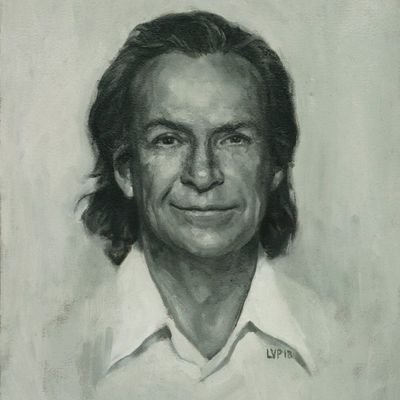
Prof. Feynman @ProfFeynman
1.3M Followers 0 Following A universe of atoms, an atom in the universe. Tribute to the great explainer. Tweets about Science and Wisdom. Portrait by L.V Patten.
big brane boi @bcubeddd
1K Followers 261 Following theoretical physicist not in harmony with the average roommate
Zhencheng Wang @zcw_phys
66 Followers 321 Following Theoretical physics postdoc @UofIllinois. PhD @ucsantabarbaraYou might like

















