

Red Arroz @RedArrozes
The Lindum, Lincoln Joined March 2022-
Tweets171
-
Followers11
-
Following73
-
Likes4K

Siempre me ha llamado la atención lo revolucionaria que fue Diana Rigg, sobre todo en los 60. Descubrió que en Los Vengadores cobraba menos que el camarógrafo (90 libras frente a 120 a la semana) y, en lugar de callarse, lo dijo en voz alta y lo llevó a la prensa. En aquella época eso era casi impensable. Se esperaba que una actriz estuviera agradecida, callada y sonriente. Ella no, y por esa razón, la prensa la llamó “malagradecida”, “diva” y “mercenaria”. Se quedó completamente sola…ni siquiera Patrick Macnee, a quien ella siempre admiró, la apoyó públicamente. Aun así no dio un paso atrás y consiguió que le doblaran el sueldo. Para mí eso fue de una valentía enorme. No era solo pedir más dinero, era atreverse a cuestionar en público cómo se trataba a las mujeres en la industria en un momento en el que casi nadie lo hacía. Fue de las primeras en plantar cara de verdad. Y esa misma actitud se veía en su trabajo. Como Emma Peel (Los Vengadores) no se limitó a ponerse el traje de cuero y sonreír. Entrenó judo de verdad, participó en la coreografía de muchas de sus peleas y le dio al personaje un ingenio seco y una inteligencia que la convertían en la más lista de la habitación. Odiaba que la redujeran a un simple reclamo visual. “No soy un juguete. Soy una actriz”, decía. Para mí esa es una de las cosas más potentes de su interpretación, consiguió ser icónica y sexi sin dejar de ser respetada como actriz. Décadas después, rodeada de actores mucho más jóvenes en Juego de Tronos, volvió a demostrar ese carácter como Olenna Tyrell. “Dile a Cersei que fui yo” no es solo una de las mejores líneas de la serie, es el resumen de cómo ella entendía el poder. Pocas palabras, máximo impacto. Al final, lo que más me impresiona de Diana Rigg es que nunca tuvo que elegir entre ser una estrella y ser una persona que se plantaba. Podía ser elegante, carismática y letal con una frase… y al mismo tiempo dejar claro que el talento y el respeto no se negocian. En los 60 eso era revolucionario. Y sigue siendo más actual de lo que debería.


Marc Haynes recordó una vez: «Cuando tenía siete años, en 1983, vi a Roger Moore sentado en el aeropuerto de Niza. Entusiasmado, le pedí a mi abuelo que fuéramos a pedirle un autógrafo. Mi abuelo, sin conocer a James Bond, le dijo simplemente: “Mi nieto dice que usted es famoso. ¿Puede firmar esto?”. Roger, con una amabilidad excepcional, me preguntó mi nombre y firmó con buenos deseos. Sin embargo, al volver a nuestros asientos, advertí que no decía “James Bond”. Regresamos y mi abuelo le comentó que había firmado con el nombre equivocado. Roger Moore me llamó, me miró y, en voz baja, me susurró: “Debo firmar como Roger Moore, porque si no, Blofeld podría encontrarme aquí”. Muchos años después, mientras trabajábamos juntos en una filmación para UNICEF, le conté la historia y, con su habitual encanto, me dijo: “No lo recuerdo, pero me alegra que hayas conocido a James Bond”. Luego, justo antes de marcharse, se acercó de nuevo, levantó una ceja y me dijo: “Claro que recuerdo nuestro encuentro en Niza… pero no podía decirlo, esos camarógrafos podrían estar trabajando para Blofeld”».


"That's not a knife... that's a knife." 🔪
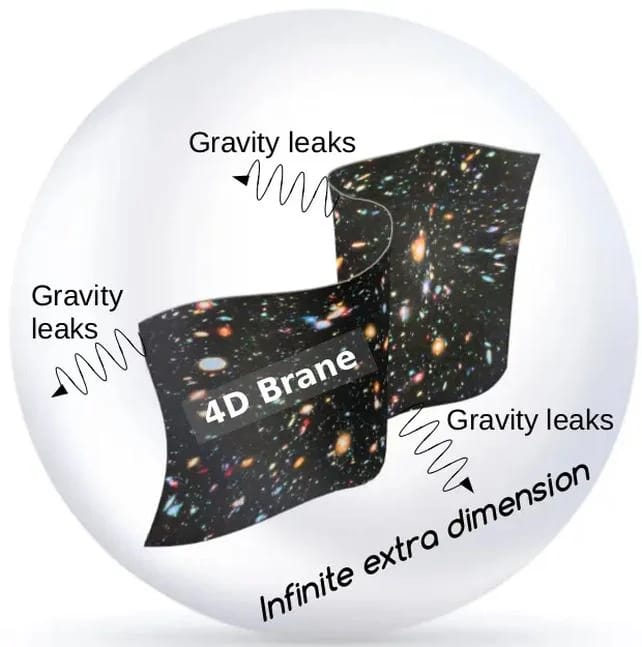
A new theoretical study suggests that primordial black holes could provide an unexpected way to probe whether our Universe contains a hidden extra spatial dimension. The idea comes from the so-called Dark Dimension Scenario, a framework motivated by quantum-gravity arguments in which the familiar four-dimensional spacetime is embedded in a larger five-dimensional structure. Ordinary Standard Model particles would remain confined to our four-dimensional “brane”, while gravity could propagate into an additional compact spatial dimension roughly on the micron scale. Primordial black holes, or PBHs, are hypothetical black holes that may have formed during the first moments after the Big Bang, rather than from the collapse of massive stars. Because they could be extremely small, their gravitational fields might probe distances at which the extra dimension becomes physically relevant. Scientists examined several established mechanisms proposed for producing PBHs in the early Universe, including inflationary density fluctuations, cosmological phase transitions and the collapse of cosmic-string loops. Their analysis finds that, within the Dark Dimension Scenario and in the absence of exotic new low-energy physics, viable primordial black holes would inevitably become five-dimensional objects. The distinction depends on the relationship between the black hole’s horizon and the size of the extra dimension. When the horizon is much larger than the compact dimension, the black hole behaves essentially as an ordinary four-dimensional object. But sufficiently small black holes can gravitationally access the extra spatial direction, changing their geometry and physical properties. For PBHs produced during early-Universe phase transitions, the researchers argue that configurations that initially resemble four-dimensional black holes would become unstable and undergo a Gregory-Laflamme-type transition into five-dimensional objects. This instability is familiar from higher-dimensional gravity, where extended black objects can become unstable when their geometry reaches certain scales. For primordial black holes produced by collapsing cosmic strings, the situation is even more direct: under the assumptions of the model, they would form as five-dimensional black holes from the beginning. The extra dimension would also substantially modify Hawking evaporation. In standard four-dimensional physics, sufficiently small black holes lose energy rapidly through Hawking radiation and eventually disappear. Five-dimensional black holes of comparable mass behave differently: their temperature, horizon size and evaporation rate are modified, allowing some of them to survive much longer. The calculations suggest that PBHs produced from cosmic strings could, under certain conditions, have lifetimes comparable to the approximately 13.8-billion-year age of the Universe. If such objects were created in the early cosmos, some might therefore still exist today or could only now be reaching the final stages of evaporation. The authors also discuss a particularly speculative observational possibility involving the extremely energetic neutrino detected by the KM3NeT observatory. In the five-dimensional scenario, an evaporating primordial black hole could potentially emit particles into the higher-dimensional bulk. Those particles might subsequently produce a neutrino detectable on our brane, potentially offering an explanation for why such a high-energy neutrino could appear without an obvious accompanying high-energy photon signal. The connection is intriguing because the observed neutrino energy is close to the characteristic five-dimensional Planck scale predicted in this framework, but it remains a hypothesis rather than evidence for either primordial black holes or an extra dimension. The significance of the work is therefore not that a fifth dimension has been discovered, but that it identifies possible physical consequences if such a dimension exists. Primordial black holes would then behave very differently from their conventional four-dimensional counterparts, affecting their formation, stability, evaporation and possible observational signatures. Detecting those signatures could provide an indirect test of the dimensional structure of spacetime at scales that cannot currently be explored in laboratory experiments. For now, however, both primordial black holes and the dark dimension remain hypothetical, making this an interesting bridge between quantum-gravity theory, early-Universe cosmology and potentially observable astrophysics. 👉 journals.aps.org/prd/accepted/1…

Bro Caught God Live on Camera

Who Remembers.


Scientists found Earth’s microbes could survive at the Moon’s south pole. They can hide in dark craters to avoid deadly radiation.


Who remembers this laugh ? 🤣

✨Phil Collins: The “IT Guy” Who Silenced an Entire Stadium The clip of Phil Collins singing and drumming “In the Air Tonight” in front of tens of thousands of people always leaves a strong impression because of a striking contrast: he’s wearing a simple white shirt and a headset mic, looking no different from an ordinary office IT guy, yet he makes the whole stadium shake. The song was released in 1981 during the breakdown of his marriage. Most of the lyrics were improvised, and the famous drum fill with its gated reverb effect was almost accidental. No dramatic backstory or flashy outfits were needed—just raw emotion and refined skill. The real power lies in authenticity. In an era when many artists carefully craft every detail of their image, Phil Collins simply sits there, completely focused on the drums and his voice. When the iconic drum fill hits, there’s no need for theatrical performance—genuine talent and emotion are more than enough to captivate the crowd. This reminds me that true talent doesn’t need a glamorous exterior to be recognized. Sometimes, the most ordinary-looking person is the one who can make an entire stadium fall silent and listen.
That was wonderful wasn’t it !


One of my Favorite Movies! 🍿
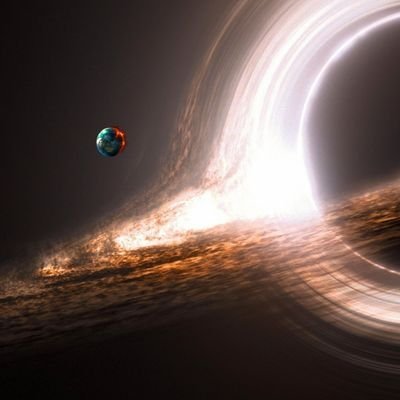
Timelapse of Europa & Io orbiting Jupiter, captured by the Cassini space probe
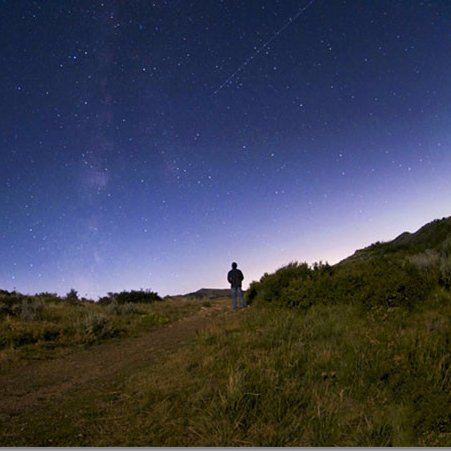
Arthur C. Clarke on BBC's Horizon in 1964, when he gave some astonishing predictions about the future.

One of the greatest negotiation scenes in war movie history.
Astronomers have made the first confirmed detection of a genuine sugar molecule in the interstellar medium, identifying erythrulose in the molecular cloud G+0.693−0.027 near the centre of the Milky Way, approximately 8.2 kiloparsecs, or 26,700 light-years, from Earth. Erythrulose is a monosaccharide containing four carbon atoms and belongs to the ketose family. On Earth, it occurs naturally in fruits such as raspberries and is also used in some self-tanning products, although its astronomical importance lies in its connection to prebiotic chemistry rather than its terrestrial uses. The discovery clarifies an important chemical distinction. Glycolaldehyde has previously been detected in several interstellar environments and is sometimes informally described as the simplest sugar, but chemically it is a hydroxyaldehyde rather than a true monosaccharide. Erythrulose therefore represents the first molecule satisfying the stricter chemical definition of a sugar to be identified directly in the gas and dust between stars. It is also the first interstellar molecule detected with four oxygen atoms, the largest non-cyclic molecule yet identified in this environment by number of constituent atoms, and only the second chiral molecule reported in interstellar space. The international research team used highly sensitive spectral surveys obtained with the 40-metre Yebes radio telescope in Guadalajara and the IRAM 30-metre telescope at Pico Veleta in Granada. Molecules rotating in space emit or absorb radiation at characteristic radio frequencies, producing a spectral fingerprint that can be compared with measurements made in the laboratory. Recent experiments using ultrafast laser vaporisation had provided the accurate gas-phase rotational spectrum of erythrulose needed for this comparison. The astronomers identified 12 groups of spectral features corresponding to 17 rotational transitions, including six lines with little contamination from other molecules. Their analysis estimated that the probability of these six clean signals aligning by chance was about 0.2%, providing strong statistical support for the identification. Unexpectedly, erythrulose appears to be at least eight to seventeen times more abundant in the cloud than the simpler three-carbon sugars glyceraldehyde and dihydroxyacetone, neither of which was detected. This challenges the intuitive expectation that molecular abundance should steadily decline as additional carbon atoms are added. Quantum-chemical calculations and astrochemical simulations instead indicate that erythrulose can form efficiently on the icy surfaces of microscopic interstellar dust grains through reactions involving abundant two-carbon compounds, especially glycolaldehyde and ethylene glycol. Radiation and cosmic rays can drive reactions within these ices, while shocks travelling through the cloud may later release the newly formed molecules into the gas, where radio telescopes can detect them. The result is relevant to research on the origin of life because sugars perform fundamental biological functions. They provide metabolic energy, form structural components of cells and constitute the molecular backbones of RNA and DNA. Producing sufficient concentrations of sugars under plausible conditions on the primitive Earth remains difficult in laboratory experiments, whereas ribose, glucose and other sugars have been found in meteorites and in samples returned from asteroid Bennu. The detection of erythrulose shows directly that genuine monosaccharides can form before stars and planets are fully assembled, allowing them or their chemical descendants to become incorporated into asteroids, comets and young planetary systems. Erythrulose is not itself the ribose used in RNA, but ketose sugars can rearrange into related aldose sugars when exposed to liquid water. Erythrulose can therefore produce erythrose and threose, molecules involved in chemical pathways that may lead towards ribose or towards simpler nucleic-acid analogues such as threose nucleic acid. Based on the measured abundance and several assumptions about the material delivered by primitive impactors, the researchers estimate that between roughly half a million and fifty million tonnes of erythrulose might have reached the early Earth. This figure is highly model-dependent, however, and the existence and intensity of a discrete Late Heavy Bombardment remain debated. The discovery does not demonstrate that life exists elsewhere, that interstellar sugars directly created life on Earth or that one molecular handedness was preferentially produced. Radio observations identify the molecule but cannot determine whether one of its mirror-image forms is more abundant. Nevertheless, the finding provides strong evidence that interstellar clouds are capable of producing relatively complex, biologically relevant organic chemistry. It strengthens the possibility that young planets throughout the Galaxy may inherit some of the chemical ingredients required for prebiotic reactions rather than having to manufacture all of them from simpler substances after they form. 👉 nature.com/articles/s4155…
@lincsblogger Or had their daughter kidnapped.
@watergypsi Feel you, also a Friday, and we spoke of mum and dad.
@watergypsi Snap. Consciousness never dies 🧬
What if most observers in the universe aren’t real? Some ideas in physics sound strange because they are speculative. Others sound strange because they take our best theories seriously and follow them to uncomfortable conclusions. Boltzmann brains belong to the second category. The idea begins with a simple fact from thermodynamics: rare fluctuations can happen. In a system with enough time, particles can briefly arrange themselves into unlikely configurations. Most of the time, disorder increases. That is the second law of thermodynamics. But on very long timescales, tiny local reversals of disorder are not impossible. They are just fantastically unlikely. Ludwig Boltzmann, one of the founders of statistical mechanics, helped show that entropy is not just a vague measure of “messiness.” It is connected to probability. A high-entropy state is likely because there are many ways to arrange a system that look disordered. A low-entropy state is unlikely because there are very few ways to arrange matter into something ordered. That insight changed physics. But it also opened the door to a very strange question. If the universe lasts long enough, and if random fluctuations can occasionally produce ordered structures, could a conscious observer appear by chance? Not a person born from evolution. Not a brain inside a skull produced by biology. But a temporary, self-aware structure assembled by a random fluctuation in a vast, old universe. It might exist for a moment, complete with memories, perceptions, and the illusion of a coherent past. That hypothetical object is called a Boltzmann brain. At first, it sounds absurd. And it is absurd in any ordinary sense. The probability of a functioning brain fluctuating into existence from thermal noise is unimaginably tiny. But the problem is not whether it is likely in normal time. The problem is what happens if the universe has an almost unlimited future. In an extremely long-lived universe, even absurdly rare events may eventually occur. If ordinary observers like us exist only during a finite period, while random fluctuation observers can appear over an unlimited future, then the number of Boltzmann brains could eventually outnumber ordinary observers. And that is where the trouble begins. If a cosmological model predicts that most observers are Boltzmann brains, then statistically we should expect to be one of them. But that would mean our memories, our perception of a consistent universe, and the evidence we think we have for cosmic history could all be random artifacts. That is not just weird. It is a serious problem. Science depends on the assumption that our observations are broadly reliable. If a theory predicts that most observers are disordered fluctuations with false memories, then the theory undermines the very observations used to support it. In other words, a universe dominated by Boltzmann brains becomes self-defeating. This is why physicists use Boltzmann brains as a kind of stress test for cosmological theories. They are not usually proposed as real objects we expect to find. Instead, they are used to ask whether a model of the universe gives sensible probabilities for observers. A good cosmological model should predict that observers like us arise from ordinary cosmic evolution: stars, planets, chemistry, biology, and long histories. It should not predict that most observers are isolated freak fluctuations in the distant future. The problem becomes especially relevant in universes with dark energy. If dark energy behaves like a true cosmological constant, the universe may approach a state known as de Sitter space, expanding forever while maintaining a cosmic horizon and a tiny temperature. In such a universe, thermal fluctuations can continue for unimaginable lengths of time. That raises the question: over infinite time, do Boltzmann brains become inevitable? Different proposed solutions exist. One possibility is that the universe does not last forever in the required way. It might decay into another vacuum state before Boltzmann brains dominate. Another is that our understanding of quantum gravity, horizons, or probability in cosmology is incomplete. Some physicists argue that the correct measure of probabilities in an eternally inflating universe may avoid the problem, though this remains deeply debated. There is also a more direct possibility: any theory that predicts Boltzmann brains outnumber ordinary observers should simply be rejected. That may sound philosophical, but it has teeth. If a theory predicts that our observations are probably unreliable, then it cannot consistently be used to explain those observations. This is why the Boltzmann brain problem matters. It is not just a bizarre thought experiment. It exposes a tension between cosmology, probability, entropy, and what it means to be an observer. The most unsettling part is that Boltzmann brains force us to ask why our universe began in such a special state. The early universe had extraordinarily low entropy. That low entropy is what allowed structure to form, stars to burn, planets to develop, and life to emerge. If the universe had started in a more typical high-entropy state, none of that would have happened. So the existence of ordinary observers like us is tied to one of the deepest mysteries in physics: why did the universe begin so ordered? Boltzmann brains are a warning sign. They remind us that not every mathematically possible universe is a physically acceptable one. A model must not only fit the data. It must also explain why observers capable of measuring that data arise in a coherent cosmic history. So are we Boltzmann brains? Almost certainly not. The world we observe is too consistent, too structured, and too deeply connected across scales. The cosmic microwave background, the evolution of galaxies, the birth of stars and planets, biology, and memory all fit into a coherent history. That is exactly what we expect if we are ordinary observers in a universe with a real past. But the fact that we have to ask the question at all is revealing. Boltzmann brains are not really about brains appearing in space. They are about whether our theories of the universe can explain why reality is ordered enough for observers to exist in the first place. And that makes them one of the strangest and most useful thought experiments in modern cosmology.


Shoudde @ShouddebAa0
51 Followers 2K Following
EthnicallyEnglish Lat... @where4artthow
5K Followers 7K Following Wherefore art thou, UK Culture? I'm sure we had one when I were nobbut a lad It has been suggested UK doesn't have a culture How very dare you!
Dr Peter Caddick-Adam... @militaryhistori
90K Followers 92K Following Welcome to Planet Caddick: wordsmith & war professor; NATO historian; ex-reserve officer; 9 books; defence journalist @TheCriticMag/@BBC/@SkyNews
Fed Up Lady! @scamptonlady
162 Followers 222 Following Sick of the state of this country and what politicians have allowed to happen to us, sick of the cover-ups! Reform UK supporter. No DMs please.
Rachael @rachaelrattus
176 Followers 386 Following #RAFScamptonSaved wife, mother, grandmother, adult human female
Tony ASTON @TonyASTON18
78 Followers 104 Following Author. Periodic radio co-presenter. Fellow - Security Institute. Member - Society of Authors and Historical Writers Assoc. Public Speaker. Loves B'ham City FC.

lexxy @usilox47
2K Followers 4K Following 1.5 million miles motorcyclist,loves honesty, our country,nature, animals and straight talking.Amateur Investor since 1994,Crypto fan. 🏴
Golden Retriever Love... @GoldenLoversFan
696 Followers 3K Following 👉 Welcome to @GoldenLoversFan 🐕 We share daily #goldenretriever Contents 👇visit store👇
VitaminBlog @GistVitamin
58 Followers 411 Following Vitamin 1000mg Gist We supply a dictary supplement of Gist 🗞️🚨 News | fashion | lifestyle | entertainment
Writer's Glock ✍�... @WritersGlock
81 Followers 1K Following Shoot from the hip! Brokers, Into The Fire, Empty Quarter, Kunoichi, Imker🐝 Wolf🐺 Nothing Matters🚀 Matryoshka🪆 Will To Power, Most Likely Outcome 🤖✨📽️
Lincolnshire Life @LincsLife
11K Followers 845 Following The biggest selling and favourite county magazine, established 1961. Free monthly newsletter: https://t.co/SGgutm8TRy
Erika @ExploreCosmos_
60K Followers 901 Following Canadian astrophysicist focused on extragalactic astronomy & early-universe galaxies. Seeking mountain peaks. Writing through the chaos; riding away from it.
Lincolnshire Blogger @lincsblogger
14K Followers 13K Following Supporting #Lincolnshire individuals, businesses & charities in my spare time. Likes ☕️🍰📚👠🐘 - in no particular order! #LincolnshireEvents
Brian Cox @ProfBrianCox
3.0M Followers 1K Following Professor of Particle Physics at The University of Manchester
Prof. Frank McDonough @FXMC1957
88K Followers 4K Following Historian. I post a selection of facts that happened on This Day in History at 9:00 AM (BST). It’s a daily journey to inform, educate and entertain.
EthnicallyEnglish Lat... @where4artthow
5K Followers 7K Following Wherefore art thou, UK Culture? I'm sure we had one when I were nobbut a lad It has been suggested UK doesn't have a culture How very dare you!
Lightning Town @LightningTown
389 Followers 7 Following All things RAF Binbrook, XS416, XS459, SHQ, Lightning Legends, Tales from the Engine Bay!
Dr Peter Caddick-Adam... @militaryhistori
90K Followers 92K Following Welcome to Planet Caddick: wordsmith & war professor; NATO historian; ex-reserve officer; 9 books; defence journalist @TheCriticMag/@BBC/@SkyNews
Jeremy Corbyn @jeremycorbyn
2.5M Followers 3K Following MP for Islington North. Founder of the @corbyn_project. Parliamentary Leader of @thisisyourparty.
RAF Metheringham @RafMetheringham
3K Followers 257 Following This channel is no longer monitored please go to the website for information about visiting and how you can support the work of volunteers at MAVC. Thank you.
Dr Dan Ellin @danmadmorgan
2K Followers 1K Following Historian, Gremlinologist, musician, and father. @IntBCC Digital Archivist @unilincoln. All views my own. He/him.
Kanishka Narayan MP @KanishkaNarayan
14K Followers 279 Following Labour MP for the Vale of Glamorgan | Minister for AI 🏴🇬🇧
Fed Up Lady! @scamptonlady
162 Followers 222 Following Sick of the state of this country and what politicians have allowed to happen to us, sick of the cover-ups! Reform UK supporter. No DMs please.
Rachael @rachaelrattus
176 Followers 386 Following #RAFScamptonSaved wife, mother, grandmother, adult human female
Rachel Belcher @_RachelBelcher_
325 Followers 607 Following Senior Public Health Officer, Public Health. These views are my own.
Dambusters Inn @DambustersInn
225 Followers 0 Following
Martin-Baker @MB_EjectEject
37K Followers 396 Following Official X account of Martin-Baker, the world leading manufacturer of Ejection Seats. 🔻 We've saved 7,831 aircrew lives from around the world to date.
Flightradar24 @flightradar24
2.3M Followers 655 Following Track air traffic in real time from all around the world! Apps: https://t.co/AnZhJUIrBg | FAQ: https://t.co/WkTgAaePHs | Support: https://t.co/BomORktp7R
RAF Ingham @RAFIngham
1K Followers 370 Following The Founders of Polish Bomber Squadrons Centre at RAF Ingham
Tony ASTON @TonyASTON18
78 Followers 104 Following Author. Periodic radio co-presenter. Fellow - Security Institute. Member - Society of Authors and Historical Writers Assoc. Public Speaker. Loves B'ham City FC.
Gigi & James Garner @MavrocksGirl
44K Followers 27K Following DAUGHTER OF ACTOR JAMES GARNER-Artist, Published Author, Songwriter, ANIMAL RESCUER for 30 YEARS! Running 501(c)3 called the JAMES GARNER ANIMAL RESCUE FUND🐶
Trev Clark's Obscure ... @clark_aviation
47K Followers 906 Following Posting from the obscure corners of aviation history! Ex-@RoyalAirForce, former Curator of @MuseumTangmere, now a volunteer aviation specialist @PDHeritageCent.
Spitfires.com @spitfiresdotcom
14K Followers 533 Following The home of G-IRTY, The Silver Spitfire, G-ILDA & G-TCHI, TR9 two seat Spitfires and is the birthplace of modern day #SpitfireTraining & #SpitfireFlights
Newark and Sherwood D... @NSDCouncil
11K Followers 305 Following The latest news from Newark and Sherwood District Council.
WW2 Pod: We Have Ways... @WeHaveWaysPod
46K Followers 320 Following 🔔 ACHTUNG! ACHTUNG! 🔔 WW2 podcast with @almurray @James1940 @GoalhangerPods #WHWF25
West Lindsey DC @WestLindseyDC
5K Followers 736 Following This is the official West Lindsey District Council Twitter feed to keep you up to date with news and events. This account is not monitored 24/7.
Sir Edward Leigh MP @EdwardLeighGB
20K Followers 191 Following Conservative Member of Parliament for Gainsborough. Constituents: to contact me please email [email protected]
Scampton Holdings Lim... @ScamptonHolding
126 Followers 56 Following Scampton Holdings Ltd: regeneration and long-term stewardship of Former RAF Scampton, delivering a phased masterplan that protects heritage and creates jobs.
Vulcan XH558 @vulcantothesky
71K Followers 6K Following Home of Vulcan XH558 and English Electric Canberra WK163 #VulcanXH558 #TheSpiritofGreatBritain
OC 617 Squadron @OC617Sqn
9K Followers 290 Following 617 Sqn is the UK's front-line Lightning Squadron. Jointly manned by Royal Air Force and Royal Navy personnel, delivering combat air from the land or sea.
Scampton Church & RAF... @ScamptonChurch
271 Followers 71 Following Our Church is community based, modern, relevant & unstuffy! Keep up to date with our Commonwealth War Graves projects by following this page.
GlosAir @ glosair.co.... @AirGlos
107 Followers 95 Following Creating a network of particulate pollution sensors for the Shire
International Bomber ... @IntBCC
11K Followers 2K Following This profile will no longer be monitored. To find out more about the IBCC find us on Facebook, Instagram ,TikTok, LinkedIn & YouTube
Trevor Beattie @trevorbmbagency
13K Followers 978 Following Don't let me hear you say life's taking you nowhere, Angel N1.
Save/PreserveScampton... @SaveScampton
2K Followers 4K Following Twitter and FB campaign to buy, save and preserve this historic RAF Scampton base, home of 617 Dambusters and base of the Red Arrows. - Facebook #saveredsbase.
John Peters @JohnPeters1531
812 Followers 112 Following RAF fast jet pilot, 1991 Gulf War Prisoner of War, public speaker and author.
Nick English @BremontNick
10K Followers 308 Following Co-Founder of Bremont Watch Company, Co-owner of Yard-O-Led and The Thames Club.
Giles English - Yard-... @GilesEnglish
10K Followers 951 Following Owner / Custodian -YARD O LED and Co Founder of Bremont Watch Company
Bremont Military @BremontMilitary
8K Followers 1K Following Official Bremont Military Twitter Page - Our team is dedicated to making Bremont the luxury brand of choice for military members around the world.
Chaos McBueno @kfRedhot
48K Followers 829 Following The guy from that thing. Lord Forgive Me For My Scenes 🎬 [email protected]
BBC's Ghosts Script @GhostsScript
5K Followers 11 Following tweeting the entire bbc's ghosts script — FINISHED? | not affiliated with ghosts' crew | #BBCGhosts
Jim Howick @JimHowick
78K Followers 866 Following Actor mostly. Co creator/writer of Ghosts. West stand Spurs.
Air Chief Marshal Har... @HarvSmyth
13K Followers 492 Following ACM Harv Smyth. RAF. Hon Col 2nd(NI) Bn Army Cadets. Patron Jon Egging Trust, Ulster Aviation Society, & IBCC. President RAF Rugby, Shooting & Rowing.
Major General Greg No... @SpaceCommandAU
1K Followers 57 Following Official account of Commander Space Command 🇦🇺. We prepare space power to secure 🇦🇺 interests in competition & conflict. RTs, likes, follows ≠ endorsement
Graham Rumbelow @RumbelowGraham
37 Followers 290 Following Professional engineer, part time flying instructor and volunteer fireman (of the steam train variety).
Mark Lane - Football ... @marklanebiz
13K Followers 11K Following Journalist. Football Podcast Heroes presenter (YouTube: @footballpodcastheroes). Creator of no.1 Blackadder page @pitchblacksteed.
National Spitfire Pro... @spirit_spitfire
2K Followers 508 Following Delivering a world class tribute to the Supermarine Spitfire. A monument to soar 40m over the Solent, at twice the height of the Angel of the North.
RAF Lakenheath @48FighterWing
32K Followers 513 Following The 48th Fighter Wing provides worldwide responsive combat air power and support. Following, RT's and links ≠ endorsement.
RAF Cosford Air Show @cosfordairshow
25K Followers 748 Following Official X account for the RAF Cosford Air Show We will be back on Sunday 14th June 2026!
RAF Museum @RAFMUSEUM
59K Followers 491 Following Two Museums, over 100 years of aviation history ✈️. We are open daily from 10.00am. Entry is FREE. Get ready for take off!Trends for United States
You might like


















