

SlimMaxOnChain @SlimMaxOnChain
Driving web3 project growth & innovation |web3 content creator & writer | tier 1 KOL | strategic projects Amb @trondao @BingXofficial @foresoGlobal t.me/SlimMaxOnchain Vietnam Joined January 2012-
Tweets6K
-
Followers20K
-
Following404
-
Likes4K
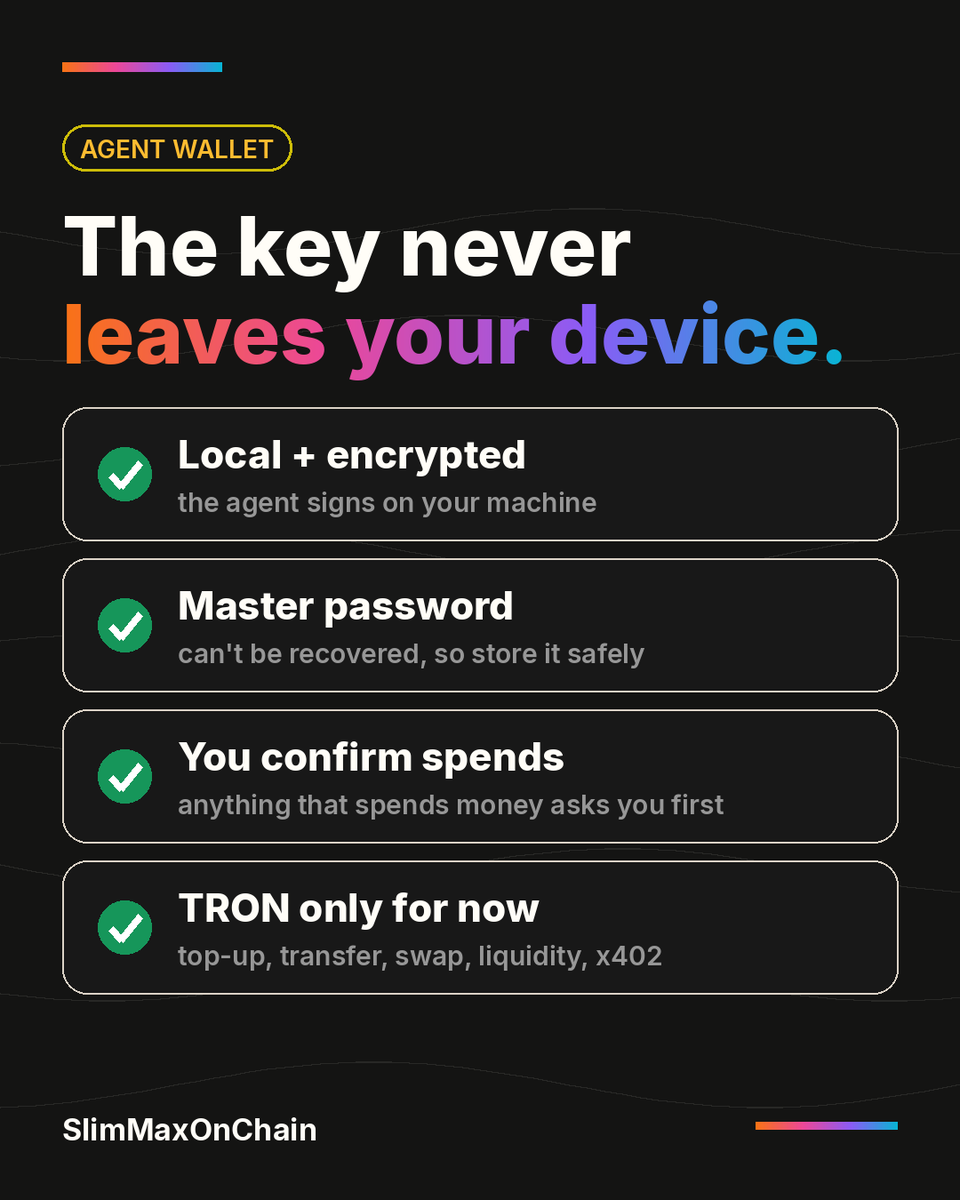
𝗚𝗶𝘃𝗶𝗻𝗴 𝗮𝗻 𝗔𝗜 𝗮𝗴𝗲𝗻𝘁 𝗺𝗼𝗻𝗲𝘆 𝘀𝗼𝘂𝗻𝗱𝘀 𝘁𝗲𝗿𝗿𝗶𝗳𝘆𝗶𝗻𝗴. 𝗨𝗻𝘁𝗶𝗹 𝘆𝗼𝘂 𝘀𝗲𝗲 𝘄𝗵𝗲𝗿𝗲 𝘁𝗵𝗲 𝗸𝗲𝘆 𝗮𝗰𝘁𝘂𝗮𝗹𝗹𝘆 𝗹𝗶𝘃𝗲𝘀. Bank of AI's Agent Wallet is built around one rule: 𝘁𝗵𝗲 𝗽𝗿𝗶𝘃𝗮𝘁𝗲 𝗸𝗲𝘆 𝗻𝗲𝘃𝗲𝗿 𝗹𝗲𝗮𝘃𝗲𝘀 𝘆𝗼𝘂𝗿 𝗱𝗲𝘃𝗶𝗰𝗲. The agent gets local key storage and signing, not a custodial account somewhere in the cloud. BAIclaw's Agent Wallet follows the same idea: ➜ A 𝗹𝗼𝗰𝗮𝗹, 𝗲𝗻𝗰𝗿𝘆𝗽𝘁𝗲𝗱 Web3 wallet for your agent ➜ You need a B.AI API key first, then you import the TRON private key that matches that API-key account ➜ It's locked with a 𝗺𝗮𝘀𝘁𝗲𝗿 𝗽𝗮𝘀𝘀𝘄𝗼𝗿𝗱 𝘁𝗵𝗮𝘁 𝗰𝗮𝗻'𝘁 𝗯𝗲 𝗿𝗲𝗰𝗼𝘃𝗲𝗿𝗲𝗱, so write it down somewhere safe ➜ It can self top-up, transfer, swap, add liquidity and make x402 payments For now it's 𝗧𝗥𝗢𝗡 𝗼𝗻𝗹𝘆. Pair that with Bank of AI's rule that anything that spends money needs your confirmation first. That's the combo that makes me comfortable letting an agent hold a balance. Local keys, explicit approvals, small amounts. The Agent Wallet docs are here: ➜ docs.bankofai.io/Agent-Wallet/I… @justinsuntron @BAI_AGI #TronEcoStar
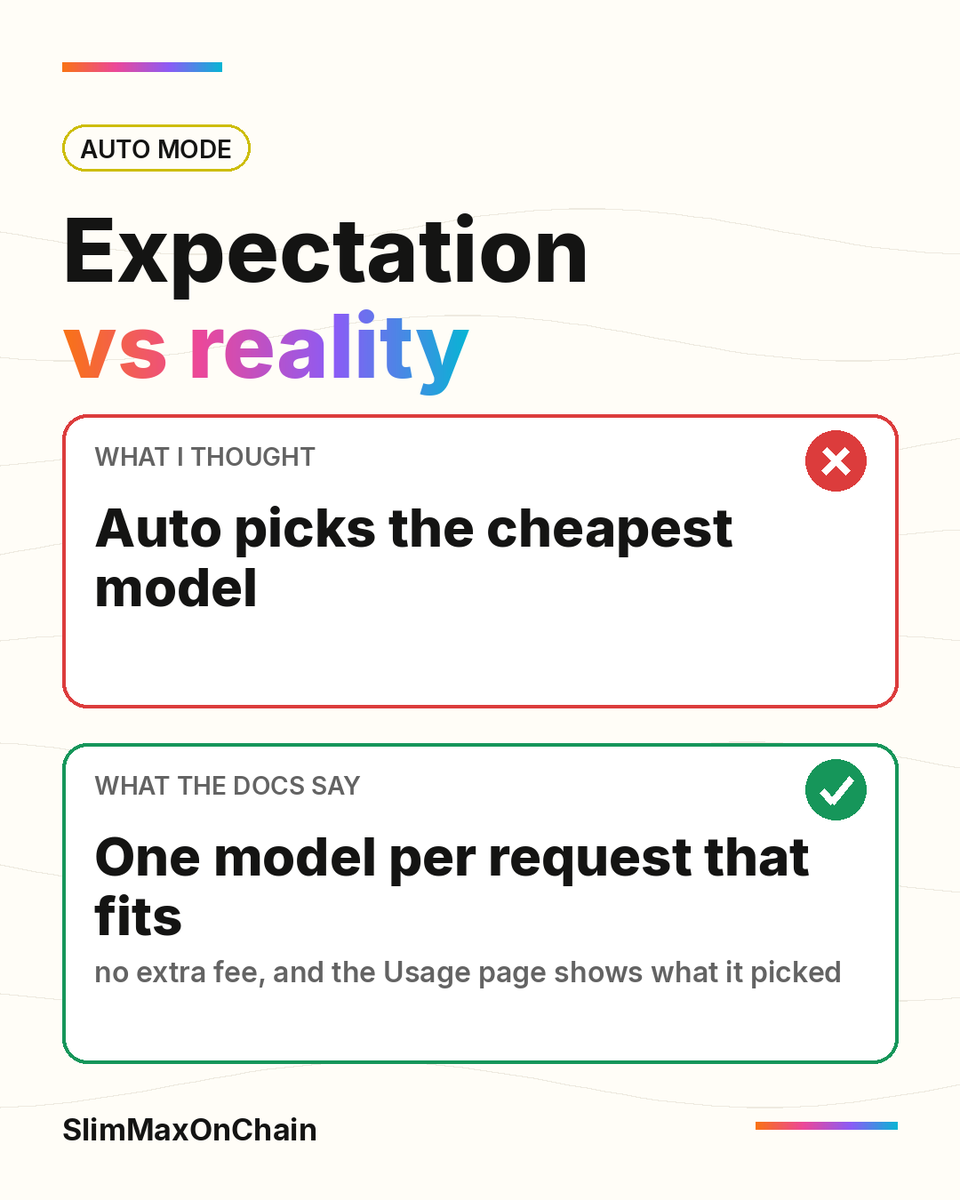
𝗔𝘂𝘁𝗼 𝗠𝗼𝗱𝗲 𝗶𝘀 𝗻𝗼𝘁 "𝗽𝗶𝗰𝗸 𝘁𝗵𝗲 𝗰𝗵𝗲𝗮𝗽𝗲𝘀𝘁 𝗺𝗼𝗱𝗲𝗹." 𝗕.𝗔𝗜'𝘀 𝗼𝘄𝗻 𝗱𝗼𝗰𝘀 𝘀𝗮𝘆 𝘀𝗼. I assumed Auto was a cost-saving trick. It's actually something better. Here's what the docs say it does: ➜ You pick 𝗔𝘂𝘁𝗼 in the model selector and B.AI chooses one model per request ➜ There's 𝗻𝗼 𝗲𝘅𝘁𝗿𝗮 𝗳𝗲𝗲 for using it ➜ The actual model, tokens and cost show up on your 𝗨𝘀𝗮𝗴𝗲 𝗽𝗮𝗴𝗲 And the line that surprised me: it "does not always select the largest, fastest, or cheapest model." So Auto is about fit, not about bargain hunting. That changes how I use it. When I don't know which of the 70+ models suits a task, I start on Auto. Then I check the Usage page to see what it picked and what it cost. If the choice keeps working, I pin that model and move on. It's the fastest way I've found to learn the catalogue without reading every model card. The Auto Mode docs are short and worth a read: ➜ docs.b.ai/llmservice/aut… @justinsuntron @BAI_AGI #TronEcoStar
𝗗𝗲𝗲𝗽𝗦𝗲𝗲𝗸 𝗶𝗻 𝗕.𝗔𝗜 𝗖𝗵𝗮𝘁 𝗶𝘀 𝗮𝗹𝘄𝗮𝘆𝘀 𝗯𝗶𝗹𝗹𝗲𝗱 𝗮𝘁 𝗼𝗳𝗳-𝗽𝗲𝗮𝗸. 𝗘𝘃𝗲𝗻 𝗮𝘁 𝟭𝟬𝗮𝗺 𝗼𝗻 𝗮 𝗧𝘂𝗲𝘀𝗱𝗮𝘆 𝗶𝗻 𝗕𝗲𝗶𝗷𝗶𝗻𝗴. Quick context, because this trips people up. DeepSeek pricing on B.AI has two windows, both on Beijing time: ➜ 𝗣𝗲𝗮𝗸: Monday to Friday, 09:00-12:00 and 14:00-18:00, excluding Chinese holidays ➜ 𝗢𝗳𝗳-𝗽𝗲𝗮𝗸: everything else, at half price For DeepSeek-V4.1-Flash that's $0.30 → $1.20 per 1M tokens at peak, and $0.15 → $0.60 off-peak. Now the good part. B.AI's docs say 𝗪𝗲𝗯 𝗖𝗵𝗮𝘁 𝗮𝗹𝘄𝗮𝘆𝘀 𝗯𝗶𝗹𝗹𝘀 𝗗𝗲𝗲𝗽𝗦𝗲𝗲𝗸 𝗮𝘁 𝘁𝗵𝗲 𝗼𝗳𝗳-𝗽𝗲𝗮𝗸 𝗿𝗮𝘁𝗲. So if you're chatting, you never touch the peak price. If you're on the API, the windows do apply, so I push my heavy batch jobs outside them. Convert Beijing time to your own timezone before you schedule anything. B.AI is also running a promo right now that bills DeepSeek-V4.1-Flash at 60% of the standard price. Cheap model, cheaper window, cheaper again. The pricing page has the details: ➜ docs.b.ai/llmservice/pri… @justinsuntron @BAI_AGI #TronEcoStar

𝟭 𝗨𝗦𝗗 = 𝟭,𝟬𝟬𝟬,𝟬𝟬𝟬 𝗖𝗿𝗲𝗱𝗶𝘁𝘀. 𝗢𝗻𝗰𝗲 𝘁𝗵𝗮𝘁 𝗰𝗹𝗶𝗰𝗸𝘀, 𝗕.𝗔𝗜'𝘀 𝗽𝗿𝗶𝗰𝗲 𝘁𝗮𝗯𝗹𝗲 𝗿𝗲𝗮𝗱𝘀 𝗶𝘁𝘀𝗲𝗹𝗳. B.AI lists every model in USD per 1M tokens, and your balance sits in Credits. So the conversion is basically free: ➜ $𝟭 𝗽𝗲𝗿 𝟭𝗠 𝘁𝗼𝗸𝗲𝗻𝘀 = 1 Credit per token ➜ $𝟬.𝟭𝟬 𝗽𝗲𝗿 𝟭𝗠 𝘁𝗼𝗸𝗲𝗻𝘀 = 0.1 Credit per token Here's how a few rows read, input then output: ➜ 𝗚𝗣𝗧-𝟲 𝗟𝘂𝗻𝗮: $0.10 → $0.50 ➜ 𝗖𝗹𝗮𝘂𝗱𝗲 𝗦𝗼𝗻𝗻𝗲𝘁 𝟱.𝟱: $2 → $10 ➜ 𝗖𝗹𝗮𝘂𝗱𝗲 𝗢𝗽𝘂𝘀 𝟱.𝟱: $4 → $20 ➜ 𝗠𝗶𝗠𝗼-𝗩𝟮.𝟲-𝗙𝗹𝗮𝘀𝗵: $0.14 → $0.28 The gap is wild. 1M output tokens on Opus 5.5 is $20, or 20M Credits. The same output on MiMo-V2.6-Flash is $0.28, or 280,000 Credits. That's why I send drafts and bulk jobs to Flash models and save the flagships for the hard thinking. The table also shows cache write, cache read and per-use web search, so check those if you run long prompts. Full price table here: ➜ docs.b.ai/llmservice/pri… @justinsuntron @BAI_AGI #TronEcoStar

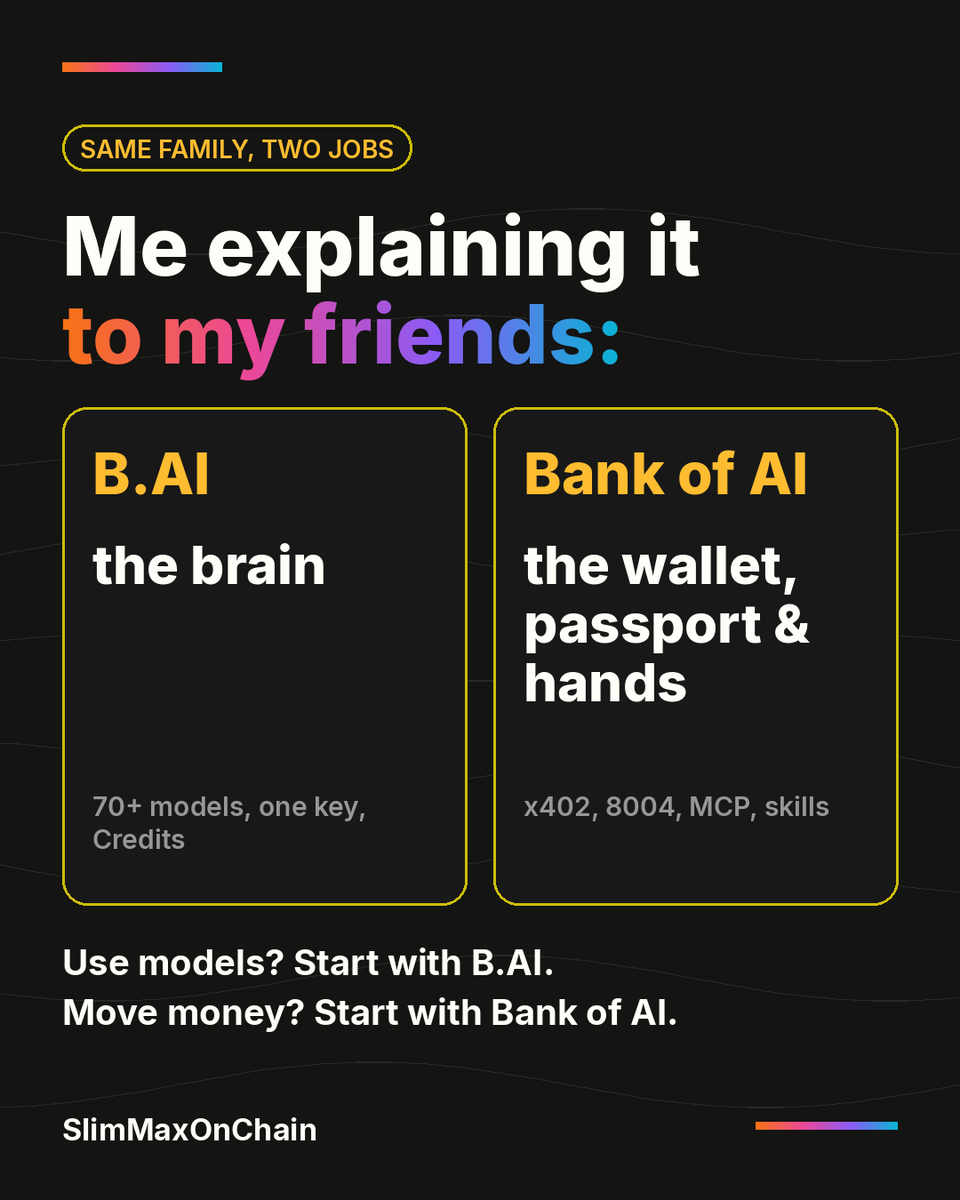
𝗕.𝗔𝗜 𝗮𝗻𝗱 𝗕𝗮𝗻𝗸 𝗼𝗳 𝗔𝗜 𝗮𝗿𝗲 𝗻𝗼𝘁 𝘁𝗵𝗲 𝘀𝗮𝗺𝗲 𝗽𝗿𝗼𝗱𝘂𝗰𝘁. 𝗜 𝗺𝗶𝘅𝗲𝗱 𝘁𝗵𝗲𝗺 𝘂𝗽 𝗳𝗼𝗿 𝘄𝗲𝗲𝗸𝘀. Same family, two different jobs: ➜ 𝗕.𝗔𝗜 is the gateway: Web Chat, an OpenAI and Anthropic compatible API, 70+ models, Credits, BAIclaw and BAI code ➜ 𝗕𝗮𝗻𝗸 𝗼𝗳 𝗔𝗜 is the agent-finance stack: x402 payments, 8004 identity, MCP servers, skills and wallet-cli The way I remember it: 𝗕.𝗔𝗜 𝗴𝗶𝘃𝗲𝘀 𝘆𝗼𝘂𝗿 𝗮𝗴𝗲𝗻𝘁 𝗮 𝗯𝗿𝗮𝗶𝗻. 𝗕𝗮𝗻𝗸 𝗼𝗳 𝗔𝗜 𝗴𝗶𝘃𝗲𝘀 𝗶𝘁 𝗮 𝘄𝗮𝗹𝗹𝗲𝘁, 𝗮 𝗽𝗮𝘀𝘀𝗽𝗼𝗿𝘁 𝗮𝗻𝗱 𝗵𝗮𝗻𝗱𝘀. Fun fact: Bank of AI came first, with its docs changelog starting in February, and B.AI launched globally in April. Bank of AI runs on TRON, BNB Chain and Base, and installs into clients you already use like OpenClaw, Claude Code, Cursor and Codex. And my favourite rule on its site: 𝗮𝗻𝘆𝘁𝗵𝗶𝗻𝗴 𝘁𝗵𝗮𝘁 𝘀𝗽𝗲𝗻𝗱𝘀 𝗺𝗼𝗻𝗲𝘆 𝗮𝗹𝘄𝗮𝘆𝘀 𝗻𝗲𝗲𝗱𝘀 𝘆𝗼𝘂𝗿 𝗰𝗼𝗻𝗳𝗶𝗿𝗺𝗮𝘁𝗶𝗼𝗻 𝗳𝗶𝗿𝘀𝘁. If you just want to use models, start with B.AI. If you're building agents that move money, start with Bank of AI: ➜ bankofai.io @justinsuntron @BAI_AGI #TronEcoStar
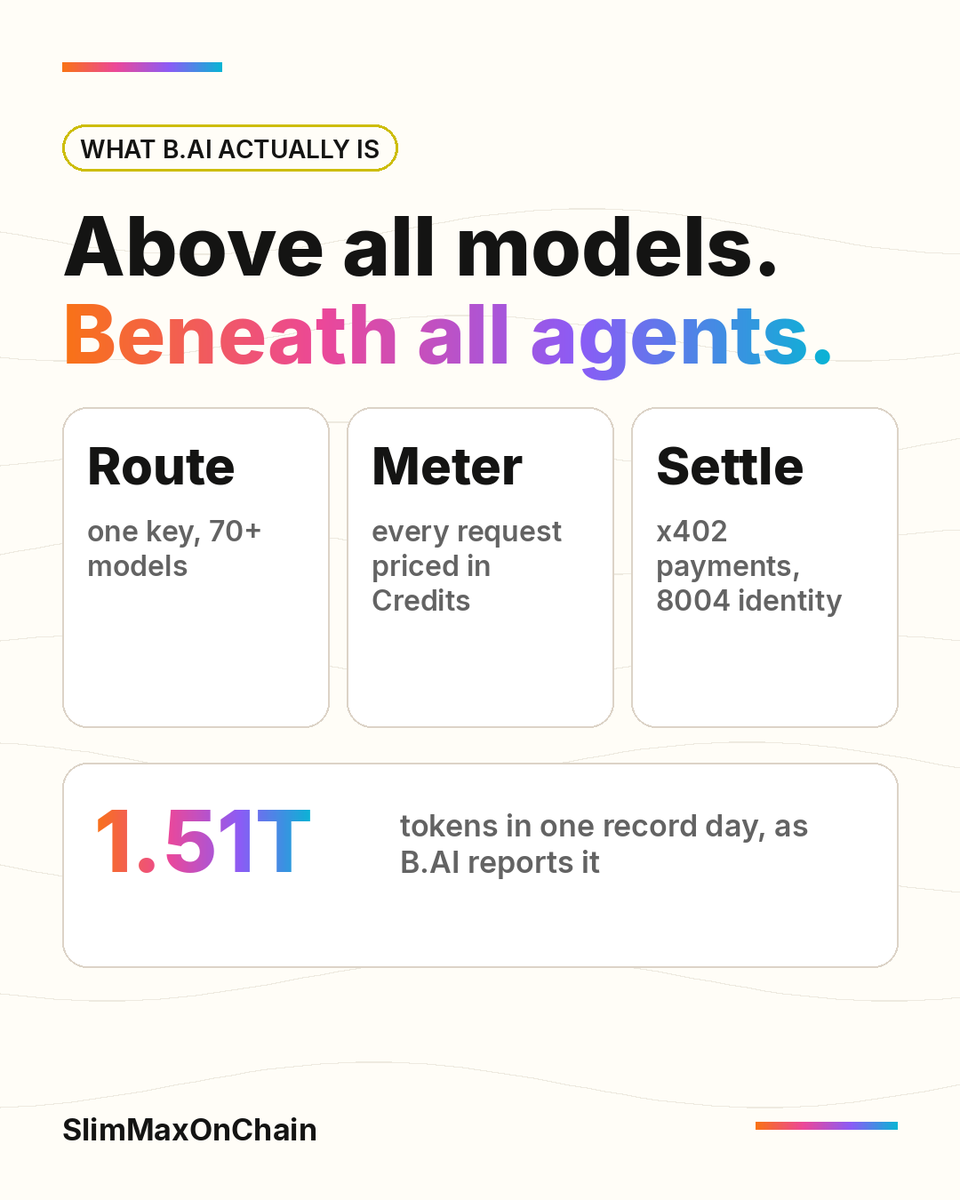
"𝗔𝗯𝗼𝘃𝗲 𝗮𝗹𝗹 𝗺𝗼𝗱𝗲𝗹𝘀, 𝗯𝗲𝗻𝗲𝗮𝘁𝗵 𝗮𝗹𝗹 𝗮𝗴𝗲𝗻𝘁𝘀." 𝗧𝗵𝗮𝘁 𝗼𝗻𝗲 𝗹𝗶𝗻𝗲 𝗲𝘅𝗽𝗹𝗮𝗶𝗻𝘀 𝗕.𝗔𝗜 𝗯𝗲𝘁𝘁𝗲𝗿 𝘁𝗵𝗮𝗻 𝗮𝗻𝘆 𝘁𝗵𝗿𝗲𝗮𝗱. Most people meet B.AI as a chat app with 70+ models. That's just the surface. B.AI calls itself financial infrastructure for the AI agent era, and the slogan ends with three verbs: ➜ 𝗥𝗼𝘂𝘁𝗲: one login and one API key across GPT, Claude, Gemini, Grok, DeepSeek, Qwen, Kimi and more ➜ 𝗠𝗲𝘁𝗲𝗿: every request priced in Credits, with the model, tokens and cost on your Usage page ➜ 𝗦𝗲𝘁𝘁𝗹𝗲: agents pay over HTTP with x402, carry an on-chain identity with 8004 and act through MCP servers and skills Above the models means I don't marry one vendor. Beneath the agents means my agents don't need a bank account to spend. B.AI reports a record of 𝟭.𝟱𝟭𝗧 𝘁𝗼𝗸𝗲𝗻𝘀 𝗶𝗻 𝗮 𝘀𝗶𝗻𝗴𝗹𝗲 𝗱𝗮𝘆. It's a self-reported peak, not a daily average, but it tells you exactly which layer they want to own. Start with the overview here: ➜ b.ai @justinsuntron @BAI_AGI #TronEcoStar
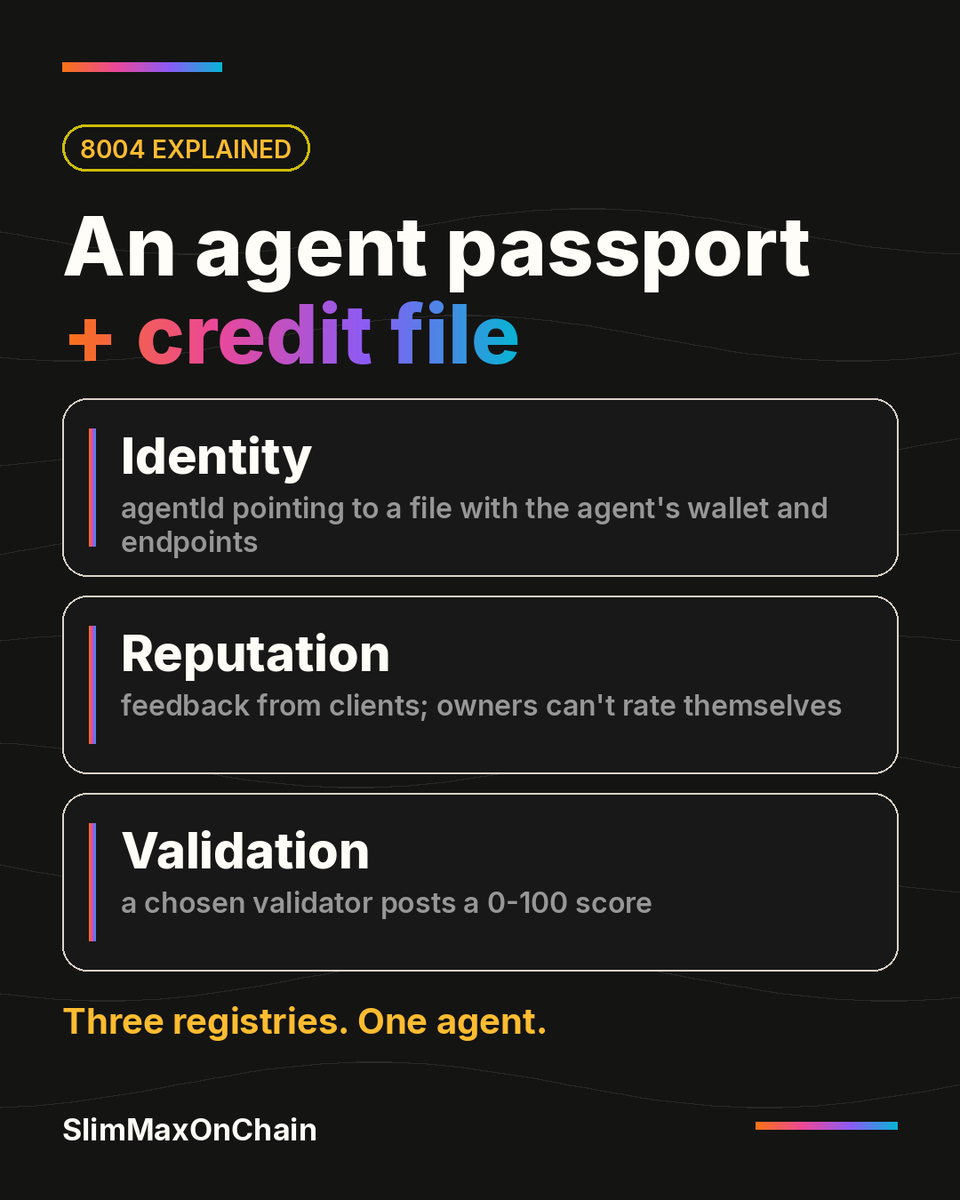
𝗢𝗻𝗲 𝘀𝘁𝗮𝗻𝗱𝗮𝗿𝗱, 𝘁𝗵𝗿𝗲𝗲 𝗿𝗲𝗴𝗶𝘀𝘁𝗿𝗶𝗲𝘀. 𝗧𝗵𝗮𝘁'𝘀 𝗵𝗼𝘄 𝗮𝗻 𝗮𝗴𝗲𝗻𝘁 𝗲𝗮𝗿𝗻𝘀 𝘁𝗿𝘂𝘀𝘁 𝗼𝗻-𝗰𝗵𝗮𝗶𝗻. 8004 is the identity standard behind Bank of AI, and on TRON it lives as TIP-8004. It runs on three registries: ➜ 𝗜𝗱𝗲𝗻𝘁𝗶𝘁𝘆: an NFT-style agentId pointing to a registration file with the agent's wallet and endpoints like Web, MCP or DID ➜ 𝗥𝗲𝗽𝘂𝘁𝗮𝘁𝗶𝗼𝗻: feedback from client addresses, and owners can't rate their own agent ➜ 𝗩𝗮𝗹𝗶𝗱𝗮𝘁𝗶𝗼𝗻: a chosen validator posts a 0-100 score, with room for TEE, zkML or staking Here's why the split matters. If an agent orders me a pizza, a few good reviews are enough trust. If an agent reads a medical scan, I want an independent validator score on top. Same agent, different bar, and each app gets to choose its own. One detail I love: 𝘁𝗵𝗲 𝗶𝗱𝗲𝗻𝘁𝗶𝘁𝘆 𝗶𝘀 𝘁𝗿𝗮𝗻𝘀𝗳𝗲𝗿𝗮𝗯𝗹𝗲, 𝗯𝘂𝘁 𝘁𝗵𝗲 𝗽𝗮𝘆𝗺𝗲𝗻𝘁 𝗮𝗱𝗱𝗿𝗲𝘀𝘀 𝗿𝗲𝘀𝗲𝘁𝘀 𝘄𝗵𝗲𝗻 𝗶𝘁 𝗺𝗼𝘃𝗲𝘀. So buying someone's agent doesn't quietly keep paying the old owner. The full breakdown is in the docs: ➜ docs.bankofai.io/8004/general/ @justinsuntron @BAI_AGI #TronEcoStar
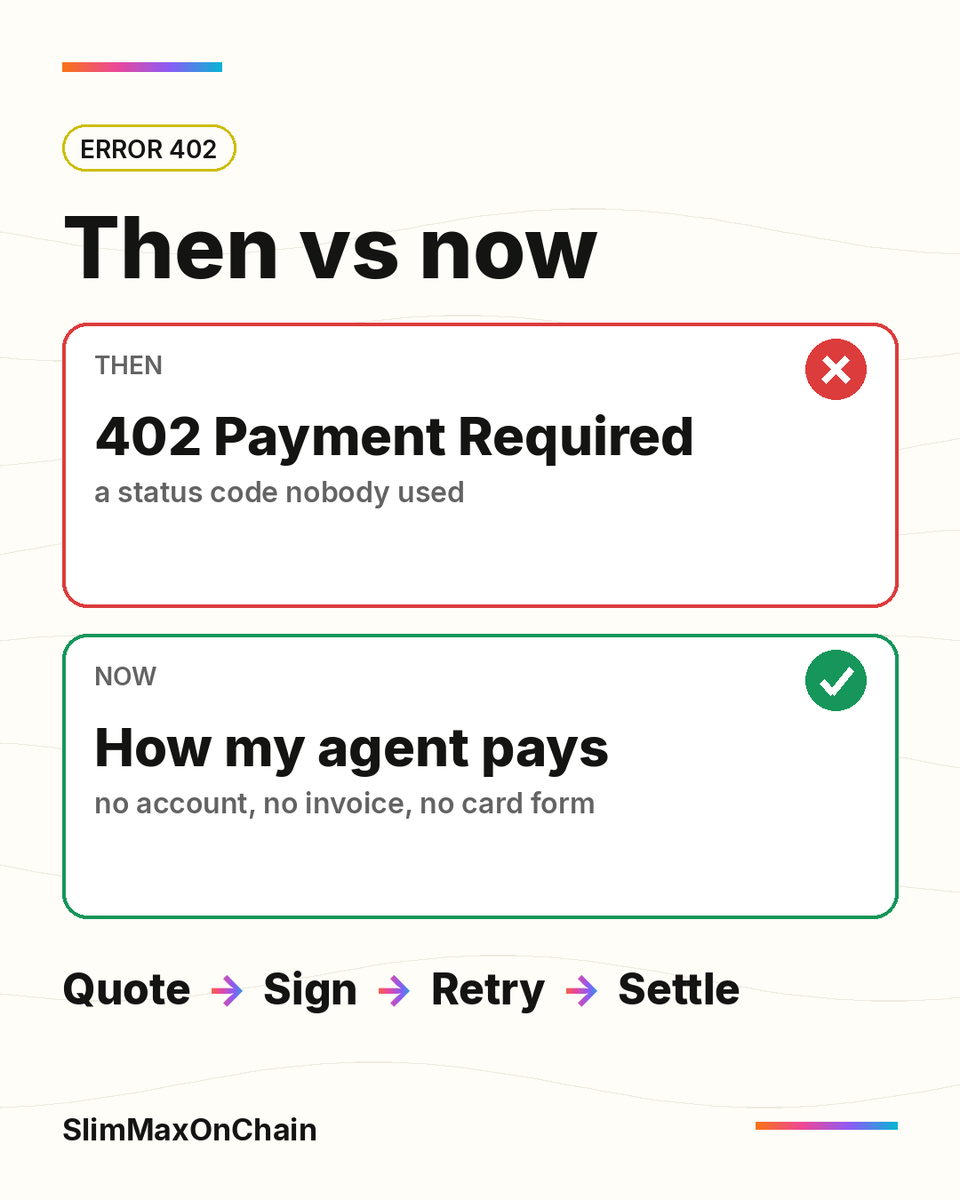
𝗛𝗧𝗧𝗣 𝟰𝟬𝟮 𝘀𝗮𝘁 𝘂𝗻𝘂𝘀𝗲𝗱 𝗳𝗼𝗿 𝗱𝗲𝗰𝗮𝗱𝗲𝘀. 𝘅𝟰𝟬𝟮 𝗳𝗶𝗻𝗮𝗹𝗹𝘆 𝗽𝘂𝘁 𝗶𝘁 𝘁𝗼 𝘄𝗼𝗿𝗸 𝗳𝗼𝗿 𝗺𝘆 𝗮𝗴𝗲𝗻𝘁. HTTP has had a "Payment Required" status code for decades, and almost nobody used it. x402 finally gives it a job. Here is the flow in plain English: ➜ 𝗤𝘂𝗼𝘁𝗲: my agent asks for a resource and the server replies 402 with the network, token, amount, recipient and how long the offer is valid ➜ 𝗦𝗶𝗴𝗻: the agent signs a payment for exactly that quote ➜ 𝗥𝗲𝘁𝗿𝘆: it sends the request again with the signed payment attached ➜ 𝗦𝗲𝘁𝘁𝗹𝗲: a facilitator verifies and settles it, and the resource comes back No account, no invoice, no card form built for humans. To be clear, x402 is Coinbase's open standard, and B.AI didn't invent it. What Bank of AI does is stay fully compatible with it and extend it with 𝗺𝘂𝗹𝘁𝗶-𝗻𝗲𝘁𝘄𝗼𝗿𝗸 𝘀𝘁𝗮𝗯𝗹𝗲𝗰𝗼𝗶𝗻 𝗽𝗮𝘆𝗺𝗲𝗻𝘁𝘀 𝗽𝗹𝘂𝘀 𝗧𝗥𝗢𝗡 𝘀𝗶𝗴𝗻𝗶𝗻𝗴 𝗮𝗻𝗱 𝘀𝗲𝘁𝘁𝗹𝗲𝗺𝗲𝗻𝘁. This is the piece that makes "agents that buy their own data" feel real to me. The devnote that walks through it step by step is here: ➜ docs.bankofai.io/devnotes/x402-… @justinsuntron @BAI_AGI #TronEcoStar
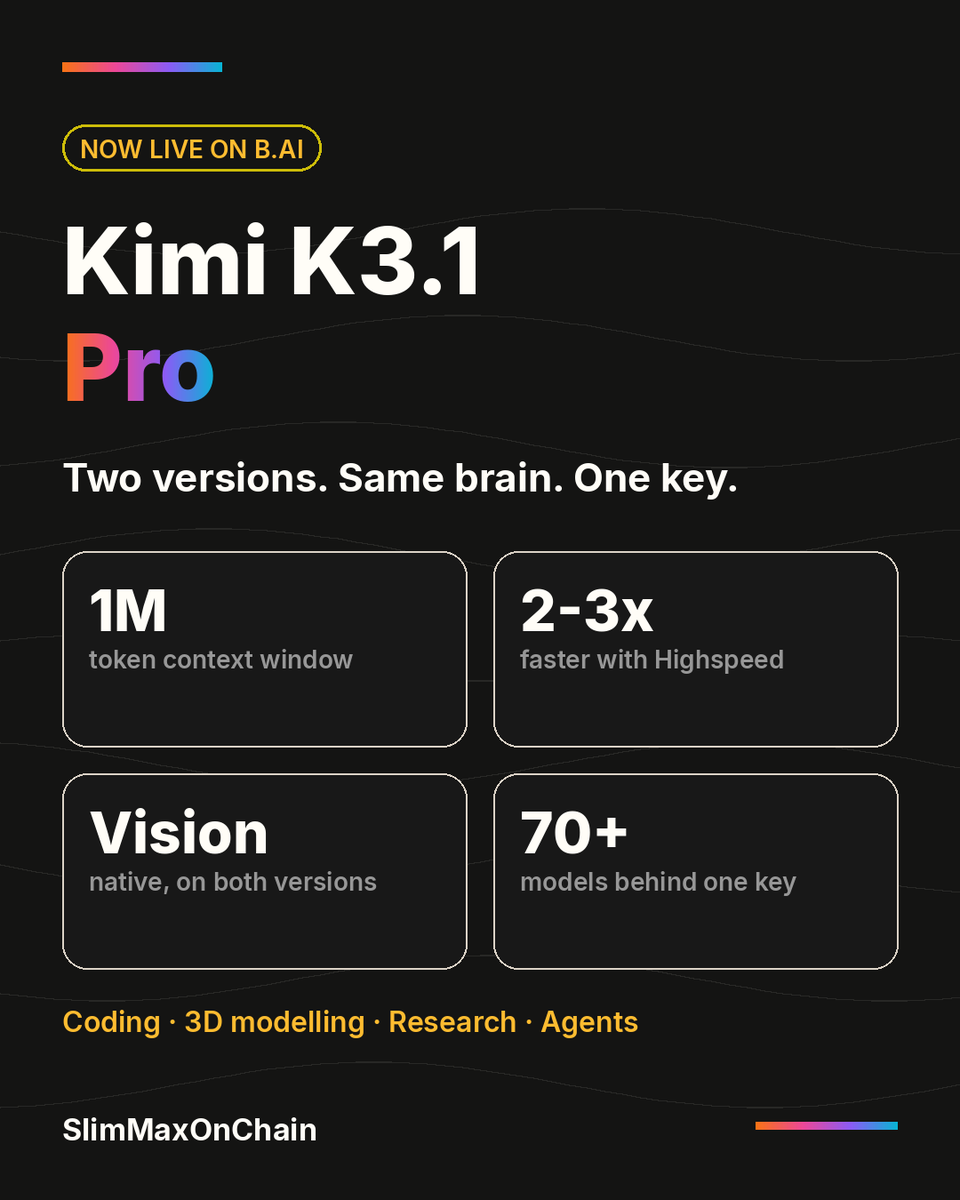
𝗞𝗶𝗺𝗶 𝗞𝟯.𝟭 𝗣𝗿𝗼 𝗷𝘂𝘀𝘁 𝗹𝗮𝗻𝗱𝗲𝗱 𝗼𝗻 𝗕.𝗔𝗜. 𝗜'𝘃𝗲 𝗯𝗲𝗲𝗻 𝘄𝗮𝗶𝘁𝗶𝗻𝗴 𝗳𝗼𝗿 𝘁𝗵𝗶𝘀 𝗼𝗻𝗲. Moonshot shipped its newest flagship, and B.AI put both versions live on day one. Here is what you get: ➜ 𝗞𝗶𝗺𝗶 𝗞𝟯.𝟭 𝗣𝗿𝗼: lower input and output costs, built for cost-sensitive and long-context work ➜ 𝗞𝗶𝗺𝗶 𝗞𝟯.𝟭 𝗣𝗿𝗼 𝗛𝗶𝗴𝗵𝘀𝗽𝗲𝗲𝗱: the same intelligence, roughly 2-3x faster, for interactive coding and agent loops ➜ 𝟭𝗠 𝘁𝗼𝗸𝗲𝗻 𝗰𝗼𝗻𝘁𝗲𝘅𝘁 𝘄𝗶𝗻𝗱𝗼𝘄 on both, plus native vision Moonshot is aiming it at complex coding, Blender and CAD 3D modelling, financial research and multi-step agent workflows. That last one is the part I care about. A model that can hold a whole codebase or a full research pack in memory is exactly what agents need. And on B.AI it sits behind the same single key as the other 70+ models, so switching costs me nothing. Moonshot says the full weights are due by November 4, which makes this one even more interesting to watch. I'm testing Highspeed on my coding workflow first. You can try it in Web Chat or through the API here: ➜ chat.b.ai/chat @justinsuntron @BAI_AGI #TronEcoStar
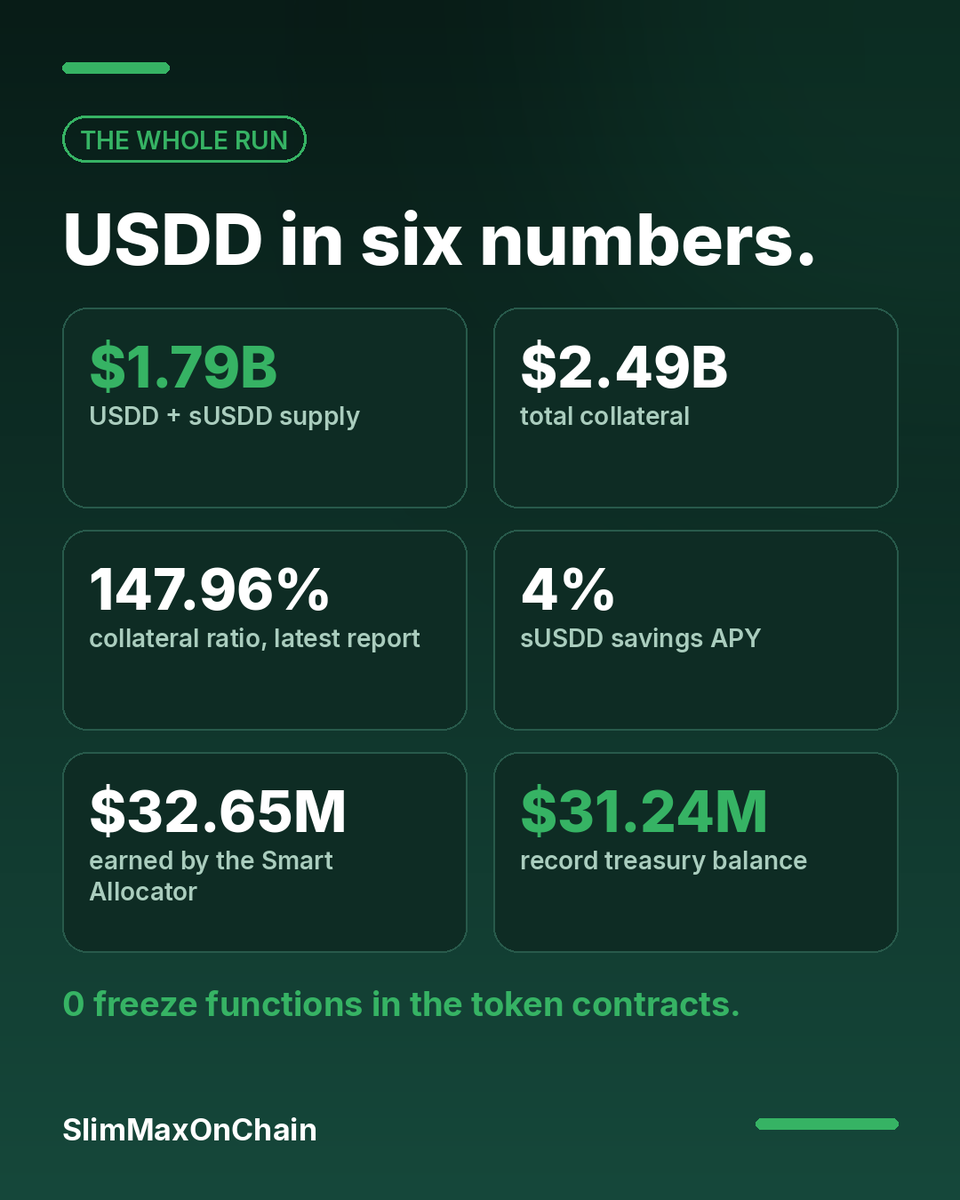
𝟱𝟬 𝗽𝗼𝘀𝘁𝘀 𝗼𝗻 𝗨𝗦𝗗𝗗 𝗹𝗮𝘁𝗲𝗿, 𝗵𝗲𝗿𝗲'𝘀 𝘁𝗵𝗲 𝘄𝗵𝗼𝗹𝗲 𝗿𝘂𝗻 𝗶𝗻 𝗼𝗻𝗲 𝗽𝗹𝗮𝗰𝗲. If you only save one of my posts, make it this one: ➜ 𝗦𝘂𝗽𝗽𝗹𝘆: $1.79B of USDD plus sUSDD, up about 111% this year ➜ 𝗕𝗮𝗰𝗸𝗶𝗻𝗴: $2.49B total collateral, 147.96% in the latest report ➜ 𝗡𝗼 𝗳𝗿𝗲𝗲𝘇𝗲: no freeze or blacklist function in the token contracts ➜ 𝗬𝗶𝗲𝗹𝗱: sUSDD at 4% APY, no lock-up ➜ 𝗘𝗻𝗴𝗶𝗻𝗲: the Smart Allocator has earned $32.65M to date ➜ 𝗧𝗿𝗲𝗮𝘀𝘂𝗿𝘆: a record $31.24M, with $9.70M revenue last quarter ➜ 𝗖𝗼𝗹𝗹𝗮𝘁𝗲𝗿𝗮𝗹: TRX, sTRX, WBTC and USDT on TRON, plus ETH and WBTC on Ethereum ➜ 𝗔𝗰𝗰𝗲𝘀𝘀: mint in a vault, swap 1:1 in the PSM, or buy on an exchange ➜ 𝗕𝘂𝗶𝗹𝗱𝗲𝗿𝘀: public API, MCP server and 14 read-only Skills ➜ 𝗦𝘁𝗶𝗹𝗹 𝗼𝗽𝗲𝗻: the September report, Ethereum vault uptake and B.AI payments That's a lot of moving parts for something built to hold a dollar. My take: the parts you can verify are strong, and the parts you can't are worth watching, not ignoring. Everything starts here: ➜ usdd.io @justinsuntron @BAI_AGI #TronEcoStar
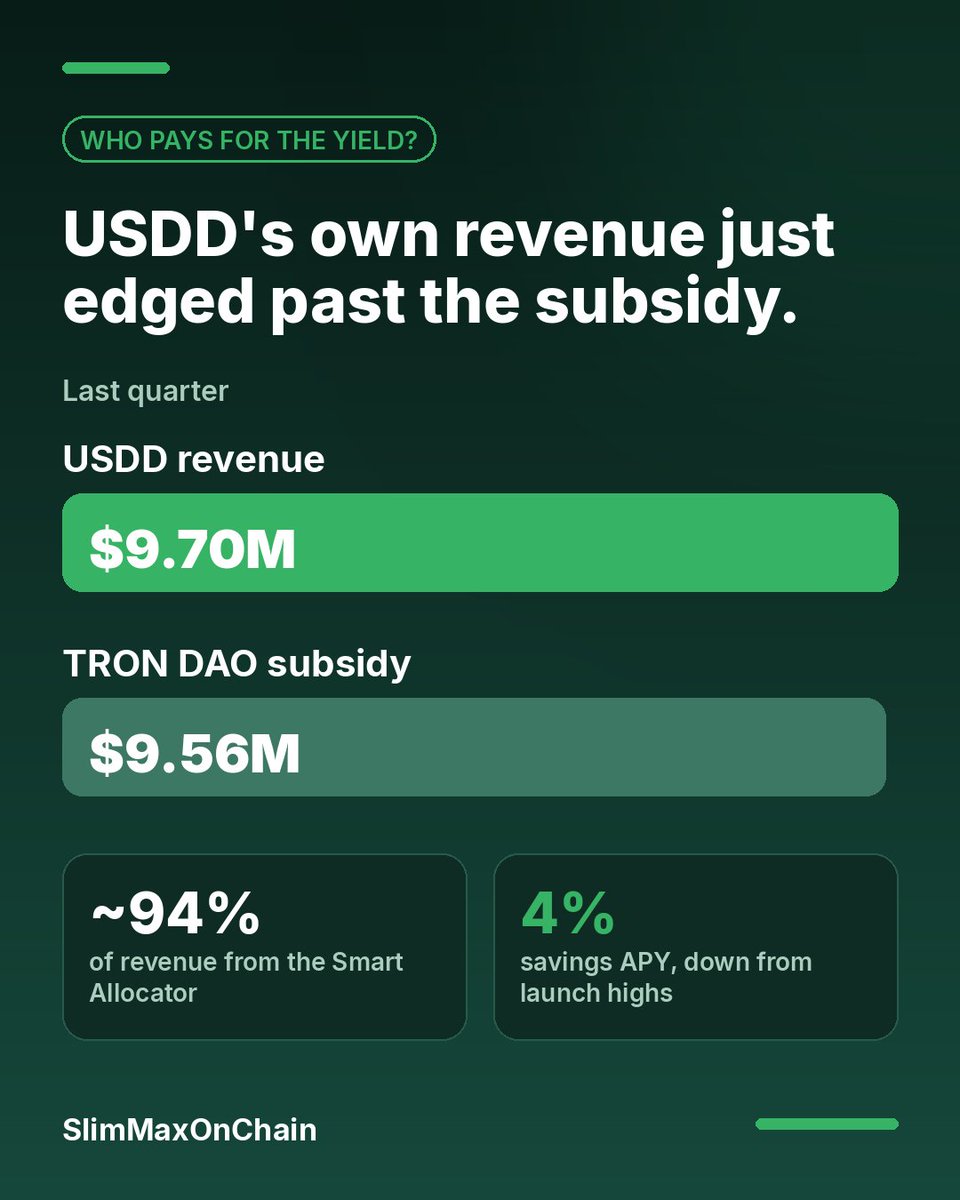
𝗙𝗼𝗿 𝗮 𝗹𝗼𝗻𝗴 𝘁𝗶𝗺𝗲, 𝘁𝗵𝗲 𝗳𝗮𝗶𝗿 𝗾𝘂𝗲𝘀𝘁𝗶𝗼𝗻 𝗮𝗯𝗼𝘂𝘁 𝗨𝗦𝗗𝗗 𝘆𝗶𝗲𝗹𝗱 𝘄𝗮𝘀 𝘀𝗶𝗺𝗽𝗹𝗲: 𝘄𝗵𝗼'𝘀 𝗽𝗮𝘆𝗶𝗻𝗴 𝗳𝗼𝗿 𝗶𝘁? 𝗧𝗵𝗲 𝘁𝗿𝗲𝗮𝘀𝘂𝗿𝘆 𝗻𝘂𝗺𝗯𝗲𝗿𝘀 𝗳𝗶𝗻𝗮𝗹𝗹𝘆 𝗴𝗶𝘃𝗲 𝗮 𝗰𝗹𝗲𝗮𝗻 𝗮𝗻𝘀𝘄𝗲𝗿. Last quarter, TRON DAO subsidised $𝟵.𝟱𝟲𝗠 of mining incentives. In the same quarter, USDD's own revenue came in at $𝟵.𝟳𝟬𝗠. That's revenue edging past the subsidy, on a public dashboard. The trend behind it: ➜ 𝗤𝟭: $6.30M ➜ 𝗤𝟮: $7.66M ➜ 𝗤𝟯: $9.70M Most of it comes from the Smart Allocator putting reserve capital to work in DeFi. Why should you care? Yield paid from real revenue can last, while yield paid by a sponsor lasts as long as the sponsor wants it to. Savings APY has also come down to 4% from much higher launch rates, which brings payouts closer to what the reserves earn. I'm not calling it fully self-funded yet, because the margin is thin. But the direction is right, and anyone can track it. Follow the revenue line yourself: ➜ usdd.io/usdd-treasury @justinsuntron @BAI_AGI #TronEcoStar
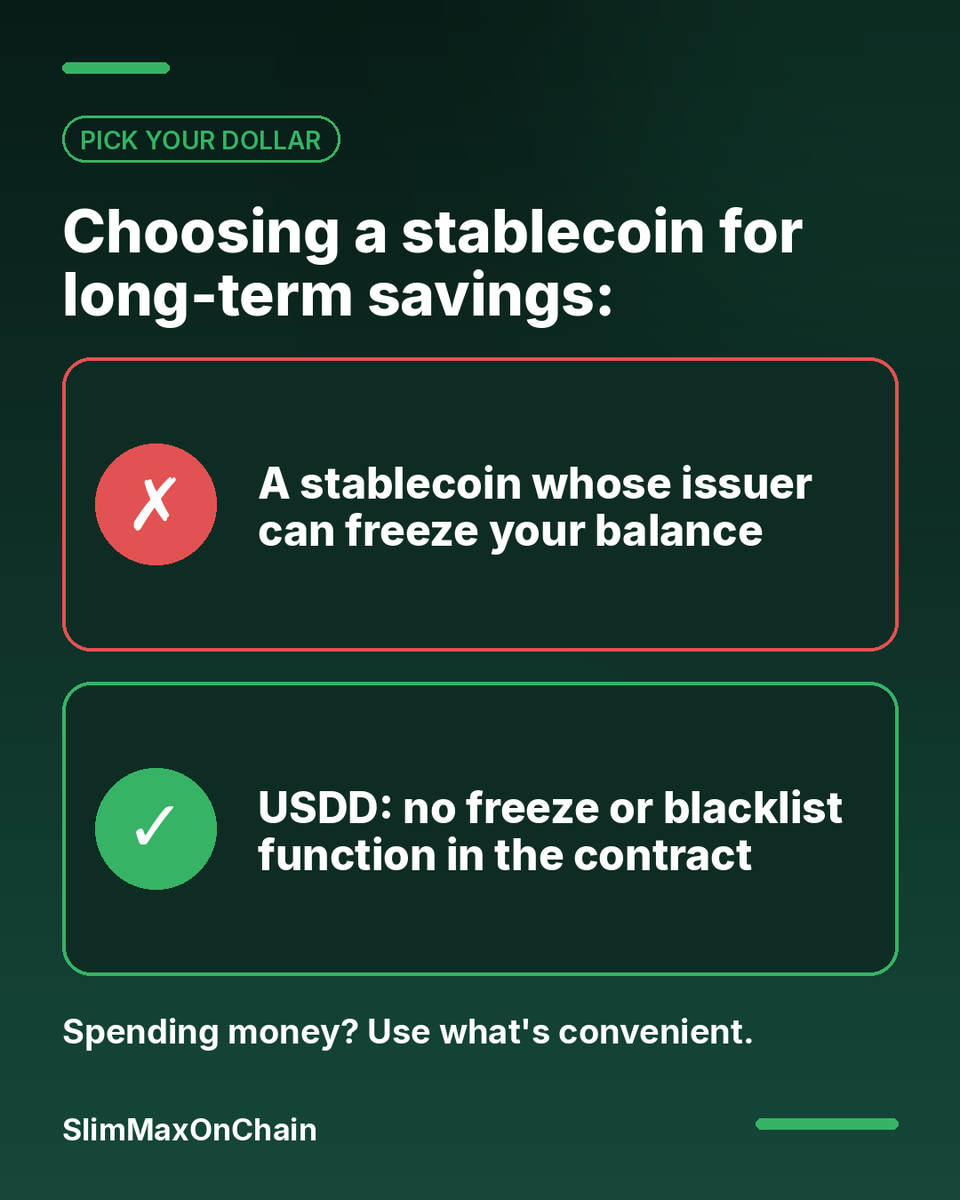
𝗣𝗼𝗽 𝗾𝘂𝗶𝘇: 𝘄𝗵𝗼 𝗱𝗲𝗰𝗶𝗱𝗲𝘀 𝘄𝗵𝗲𝘁𝗵𝗲𝗿 𝘆𝗼𝘂𝗿 𝘀𝘁𝗮𝗯𝗹𝗲𝗰𝗼𝗶𝗻 𝗯𝗮𝗹𝗮𝗻𝗰𝗲 𝗶𝘀 𝘀𝘁𝗶𝗹𝗹 𝘆𝗼𝘂𝗿𝘀 𝘁𝗼𝗺𝗼𝗿𝗿𝗼𝘄? With a freezable stablecoin, the honest answer is the issuer. That's not a conspiracy theory. It's a function written into the contract. With USDD, the answer is different: ➜ The token contracts have 𝗻𝗼 𝗳𝗿𝗲𝗲𝘇𝗲 𝗼𝗿 𝗯𝗹𝗮𝗰𝗸𝗹𝗶𝘀𝘁 𝗳𝘂𝗻𝗰𝘁𝗶𝗼𝗻 ➜ Supply is backed by 𝗼𝘃𝗲𝗿-𝗰𝗼𝗹𝗹𝗮𝘁𝗲𝗿𝗮𝗹𝗶𝘀𝗲𝗱 𝘃𝗮𝘂𝗹𝘁𝘀 and the PSM ➜ Liquidation rules and oracle sources are public before you mint I'm not saying freezable stablecoins are useless. They're liquid and widely accepted, and I use them too. But it's worth knowing which kind of dollar you're holding for which job. Spending money for this week? Use whatever's convenient. Long-term savings in self-custody? That's where I want the dollar that can't be switched off. Check the core features for yourself: ➜ docs.usdd.io/introduction/c… @justinsuntron @BAI_AGI #TronEcoStar
𝗧𝗵𝗲𝗿𝗲 𝗮𝗿𝗲 𝘁𝗵𝗿𝗲𝗲 𝘄𝗮𝘆𝘀 𝘁𝗼 𝗴𝗲𝘁 𝗨𝗦𝗗𝗗. 𝗧𝗵𝗲 𝗿𝗶𝗴𝗵𝘁 𝗼𝗻𝗲 𝗱𝗲𝗽𝗲𝗻𝗱𝘀 𝗼𝗻 𝘄𝗵𝗮𝘁 𝘆𝗼𝘂 𝗮𝗹𝗿𝗲𝗮𝗱𝘆 𝗵𝗼𝗹𝗱. Here they are: ➜ 𝗩𝗮𝘂𝗹𝘁: lock TRX, sTRX, WBTC or USDT on TRON, or ETH and WBTC on Ethereum, then mint USDD against it ➜ 𝗣𝗦𝗠: swap USDT or USDC 1:1, no fee, no slippage, just gas ➜ 𝗘𝘅𝗰𝗵𝗮𝗻𝗴𝗲: buy it on a CEX or DEX like any other token If you hold crypto you don't want to sell, the vault is the move, as long as you respect the collateral ratio. If you already hold USDT or USDC, the PSM is the cleanest path. The catch is the "Available" reserve, which caps how much you can swap at any moment. Right now the PSM holds roughly $𝟴𝟳.𝟯𝗠 of USDT across TRON, Ethereum and BNB Chain. If you're already on an exchange, buying is the fastest route, but check liquidity and fees first. One thing I always point out: the PSM rate is fixed at 1:1, and an exchange price isn't. Start in the official app: ➜ app.usdd.io/tron @justinsuntron @BAI_AGI #TronEcoStar

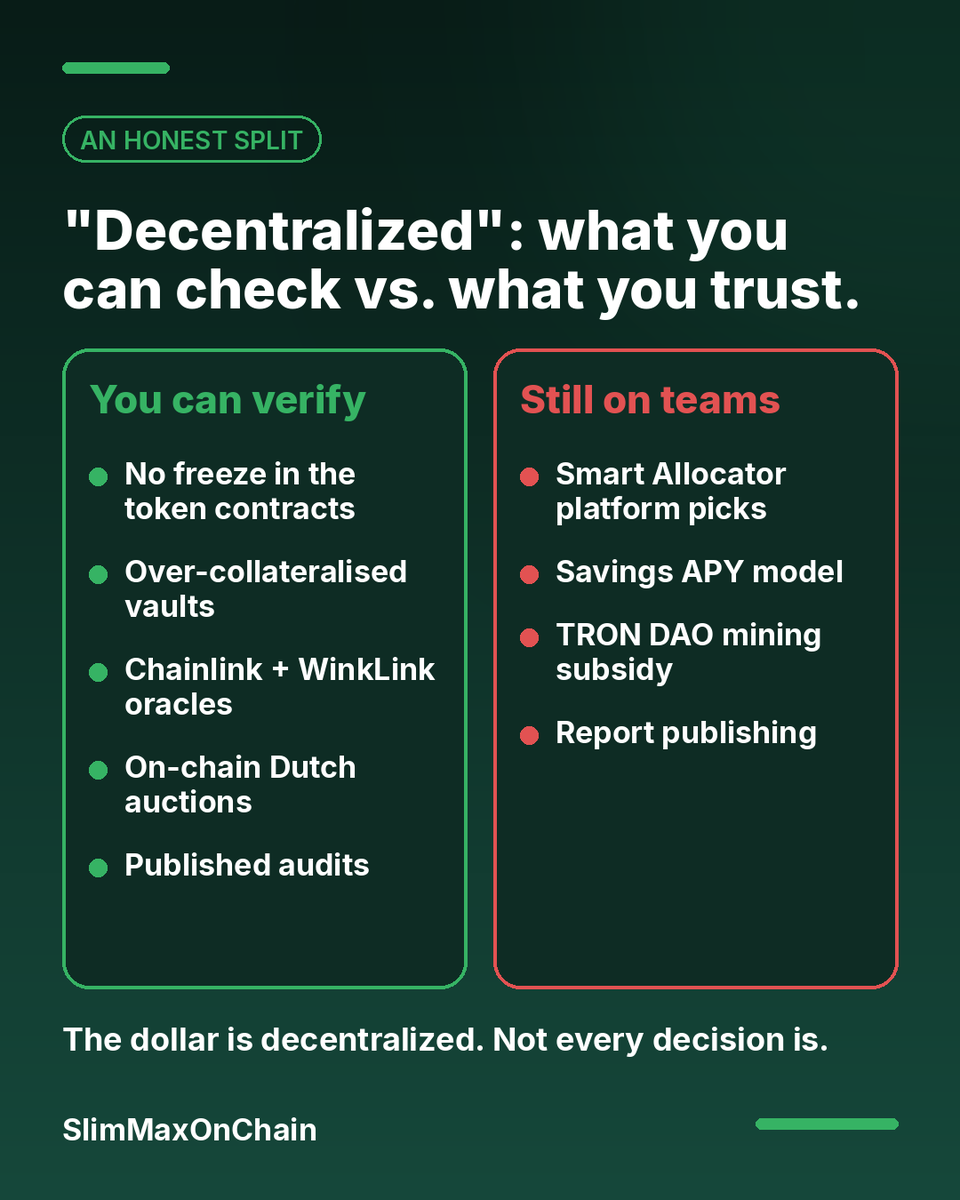
𝗗𝗲𝗰𝗲𝗻𝘁𝗿𝗮𝗹𝗶𝘇𝗲𝗱" 𝗶𝘀 𝗮 𝘄𝗼𝗿𝗱 𝗜 𝗼𝗻𝗹𝘆 𝘁𝗿𝘂𝘀𝘁 𝘄𝗵𝗲𝗻 𝗜 𝗰𝗮𝗻 𝗰𝗵𝗲𝗰𝗸 𝗶𝘁. 𝗦𝗼 𝗵𝗲𝗿𝗲'𝘀 𝗺𝘆 𝗵𝗼𝗻𝗲𝘀𝘁 𝘀𝗽𝗹𝗶𝘁 𝗳𝗼𝗿 𝗨𝗦𝗗𝗗. What you can verify yourself: ➜ Token contracts with no freeze, blacklist or destroyBlackFunds function ➜ Over-collateralised vaults, with live ratios on the data page ➜ Oracle prices from Chainlink and WinkLink, passed through a delayed OSM ➜ Liquidations through on-chain Dutch auctions ➜ Audits from ChainSecurity and CertiK, listed in the docs What still depends on teams: ➜ Smart Allocator platforms are picked by the USDD and JUST DAO teams ➜ Savings APY comes from a model the protocol sets, not an open market ➜ TRON DAO still subsidises mining incentives ➜ Transparency reports arrive when the team publishes them I don't think the second list cancels the first. It means "decentralized" here describes the dollar you hold, not every decision around it. That's an honest place to be, and better than pretending. The audit list is public: ➜ docs.usdd.io/security/audits @justinsuntron @BAI_AGI #TronEcoStar
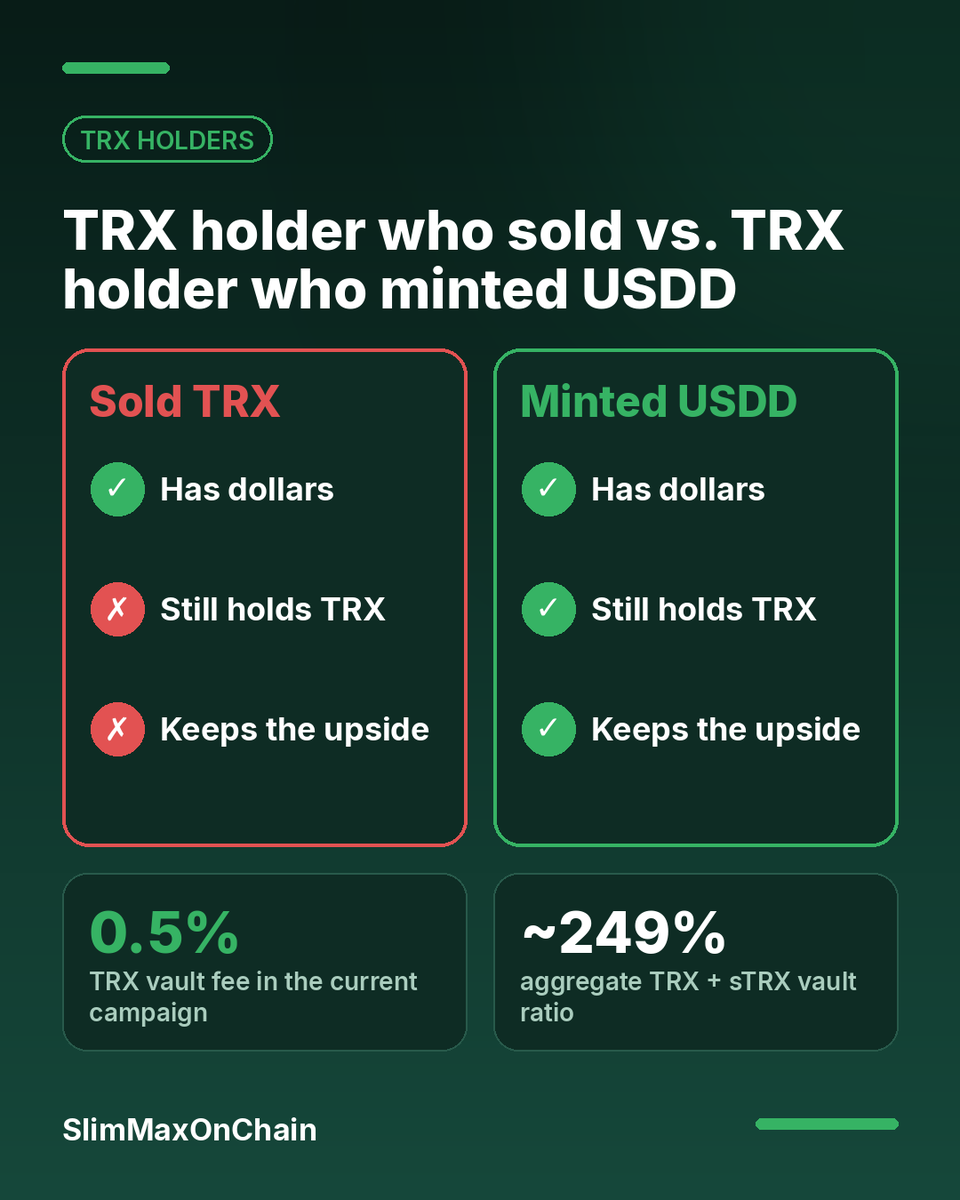
𝗦𝗲𝗹𝗹𝗶𝗻𝗴 𝗧𝗥𝗫 𝘁𝗼 𝗴𝗲𝘁 𝗱𝗼𝗹𝗹𝗮𝗿𝘀 𝗶𝘀 𝗮 𝗰𝗵𝗼𝗶𝗰𝗲, 𝗻𝗼𝘁 𝗮 𝗿𝗲𝗾𝘂𝗶𝗿𝗲𝗺𝗲𝗻𝘁. On TRON, you can lock TRX in a USDD vault and mint USDD against it. You keep your TRX exposure and get dollar liquidity at the same time. Right now the app shows TRX vault fees reduced to 𝟬.𝟱% as a campaign, against standard rates of 5%, 7% and 3%. sTRX vaults show 𝟭%. Here's how the TRX vaults line up on minimum collateral ratio: ➜ 𝗧𝗥𝗫-𝗔: 120% ➜ 𝗧𝗥𝗫-𝗕: 117% ➜ 𝗧𝗥𝗫-𝗖: 130% Across the TRX and sTRX vaults, the aggregate ratio is around 𝟮𝟰𝟵%, so most borrowers sit well above the line. That's the part I'd copy. A cheap fee doesn't help you if one TRX dip takes you to liquidation. And campaign rates are campaign rates, so check the fee in the app before minting instead of assuming it lasts. Open the TRON app and see the live fees yourself: ➜ app.usdd.io/tron @justinsuntron @BAI_AGI #TronEcoStar
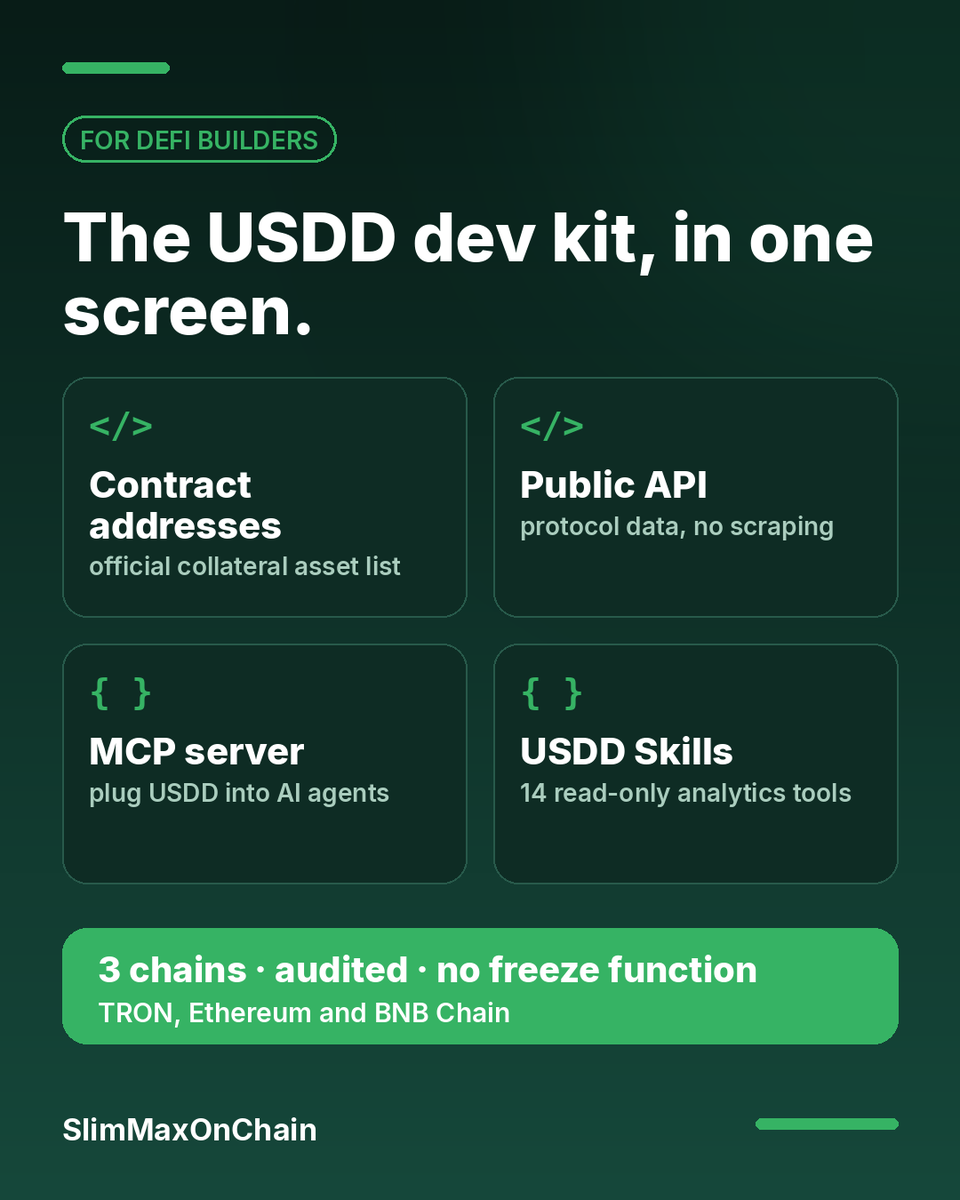
𝗜𝗳 𝘆𝗼𝘂'𝗿𝗲 𝗯𝘂𝗶𝗹𝗱𝗶𝗻𝗴 𝗶𝗻 𝗗𝗲𝗙𝗶, 𝗨𝗦𝗗𝗗 𝗵𝗮𝘀 𝗾𝘂𝗶𝗲𝘁𝗹𝘆 𝘀𝗵𝗶𝗽𝗽𝗲𝗱 𝗮 𝘀𝗼𝗹𝗶𝗱 𝗱𝗲𝘃 𝗸𝗶𝘁. I went through the docs with a builder's eye, and this is what's there: ➜ 𝗖𝗼𝗻𝘁𝗿𝗮𝗰𝘁 𝗮𝗱𝗱𝗿𝗲𝘀𝘀𝗲𝘀: an official list of collateral asset contracts, so you aren't trusting a random explorer link ➜ 𝗣𝘂𝗯𝗹𝗶𝗰 𝗔𝗣𝗜: official endpoints for protocol data, so you aren't scraping a dashboard ➜ 𝗠𝗖𝗣 𝘀𝗲𝗿𝘃𝗲𝗿: plug USDD into an AI agent, built on the B.AI agent-wallet package ➜ 𝗨𝗦𝗗𝗗 𝗦𝗸𝗶𝗹𝗹𝘀: 14 read-only analytics tools for agents The read-only part matters. An agent can analyse supply and vaults without touching funds unless you wire that in yourself. Add three chains, audits from ChainSecurity and CertiK, and a token contract with no freeze function. That's a dollar your users can hold without a freeze switch sitting in the code. If I were shipping a payments or savings app this year, I'd at least test it. Start with the public API docs: ➜ docs.usdd.io/developers/usd… @justinsuntron @BAI_AGI #TronEcoStar
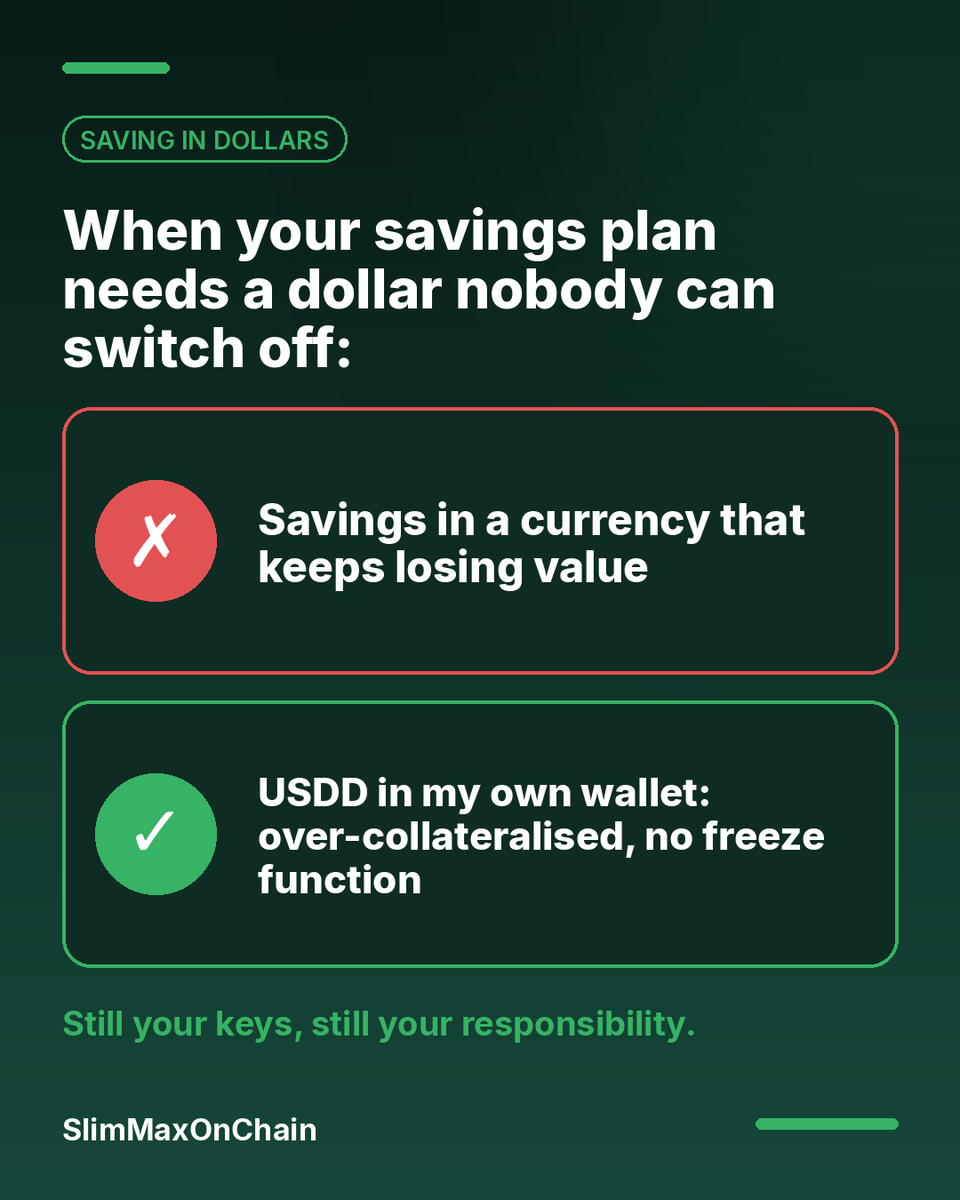
𝗜𝗳 𝘆𝗼𝘂𝗿 𝗹𝗼𝗰𝗮𝗹 𝗰𝘂𝗿𝗿𝗲𝗻𝗰𝘆 𝗹𝗼𝘀𝗲𝘀 𝘃𝗮𝗹𝘂𝗲 𝗳𝗮𝘀𝘁𝗲𝗿 𝘁𝗵𝗮𝗻 𝘆𝗼𝘂𝗿 𝘀𝗮𝘃𝗶𝗻𝗴𝘀 𝗴𝗿𝗼𝘄, 𝘆𝗼𝘂 𝗮𝗹𝗿𝗲𝗮𝗱𝘆 𝗴𝗲𝘁 𝘄𝗵𝘆 𝘀𝘁𝗮𝗯𝗹𝗲𝗰𝗼𝗶𝗻𝘀 𝗺𝗮𝘁𝘁𝗲𝗿. I'm thinking about people in places like Nigeria, where holding dollars is often about protection, not speculation. But a dollar token is only as useful as your control over it. Here's why USDD's design fits that use case for me: ➜ 𝗦𝗲𝗹𝗳-𝗰𝘂𝘀𝘁𝗼𝗱𝘆: once USDD is in your own wallet, the docs say no central authority can freeze it ➜ 𝗢𝘃𝗲𝗿-𝗰𝗼𝗹𝗹𝗮𝘁𝗲𝗿𝗮𝗹𝗶𝘀𝗲𝗱: the latest official report showed a 𝟭𝟰𝟳.𝟵𝟲% collateral ratio, so more value backs it than USDD issued ➜ 𝗚𝗮𝘀𝗙𝗿𝗲𝗲 𝗼𝗻 𝗧𝗥𝗢𝗡: send USDD without holding TRX, with the fee paid in USDD ➜ 𝗦𝗮𝘃𝗶𝗻𝗴𝘀 𝗼𝗽𝘁𝗶𝗼𝗻: sUSDD on Ethereum and BNB Chain, with no lock-up None of this removes risk. Smart contracts can fail, and you still have to protect your own keys. Know your local rules too. But "nobody can freeze my savings" and "I can see what backs them" are two things a lot of people would value. Read the core features yourself: ➜ docs.usdd.io/introduction/c… @justinsuntron @BAI_AGI #TronEcoStar
𝗨𝗦𝗗𝗗 𝘀𝗲𝘁 𝗿𝗲𝗰𝗼𝗿𝗱𝘀 𝗮𝘁 𝗧𝗢𝗞𝗘𝗡𝟮𝟬𝟰𝟵. 𝗧𝗵𝗲𝗻 𝗶𝘁 𝗸𝗲𝗽𝘁 𝗴𝗼𝗶𝗻𝗴. During TOKEN2049 Singapore, USDD hit $𝟭.𝟲𝟴𝗕 𝘀𝘂𝗽𝗽𝗹𝘆 and $𝟮.𝟯𝟵𝗕 𝗧𝗩𝗟, both records at the time. A few days later, the October 12 reports showed: ➜ Supply above 𝟭.𝟴𝟭𝗕 ➜ TVL above $𝟮.𝟱𝟭𝗕 The supply series peaked at 𝟭,𝟴𝟭𝟰.𝟱𝗠 on October 10. I'll be straight about one thing. Part of that move came from Ethereum, where USDD went from about 53M to about 252.7M in two days, and I haven't seen a confirmed explanation for it. So I'm not calling it organic demand. Today supply sits at about 𝟭.𝟳𝟵𝗕, just off that peak. What I can say is that the backing kept pace. Total collateral is $𝟮.𝟰𝟵𝗕, against $1.79B of USDD plus sUSDD. Records get set and then revised. The gap between what's issued and what's backing it is the number I keep my eye on. Watch both lines yourself: ➜ usdd.io/data @justinsuntron @BAI_AGI #TronEcoStar

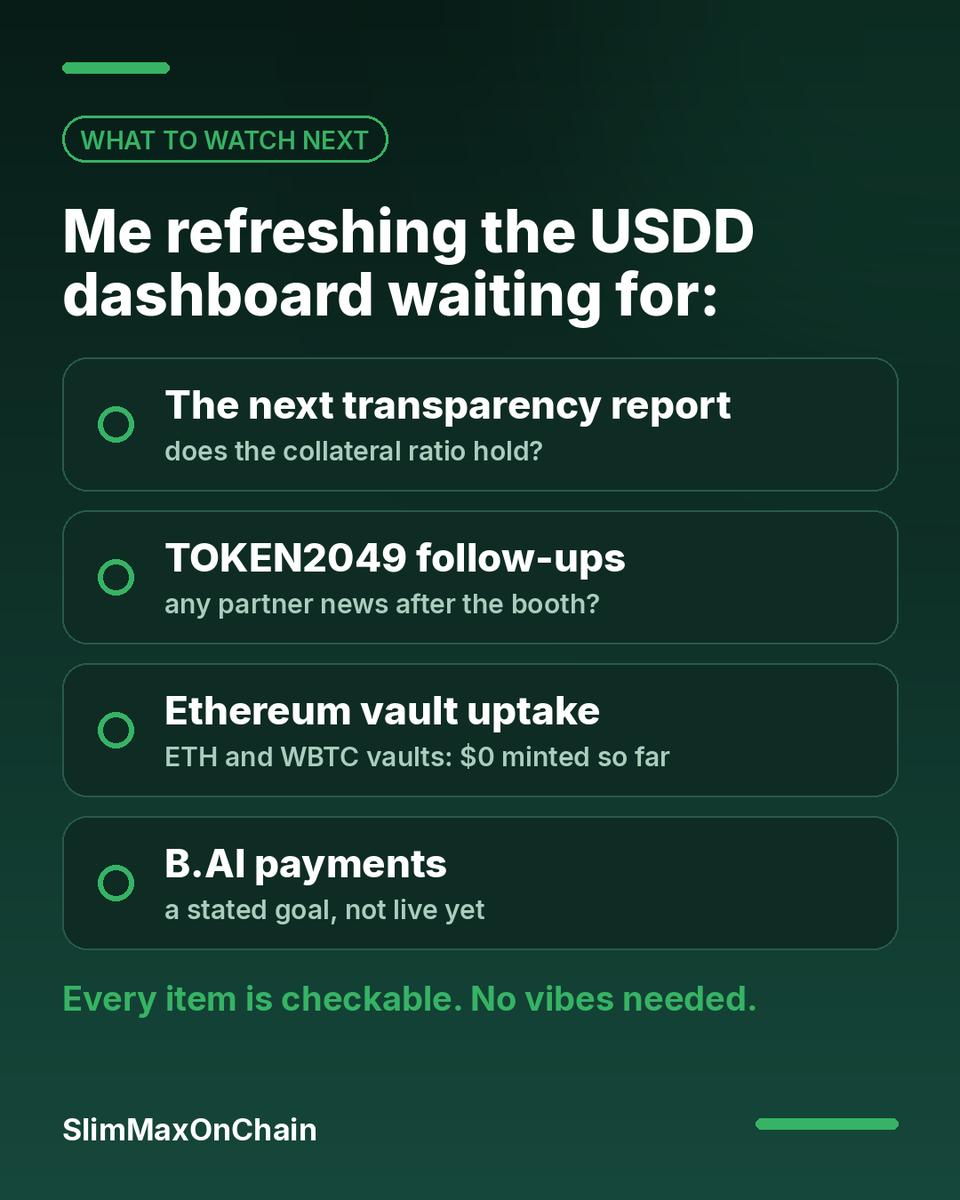
𝗜'𝗺 𝗻𝗼𝘁 𝘄𝗮𝘁𝗰𝗵𝗶𝗻𝗴 𝘁𝗵𝗲 𝗽𝗿𝗶𝗰𝗲 𝗼𝗳 𝗮 𝘀𝘁𝗮𝗯𝗹𝗲𝗰𝗼𝗶𝗻. 𝗜'𝗺 𝘄𝗮𝘁𝗰𝗵𝗶𝗻𝗴 𝘄𝗵𝗮𝘁 𝗶𝘁 𝗱𝗼𝗲𝘀 𝗻𝗲𝘅𝘁. Here's my USDD watchlist for the coming weeks: ➜ 𝗧𝗵𝗲 𝗦𝗲𝗽𝘁𝗲𝗺𝗯𝗲𝗿 𝘁𝗿𝗮𝗻𝘀𝗽𝗮𝗿𝗲𝗻𝗰𝘆 𝗿𝗲𝗽𝗼𝗿𝘁: August showed a 147.96% collateral ratio on $2.26B of reserves, and I want to see whether that holds ➜ 𝗧𝗢𝗞𝗘𝗡𝟮𝟬𝟰𝟵 𝗳𝗼𝗹𝗹𝗼𝘄-𝘂𝗽𝘀: USDD had a booth in Singapore, and I'm waiting to see whether partner news follows ➜ 𝗘𝗧𝗛 𝘃𝗮𝘂𝗹𝘁 𝘂𝗽𝘁𝗮𝗸𝗲: the ETH and WBTC vaults on Ethereum are live, but minted debt is still $0 ➜ 𝗕.𝗔𝗜 𝗽𝗮𝘆𝗺𝗲𝗻𝘁𝘀: the plan is for USDD to become B.AI's core payment network, and that's a goal, not a live product yet I like this list because every item is checkable. Either the report drops or it doesn't. Either the Ethereum vaults start minting or they stay at zero. No vibes needed. Tell me which one you think lands first. I'll be tracking updates on the official Medium: ➜ medium.com/@usddio @justinsuntron @BAI_AGI #TronEcoStar
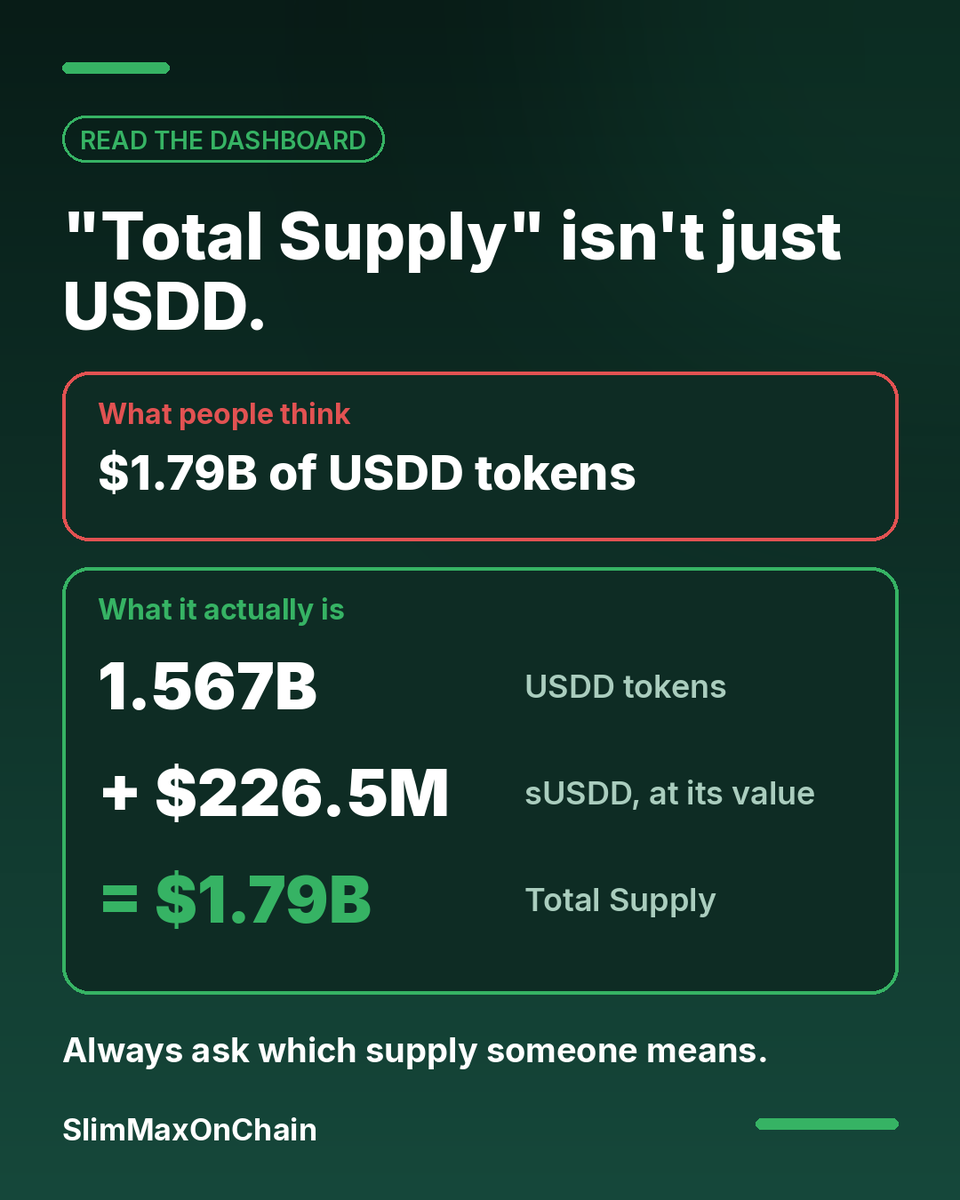
𝗧𝗵𝗲 𝗯𝗶𝗴𝗴𝗲𝘀𝘁 𝗻𝘂𝗺𝗯𝗲𝗿 𝗼𝗻 𝘂𝘀𝗱𝗱.𝗶𝗼 𝗶𝘀𝗻'𝘁 𝘁𝗵𝗲 𝗨𝗦𝗗𝗗 𝘁𝗼𝗸𝗲𝗻 𝘀𝘂𝗽𝗽𝗹𝘆. 𝗜𝘁'𝘀 𝘁𝘄𝗼 𝘁𝗵𝗶𝗻𝗴𝘀 𝗮𝗱𝗱𝗲𝗱 𝘁𝗼𝗴𝗲𝘁𝗵𝗲𝗿. "Total Supply" on the homepage reads $𝟭.𝟳𝟵𝗕. Here's what's inside it: ➜ 𝟭.𝟱𝟲𝟳𝗕 𝗨𝗦𝗗𝗗 tokens across TRON, Ethereum and BNB Chain ➜ $𝟮𝟮𝟲.𝟱𝗠 𝗼𝗳 𝘀𝗨𝗦𝗗𝗗, the savings token, counted at its value Why does that matter? Because if you put that $1.79B next to a token-only figure from somewhere else, you'll think one of them is wrong. Neither is. They just measure different things. Growth claims work the same way. On a consistent basis, USDD plus sUSDD went from 𝟴𝟱𝟵.𝟰𝗠 at the start of the year to about 𝟭.𝟳𝟵𝗕 now, roughly +𝟭𝟭𝟭%. That's the figure I'm comfortable using, because both ends are measured the same way. My habit now: when someone posts a USDD number, I ask which supply they mean before I react. Check the breakdown yourself on the data page: ➜ usdd.io/data @justinsuntron @BAI_AGI #TronEcoStar

Saifuzzaman ❤️UXL... @Saifuzzaman786
40 Followers 358 Following
Delight @Delightweb3_
548 Followers 2K Following Crypto/@Hotcoin_wallet | AI | Market_trends/Web3 researcher | @live_customer_service_rep_via_kommo// @Ambassador// @forex_candle_stick// @content creator💰💰
Noorullah Jamakzai @itzSaasified
2K Followers 2K Following https://t.co/Y63JN4Qxe8 | 25k mrr https://t.co/TNu4jkc3v9 | $600 mrr Builder, marketer - making outbound easy
GamingIntelDrop @x015341072
57 Followers 2K Following 🚀Unlock the future of Play-to-Earn! https://t.co/OBRTDFnlXI| Jigsaw iOS https://t.co/dqfc0wCvsI| Sudoku iOS https://t.co/u7fAdXXf7x|
Лев @nakth_
177 Followers 3K Following
Dizzy James @_Dizzyjames
6K Followers 311 Following Web3 Content Strategist & Writer | Product & Project Manager | Driving Project Growth & Development | KOL & Ambassador |
Ellen @Ellensrv3
49 Followers 355 Following
bet105 Insights @bet105insights
655 Followers 2K Following The bet105 trading desk. Our positions, the sharp money, and where the line's going.
Christopher Gore @GOREREPORT29
85 Followers 247 Following Financial Markets Strategist, Macro-Economics Messenger & Avid Financial Literacy Storyteller.
Do ra @Doraj67
0 Followers 54 Following

Saifuzzaman Shuvo @S_Shuvo_
1K Followers 2K Following Just be focus on your goal. Cooking in @liberappx
Flor @hookanoflor21
44 Followers 2K Following creating spicy content and having the time of my life 🌶️
Joe Joe @joejossy_12
20K Followers 15K Following Driving Web3 Project Growth & Innovation | Web3 Content Creator & Writer | Tier 1 KOL | Strategic Project Amb @trondao @BingXofficial @_kultGames @foresoGlobal
I AM 🕊 @divine_fro41893
10 Followers 210 Following
Gurbaksh Chahal @gurbakshchahal
16K Followers 13K Following Dad 👶 💍 Founder AuraOne & Chahal Foundation Founded ClickAgents (VCLK), BlueLithium (YHOO), RadiumOne (NEXN). AI, robotics, human data.

Johnny @Dr_johhny
4K Followers 4K Following Ideas → Content → Attention → Growth ◈ Web3 Writer ◈ Marketer ◈ Designer ◈ Editor◈ Ambassador
UnboxingGambler @UnboxingGambler
2 Followers 29 Following Just a profil to share with the gambling community
PJ VALOR @0xpjvalor
7K Followers 4K Following Web3 Ambassador ⋆ Alpha shiller ⋆ Founder of pj valor updates hub @ValoriansHub | https://t.co/SNpQ9h2dht 📩 DM for inquiries: https://t.co/BZo0wHUKvQ

Somebody's Candy @SomebodysCandya
152 Followers 448 Following
NILOY @NILOYify
2K Followers 5K Following Ex #KuCoin #CoinEx #LBank | Web3 Community & Business Development | 8+ yrs | Built 10K+ Communities | User Growth & Market Expansion | Open to remote roles 📩

Amit @Amitmvg3
6K Followers 7K Following 🎨 Artist | ✏️ Sketch Maker | ₿ Crypto | Web3 Creating art from imagination. ✨

Greatman @Greatman762756
96 Followers 499 Following
Drew Radio FM.📻 @Ediscuo1345
11K Followers 9K Following Crypto Radio station,blockchain product promotion, Blockchain related advertisment. MOTTO: Since the beginning. Forever onchain
_IncomeSharks @_IncomeSharks77
202 Followers 5K Following Stock and crypto, analysis & predictions. Be careful of impersonators. Trades/education on Slice: https://t.co/MzvoDjv5lb.

SarahM @MuhdSaratu13830
7K Followers 6K Following Content creator, Airdrop hunter, #YapToEarn , #Ambassador // @dragonzlandx , @ston_fi , @tryquantio , Contributor, #Digital_Education_advocate.
BLACK BIT @BlackBit21
3K Followers 585 Following Advocate of Blockchain Innovation | Web3 ambassador and Content Creator | Crypto Enthusiasts Ambassador for/Waves/WhiteBit/ 3PEcGtZnE2QG1nx9Caaxy8eWCnRatusVGJT
LIBER App @liberappx
2K Followers 198 Following Deposit assets. Create LIBER DISK. Track rewards. Exit anytime. Powered by LIBERTAS Protocol.
ANDREW MITCHELL || А... @ANDREWMITCvl
489 Followers 3K Following Head of Customer Care @ Bitmart. we're here to assist 24/7 either you tag ur or chat us directly. we've got you.
Emmanuel @SEFATUBA3__fvC
4K Followers 4K Following I edit and animate short form and long form videos for founders and Web3. Breakdowns and before/afters below. DMs open for projects.
Olivia Turner @OliviaTurn0yge
5 Followers 95 Following

BingXTradFi @BingXTradFi
309 Followers 53 Following Stocks · Gold · Forex · Indices | Powered by @BingXOfficial Market moves. Macro signals. One account, every market. Follow for daily edge 👇

Sarah @SarahDann98
2K Followers 4K Following looking for questions. Then looking for answers. On repeat.

SUPPORT | TRONSCAN @TRONSCAN_ORG_
127 Followers 975 Following The best block explorer of TRON network. Explore the TRON world with: https://t.co/Nhi8HzGkQq #TRON #TRX $TRX #TRONSCAN
BitTorrent中文 BTTC @BitTorrentCN_
189 Followers 860 Following 建立一个更好的互联网,使人们能够自由和安全地分享信 息。 FF X#: https://t.co/lvqIjNN7dq
Support | SunX @Sunx_dex_
178 Followers 922 Following SunX: The first top-tier decentralized perpetual exchange on TRON | Institutional-grade trading experience | https://t.co/Se3eTtY3GJ
Crypto Japans @CryptoJapans
100K Followers 2K Following Japan / bilingual crypto distribution Campaigns, AMAs, JP+EN copy, X + Telegram Licensed products only. お仕事は DM か Telegram へ https://t.co/XDqm9E7ZdP
xtrsk capital @xtrskcapital
2K Followers 5K Following HFT Hedge fund manager https://t.co/BoETbAOfPM Telegram Follow us https://t.co/bw2lGbr1e5

Söz Ordusu @sozordu9
2K Followers 6K Following Ölçü tutmaz belki ama içten. Sıradan biri, sıra dışı bir merakla.
Goddess Lexi @3lexi45
76 Followers 272 Following Lady Lexi, an experienced dominatrix with a true adoration for classical dominance. ❤️Sadistic Sweetheart ❤️Luxury Fetishist & Femdom❤️Sarve Me Locally Or FMTY~
Saifuzzaman Shuvo @S_Shuvo_
1K Followers 2K Following Just be focus on your goal. Cooking in @liberappx
Berzio GMI 👑🧵 @Defi_Berzio
9K Followers 133 Following I Grow, I Build & I create wealth || Growth Manager & Project Advisor || Affiliate #TRONEcoStar
ORACLE @ORACLE_OKLA
10K Followers 8K Following 🌟 Degen Hunter in The Trenches @byzanlink 💎AI & Robotics | Defi | Prediction Market 💎Ambassador @HTX_Global l @xtrade_xyz |@GameSpot DM : https://t.co/s935idKp8b
American Mineral Reso... @AMR_MineralRes
40 Followers 49 Following We acquire and develop high value precious metal and rare earth mining projects globally-building the foundation for anew era of tokenized, real-world assets.
Safe In Our World @SafeInOurWorld
10K Followers 541 Following The video games mental health charity | No. 1183344 | Check out our linktree for support, helplines and where to find us! 🪐 https://t.co/u1kZPce9bk
Nodiens @nodiens
63K Followers 48 Following Sharpen Your Edge. Unified market intelligence: signals, risk, sentiment, one view. Live on web, iOS and Android → https://t.co/WnfT87EtLw
Ryfinite @ryfinite
40K Followers 146 Following Your key to the next era of DeFi ✦ Discover DeFi opportunities, participate on-chain, build your digital identity, and unlock ecosystem rewards.

African Languages Lab @all__lab
9 Followers 20 Following We are the leading African language AI research and deployment company. We built Mansa, an AI supporting over 30 African Languages. Join the waitlist https://t.co/fljyJRRkV1
FBYT @FBYTio
9K Followers 935 Following Active onchain money management. Transparent vaults. Non-custodial capital. Discord: https://t.co/Se1UVlq4z2
Gurbaksh Chahal @gurbakshchahal
16K Followers 13K Following Dad 👶 💍 Founder AuraOne & Chahal Foundation Founded ClickAgents (VCLK), BlueLithium (YHOO), RadiumOne (NEXN). AI, robotics, human data.
Talaxeum Ecosystem @TalaxeumEco
2K Followers 86 Following Beyond products. Beyond platforms. Evolving the Talaxeum 2.0 Ecosystem Powered by TALAX NetCard. 🌍 Access · Participate · Contribute · Impact
Money @Moneyz0x
3K Followers 737 Following Web3 content creator | learning in public • community builder | Shitposter 🥱 TG : https://t.co/Tx6uXN4IQP

BUZZZ Network @thebuzzznetwork
758 Followers 0 Following Building the human layer for AI. Mining, tasks, XP, levels & teams today. Real human contributions, AI utility & on-chain ecosystem ahead.
EPTA @eptastudios
857 Followers 63 Following Launch Partners for Startups & VC firms. Clients: @a16z, @kalshi, @p0, @extropic, @greptile
Young Rich @YoungRich6h
16 Followers 116 Following
PJ VALOR @0xpjvalor
7K Followers 4K Following Web3 Ambassador ⋆ Alpha shiller ⋆ Founder of pj valor updates hub @ValoriansHub | https://t.co/SNpQ9h2dht 📩 DM for inquiries: https://t.co/BZo0wHUKvQ
Action Model @ActionModelAI
58K Followers 30 Following The future of AI shouldn't be owned by big tech, it should be owned by all of us. Discord: https://t.co/S4Fj0GcQos
EmpireDrop @empiredrop
39K Followers 11 Following Unbox your dream Luxury items, Play with your friends & Enjoy instant Withdrawals. 📦
Amit @Amitmvg3
6K Followers 7K Following 🎨 Artist | ✏️ Sketch Maker | ₿ Crypto | Web3 Creating art from imagination. ✨

Orihime @orihimexweb3
2K Followers 958 Following Ai x Crypto Best community supporter you ever see ... Something At - @Duel_duck

mofo @trademofo
1K Followers 1 Following all the tools you need to stay ahead of others on fomo & pump app https://t.co/qqN3KWJDjh
PancakeSwap @PancakeSwap
2.1M Followers 340 Following Everyone's favorite DEX. Swap, trade, and earn across 11+ chains.
SarahM @MuhdSaratu13830
7K Followers 6K Following Content creator, Airdrop hunter, #YapToEarn , #Ambassador // @dragonzlandx , @ston_fi , @tryquantio , Contributor, #Digital_Education_advocate.
BingX @BingXEnglish
32K Followers 248 Following Trade Crypto, Forex & Indices with Confidence Official crypto exchange partner of @ScuderiaFerrari & @ChelseaFC 📲 Join our Telegram: https://t.co/ktBjyn09QZ
Olivia Turner @OliviaTurn0yge
5 Followers 95 Following
NERO Chain @Nerochain_io
57K Followers 132 Following The self sovereign economy layer. Powered by $NERO. Discord: https://t.co/Au1LfScqqr
LIBER App @liberappx
2K Followers 198 Following Deposit assets. Create LIBER DISK. Track rewards. Exit anytime. Powered by LIBERTAS Protocol.
Antseed @AntSeed
6K Followers 160 Following Non Profit Foundation. The open market for AI inference. Peer-to-peer. Onchain payments. Verifiable reputation. 🐜🌱 https://t.co/q0t7Vh21lw
LBank.com @LBank_Exchange
722K Followers 4K Following https://t.co/OIbrw8c0PL | 30M+ Users | 11 Years | Spot, Futures & Stocks | Partner of @AFA | Discover the Next Crypto Gem 💎Official TG: https://t.co/sTGTXxCThG
CRYPTO ATTACKS || DAO @CryptoAttackDao
229K Followers 382 Following The signal in the noise of Web3. We deliver high-conviction analysis, project deep-dives, and market-moving Alpha insights. #MarketInsights #Trade #Analyst
Block_CK @BlockChain_CK
300K Followers 738 Following ◆ Korean KOL ◆ Web3 & Crypto Content Creator 🚀 Web3 | Crypto | AI | TCG 📢 X & Telegram Community 🤝 KOL / Marketing / Partnership 📩 DM for Collaboration
DigiFinex Global @DigiFinex
254K Followers 790 Following 🧐#DigiFinex | GLOBAL CRYPTOCURRENCY EXCHANGE 📲Download: https://t.co/A2PHozrJLl 🙋Contact us: https://t.co/MYbhMH3JVK 💼Hiring: [email protected]

Artyfact ⚡️ @artyfact_game
396K Followers 72 Following 🎮 #AI #Multiplayer #Shooter Where Skill Pays! 👨🏻🎤 Join our https://t.co/RtlwTgvs65 and Telegram https://t.co/OIGj5UmeAM ⚡️
META STAR @META_STARx
254K Followers 38 Following META STARx 🔥 🚨 Early Airdrops | Free NFTs | Premium Alpha 🎁 Whitelists, Flash Giveaways & Collabs 🎮 Powered by #P2E #M2E #W2E 📩 DM for Partnerships
OxineEth @Crypto_OxineEth
341K Followers 38 Following Stay Informed with the Latest in Crypto & NFT • #GemOriental • Speaking the Universal Language of Cryptocurrency • DM Let’s Connect, Innovate & Collaborate! 📩
BitMart @BitMartExchange
1.3M Followers 653 Following Trade smarter: Crypto, TradFi, AI trading tools, and prediction products in one platform. 🎁 Up to 14,000 USDT bonuses: https://t.co/67KK8V8NTd
Wise Crypto @WiseCrypto_
374K Followers 2K Following Trader • Investor • IDO Analyst • TA Insights • Market Update • AMA • Giveaways 🔗 https://t.co/3ZvMZfdnFi #DYOR #NFA
tagSpace | Find what ... @tagSpaceCo
11K Followers 230 Following Leave notes, tips and stories on real places. Find what others left. 📍 Get the app 👇 Information ● Exploration ● Entertainment ● Reimagined
Emmanuel @SEFATUBA3__fvC
4K Followers 4K Following I edit and animate short form and long form videos for founders and Web3. Breakdowns and before/afters below. DMs open for projects.You might like


















