

-
Tweets692
-
Followers1K
-
Following0
-
Likes1K
The financial strength of IS‑Somalia in the years leading up to 2025 was one of the key pillars that enabled the group to sustain its operations inside Somalia and support ISIS networks abroad. Intelligence reports indicate that in 2021 the group generated approximately $2.5 million while in the first six months of 2022 it raised nearly $2 million reflecting a monthly income that could reach $100,000. Estimates for 2023–2024 placed the group monthly revenue between $100,000 and $360,000 while other sources assessed its annual budget at a minimum of $4 million. These discrepancies stemmed from differences in timing and methodology of data collection. The primary sources of IS‑Somalia income were extortion and illegal taxation particularly levies imposed on traders companies financial services and businesses in areas where the group maintained indirect control. IS‑Somalia relied on commercial networks and diverse financial channels to collect and move money. According to a recent report by the U.S. Treasury Department the group funneled funds through cash transfers, businesses, banks and mobile money creating a broad financial system not dependent on a single pathway. Al‑Karrar played a central role in this system acting as a hub for collecting and distributing funds facilitating the movement of foreign fighters and linking ISIS branches globally. Intelligence reports described Al‑Karrar as vital not only for Somalia but also for IS‑Somalia ability to support other ISIS networks. While open sources do not confirm that Al‑Karrar was completely dismantled its capacity and financial connectivity have been significantly weakened. The turning point came with Puntland military campaigns beginning in late 2024 and intensifying in 2025. These operations deprived IS‑Somalia of key revenue bases and disrupted links between local revenue collectors and financial networks. A major blow was the capture of Abdiweli Mohamed Yusuf aka Abdiwali Walac Walac the head of IS‑Somalia finance office. Recognized by the USas the group financial chief since at least 2019 his arrest confirmed by Puntland authorities and US-AFRICOM removed one of the most critical figures managing the group finances and transactions. IS‑Somalia financial situation had deteriorated sharply compared to 2022–2024. Monitoring reports assessed that the group ability to raise revenue had collapsed, with extortion points heavily secured and disrupted. Although IS‑Somalia still retains limited income streams these only allow for small scale operations rather than sustained campaigns. The group has suffered major battlefield and financial setbacks facing relentless pressure from Puntland forces and targeted US operations that dismantled its financial and operational infrastructure. #Somalia
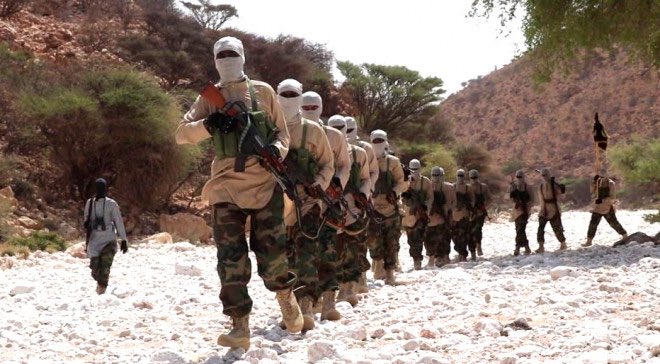
Fighters belonging to Somalia militant group Al‑Shabaab are reported to have spent three months in the Saada region of northern Yemen where they underwent intensive training on the preparation and operation of unmanned aerial vehicles (UAVs). According to local and security sources, the program was conducted in areas under the control of the Houthi movement which has long maintained dominance in the region. The training focused on the construction of UAVs their maintenance and remote control systems, with particular emphasis on assembly techniques, operational deployment and guidance methods. This reflects growing concerns about the expanding use of drones by armed groups across the region. Security observers have expressed alarm over the potential knowledge sharing and cooperation between militant organizations operating in different conflict zones especially in the field of drone warfare. The reported program highlights how UAV technology is becoming a central tool in asymmetric conflicts raising the risk of more sophisticated attacks. The collaboration between Al‑Shabaab and Houthi elements appears to have deepened with trust and confidence between the two sides driving a significant escalation in their partnership. This development underscores the emerging threat of drone proliferation among non state actors and the challenges it poses to regional security.
Intelligence reports revealed that in April 2025 US destroyed two unflagged vessels originating from Yemen and heading toward Somali waters. the ships were carrying advanced conventional weapons. Al-Shabaab had established operatives to coordinate cooperation with the Houthi group in Yemen. The central figure in building this relationship was Jibril Yahya Ali, a Somali national who served as the primary liaison between Al-Shabaab and the Houthis since at least 2023. The Houthis provided him with a furnished residence in Sana’a and a Yemeni passport issued under a false identity. An internal assessment by Yemen Counterterrorism Agency described Jibril as a key actor in strengthening ties between the groups particularly in arms transfers military equipment and technical expertise. He was killed on February 12, 2026 after being struck by a missile near Al-Ghaydah in eastern Yemen. Another senior official Sheikh Ahmed Ilmi Samatar was dispatched to Yemen in 2024 as a high level envoy. He delivered to Houthi authorities a detailed weapons list that included shoulder fired anti aircraft missiles, Katyusha rockets, sniper rifles, attack drones, anti tank missiles and night vision equipment. Arms trafficking formed the backbone of this cooperation. Front companies linked to the groups reportedly concealed weapons shipments as civilian goods before routing them through Yemeni ports such as Mukalla. Fishing vessels and high speed boats then transported the cargo across the Gulf of Aden to Highly monitored stretches of Somalia northern coastline.
Puntland forces in cooperation with the @USAfricaCommand carried out a major operation that destroyed the command center linking Al‑Shabab and the Houthi group. This facility was located in the Markad area of the Golis mountain range specifically in Laasqoray district of Sanaag region. Heavy airstrikes targeted two key sites one was a training camp and the other a weapons depot. Both were critical to Al‑Shabab operations. During the attack two Houthi engineers were killed they had been working on assembling improvised rockets. The site also served as a transit hub for weapons smuggled from Yemen which were then distributed to Al‑Shabab units inside Somalia. This operation was significant because it dismantled infrastructure that supported the black market arms trade and strengthened terrorist networks. By striking these facilities cooperation between Al‑Shabab and the Houthis inside Somalia has been severely disrupted. #Somalia #Markad
Emerging reports indicate that between 2022 and 2025 Al‑Shabab experienced a significant decline in the revenue streams used to obtain in Mogadishu particularly from areas it considered vital. According to Somali intelligence efforts began two years ago to systematically shut down every financial channel the group relied upon including markets, land holdings, ports, and airports. This campaign evolved into a financial war targeting banks and mobile money platforms that Al‑Shabab had infiltrated through operatives embedded within civilian society. The government succeeded in dismantling these networks, effectively cutting off the group’s access to illicit funds. Al‑Shabab generated more than $80 million annually which financed salaries for fighters, food supplies, weapons procurement, ammunition and medical equipment. The government also arrested over 50 individuals involved in laundering the group money. Many of these suspects were linked by family ties, a tactic designed to conceal financial trails. Al‑Shabab now faces severe financial strain. In 2023, the group attempted to compensate by offering millions of dollars to the Houthi movement in exchange for modern weaponry and technical expertise. the collapse of its revenue base has made sustaining such deals increasingly difficult. #Somalia

It is widely acknowledged that IS‑Somalia suffered a decisive defeat in the battles fought last year by Puntland local forces. The group endured a crushing blow that dismantled its critical units and forced it to abandon key positions in the Al‑Miskad mountain range. According to a recent UN Security Council report, IS‑Somalia remaining strength is estimated at 150–250 fighters including its overall leader ISIS emir Abdikadir Moumin and his deputy heading IS‑Somalia Abdirahman Fahiye. This is very similar the assessment given by Gen. Michael Langley in 2025 who noted the group manpower at 1200–1500 fighters primarily foreign jihadists smuggled into Somalia between 2018 and 2023 via clandestine migration routes. The combination of direct combat by Puntland local forces and sustained airstrikes by US-AFRICOM and the UAE resulted in the deaths of more than 900 IS‑Somalia militants. This synergy of ground operations and precision strikes has left the group crippled and unable to reclaim its former capacity. #Somalia

At the start of this year, piracy activities have resurged across the waters of Somalia, Yemen and the Gulf of Aden. During the second quarter alone, approximately 32 incidents were recorded, comprising both successful and attempted attacks. These operations were concentrated along the northeastern Somali coast reigniting widespread security concerns and posing renewed challenges for commercial vessels navigating one of the world most critical maritime corridors. Successful hijackings have resulted in 6 foreign vessels and 96 crew members currently being held hostage. These abductions underscore the growing operational capacity of Somali pirate groups and highlight the severe threat they pose to international trade, regional economies and the safety of maritime traffic transiting Somali waters. This week incidents along the coastal areas of 𝐆𝐚𝐫𝐦𝐚𝐚𝐥 And 𝐀𝐫𝐠𝐞𝐞𝐠𝐭𝐨 resulted in the deaths of thirteen pirates targeted in airstrikes carried out by military aircraft positioned above vessels currently held hostage in Somali waters. These operations have heightened regional tensions and triggered a decline in both maritime travel and fishing activities as local operators fear becoming targets of military assets monitoring hijacked ships. The situation has been particularly acute near Argeegto in Nugaal, northeastern Somalia where a hijacked vessel remains anchored approximately six to seven kilometers off the settlement of 𝐃𝐡𝐢𝐧𝐨𝐰𝐝𝐚. The presence of military forces in the area has created a volatile environment, further discouraging commercial and subsistence use of the sea. #Somalia
This information was disseminated by @TIKLS_ through verified sources and limited intelligence. The beginning of Somaliland recognition journey was a sensitive time marked by travels of officials including President Cirro, who today confirmed his first visit in October 2025.
President of Somaliland Ciro made a secret visit to Tel Aviv in October where he met with Israeli intelligence officials. linkedin.com/posts/tikls_19…
1/4 ISS is concentrating on maintaining a presence in key valleys seeking supply routes and secure bases essential for their fighters. These areas have served as strongholds where militants could evade aerial bombardments and sustain their operations.
1/1 Since April, Islamic State group in Somalia has resumed indirect attacks targeting camps and roads used by Puntland government forces. Reports indicate that these assaults carried out at different times have resulted in casualties including both deaths and injuries.

1/3 Tocontain the small cells of ISS the PForces has launched a renewed and intensified mobilization.This time the focus is on involving armed local communities who have resumed conducting security operation These operations have taken place in the valleys of Jeceel Curar Miraale
1/2 Puntland forces together with their ally US-AFRICOM responded to the attacks carried out by IS-Somalia with effective airstrikes. These strikes took place mainly in the Jeceel area where several militants responsible for the series of assaults against local forces were killed
𝗧𝗜𝗞𝗟𝗦 𝗢𝘃𝗲𝗿𝘄𝗮𝘁𝗰𝗵 Intelligence reporting indicates that dozens of al‑Shabaab fighters recently infiltrated Yemen through illicit maritime smuggling routes raising concerns about deepening coordination among extremist networks in the region. Among those who arrived were three senior commanders, who slipped ashore before moving inland toward Shabwa and Marib. Sources reveal that these leaders held direct meetings with operatives of al‑Qaeda in the Arabian Peninsula (AQAP) in Shabwa with discussions centered on strengthening security cooperation and logistical support. The talks are believed to have focused on sharing battlefield expertise and preparing joint operations in unstable strategically significant areas. The movements did not stop in Shabwa and Marib. Several al‑Shabaab members later traveled to al‑Bayda, where they reportedly engaged with Houthi militants. Intelligence suggests that these encounters explored discreet forms of collaboration including facilitating fighter mobility and exchanging logistical assistance despite the public rhetoric of hostility between the groups. Additional reporting highlights al‑Shabaab growing role in cross border smuggling networks that traffic weapons and narcotics on behalf of the Houthis. These operations provide the militia with supplementary revenue streams while reinforcing their military capacity. The smuggling activities are managed through complex maritime and land corridors exploiting Yemen rugged terrain and vast areas beyond effective government control. This environment grants extremist networks significant freedom of movement and concealment amplifying regional security risks.

Eid Mubarak 𝐓𝐈𝐊𝐋𝐒 sends warm wishes to all Somalis and Muslims around the world for a blessed Eid-Al-Adha filled with joy and peace.

𝗧𝗜𝗞𝗟𝗦 𝗢𝘃𝗲𝗿𝘄𝗮𝘁𝗰𝗵 IS‑Somalia branch of the violent extremist group Islamic State has recently released imagery from the Al‑Miskaad mountains. The footage intended as propaganda instead highlights the group decline. Fighters appear poorly equipped with some dressed in civilian clothing such as macawiis signaling shortages in supplies and discipline. The majority of those visible are foreign nationals underscoring the sharp reduction in Somali participation. This shift confirms that local recruitment has collapsed leaving the group increasingly isolated from the communities it once sought to influence. The reliance on foreign fighters and the evident lack of resources reflect disrupted funding streams and weakened internal networks. Rather than projecting strength, the imagery reveals a group in survival mode. While this diminishes IS‑Somalia ability to conduct coordinated operations it raises the risk of sporadic violence from fragmented cells seeking attention. For the Horn of Africa, this decline carries both opportunity and caution. On one hand, the weakening of ISIS‑Somalia creates openings for counterterrorism forces to dismantle remaining cells. On the other, the vacuum may invite competition from rival militant factions. Communities appear increasingly resistant to extremist recruitment, a positive sign for long‑term stability. TIKLS assesses that IS‑Somalia deterioration marks a turning point in the extremist landscape of Puntland and the wider Horn of Africa. Continued monitoring of foreign fighter movements and propaganda output will be essential to anticipate residual threats. The group’s decline offers a chance for decisive counterterrorism action, while reminding stakeholders to remain vigilant against isolated acts of violence. #Somalia

Muhanad @muhanad1913549
367 Followers 1K Following
Cimraan Cajab @cimraancajab
4 Followers 82 Following
zaidosforza @zaidosforza
2 Followers 53 Following I am Somali 🇸🇴. No living creature under the sun holds dominion over me.
Barbara @BarbaraJoyy
421 Followers 4K Following Being nice to the people you don`t like isn`t called 2 faced, its called growing up.
Fayes Badran @FayesBadraq1
2 Followers 133 Following The intersection of disruptive innovation and regional instability
Alex Anastasiades �... @AJAnastasiades
50 Followers 417 Following Α 🇬🇧 Defence Diplomat living and working in 🇸🇦. On-the-ground reflections on defence and international affairs issues impacting the Gulf and Middle East.
Ahmed Suleiman Hussei... @diinaaari
5K Followers 903 Following Terrorism Research lead @ONSSomalia Office of National Security| The presidency |Somalia.

🌺Safia Yasin @SafiaYasin
2K Followers 2K Following M.A. International Development -B.S. Psychology 📚 #Camels #Beaches #Books #RedSea #HornAfrica


︎ ︎ @05BM44
15K Followers 4K Following This page has multiple admins with permissions to post content, comment & send messages ▫ RTs ≠ Endorsements ▫ Non-Political ▫ 🇰🇪 ▫ Policy Support Analysis

Isaac Sal @IsaacSal769482
4 Followers 199 Following

Conflict intel @ukraineintel22
68 Followers 945 Following Posting relevant information from conflicts, mainly the Russian invasion of Ukraine
Brittney Jenkins @Brittne20766695
113 Followers 2K Following
Neil H @neil_hamman
334 Followers 2K Following Focused on international relations and global security | Views my own; retweets not endorsements | Fear nought but God.
Mohamed Gabobe @Mohamed_Gabobe
2K Followers 2K Following Journalist & Producer based in Mogadishu, Somalia | Bylines: @AJEnglish @channel4news @washingtonpost @guardian @nytimes @BBCAfrica, Plus Many More
Abdirahman Qaanuf @QaanufAb
401 Followers 767 Following Extrovert |Studied MA of Education @JazeeraUniv | Studied Higher Diploma in Criminology @hiss_edu_so | interested in leadership | Member of People's Power Party
Maad Alzekri | معد... @MaadAlzekri
8K Followers 7K Following Video journalist This is my personal account and it is not affiliated with any entity Whatever I tweet rep
my name jhonny @mynamejhonny
0 Followers 73 Following
Claude Carpentier @ccarpentier0301
3 Followers 57 Following

Gebremichael @Gebremichael88
1 Followers 67 Following
@Ibrahim weheliye moh... @weheliye055
70 Followers 774 Following An Independent intelligence| Peacebuilding and Conflict Resolution Specialist| Governance and Justice Specialist.
Paolo Dona @PaoloDona144122
0 Followers 123 Following
Adan Abdi Issa (Garca... @AdanAbdiIssa
168 Followers 2K Following 🌱Extension Officer | Ministry of Agriculture & Irrigation, Jubbaland 📍 Based in Kismayo, Somalia .


Toufik Hillali @HillaliTou35484
11 Followers 271 Following
Abdirisaaq Koore @koore97730
21 Followers 521 Following
Jojomojodojo @JojojerFRA
61 Followers 6K Following
arada ab @AradaAb18929
7 Followers 308 Following
Ethiopian Embassy Mog... @ETEmbassyMGQ
999 Followers 373 Following This is the official X handle of the Ethiopian Embassy in Mogadishu, Somalia.
a a @aa172087135218
0 Followers 92 Following
mowgli.mo @MowgliMo77
2 Followers 50 Following
ali @ali123898333505
25 Followers 1K Following
рдвнски @Radovenski_
60 Followers 2K Following
Asli Ahmed @ahmed_asli38915
0 Followers 21 Following
حمد @md300005
7 Followers 756 Following لَا إِلَهَ إِلَّا أَنْتَ سُبْحَانَكَ إِنِّي كُنْتُ مِنَ الظَّالِمِينَ

Onkod M. ali @Madaryare_Ali
111 Followers 2K Following Activist,inspirational , motivator and team leader

kaleabberhe @kaleabberhe22
18 Followers 991 Following
Abdurahman Sheikh Azh... @HOA_ANALYST
6K Followers 7K Following Director @Wargelinn Analytica | FMR Intelligence Briefer for President of Somalia| FMR Senior Security, Counterterrorism and Geopolitical Advisor@OPM&ONSSomalia
Frontier Risk Solutio... @frontierrs
294 Followers 38 Following FRS is a leading security and risk management company dedicated to safeguarding people, assets, and operations in volatile and high-risk environments.

You might like


















