

Abhinaysai Kamineni @ask_my_stack
Building AI agents + infra. Working on product loops, evals, that ship AI systems and own distribution. askmystack.space San Francisco, CA Joined July 2024-
Tweets96
-
Followers36
-
Following354
-
Likes607
The most requested feature is often a symptom, not a need. People ask for exports because the dashboard doesn't answer their question. People ask for integrations because one step is too manual, that is there feature significance and company value grows with product enhancement.
Disaster imagery "within hours" sounds fast until you see the queue. Book the pass, wait for the downlink, then a human sorts the images. Put a change-detection model on the satellite and two of those steps disappear.
Everyone says "add more agents" for hard tasks. I tested it on Cortex: 1 agent vs [N] on the same [N] tasks. More agents: [X]% pass, [Y]× the tokens. One agent with a tighter tool contract: [Z]%. In simpler terms Coordination costs more than intelligence buys. B.
@lennysan @joshwoodward The team knows first because they see the usage logs and workarounds every day. Leaders see the roadmap. The fix is putting raw user sessions in the leader's week, not summaries.
@rafalwilinski @runlayer Folks work because each one owns its own memory and job, so context stops bleeding across tasks. Have you hit a case where folks needed the same context and drifted?
@svpino Graph retrieval helps when relationships matter, but building the graph is the real cost. Do you rebuild edges on every data change or batch it?
@mattpocockuk Splitting one big skill into [your number] small ones made the agent pick the right one more often. Where do you draw the line on skill length? curious!~
@hwchase17 We push results into a queue the parent checks between steps instead of interrupting mid-thought. Interrupts broke the parent's plan more often than they helped. Do you let the parent ignore a finished subagent, or must it acknowledge it?
@omarsar0 The catch is your harness logs need outcomes attached, not just diffs. A change log without "did the task pass after this" is noise for training. How are they labeling which harness changes actually helped?
Every AI startup pitch has a demo video. None of them show the Slack thread where a human quietly fixed the issue on the product. That thread is the real product insight that gives bigger picture about the product.
A star died, and a new planet grew from what it left behind. Even the end of a star isn't the end of the story.
Most harnesses put one gate after the tool returns. By then the charge cleared, the file moved, the message left. Authorize outbound. Redact inbound. Same loop, two different products.
AI stopped being something you ask and became something that keeps working after you close the laptop. Now it's in the room with your whole team. So the product isn't the agent anymore. It's the approval step.
Autonomy isn't more agents. It's redesigning the job so AI Native that agent can finish and human become the orchestrator. If your workflow still needs a person at every fork, you didn't ship leverage. You shipped a faster checklist.

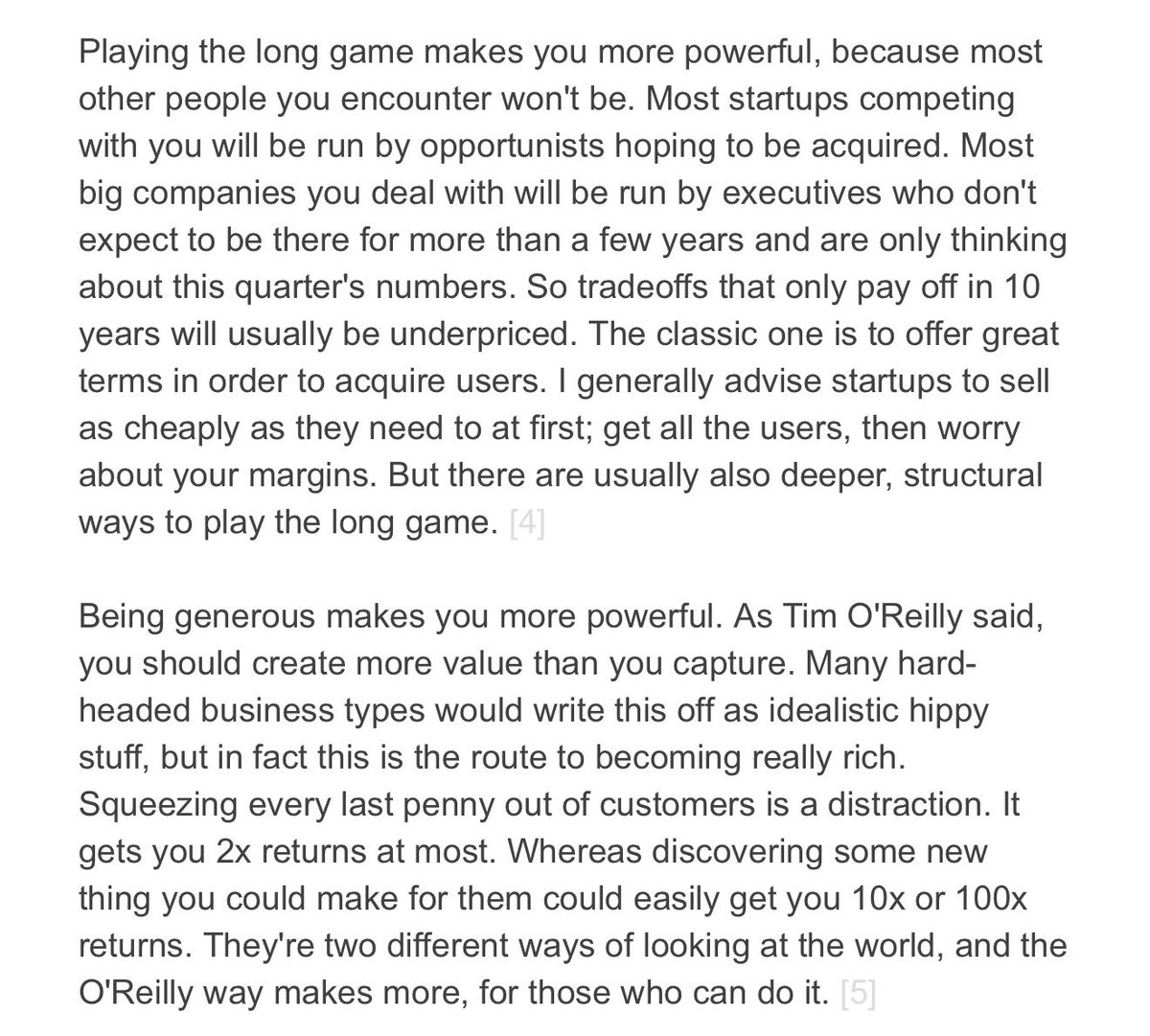
“Tradeoffs that only pay off in 10 years will usually be underpriced.” Play the long game. When you think in decades rather than quarters, you’ll see that your potential customers have trajectories, not fixed sizes. Paul Graham on making startups more powerful: paulgraham.com/powerful.html
The next leap isn’t a bigger chat model. It’s a decision model mid-run: pass, fail, retry cheap, escalate when it matters. Most stacks optimize the paragraph. The expensive part is the fork. Evals that only score the ending are reviews. Evals that change the next step are control of Safe AI.
Shipping agents overnight is easy. Waking up to a trail that tells you what changed, what it cost, and what to roll back is the hard product. The scarce layer isn’t another model. It’s ops that still works when you’re asleep, So I started building an open source Fulcrum github.com/askmy-stack/Fu…
The scarce skill in robotics isn’t another smoother grasp. It’s catching the almost-drop, writing it into a reusable recovery, and running the next carton without a human reset. If your training set only has perfect demos, you taught the arm the easy day. The hard day is the product.
In AI times, demos are cheap and systems are expensive. A demo answers once. A product answers next week with the same permissions, memory, and eval you can trust. If it only works in the chat where you built it, you didn’t ship a product. You shipped a moment.

Every functioning institution is merit-based, not participation-based.


Rawiya @Rawiya019195673
4 Followers 275 Following
Lakya @Lakya1521020701
1 Followers 332 Following
Glyndwr @Glyndwr6I8D
5 Followers 482 Following
Wahkuna @Wahkuna7NEvwK
8 Followers 765 Following
Cleveland @Cleveland276446
4 Followers 300 Following

Wynono @Wynono8278525
6 Followers 331 Following
Vincentia @Vincent15936357
2 Followers 342 Following
Media @404notfoundmedi
1K Followers 548 Following
Ebi @EbiThinks
3K Followers 4K Following In semiconductors, I trust. Semiconductors | Data Centers | AI
Andela @Andela28429019
0 Followers 241 Following
Eiros @Eiros3181076
3 Followers 237 Following
Isaac @Isaac22360869
2 Followers 173 Following
Ohiyesa @Ohiyesa4306241
0 Followers 147 Following

Itsrodeygonzales @Itsrodeygoigcg
13 Followers 524 Following
Edek @EdekKeDQ
3 Followers 438 Following
Norna @NornarJSX
1 Followers 154 Following
Leann Haddad @leannhaddad
758 Followers 257 Following founder (acquired) | ops & product | delusional baker & photographer

Michel @MichelRajkovaca
243 Followers 726 Following AI & Cybersecurity Consultant | AI, custom software, cybersecurity & technical partnerships | Block Consulting
Bhagyam Tiwari @maygahb
430 Followers 768 Following
Arnesh @arnesh_11
3K Followers 3K Following 4th year med student at AIIMS Delhi // intern @UltrahumanHQ // building @usepapertrace // health and startups
. @_1jason_
82 Followers 2K Following Host: @twistartups @theallinpod@thisweeknai; 1 invest in 100 startups a year @launch & @founderuni [email protected] for life


Artificial Doge @DOGEAINVDA
331 Followers 2K Following $DOGEAI- Artificial Doge Paired with $NVDA 7pBvmrqSXGi5oofq9oyq8jzNnLR9RtkZBq13e7f7pump https://t.co/k4EST6poGK
XRP Update@Crypto @XrpxUdate1
149 Followers 3K Following I'm crypto enthusiast who believes #XRP is the key to revolutionizing global finance, with a keen eye on the #XRPLedger.

Rebecca Thomas @Rebecca29944120
903 Followers 8K Following 🚀 Introducing Rizq token – The Future of Growth-Driven Digital Assets We are excited to introduce Rizk token, a next-generation crypto token.
Meet @meetjoshi010
2 Followers 22 Following

Vinod Khosla @vkhosla
779K Followers 673 Following entrepreneurship zealot, grounded technology possibilist, believer in the power of ideas, passionate about sustainability & impact; @Seahawks & @12s fan
Nathan C. Frey @nc_frey
9K Followers 2K Following Head of Drug Discovery & Development Research @AnthropicAI | previously CTO & Co-Founder @CoefficientBio (acq. by @AnthropicAI) | ex-@Genentech | @MIT @Penn

neo @PineapplesDev
341 Followers 220 Following ABC: Always Be Cooking 🧑🍳 👻 https://t.co/CXLbGCp5Km 🍍 https://t.co/KFgCrif9f7
Ebi @EbiThinks
3K Followers 4K Following In semiconductors, I trust. Semiconductors | Data Centers | AI
Chinsanity @chinsanity
11K Followers 3K Following Host of Chinsanity Show, a livestream tech show covering the people, culture, & trends.

Mayor Zohran Kwame Ma... @NYCMayor
2.7M Followers 108 Following Fighting every day to deliver a city that working New Yorkers can actually afford. Mayor of New York City.
Microsoft On the Issu... @MSFTIssues
40K Followers 1K Following News and perspectives on legal, public policy and philanthropic topics for #Microsoft
Yash Patil @ypatil125
11K Followers 668 Following Co-Founder, CEO @appliedcompute 🚂 prev: @OpenAI, @Stanford
Eric Daugherty @EricLDaugh
1.2M Followers 3K Following Chief Content Officer @RightLineNews @FLVoiceNews | Marylander-turned-Floridian | “Men must vote” - Charlie Kirk
Chetan Tekur @chetantekur
429 Followers 680 Following Head of Product for OSS/Agents at @reflection_ai. Ex-Google, Ex-Groq, Ex-Nvidia. Here to discuss LLMs and Agents.
Sumer Sao @sumersao
2K Followers 623 Following leading comms/growth & more @etched // prev founding eng @kalshi @robinhoodapp @stanford
shreya rajpal @ShreyaR
9K Followers 1K Following ML, systems, and everything in between. Building @guardrails_ai. Previously founding eng @predibase, @Apple SPG, @driveai_, @IllinoisCS, @iitdelhi.
Codex Updates @Codexresets_
11K Followers 11 Following unofficial - Just Codex Updates not affiliated with @openai
Ava Carroll @typeava
724 Followers 483 Following designer, previously. design recruiter, recently. type A, always.
Wispr Flow @WisprFlow
36K Followers 179 Following Smart voice-to-text that turns messy, real-world speech into perfectly formatted text. Now, with Notetaker.
Tanay Kothari @tankots
37K Followers 384 Following CEO @WisprFlow | IOI medalist | Forbes 30 under 30 | Stanford CS + AI
Department of State @StateDept
6.8M Followers 410 Following Leading U.S. foreign policy and American diplomacy since 1789. For all Department accounts: https://t.co/VpbtF1M8HK
Harry Chow @harrychow_
2K Followers 316 Following 3x founder | tech marketing | professional side quester founding ✷ @pinetree_ai (StartX 25) building ✷ @getsolari mba @babson | alumni @bentleyu

Colosseum @colosseum
65K Followers 117 Following Crypto’s premier hackathon, accelerator, and venture fund | https://t.co/l8ojirFTE6
Garry's List @garryslist
5K Followers 49 Following A citizen's union for radical centrism. Advocating effective government, housing, education, pro-tech, and pro-prosperity

VOLTIX @VOLTIXSOL
26K Followers 744 Following Crypto since 19’ | Top memecoin caller ⚡️ | $SOL whale
Leann Haddad @leannhaddad
758 Followers 257 Following founder (acquired) | ops & product | delusional baker & photographer
Michel @MichelRajkovaca
243 Followers 726 Following AI & Cybersecurity Consultant | AI, custom software, cybersecurity & technical partnerships | Block Consulting


Rajan Anandan @RajanAnandan
126K Followers 1K Following @PeakXVPartners @_surgeahead https://t.co/26CrKXCXSQ
DHH @dhh
928K Followers 481 Following Father of three, Creator of Ruby on Rails + Omarchy, Co-owner & CTO of 37signals, Shopify director, NYT best-selling author, and Le Mans 24h class-winner.


LangChain @LangChain
270K Followers 204 Following Own your intelligence. Makers of LangSmith, @LangChain_OSS, and @LangChain_JS.
Microsoft @Microsoft
13.1M Followers 1K Following We're on a mission to empower every person and every organization on the planet to achieve more. Support: @MicrosoftHelps
Stanford University @Stanford
1.0M Followers 583 Following Our mission of discovery and learning is energized by a spirit of optimism and possibility that dates to our founding.
Mark Gurman @markgurman
485K Followers 2K Following Breaking News on Apple & Tech. Bloomberg Managing Editor. @UMSI Board Member. Send secure tips on Signal: markgurman.01 or email [email protected].
Entrepreneurs First @join_ef
48K Followers 1K Following Entrepreneurs First invests in exceptional individuals to build startups from scratch.

Chris Tate @ctatedev
69K Followers 2K Following @Vercel Labs | Created https://t.co/473Fqx49UV, https://t.co/ZekOfFdR87, https://t.co/9MKvOdxZXv, https://t.co/TbXWHFZT2L | Husband & Dad | He/him | Musician, Space Nerd, Foodie | Vegan
Yohei @yoheinakajima
127K Followers 12K Following VC by day @untappedvc, builder by night: babyagi/@activegraphai. Build-in-public log: https://t.co/UdHHGbZba5
Rafal Wilinski @rafalwilinski
9K Followers 984 Following founding eng @runlayer, ex-ai agents lead @zapier
Alex Finn @AlexFinn
485K Followers 9K Following Founder/CEO of Henry Intelligent Machines and Creator Buddy ($300k ARR). Building a 100 trillion dollar economic engine AI use cases: https://t.co/ovTDKYMqRt

Thorsten Ball @thorstenball
56K Followers 1K Following Working on @ampcode. Writing https://t.co/0SZD6dbLes. Once authored https://t.co/arW0hnVET0 and https://t.co/RN9xXOzhON.
Maggie Appleton @Mappletons
43K Followers 2K Following Staff Research Engineer at @GitHubNext. But actually a designer. Writes about design, dev, & anthropology. Also on Bluesky 🦋 @maggieappleton.com
Hamel Husain @HamelHusain
60K Followers 3K Following Evals Evals Evals - https://t.co/Zrmp6LRd9c About Me: https://t.co/P6WyeKkyTa
Entrepreneur @Entrepreneur
3.5M Followers 1K Following Inspiring, informing and celebrating entrepreneurs.Trends for United States
You might like


















