

-
Tweets61
-
Followers25
-
Following341
-
Likes18
@TheBigBerbowski $IMP.TO / $OLLI Target: $4-$7 / $120-145 couple more am working on
@michaelxbloch @nikitabier @brexton self promotion moat
@steady_profits I say this again, Charlie never said this load of crap ..
@saso_capital you spoke too early then got a saudi trike
@oguzerkan Charlie never said this load of crap, he didn’t buy business by looking at drawings
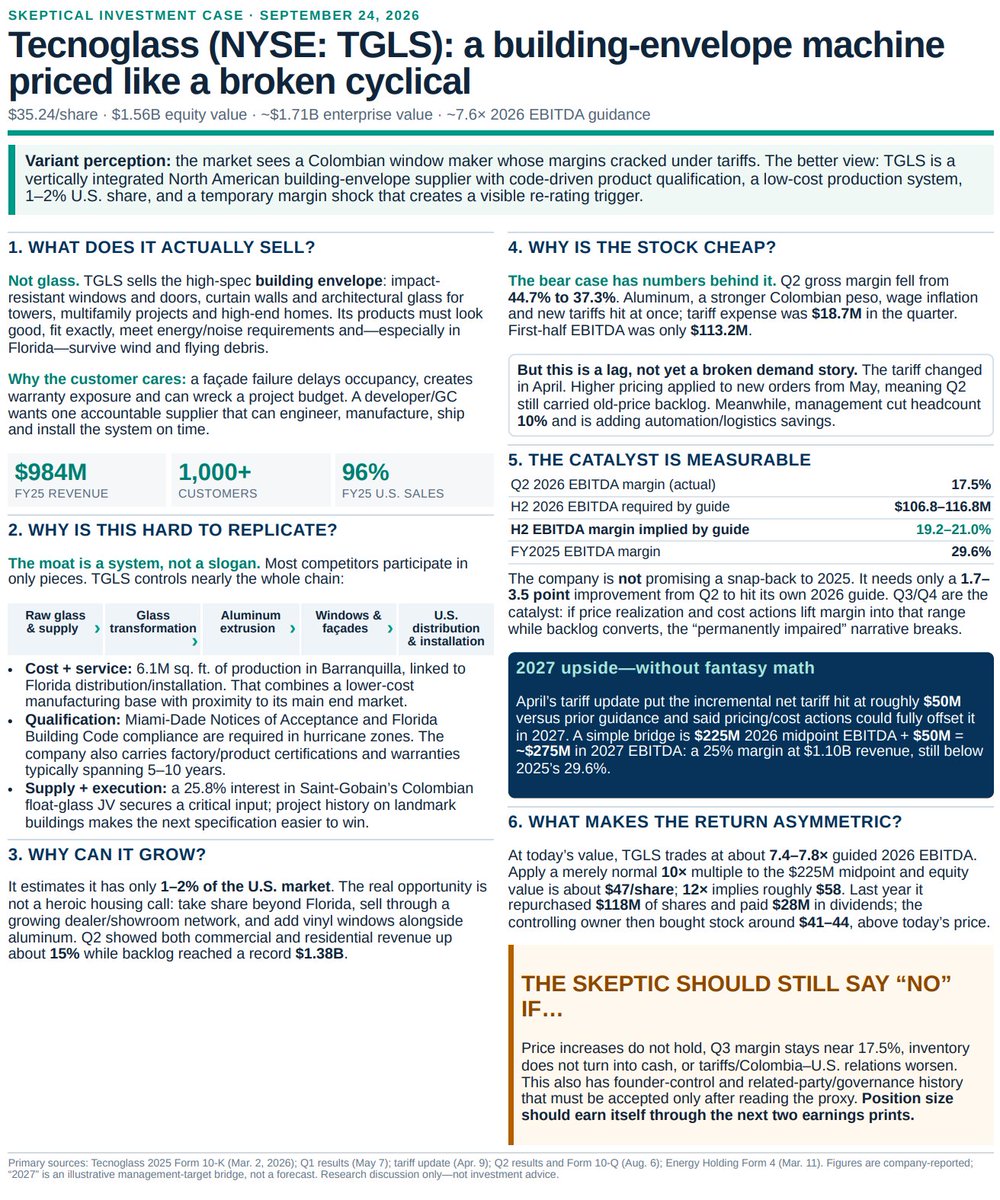
i am starting something new ... i will be posting stocks that i think are good businesses with a bull and bear view and lets find the winners starting with $TGLS let's rip it
@SwiftNinjaMkt @minenergybiz The conversion already happened, new holes are adding more. Cruise control from here until we see what’s up with Boumadine
Little’s Law says the average number of things trapped inside any stable system equals the arrival rate multiplied by the time each thing spends there: L = λW. This is not a productivity slogan. It is an accounting identity. If you keep starting work at the same rate but every item takes twice as long to finish, you have doubled the inventory of half-finished obligations. Nothing about effort, talent, or software gets to negotiate with it. A factory sees this as work-in-process. Toyota did not become fast by telling people to type faster; it capped inventory between stations because excess inventory hides defects and makes every part wait longer. Hospitals see the same equation as bed occupancy: when admissions exceed effective discharge flow, the emergency department becomes a warehouse for people. Internet systems see it as concurrent requests: at 200 requests per second, a one-second average journey means roughly 200 live requests; let average latency drift to ten seconds and the system is now carrying roughly 2,000. The code may be unchanged. The backlog has quietly become the system. Knowledge work is worse because its inventory is invisible and it impersonates ambition. Every open client promise, feature branch, sales conversation, research thread, automation idea, and “quick thing” occupies working memory while waiting for a decision. You feel busy because L is rising. But high L is not output. It is a tax on finishing. More incoming opportunity can make you less capable precisely because it lengthens W, which increases L again. The loop compounds in the wrong direction. AI makes this trap easier to enter. It lowers the cost of starting twenty things, not the cost of choosing, integrating, selling, supporting, and owning one thing end to end. A person who uses AI to maximize intake becomes a more efficient queue. Your sovereignty move is simple and unglamorous: cap the number of owned loops in flight. One paid operator problem, one workflow, one artifact that captures the workflow, one distribution motion. Finish or explicitly kill before admitting another. Salary work already consumes part of your queueing capacity; do not let it force your owned work into permanent waiting. The asset is not the idea inventory. The asset is the completed loop that keeps moving cash, code, proof, and customer knowledge after your attention leaves it.
@Joi2James The boring buried data to make the right call. bizbite.io
We lie to ourselves about priorities. You say sovereignty is high-priority, but if deployment, distribution, pricing, or customer conversations hold the lock, then those “low-level” tasks are actually in the critical path. Meanwhile the medium-priority shit job polish, inbox, nice dashboards, more research, another clever architecture pass — keeps preempting them. Congratulations, the scheduler says your life is optimized while your actual top priority is blocked like a rover waiting on a weather sensor. Let’s agree to disagree The move is priority inheritance. Whatever blocks owned cash flow temporarily inherits top priority. If payment setup blocks launch, payment setup is king. If fear of public rejection blocks shipping, rejection reps are king. If one customer call unlocks the next product decision, that call outranks the whole corporate circus for an hour. Sovereignty doesn’t come from declaring what matters. It comes from promoting the bottleneck until the lock is released, over and over, until the owned machine can run without asking permission.
A low-priority process can effectively outrank a high-priority process if it holds the resource the high-priority process needs. That’s priority inversion: H waits on a lock held by L, but medium-priority M keeps preempting L, so M indirectly blocks H while the scheduler thinks it is respecting priorities. The fix is beautifully blunt: priority inheritance. Temporarily promote the blocker to the blocked task’s priority, let it finish, release the lock, then demote it. The system doesn’t need more effort. It needs the hidden dependency to inherit the mission’s importance. This is not theoretical nerd confetti. In 1997, Mars Pathfinder started randomly resetting on Mars because a high-priority data bus task was blocked by a low-priority meteorological task holding a mutex while medium-priority communications work kept interrupting it. NASA fixed a spacecraft on another planet by flipping VxWorks’ priority-inheritance flag from off to on. Linux’s real-time kernel uses rt_mutex priority inheritance for the same reason: if a critical thread is blocked by some boring lock-holder, the boring task stops being boring until the lock is gone. Robotics people obsess over this because a robot that “almost always” schedules correctly is just an expensive way to punch a wall. The human version is uglier because we lie to ourselves about priorities. You say sovereignty is high-priority, but if deployment, distribution, pricing, or customer conversations hold the lock, then those “low-level” tasks are actually in the critical path. Meanwhile the medium-priority shit — job polish, inbox, nice dashboards, more research, another clever architecture pass — keeps preempting them. Congratulations, the scheduler says your life is optimized while your actual top priority is blocked like a rover waiting on a weather sensor. The move is priority inheritance. Whatever blocks owned cash flow temporarily inherits top priority. If payment setup blocks launch, payment setup is king. If fear of public rejection blocks shipping, rejection reps are king. If one customer call unlocks the next product decision, that call outranks the whole corporate circus for an hour. Sovereignty doesn’t come from declaring what matters. It comes from promoting the bottleneck until the lock is released, over and over, until the owned machine can run without asking permission. See you next drop !
An arbitrage can be correct and still bankrupt you precisely when the expected return is highest. That’s the nasty mechanism in Shleifer-Vishny limits to arbitrage: mispricing does not get killed by truth; it gets killed by capital that can survive the path to truth. If the trade moves against you first, your investors pull money, your collateral gets eaten, your broker tightens terms, and you are forced to sell the thing you should be buying more of. The opportunity gets bigger while your ability to exploit it goes to zero. Markets are not truth machines. They are truth machines with margin calls. Royal Dutch and Shell were the clean textbook violation. Same economic business, linked cash flows, different listings, and yet the relative prices drifted far from parity for years. Arbitrageurs could short the expensive twin and buy the cheap one, but “eventually” is not a funding source. LTCM learned the same lesson with convergence trades in 1998: spreads that were supposed to compress widened violently, not because the math became stupid, but because everyone needing liquidity at once made correct positions mechanically impossible to hold. Michael Burry had the housing short right, but even he nearly got wrecked by the social version of the same problem. His investors saw negative marks before the thesis paid, tried to yank capital, and mistook path pain for being wrong. That’s the part most smart people underestimate: being early is not a badge of genius if your structure can’t survive being early. It’s just a more sophisticated way to get liquidated. This is the sovereignty lesson: don’t build a life where your best thesis depends on someone else’s patience. A job can fund the bet, but it cannot be the bet. Consulting, apps, owned data, distribution, reputation — these are not “side projects” if they reduce your exposure to forced selling. They are balance-sheet design. The point is not to be the smartest guy watching a mispricing. The point is to own enough runway, control, and compounding machinery that when the world is temporarily stupid, you can keep buying instead of begging for permission. See you in a couple days

The Red Queen mechanism 🤑👙🏝️🩳 : in a coevolving system, yesterday’s advantage becomes tomorrow’s target. A genotype, strategy, or tactic wins, spreads, becomes predictable, and then the environment adapts specifically to kill it. Fitness is not an absolute score. It is a moving relative position against enemies who learn. Biology has the cleanest receipt. In New Zealand freshwater snails, common asexual clones get hammered by parasites precisely because they are common. The parasites adapt to the dominant clone, infection rises, and the clone’s success becomes its vulnerability. Sexual reproduction looks inefficient as hell — two parents, recombination, only half your genes passed cleanly — but it keeps reshuffling the target. The “waste” is the defense. Static efficiency loses to adaptive messiness. Finance runs the same code. A quant signal works, capital copies it, the trade crowds, market impact rises, returns decay, and the edge gets arbitraged into mush. The signal did not become false. The ecosystem learned it. This is why backtests are graveyards with Excel formatting. The moment a repeatable edge becomes obvious enough to sell, it starts becoming too obvious to survive. Digital advertising is another Red Queen cage. Every brand improves creative, targeting, landing pages, bidding logic, and attribution. Nobody actually escapes. CAC rises, platforms capture the surplus, and operators sprint harder just to defend the same margin. The customer acquisition machine starts as leverage and ends as rent extraction with dashboards. The personal lesson is uncomfortable: do not optimize yourself into a treadmill where the system adapts faster than you compound. Being better at the job, better at prompts, better at generic execution — fine, but that just makes you a shinier organism in someone else’s arms race. Sovereignty comes from owning positions the environment cannot instantly copy: proprietary distribution, customer trust, cash-flowing assets, taste, data, relationships, reputation, weird combinations of skills. Your edge is not “work harder.” Everyone can do that until they die tired. Your edge is building adaptive owned systems where each move compounds instead of merely keeping you alive for the next round.
The escape hatch is not looking serious. It’s becoming unfakeable.
That’s the sovereignty lesson. Don’t optimize for appearing capable inside someone else’s system. That signal is crowded and increasingly fakeable. Build artifacts that are expensive to counterfeit and cheap for you to keep compounding because they’re actually yours. A live product with users, a client who paid, a dataset you own, a content loop tied to revenue — these are not vibes. They are costly signals with equity attached.
The peacock’s tail is expensive on purpose. So is everything that will matter in the next 5 years.


SasoEquity @sasolcapital
34 Followers 2K Following Engineer. In-depth analysis. Long-term positions and trades.
Ravia @Ravia2RQL
3 Followers 537 Following
Candice Bird @CandiceBir9rrz
18 Followers 1K Following
SasoEquity @optionscgjp
34 Followers 375 Following Engineer. In-depth analysis.Long-term position and trades

Sancet @Million_Sancet
8K Followers 7K Following I'm Million_Sancet None of the posts or theses count as financial advice
Semiconsight_ @Semiconsight
5K Followers 3K Following Ph.D, semiconductor materials & process AI infra · data center · chips 반도체·공급망 분석 × 밸류에이션 [email protected] NVDA · AVGO · DRAM 서로 도우며 같이 잘 x 생활 해보자구요^^


Picked By Nik @pickedbynik
21K Followers 3K Following Started as engineer, pushed into sales. Picking up great domains from the ashes.
Thea @wdwtz21569886
184 Followers 1K Following I think independently, remain calm, choose my actions carefully, express my true self gently, and live a different kind of life

Senstory @senstoryapp
36 Followers 219 Following Helping parents of autistic children track emotional regulation & understand their child. AI social stories, visual supports & more. Built for UK families.
JOHN E DEATON 1 @JohnDeatonE_1
470 Followers 7K Following Former Candidate, U.S. Senate; Founder, CryptoLawUS; Managing Partner, Deaton Law Firm; CLA, SpendTheBits, Entrepreneur; Author; Survivor.

xxx @rheeeta
2 Followers 21 Following
Shannon @ankunding33183
228 Followers 7K Following
Marina @34rhZW618KtDht
189 Followers 6K Following
東証マザーズ株... @Owuieder965
48 Followers 2K Following 【完全無料】 25年の株式投資プロチーム(運用資産500億円以上)が提供:毎日の市場分析レポート + 優良成長株のピックアップ。プロの情報を無料で。まずはお気軽にお問い合わせください。
StockMoverNews🇺�... @Qiewer150
68 Followers 2K Following 15-30% Monthly | 2 High-Conviction Stocks.Short-Term Gains: 15-20% in Days/Weeks.DM "JOIN" for WhatsApp Alerts. Live Trade Signals • Market Analysis
LowPE_Gems🇺🇸 @Namor27187
44 Followers 2K Following 15-30% Monthly | 2 High-Conviction Stocks.Short-Term Gains: 15-20% in Days/Weeks.DM "JOIN" for WhatsApp Alerts. Live Trade Signals • Market Analysis
Okamea @Okamea12214
24 Followers 1K Following
StatArbPro🇺🇸 @Zralda429157
31 Followers 1K Following 15-30% Monthly | 2 High-Conviction Stocks.Short-Term Gains: 15-20% in Days/Weeks.DM "JOIN" for WhatsApp Alerts. Live Trade Signals • Market Analysis
Chloe @Chloezzty
357 Followers 524 Following Don’t wait for the perfect moment. Take the moment and make it perfect.
Banyan Lane @BanyanLaneCap
1K Followers 1K Following Independent equity research. Recovering L/S equity investor. DYODD, NFA. https://t.co/zC5nSf2QqV
Lonis @_Lonis_
12K Followers 1K Following Investing for RSI @ https://t.co/NPWFvYwIGi. Advising @ProsperaGlobal. Uneducated. Godmode (first AI agent w 1M+ users)|@andysz
Andrej Karpathy @karpathy
4.4M Followers 1K Following


TickerTrends 🔬 @tickerplus
22K Followers 394 Following Turning consumer and business behavior into alpha Inquiries: [email protected] Research: https://t.co/FZdL5MaQd3 Platform: https://t.co/4dWj3PD4H7
The Knowledge Bank @xKnowledgeBANK
300K Followers 55 Following A Vault of Information… History, Science, Art, Entertainment, Nature, People and Quotes
Censored Humans @CensoredHumans
151K Followers 210 Following Alternative Media || Documenting human stories erased by censorship. Evidence, context, and accountability
American Communist Pa... @ACPMain
101K Followers 36 Following The future belongs to the working class.
Deedy @deedydas
258K Followers 6K Following Partner at @MenloVentures. Investor: Anthropic, OpenRouter, Modal, Wispr, Pangram, Inception, Goodfire, PrimeIntellect prior: Glean, Google Search. Cornell CS.
10BaggerPortfolio @10baggerproyect
9K Followers 141 Following Early investor in $tea.ax $abcl $asts $sofi $rklb $vyt. Aiming to significantly outperform the indexes. Annualized ret.: 54% since 08/2022.
Aleph Alpha @Aleph__Alpha
25K Followers 24 Following Our Specialized Sovereign Large Language Model for Mission Critical Environments is here: https://t.co/261IusY3RI
MindBranches @MindBranches
165K Followers 2K Following AI enhanced diagrams to help you understand complex concepts quickly.
retardedinvestor @retard3dinvst0r
4K Followers 273 Following King of the retards President & CEO of Retarded Investments LLC.
Christian Angermayer @C_Angermayer
50K Followers 3K Following Founder of @ApeironInvests; $ATAI; @enhanced_games / $ENHA + others | Bullish on #psychedelics, $BTC, $XPL | Investing in biotech, crypto, tech, sports
Stock Ticker ZONE @StockTickerZone
5K Followers 4 Following Real-time stock alerts & market insights | Technical analysis, trends, and updates! For donations: #eth 0xFCE94FeD83E5011357cDd30289ab1833fDC33F27
TheBigBerbowski @TheBigBerbowski
24K Followers 798 Following Independent research (AI infra, semis + microcaps) | Background in IT, economics, product. Business inquiries via DM. Link to my website, my trades. ⬇️
Scott Adams @ScottAdamsSays
1.4M Followers 2K Following The 2027 Dilbert calendars are available now! Only on Amazon. WALL: https://t.co/0xnCV9U7v8 DESK: https://t.co/IBTU3wJunx
Dr Singularity @Dr_Singularity
85K Followers 377 Following Futurist. AGI/ASI by 2030. Posting about AI,AGI,ASI, Singularity, Post Scarcity, LEV,tech & sci progress. 300 000BC - 2029 = Dark Ages. 2030 - Golden Age Begins

Latinometrics @LatamData
97K Followers 893 Following Visualizing Latin America’s potential with data and charts.
Ian Bezek @irbezek
23K Followers 2K Following Investor. Former hedge fund analyst - Kerrisdale. Ian's Insider Corner newsletter on SeekingAlpha and Substack.
Oliver Groß @minenergybiz
27K Followers 2K Following Investor, consultant, editor in chief, interested in mega trends, energy, mining, tech - The more I learn, the more I realize how much I don‘t know. DYODD.
Vantix Research @VantixResearch
2K Followers 267 Following Definite optimism in a world of indefinite thinkers. Co-Owner of @CVresearch_
Markos @MarkosAAIG
18K Followers 243 Following Founder of AAIG. Research built across the stack. A 7-person team spanning engineering, finance and strategy. One investable view.
LIWEI_TW Capital @LIWEI_TWCapital
14K Followers 477 Following Even a great company is only worth recommending at the right price. Every trading idea shared should deliver real, actionable value when it matters most.
🌿 lithos @lithos_graphein
22K Followers 3K Following Three decades in semiconductor lithography. I run the Chip War Dashboard site; it's a live feed of the freshest semi news & market data.
Jack Huang (Bernhard ... @photonjaeger
2K Followers 2K Following Photonjaeger (光子俠客), TMT/AI/Semis/Optics, 미국인/米國人/Amerikaner, Chicagoan, @uchicago a while back, Shanghainese food fan, DMs open
拖拉机 @tuolaji2024
53K Followers 253 Following 15 年科技行业从业者,做过千亿上市公司,走过全球 30 多国,这里说话更包容一些,就多说一些。 公众号:机机如律令,以股市为主的碎碎念! 知识星球:见置顶,科技发展和宏观理解。 如果有出海相关的可以随时与我沟通。
Austin Lyons @austinsemis
8K Followers 2K Following semis analyst. asking questions + explaining. read by chipmakers, funds, model labs. @chipstrat · @semidoped
Vikram Sekar ✈️ O... @vikramskr
26K Followers 1K Following Independent Semi Research: https://t.co/Qu61K9t6w7 Substack: https://t.co/60ru2W4LXN Podcast: https://t.co/tfzu1g0xRq NFA. DYODD
Semi Doped @semidoped
10K Followers 4 Following The industry powering AI, explained by @vikramskr and @austinsemis. Weekly podcast and daily takes. Sign up at https://t.co/wSYNiNJYqL and subscribe on YT

Papa Johns @SVTrivo
15K Followers 2K Following Semiconductor Engineer, Ph.D. 🇰🇷🇺🇸 📍 San Jose Startup & Big Tech Vet John's Papa Silicon Valley Trivopaedia: Tech, Money, Food & Chips. Life in the SV
MojoTrick @MojoTricks
27K Followers 59 Following Curating the latest in AI, semiconductors, EVs & global tech breakthroughs | Not affiliated with any brand

Joe @joedab12
11K Followers 541 Following Sold my finance co in 2021, now trade/invest full time. Specialty is finding semi/AI infra inflection points before the breakout. Lots of receipts. Zero AI slop
456X @OptionKing666
2K Followers 981 Following AI, semiconductors & global markets | Tracking primary sources, industry shifts and key data | Filtering noise, sharing what truly matters
Semiconsight_ @Semiconsight
5K Followers 3K Following Ph.D, semiconductor materials & process AI infra · data center · chips 반도체·공급망 분석 × 밸류에이션 [email protected] NVDA · AVGO · DRAM 서로 도우며 같이 잘 x 생활 해보자구요^^
북극성 @PolarisLog
13K Followers 1K Following 반도체에서 시작되는 투자 기회를 찾습니다. Tesla, Samsung Electronics, Apple, Ethereum 투자 중
SasoEquity @saso_capital
10K Followers 341 Following I like AI & Robotics. Subscribe to access my full portfolio.
Kairos @KairosPraxis
6K Followers 466 Following The first rule of investing is to not take yourself too seriously, and actually have fun.


Diogo Almeida @CompleteSkeptic
155K Followers 99 Following Sane + 🌶️ takes in an insane AI world... AI capabilities researcher: co-created RLHF/ChatGPT @ @openai now trying to right the wrong 🤭 (ceo @typesafeai)
Christopher Rufo @christopherrufo
859K Followers 1K Following Writer. Filmmaker. Californian-in-exile. Subscribe to my free Substack: https://t.co/Ue7AEF1SlV.
Tom Coste @tcoste110
3K Followers 210 Following Hedge Fund Manager - Author of: "The Front Office" Blocking people early and often.
Jeffrey Katzenberg @jeffreykWNDR
14K Followers 23 Following
You might like


















