fourzerofour @fourdebug
Joined September 2026-
Tweets23
-
Followers1
-
Following53
-
Likes218
문정에있는데 오늘 만닐수있는 여자만 #섹트#초대녀 사진과함께디엠부탁드려요

CodexにJev Skills入れたらぶっ飛びます。仕事しなくて良くなるんです。
gpt-6-astraは本当にヤバくて、正直ほぼ勝てない域まで到達してる。 今まで、いちデザイナーとしてAI(Fable5/Opus5/gpt-5.6あたり)にデザイン品質で負ける気しなかったけど...全部ひっくり返された。 Figmaを実際に使って、BIからページデザインまで作成。 みんなこれどう評価するのか知りたい。
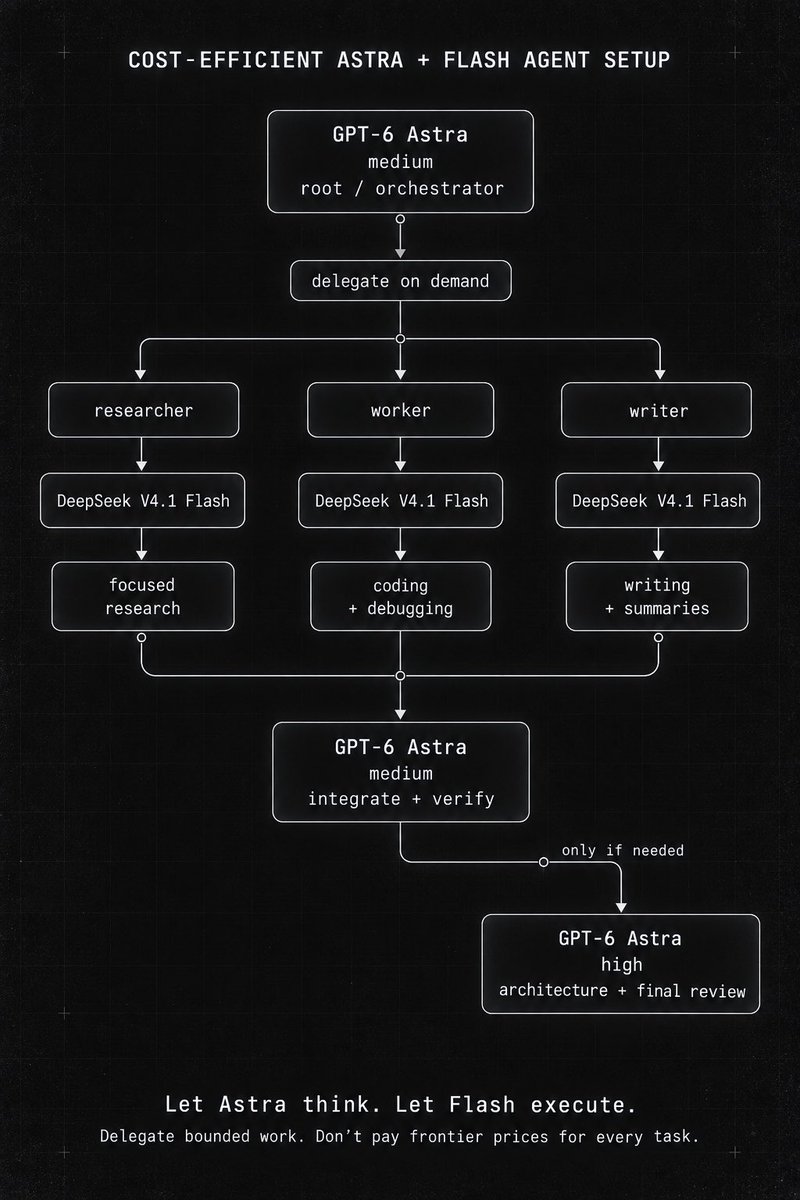
Codex tip most people are sleeping on: A cost-efficient DeepSeek V4.1 Flash agents, orchestrated by Astra. Astra plans and reviews. Flash does the heavy lifting at a fraction of the cost. paste it into Codex to get started 👇

最近做 APP 一直在用一个 Skill 叫 Apple Design,将 Apple WWDC 设计分享中的界面与动效原则整理成指导,帮助改善界面层级、反馈和整体连贯性。实践效果非常好,简单克制、很有苹果原生 App 的味道。 作者Emil Kowalski 之前在 Vercel 现在是 Linear 的设计师,Apple Design 是他整理的一组 AI Agent Skills 其中的一个,目的是让 AI 做界面时更有“设计品味”,尤其是动画选择、交互细节和视觉打磨。除了 Apple Design 还有好几个都很实用,项目GitHub Star 数接近 4w:github.com/emilkowalski/s… 「emil-design-eng:设计工程总则」 关注 UI 的整体质感、组件设计、动画选择和交互细节。适合开发新界面时作为总体设计指导。 「animate:制作动画」 从零设计并实现动画。会先判断是否有必要加动画,再决定动画目的、实现方式、属性、曲线和时长。适合弹窗、抽屉、按钮反馈等动效。 「review-animations:审查动画」 检查已有动画是否合理,例如是否多余、速度是否拖沓、缓动是否合适,以及是否考虑减少动态效果等。适合动画完成后的专项评审。 「improve-animations:改进项目动画」 检查整个项目的动画,并整理出可执行的改进建议。适合接手已有项目、想系统提升动效质量时使用。 「find-animation-opportunities:寻找动画机会」 判断界面上哪些地方值得增加动画,哪些地方不应该动。重点不是“多加动画”,而是让动效真正帮助用户理解操作反馈或界面状态。 「apple-design:Apple 风格设计原则」 将 Apple WWDC 设计分享中的界面与动效原则整理成指导,帮助改善界面层级、反馈和整体连贯性。 「prototype:制作多个原型方案」 针对一个 UI 需求生成多个不同方案,便于比较布局和组件形态。适合设计方向还不确定时使用。 「mobile-native:优化移动端网页体验」 帮助网页在手机上更像原生应用,关注安全区、触控反馈、输入框缩放和移动端视口等细节。 「write-swift:编写现代 Swift」 覆盖 Swift 值类型、并发、泛型、性能和测试等工程实践。适合 Swift 代码编写与整理。 「pick-ui-library:选择 UI 组件库」 根据需求挑选合适的组件库,避免不必要地手写复杂组件,或引入维护状况不佳的依赖。


send this prompt to GPT-6 Astra, it might just change your life... it finds tiny markets with room to take 25–30% fast, then helps build a product that's 10x better than anything already there PayPal started with ~20,000 eBay sellers and reached 25–30% market penetration in 2–3 months, Facebook went from 0 to 60% of Harvard in 10 days start with a niche nobody cares about, own it completely, then expand into bigger markets tiny market → 10x product → 30% share → expansion


Stop manually making flowcharts. Try this GitHub skill with Claude Code. I found an open-source tool that turns a plain description of a software system into a clean, interactive diagram. It's called Archify, and it has more than 66,000 stars on GitHub. You add it as a skill to an AI coding agent like Claude Code, Codex, Cursor, or OpenCode. Then you describe the system in the chat in one line. Archify turns that line into a single HTML file you can open, click through, and send to anyone. If you point your agent at an existing codebase, it reads the code and Archify maps how the pieces connect. I liked five things about it. 1. It makes five kinds of diagrams, including system maps and step-by-step workflows. 2. You can click any piece and trace what connects to it. 3. It checks the layout before it hands the diagram over, so arrows don't pile up and labels don't overlap. 4. It has dark and light themes and exports to PNG, SVG, or a short video. 5. You keep editing in plain chat, with requests like "add Redis" or "highlight the rollback path." You don't need a codebase to use it. A description in the chat is enough.

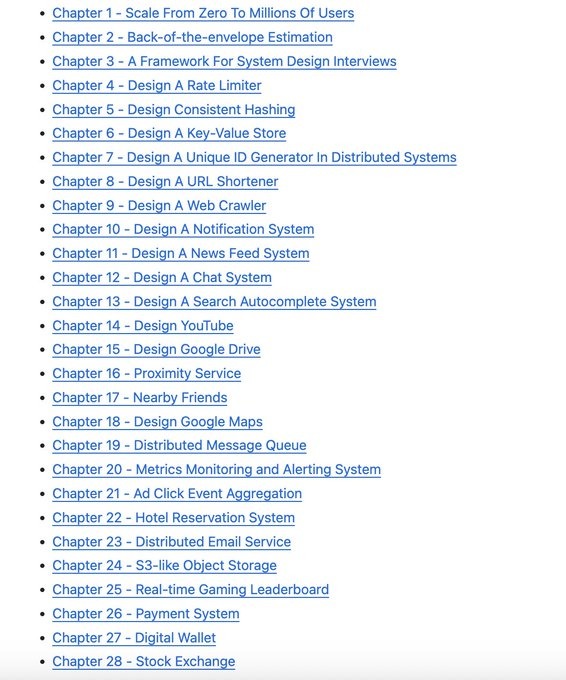
This one is the BEST for System Design Interviews. You will find everything at one place. BOOKMARK IT NOW. github.com/liquidslr/syst…
OpenAI acaba de lanzar el abogado más barato y efectivo del mundo Se llama Astra for Law. Y esto es lo que es capaz de hacer: • Buscar jurisprudencia, leyes y reglamentos. • Localizar el pasaje exacto de una sentencia y ver si te vincula • Redactar memorandos y análisis legales • Preparar argumentos y estructurar operaciones • Conectarse a tus herramientas: Relativity, Clio, iManage, Intapp, DeepJudge… Todo eso sin salir de ChatGPT Cómo funciona: → Es GPT-6 Astra con un índice de búsqueda legal e instrucciones jurídicas propias → Aparece como "GPT-6 Astra Law" en ChatGPT y Codex → En API llegará como gpt-6-astra-law Qué áreas cubre: • Litigación y jurisprudencia • Operaciones y contratos • Normativa y regulación • Reglas procesales y decisiones administrativas Los números: • 230 millones de URLs indexadas, actualizadas a diario • 99,9% de la jurisprudencia publicada de EE. UU. vía CourtListener • 54% de acierto en Legal Research Bench, frente al 38,7% de GPT-6 Astra con búsqueda web • 24% más casos de referencia encontrados Lo que antes le llevaba horas a un abogado, ahora se hace en minutos Enlace abajo:
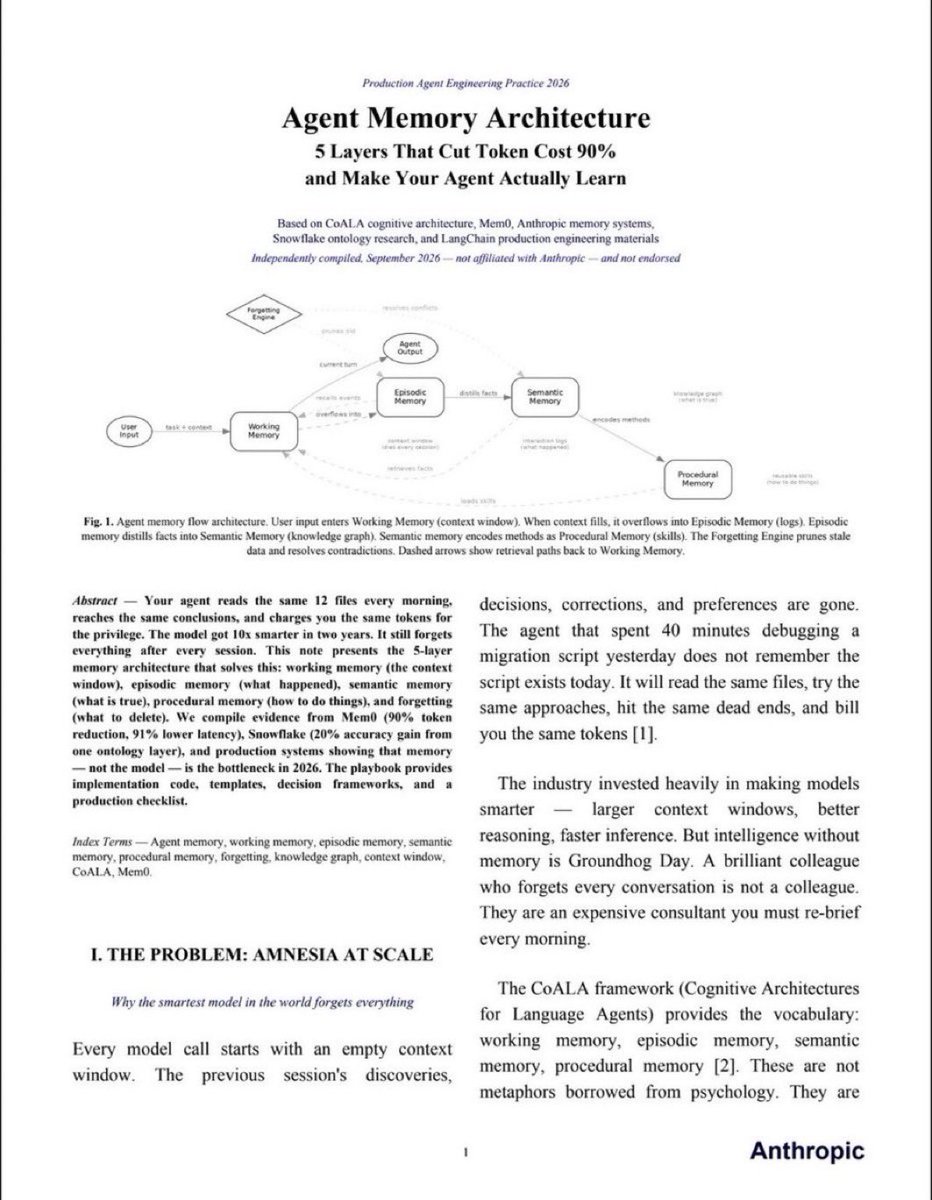
Anthropic acaba de publicar un PDF de 13 páginas sobre memoria para agentes de IA 5 capas para reducir un 90% el coste en tokens y hacer que tu agente aprenda de verdad👇 1. MEMORIA DE TRABAJO: lo que ve ahora La ventana de contexto. Todo lo que el agente tiene delante en este momento Cuando se llena, el contexto antiguo se pierde. La mayoría de los agentes se quedan aquí y luego nos preguntamos por qué fallan 2. MEMORIA EPISÓDICA: lo que pasó El historial completo de interacciones, con fecha y hora El agente recuerda que el despliegue falló el martes a las 3 de la mañana porque el script de migración tenía una errata No tienes que explicárselo otra vez 3. MEMORIA SEMÁNTICA: lo que sabe Hechos, entidades y relaciones guardados en un grafo de conocimiento «El usuario prefiere TypeScript» vive aquí Y no desaparece cuando termina la sesión 4. MEMORIA PROCEDIMENTAL: cómo hacer las cosas El agente prueba 3 enfoques. Uno funciona Ese método se convierte en una habilidad reutilizable La próxima vez va directamente a lo que funcionó 5. OLVIDO: lo que debe borrar Un agente que nunca olvida acaba acumulando contradicciones Las preferencias antiguas se imponen a las nuevas. Te mudas de ciudad y sigue recomendándote restaurantes donde vivías antes Recordar importa. Saber qué olvidar, también ¿El resultado? → Mem0 almacena 1.800 tokens por consulta en lugar de 26.000 → Snowflake añadió una capa de ontología: un 20% más de precisión y un 39% menos de llamadas a herramientas La memoria compensa su coste desde el primer día Este PDF de 13 páginas marca la diferencia entre un chatbot y un agente que aprende de verdad No lo pases de largo👇
10 GitHub repositories every developer should know for System Design 👇 1- System Design Primer github.com/donnemartin/sy… 2- System Design 101 github.com/ByteByteGoHq/s… 3- System Design by Karan Pratap Singh github.com/karanpratapsin… 4- Awesome System Design Resources github.com/ashishps1/awes… 5- Awesome Scalability github.com/binhnguyennus/… 6- Awesome System Design github.com/madd86/awesome… 7- System Design Interview github.com/checkcheckzz/s… 8- Machine Learning Systems Design github.com/chiphuyen/mach… 9- System Design Academy github.com/systemdesign42… 10- Agentic Design Patterns github.com/sarwarbeing-ai… ✅ Save this for your System Design preparation. Follow for more developer resources, interview prep, jobs & opportunities.

ANTHROPIC LEAKED A $4.4M FILE WHERE 4 AGENTS BUILD A BUSINESS DOING $120K A MONTH IN 20 MINUTES four agents run for $0, and the business on top of them pulls $120,000 a month without a single salary scout → builder → seller → critic → back to the scout the scout finds who buys and at what price, the builder makes the page and the checkout the seller writes the offer and the outreach, the critic decides whether it ships at all Haiku 4.5 searches, two Sonnet 5 build and sell, Opus 5 passes the verdict no agent grades its own work - each one is checked by the next in the ring and the ring closes: the critic checks the scout one agent always gives itself an A, four in a ring never do a kickoff meeting alone takes 60 minutes, here the whole business is done in 20 $120,000 a month is 401 customers at $299 but all four come from one model family, and they share one blind spot the agents catch the errors at the edges, the one down the middle only you catch save this and paste it into Claude Code - let it build you this ring ↓
Jev Engineering is what turns an agent stack into an actual control system and moves the expensive model out of every decision loop. and up to 193x faster and 444x cheaper in tests. the model shouldn’t decide everything. in this setup: request → structured state → Jev router → cheapest capable model → worker → relevance / approval checks → execution gate → tool the important part is that the decision layers don’t generate prose. they route → score → block → approve. so expensive models only get called when the task actually needs them. that’s the point of Jev Engineering: separate reasoning from decision-making, then make the decision layer measurable, cheap and fast. full breakdown in the article below ↓
this is pure f*cking treasure 15 GitHub projects with 852K combined stars that build a real agent stack research, remember, run, learn, show up in a product and get shipped 01 DeerFlow ▸ github.com/bytedance/deer… 02 RAGFlow ▸ github.com/infiniflow/rag… 03 Quivr ▸ github.com/QuivrHQ/quivr 04 MemPalace ▸ github.com/MemPalace/memp… 05 Folo ▸ github.com/RSSNext/Folo 06 OpenBB ▸ github.com/OpenBB-finance… 07 MindsHub ▸ github.com/mindsdb/mindsh… 08 Agno ▸ github.com/agno-agi/agno 09 Oh My OpenAgent ▸ github.com/code-yeongyu/o… 10 Goose ▸ github.com/aaif-goose/goo… 11 Continue ▸ github.com/continuedev/co… 12 Unsloth ▸ github.com/unslothai/unsl… 13 LlamaFactory ▸ github.com/hiyouga/LlamaF… 14 CopilotKit ▸ github.com/CopilotKit/Cop… 15 Dokploy ▸ github.com/Dokploy/dokploy the loop: find the signal → turn it into context → keep what matters → hand the job to an agent → give it a place to run → adapt the model → put it in front of users → ship every repo here has a defined place in that loop save this to build your own business with the help of an AI employee ⭣
this is the most dangerous thing on the internet today someone dropped an entire one-person company blueprint that he ran on AI agents for six months a 10-part framework open it for the parts that held up and the parts that faceplanted 01 zero staff, one repo, ai does everything 02 sales, crm, content, outreach, all wired 03 agents draft, human taps approve 04 scout briefs him every morning 05 taste loop writes every no back 06 edits fall weekly, machine gets sharper save this, then build your one-person company ⭣

잘 자요 @DeepAgr14164596
215 Followers 615 Following
0x ROAS @0xROAS
53K Followers 447 Following everything’s high risk if you’re a p*ssy. 👇🏻 Join the #1 community SCALING AI ADS
Ege @egeberkina
85K Followers 477 Following Art Director | Creative Ambassador @ElevenLabs & @Adobe | AI Creator
vas @vasuman
101K Followers 483 Following CEO @varickagents, Implementing AI at Enterprise. Prev AI @meta

Marc Lou @marclou
400K Followers 1K Following 💪 My body $112K/m ⭐️ https://t.co/MZc8tG9xWi $44K/m 📈 https://t.co/3EDxln5mdi $26K/m 🏴☠️ https://t.co/YBGJuAsUZ4 $13K/m 🧑💻 https://t.co/Y30jsaHwz9 $6K/m ⚡️ https://t.co/vatLDmi9UG $4K/m 🕵 https://t.co/3JtsA6kaxI +29 https://t.co/4zCWHGJp1S
GREG ISENBERG @gregisenberg
717K Followers 997 Following I drop startup ideas daily. Host @startupideaspod. CEO: @latecheckoutplz we build companies like @ideabrowser, @meetLCA, @boringmarketer etc
@levelsio @levelsio
961K Followers 3K Following 💸https://t.co/sQ0aiU7v02 📸https://t.co/lAyoqmSBRX $86K/m 🎮https://t.co/tF49atJ396 $44K/m https://t.co/8rYr9A594z $26K/m 🏡https://t.co/1oqUgfD6CZ $21K/m 👙@X $17K/m 🌍https://t.co/UXK5AFqCaQ $12K/m 🏩https://t.co/4p4dzTDVN6 $6K/m

Suraj Sharma @suraj_sharma14
16K Followers 3K Following Helping builders get into AI, startups & global opportunities
Peter Steinberger �... @steipete
592K Followers 2K Following Polyagentmorous ClawFather. Came back from retirement to mess with AI and help a lobster take over the world. @OpenClaw🦞 + @OpenAI
知识猫AI实验室 @GeekCatX
28K Followers 1K Following 在大厂写了10+年代码,现在用 AI 折腾新东西 做图、做视频,分享作品和背后的工作流 也在摸索,怎么把一个人的创作做成生意 交流 / 咨询 / 合作 👇 vx: gnipbao
Rony @Ronycoder
98K Followers 785 Following Sharing insights on AI, tech, and prompts | Helping brands grow with creative strategies | DM for paid promotions ✉️ [email protected]
Vox @Voxyz_ai
20K Followers 207 Following Obsessed with getting AI to do real work. Practicing the AI-native future before it arrives. Builds, model tests, prompts to copy.
Shann³ @shannholmberg
37K Followers 13K Following I cover AI marketing & growth. Sharing every framework as I build it. Growth @lunarstrategy @turtledotxyz

Nazday @nazmijavierl
2K Followers 213 Following Senior Product Designer, Design Systems & AI Expert Clients: Fancyleds, Feedbird, Krain AI, Contra, Upwork, Voobo AI and 50+ 📮 [email protected]
darkzodchi @zodchiii
28K Followers 373 Following ai & finance entrepreneur • @zscdao member • sharing what I learn
issui.txt @issui_ikeda
3K Followers 407 Following '02 / CreativeDeveloper / Devision inc. CEO / LLMでデザインの工業化の実現に取り組んでいます。 経歴:https://t.co/XZMnNpRflU
Luca Restagno 🐢 bl... @ikoichi
43K Followers 2K Following Indie hacker. https://t.co/vN7E8WqBun ($2.5k/m) https://t.co/pSv25pduHb https://t.co/Sto8ruI7vx ($3k/m sold) https://t.co/W2IiYFXW4H ($1k/m sold) https://t.co/3VnyXVfNKl ($1k/m sold)
OpenAI @OpenAI
5.4M Followers 4 Following OpenAI’s mission is to ensure that artificial general intelligence benefits all of humanity. We’re hiring: https://t.co/dJGr6LgzPA

Sam Altman @sama
6.3M Followers 1K Following The mission of OpenAI is to ensure that AGI benefits all of humanity

Tibo @tibo_maker
209K Followers 3K Following 📽 https://t.co/OyNJ8ZUyOh 📈 https://t.co/JkVOl1O0S1 🤖 https://t.co/tywwX4TyWa https://t.co/EFUcKeBbpU https://t.co/KG9PgxJabg https://t.co/1MEIhy0L5K https://t.co/jS9GQJ5Ps8 sold Tweet Hunter, Taplio ($10m) PH Maker of Year 🥇 growth tips: https://t.co/ereQodN3Ov

Onlyfans Leak @__OnlyfansLeak
110K Followers 0 Following
Khairallah AL-Awady @eng_khairallah1
78K Followers 2K Following angel investor | founder @Web3Arabs | vibe coding | ai & onchain research

leopardracer @leopardracer
12K Followers 339 Following sharing insights before they become headlines • ex: @google


Raul Junco @RaulJuncoV
47K Followers 507 Following System Design made me a better engineer. Now I help others do the same. System Design • Backend • Databases • Scalability • AI

slap her and spit in ... @spitinmouthsex
39K Followers 7 Following Nsfw18+ . i am here to popularise spit in mouth during sex . repost my posts if you support my cause.

Avinash Singh @AvinashSingh_20
34K Followers 2K Following Building StartupsMap | Discover startups, founders & opportunities | Helping startups get discovered → https://t.co/OBoVZkDSUM
Noisy @noisyb0y1
27K Followers 788 Following


rvaniaaa @rvaniaaaa
3K Followers 262 Following Markets. Systems. Things people overlook. Explaining AI workflows & systems.
Maya @mayaislam_ai
1K Followers 201 Following AI Tools Explorer | Content Creator | Helping businesses and creators work smarter with AI. 📩 DM for projects & collab: [email protected]

codila @0xCodila
21K Followers 80 Following AI - researcher & coder | writing about what I use myself
𝐍𝐨𝐚𝐡 @noahelhadedy
3K Followers 504 Following Building https://t.co/GL6PrzpyZV https://t.co/DHZ8RvzleQ Sharing useful UI/UX & AI insights. Tools, resources & more ⤵ https://t.co/bnN9zHHPmr
Lorenzo Cabra @cabralorenzo
5K Followers 203 Following Product Design @metalab. Building https://t.co/Rwii25i4cs I build brands, web, apps, and AI-driven products. 8+ years in the game. 🐐

CARGO🎬 @Cargo_1911
47K Followers 2K Following All About Movies & Series + Review🎬🍿🎥 |For Promotion DM | |Email : [email protected] ⭐⭐⭐⭐⭐.
TeddyCEO @TeddyinMedia
2K Followers 637 Following AI · Agents · Open Source Testing tools and finding useful shit ↳ 26K+ Telegram community

0xForge @0xForge
3K Followers 143 Following building at the edge of AI breaking down what actually matters, no hype thoughts on models, agents & the future no one's ready for @RoobetYou might like