

CJ @mkenyalegit
🙌🏻Watu ni utajiri juana nao. Joined July 2024-
Tweets2K
-
Followers17
-
Following85
-
Likes8K
If you see an opportunity that you desire. Do NOT stall. There’s no guarantee they won’t close the gate. Make hay while the sun shine and act as though you might not get that opportunity again. Go after it.

Kundu guku anga nyumba ya Mumbi ni ithui ainge,tutikanereke ringi turumwo,tunyitanage ma.

History will judge the impact of my work and what it may have done for the democratisation of this great nation - Yvonne Okwara
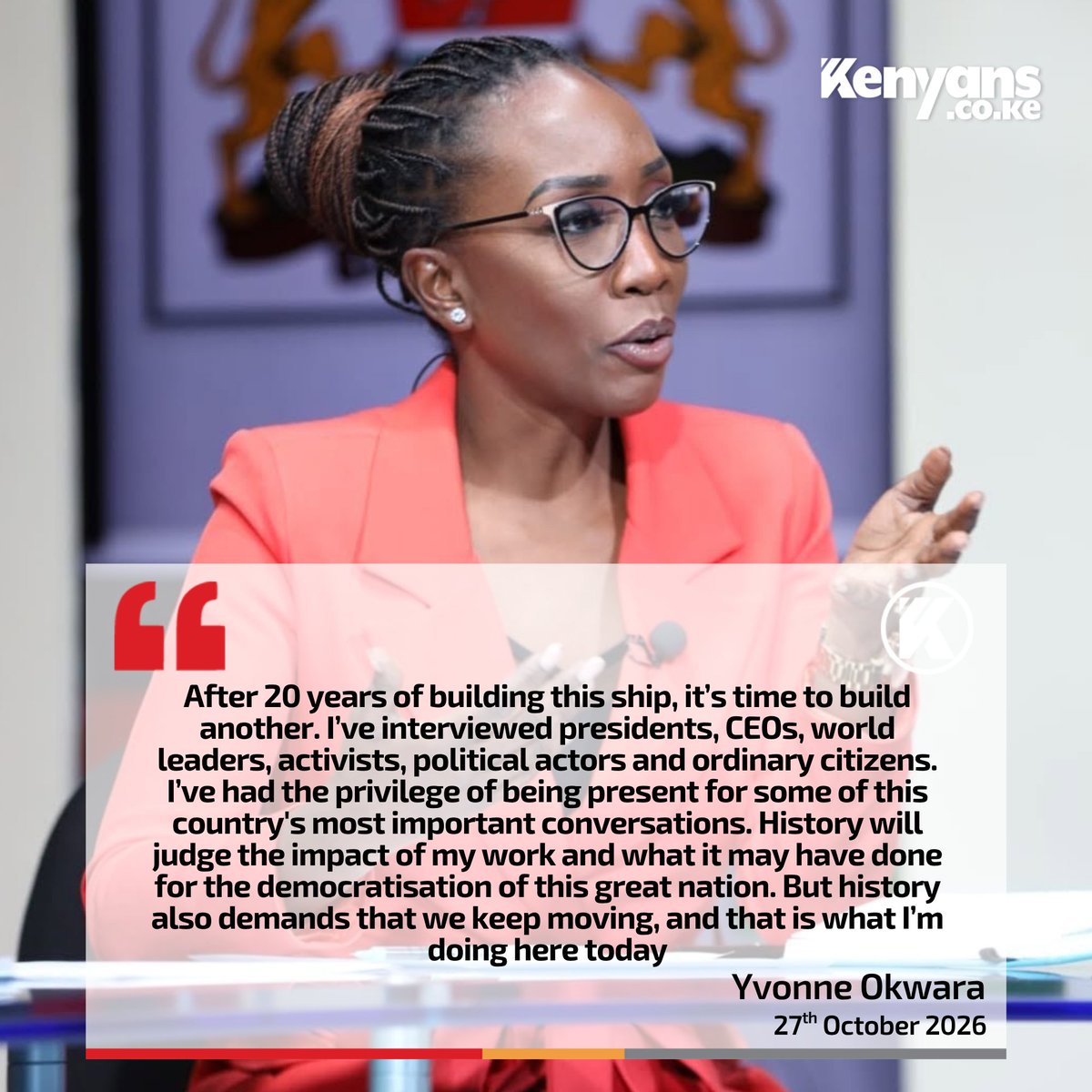
Do your DUE DILIGENCE! Dig everything and everyone to the bone. While at it, TRUST YOUR GUT INSTINCTS! I l have learnt well, incredibly painful, what only experience and time could teach!
Africa, whose imports is steadily increasing by the year and local pharmaceutical manufacturing often an afterthought must arise. There's simply no other alternative and seemingly not an easy fit. Dangote says nothing is impossible true to scriptures. Good Morning 🌄
There are multiple firms in Europe who entirely export drugs from India have local logistics company in their country then proceed to supply to Africa.This has been going on for years. Mind you there's lots of profits in millions and the annual turnover more than the books.


Yvonne Okwara Signs Off #CitizenExplainer @YvonneOkwara
My current job in the USA 🇺🇸 came through an internal transfer from my former team in the Netherlands 🇳🇱. But the story of how I got into the company in the first place, while still pursuing my Master’s degree in Germany 🇩🇪, is quite interesting! Let me share! 🧵👇 1/ One day, a PhD student in my research lab in Germany received an email about the ASML Best of Tech Masterclass, an event organized for selected Master’s students across Europe. She forwarded the email to everyone in our lab. I read it and thought, “Why not give it a shot? At least I’ll get to learn something from one of the world’s leading semiconductor technology companies.” So, I applied! 🚀 2/ I was shortlisted for a video interview, completed it, and eventually got selected to participate in the two-day virtual masterclass! There were about 50 selected students from universities across Europe. 🌍 During the event, we were introduced to ASML’s technologies and some of the fascinating engineering challenges the company was solving. We had signed NDAs beforehand. 3/ The event wasn’t just about listening to presentations. We participated in brainstorming sessions, peer-to-peer discussions, and technical problem-solving activities. 🧠 Then came the second day! There was an interesting activity on the agenda: Meet and Greet with ASML Engineers. We had the opportunity to interact directly with two engineers. Little did I know that this particular session would change my career trajectory! 4/ The first engineer I was matched with told me something interesting. He was actually the person who had reviewed my application and video interview! 😳 He explained that my research background was closely related to what he had worked on during his PhD, and that was what caught his attention. We had a very interesting conversation. Then came the second engineer! 5/ Unknown to me, this second engineer wasn’t just an engineer. He was actually a hiring manager, leading a team of about 10 engineers in the company’s Optics group! We started talking. He already had my CV and was particularly curious about my teaching experience. We discussed my academic background, research, and Master’s program in Optics and Photonics. Then he said something I wasn’t expecting! 👀 6/ He told me there was an open position in his team and that he thought I would be a good fit! Imagine that! 😭😂 I had attended the masterclass simply to learn about semiconductor technology, and here was a hiring manager discussing a potential job opportunity with me! He immediately shared the job link with me in the chat. 🔗 7/ After the masterclass, I opened the link, studied the job description, and started preparing my application. I wrote my motivation letter and sent it to my girlfriend in Nigeria, who is now my wife. ❤️ She reviewed it and made some corrections. I finalized everything and submitted my application on a Saturday. By Tuesday, HR called me to schedule an interview! 📞 8/ Long story short, I went through the recruitment process and got the job! 🎉 And here’s the interesting part: I relocated from Germany to the Netherlands to start my new job just one day after defending my Master’s thesis! 🇩🇪➡️🇳🇱 Two years later, I transferred internally to the United States. 🇳🇱➡️🇺🇸 Apply for opportunities, attend events, engage with people, and never underestimate the power of networking. 🤝 ❤️🇩🇪🇳🇱🇺🇸

There are multiple firms in Europe who entirely export drugs from India have local logistics company in their country then proceed to supply to Africa.This has been going on for years. Mind you there's lots of profits in millions and the annual turnover more than the books.

Before I was even pregnant, I asked my mom & dad for advice from raising me and my brother... This is what they told me, maybe you'll find it useful too: 1. Your kids are not your friends. They’re yours to safeguard and support, but set rules. Biggest problem with most kids in our generation, their parents wanted to be liked not respected. 2. Psy ops are underrated. My mom had this line for whenever I got into trouble. She’d say, “When I ask you a question like this, I already know the answer. I am giving you a chance to come clean...” At which point I’d sing like a canary because I’m a scaredy cat. I found out today she rarely knew the answers. Brilliant and maniacal. 3. Always on the same page. My mom and dad rarely fought in front of my brother and I. They would never go back on the word of the other. United front to deal with us mini terrorists. 4. Make time. My dad had this silly line that is actually not silly: “You can make money, you can make a cake, but you can’t make time.” So they made allllll the time for us. 5. Four chairs. We have these four chairs in our living room, no tv. Growing up, we’d sit and debate and talk for hours. Politics. Opinions. Our days. Only thing not allowed was an opinion you couldn’t defend unemotionally. We still do this today. 6. Mi Sangre mi siempre. They’d always say, blood comes first. They meant it. I hired my brother, my dad, my mom, my cousin at times. We stick together and we may fight like hell but never in front of others. 7. Once you decide, you don’t quit. We could play any sport or instrument BUT if we committed we had to play the full year all out. No 3 lessons and quit. Taught us to choose thoughtfully and keep going even when it hurt. 8. Always call. They still pick up the phone nearly every time it’s family. My dad in a meeting will pause to answer my mom. My husband taught me this too, and I try to do the same. If they’re your first priority this is an easy way to prove it. 9. You’re not a princess, you’re a president. My dad always used to say that line. He told me this week that I lived up to it. Gutted me. He taught us we didn’t need to be saved, instead we could save ourselves and help others. 10. Hug often and seriously. If you’ve ever hugged my parents, they mean it when they do it. Such a simple, free gesture. My mom always gives you a hug and says vaya con dios... go with God. How can you not do big things with parents that hold you like that? Just some lessons from parents I happen to think are some of the best in the world. Moms & dads everywhere, I'm in awe of you. Hardest job I've ever seen. Hope I'm half as good at it as my parents were with us.

Goodnesssss….everything you’ve heard about this perfume is true. BUYYYYY it!

Building a Global Software Company from Africa: 3. The Challenge of Finding Customers If you're an engineer building a software company, you probably understand how much work goes into getting a product to function properly. There are complex business requirements to understand, systems to design, and countless technical problems to solve. But even after you have built something that works, there is another challenge: getting it into the hands of people who need it, and convincing them to pay for it. This is the stage I have entered with Atlas. As part of my series on building a global company from Africa, I have been sharing my experiences building Engimeets (@engimeets), from incorporating the company in Delaware to developing Atlas, our freight operations platform (engimeets.com/atlas). Now, I am learning how to take the product to market. And so far, it has been quite an interesting experience. Building the product and building the business I have narrowed my immediate priorities down to two things now that Atlas is taking shape: 1. Talking to customers. 2. Building and stabilizing the product. Both are equally important. On the technical side, I am confident in my ability to build complex systems. There is still plenty to learn, but I am comfortable understanding business constraints and translating them into working software. The other side is marketing and sales. This is relatively new territory for me. I developed a marketing plan covering content, branding, SEO, and cold email outreach. I decided to begin with cold emails because I am still stabilizing Atlas and want to explore the market beyond the one customer I originally built it for. I need to understand how other freight companies operate, what problems they experience, and whether Atlas can solve those problems. Of course, the first challenge is getting someone to talk to me. Apparently, companies don't want to be sold to One of the funniest things I am discovering is just how much effort companies put into making sure they are not sold to. Marketing and promotional emails are filtered, restricted, and sometimes blocked entirely. I understand why. Nobody wants their inbox flooded with people trying to sell them something. But when you're on the other side, trying to introduce your product to potential customers, you quickly discover how difficult it can be to get someone's attention. At first, the whole process sounds quite simple. Find companies, get their emails, write a convincing message, and send it. Then, presumably, sit back and wait for people to flood my inbox, begging to buy my solution. Shock on me, lol 😂 Unfortunately, that is not how sales works. The process is quite humbling, especially when you're asking someone to spend thousands of dollars on software in a margin-constrained industry like freight. You might have built something genuinely useful, but that doesn't mean the person receiving your email understands the problem you're solving, trusts you, or considers it a priority. And honestly, why should they? They don't know you. So I decided to start small. My first 10 emails My initial approach was straightforward. Find freight companies online, get their contact information, and send emails manually. Easy, right? Well, not quite. On the first day, I sent about 10 emails. No response. The following day, I sent slightly more, and my email account was restricted. That was an interesting introduction to cold emailing. Proper character development 😂 I have worked with transactional emails before, but this was my first serious attempt at non-transactional emails. And I am discovering that the two are very different. With transactional emails, someone is generally expecting a message. Perhaps they signed up for an account, requested a password reset, or completed a transaction. With cold emails, nobody is expecting anything from you. You are interrupting someone's day, hoping that what you have to say is relevant enough for them to care and respond. And even before they can decide whether your message is relevant, you have to get it delivered. There was also the problem of doing everything manually. At one point, I confused a customer's name in an email. Imagine approaching a company to discuss software that could help manage its operations, only to get the company's name wrong. Not exactly the introduction you want. At that point, I decided to approach the problem the same way I approach most engineering problems. Break it down into smaller pieces and solve them one at a time. 1. First, finding potential customers The first problem was lead generation. Surprisingly, this is becoming one of the easier parts of the process. Thanks to the internet and AI. There are now quite a number of tools for finding businesses and the people who work in them, provided you know what you're looking for. One of the most common is Apollo, which allows you to search for contacts based on their companies, roles, industries, and other criteria. I also came across Treg people-search, which connects all these tools like Apollo, Hunter, Tomba, People Data Labs, name it, and costs a fraction for each search. And, of course, there is the good old Google Maps search. I decided to build a small internal tool to bring some of these tools together. Why not use Instantly, or Brevo, etc.? I could have used an existing platform for everything. But I also wanted to understand how the process works, and I figured that if I could build a reliable prospecting pipeline, it could become useful for other projects. My approach was to start with companies, then enrich the information I collect about them. I started by getting a list of businesses from Google Maps. There are many open-source Google Maps scrapers on GitHub. I decided to integrate one into my tool. Now I can describe the type of businesses I am looking for, specify a location, and collect a list of potential prospects. For instance, I can search for freight forwarding companies in Nairobi, and it gives me a list with any of their data saved on Google Maps. That gives me a starting point. But having a list of companies doesn't necessarily mean I have anyone to talk to. Which brings me to the second step. 2. Finding the people who make decisions Once I have a company, the next challenge is figuring out who I should contact. I don't necessarily want to send emails to everyone in an organization. I want to identify the people who would be involved in making a decision about a platform like Atlas. Someone who can do something. Buy, influence purchase decisions, etc. Depending on the company, that could be someone in operations, technology, or management. So the next step in my system is data enrichment. The tools I mentioned earlier, like Apollo, make the search for relevant decision-makers possible. They try to find their professional information, including LinkedIn profiles, business email addresses, and phone numbers where available. This has been one of the more interesting parts of the process. And also one of the more frustrating parts. Finding accurate information about some companies is surprisingly difficult. Sometimes you can find the company, but not the people running it. Sometimes you find a LinkedIn profile, but no reliable contact details. Other times, the information is simply outdated. And even when you find an email address, there is no guarantee that it still works. But gradually, I was putting together something useful. I could identify businesses, find relevant people, and generate personalized emails. Surely, the hardest part was over? Not quite. 3. Getting the emails into someone's inbox It turns out that finding an email address and sending an email are two very different problems. Cold email delivery is a business of its own. There are companies whose entire business revolves around helping other companies send marketing and sales emails. And some of these tools are quite expensive. As a startup, I am trying to be careful with expenses, especially when I am still validating the market. I also figured that learning how to build a reliable outreach process could be useful beyond Atlas. So I started experimenting. One of the approaches I considered was self-hosting a mail server. That led me into an entirely different world of email infrastructure. Domain reputation, IP reputation, SPF, DKIM, DMARC, blacklisting, bounce handling, sending limits, and domain warm-up. Things I had previously given little thought to. Apparently, sending an email is easy. Getting it delivered reliably, especially when the recipient hasn't asked for it, is a completely different challenge. There is also the issue of making sure the emails are valid, respecting people who don't want to be contacted, and understanding the legal requirements surrounding B2B outreach. Oh My! What did I get myself into 😂 I had to learn that automation doesn't remove these responsibilities. Eventually, after experimenting with several ideas, I decided to start with something simpler. Send a handful of emails, spread them out over time, and gradually improve the process. 4. Bringing everything together with Mautic For the scheduling and automation side, I settled on Mautic. Mautic is an open-source marketing automation platform that you can self-host. The idea is to connect everything I have been building into one workflow. My internal tool handles lead generation, company research, contact enrichment, and email generation. I skipped how I generate the emails. I use AI. A few API calls to Gemini. Mautic handles campaign scheduling, sending, and supported engagement tracking. Mautic makes it possible for me to monitor replies and determine which prospects need follow-ups. For instance, if I contact a company and nobody responds, I might want to follow up later with a different message or reach out to a more relevant decision-maker. If someone replies, I want that conversation to take priority over further automated outreach. And if someone indicates that they're not interested, the system should respect that. The goal is not to send thousands of emails and hope that something sticks. It is to develop a repeatable process for finding relevant companies, introducing Atlas, and starting conversations with the right people. Of course, the entire system is only useful if the messages are relevant and the people receiving them actually have a problem worth solving. Which brings me to the results. So far, nobody has replied 😂 Not a single response. Zero, Sufuri, Zéro, Cero, Null, Zero, Zero, Rei, Líng, Sifr 😂 I have researched companies, experimented with prospecting tools, built parts of an internal outreach system, explored email infrastructure, and spent quite some time trying to understand email deliverability. And I still haven't received a response from a potential customer through cold email. It is a little funny when I think about it. I started with the assumption that sending emails would be one of the simpler parts of taking Atlas to market. Instead, it has become an entire learning experience. But I am beginning to understand a few things. Having someone's email address doesn't make them a qualified prospect. Having a good product doesn't automatically make someone interested in buying it. And automating an outreach process doesn't necessarily make that process effective. You still have to understand the customer, identify the right problem, communicate your solution's value, and earn their attention. This is where I am beginning to appreciate the relationship between engineering and sales. Engineering helps me solve customers' problems. Sales and marketing help me discover which problems matter enough for customers to invest in solving them. The two feed into each other. The more conversations I have with freight operators, the more I can learn about what Atlas should become. And the more useful Atlas becomes, the better the conversations I can have with potential customers. The next step For now, I am continuing to stabilize Atlas while improving my outreach process. I want to get better at identifying the right companies, writing relevant emails, ensuring they reach the intended recipients, and following up appropriately. But more importantly, I want to start having actual conversations. Just getting in front of people who might benefit from what I am building, understanding their problems, and seeing whether Atlas is a good fit. I have already learned quite a bit from trying to send a handful of emails. I imagine there is even more to learn when people actually start replying. And this is another part of what it means to build a global software company from Africa. It is also about learning how to reach those customers, earn their trust, and build lasting business relationships. For now, I have the software, and I have the beginnings of an outreach system. That's the solid start. The next milestone: Get the emails delivered. Get someone to respond. Have an actual conversation. Then learn from it. The software can be built in isolation. The business cannot. If you've built a software product and had to figure out how to find your first customers, I'd be interested to hear what worked for you.

I have a strange feeling that this time next year, I will be standing in places I once only dared to dream of.

My time will come. My efforts will pay off. My life will get better, when it does I will remember the days I had nothing but faith.
Might take us a minute but in the end, we did.

Oh God, give me the discipline to create the life I want for myself.
My learnings from 3 weeks of job hunting in Germany 🇩🇪 : - if you applying to Germany without chancenkarte, it gonna be super hard, I have friends who never even got any assessments or acknowledgements or interviews - If you have chancenkarte, In the introduction write it specifically, “Chancenkarte holder, Can join immediately” also write “Ready to relocate” - Also Add your Correct Language level (B1-C1) in the introduction directly - I have noticed if you don’t have B1 it will directly goes to Rejection zone, so B1 is minimum and B2 is the most Comfortable place - Also CV format does matter alot, you can have europass cv or some prefessional german cv, it can be more than 1 page too, and try to add all the things you have done with details, even hobbies, don’t use vague thing tho - Adding a Address exactly where the job exists is gonna be helpful, but do this when you are in germany not in your home country - if the job is in Berlin write your location berlin in your cv, if it says hamburg then write Hamburg and so on.
Day-21 of job hunting until i get a proper tech job in Germany 🇩🇪
Ngumu sana. Everything I'm striving to achieve is for them😭

Your parents and siblings are not your responsibility the earlier you learn this the better!!!
I have a say in this, but watanipika. I'm still mourning, sina energy

I’m convinced men are intimidated by a woman with brains and money

Sounds familiar 🙊

Marielle @cartermarielle3
1K Followers 6K Following self love is my drug and the mirror is my best friend 💕
Soul_ @The_Soul_fairy3
8 Followers 336 Following Final Destination: Financial Freedom💰 I will teach you how to get the most out of your money and investments.
Ajayi Olalekan Jacob @Olalekanjay
720 Followers 2K Following Professional Resume Writer 📝 | Helping Job seekers craft winning CVs & land better jobs | Crypto Enthusiast 🇳🇬 | Bible Study Teacher ✝️ |
Investing .Addict.. @InvestingAdict_
50 Followers 2K Following 27 Investing Addict| ETFs, Bitcoin, and adding to my Silver collection. Don't take me too seriously. INFAI
Dəə @_deeiana
3K Followers 2K Following Ubuntu| Peniaphobic ||Go with yourself - Fiona Apple|| @bestdealmall
Wendy🌸 @akinyi__wendy
4K Followers 2K Following Co-founder @spairally and @gero_chula | Applied Physics
Investing Addict @Invest1ngAddict
17 Followers 1K Following #crypto Only private elite here. I will mainly talk about the crypto market, price action analysis, etc. ONLY FOR A FEW PEOPLE MAIN ACCOUNT @InvestingAddict
Babu @kijanacalm
3K Followers 7K Following | STOLID | Founder & CEO @UpsideTechies 🚀 | Web & Graphic Designer 🎨💻 | Freelancer💻 |Biochemist to be 🧫🔬💊🧬🧪
Spartan @AliSpartan3
446 Followers 979 Following ALWAYS BE POSITIVE ☝️ GGMU♥️ OLD TRAFFORD IS HOME CR 7🐐 DEALS ni NYINGI SHIDA ni DCI🧑✈️🇰🇪
medium light worker @mediumlightlady
45 Followers 1K Following manifesting your inner soul healer, intuitive. tarot card fertility spell psychic and spiritual healing✨
Paul Muite SC @Paul_Muite
151K Followers 14K Following Human Rights Lawyer | Senior Counsel | Reformist: prominent figure in Kenya's Second Liberation. Founding member of SAFINA and its elected Party Leader
Aesthetic Image @itsaestheticimg
298 Followers 7K Following Image not mine, just sharing and some random words.
Duane Morse @ILOVEQUOTEBOOKS
313K Followers 311K Following Motivational Quotes Posted Daily (since 2012) Follow for more… the best is yet to come!
liston @OderaListon1
567 Followers 2K Following Through one frame at a time, stories come to life. https://t.co/G496DHvUe4, feel that magic every moment on the screen.
Locco @Mr_Locol
2K Followers 7K Following Engineering! A Work in Progress (WIP). GE. | Fun | Football |
Galadima Raheem B. @ratudege12
2K Followers 6K Following We make your business stand out | UI/UX Designer | Logo/Brand Identity | General Printing | Graphic Designer | Business: UK Used Laptop/Phone

Arnab D. Saha (Job Hu... @TheArnabSaha
7K Followers 750 Following Associate @PwC || IIEST Shibpur CST’24 || Dm for work/collab
BeMobileApp @BeMobileApp
820 Followers 30 Following International calling made easy with zero roaming fees and cheap calling rates. No extra sim card needed.
Olúwáférànmi Adé... @FeranmiFerary
5K Followers 4K Following Postdoctoral Researcher | UK Global Talent | Commonwealth Scholar Supporting young people to access research, careers, and global opportunities: @wecarercdhub
Michael Adewuyi @moyo54
3K Followers 3K Following Father| Husband| Experienced CFO| Board Chair |Board Director| Finance Strategy| Investing| Passionate about Africa!


‘Wale Adejimi @Ifwal95
7K Followers 2K Following Husband & Dad | EUV Optics Engineer @ASMLcompany | MSc. Photonics (Germany) | BSc. Ed Physics, First Class Hons. (Nigeria)

TeeFaith MD @teefaithy
2K Followers 733 Following MD 🩺 busy with @teensmeetonline and @content_plans
Umoja @W_Asherah
23K Followers 868 Following Electricity in SSA. Very neurodivergent. Feminist. Survived burnout & now recovering. Made peace with uncertainty. I dislike absolutes. Views are mine. 🦋🇰🇪
Nelson Havi SC @NelsonHavi
1.5M Followers 231 Following 49th President of Law Society of Kenya and Senior Counsel.
Michael Taiwo @AskMichaelTaiwo
91K Followers 1K Following Unlocking the real story behind the story. Social Entrepreneur. Engineering PhD, @UArkansas. Chief Volunteer @MtScholarships. EB1-A/EB-2 NIW/O-1A. Here to help.
Ramsri Goutham Golla @ramsri_goutham
16K Followers 3K Following Founder bootstrapping 3 AI SaaS Apps to $100k ARR with no employees: https://t.co/GKUAYB1rB9 https://t.co/fU8yoiYVDc https://t.co/DTyILliHVm
Opportunities Feed @ReignGigs
134 Followers 205 Following Discover life-changing opportunities worldwide. Scholarships | Internships | Jobs | Fellowships Apply smarter. Grow faster.
Joedmiso @joedmiso
123 Followers 298 Following Pharmacist & Pharmacy Owner | Founder of Pharmacia | Building with AI | Telehealth & Pharmacy Marketplace | Connecting Pharmacies, Patients and Doctors
Dəə @_deeiana
3K Followers 2K Following Ubuntu| Peniaphobic ||Go with yourself - Fiona Apple|| @bestdealmall
Samuel Dominion @iamsamadekola
6K Followers 7K Following Founder Exquisite Marketing and Writing Agency | Executive Career Coach | Email Marketing Strategist | Helping executives and brands position, grow, and win.
Boring_Business @BoringBiz_
212K Followers 1K Following Nobody asks about your external rate of return
David Jolly Muganzi, ... @MuganziDavid
4K Followers 3K Following MD I Building tools for health care | Director of The Foundry @CIUuga Building; Sema Life @mejo_africa Sustaining @pacemafro Study focus: Spatial intelligence
BeyondAfrica.org, Aus... @AdewaleYusuf_
73K Followers 2K Following Media, EdTech, Talent | Founder @beyondAfricaorg @AltSchoolAfrica, @Techpointafrica |Book https://t.co/vGxNDe5Y85
Ministry of Investmen... @MITIKenya
2K Followers 110 Following Official Twitter Account for the Ministry of Investments, Trade & Industry, Kenya
Blossom Affia◽ @Blossomaffia
9K Followers 895 Following Founder at Credence | Making sure the right people find, trust and pay you, globally 🌏
Derick™🇰🇪 @dkobaye
6K Followers 3K Following Welcome to my diary of random thoughts⚡|| 🌍 Geographer || ♟️ ChessPal || ⚽ KPL Enthusiastic || Ask me about the Stock market 💹
Wendy🌸 @akinyi__wendy
4K Followers 2K Following Co-founder @spairally and @gero_chula | Applied Physics
Soul @SoulFairy3
47K Followers 3K Following Final Destination: Financial Freedom💰 I will teach you how to get the most out of your money and investments. DO NOT DM!!!
Kierra | Data Convers... @iamKierraD
32K Followers 2K Following Executive AI Strategist to Fortune 500 leaders. Career strategist for high performers that are ready to turn performance into leverage. ✨
Manish Kumar @manishkhosiya
93K Followers 1K Following Passionate about AI and career development, sharing insights, tips, and opportunities to empower your journey
Nicolas Cole 🚢👻 @Nicolascole77
228K Followers 704 Following Over $30,000,000 in revenue writing online | Author of The Art & Business of Online Writing | Become known for a niche you own (free course below!)👇
Manaswa Singh @ManaswaS
857 Followers 191 Following 25 | Founder @aftermarketsin 丨 Ex-@binance 丨IIM Indore '23
Celestino 🦁👼- d... @_celestino127
1K Followers 988 Following Building Draimo - Used by individuals & firms for research, training, meetings, and the work that has to be right.
/ˈhjuː.mə.nɔɪd/ @__ciox__
2K Followers 1K Following a high-powered mutant. cracked swe. compounding. @engimeets
Investing Addict @InvestingAddict
11K Followers 245 Following Long Term Investor | Meme Poster Don’t take me too seriously.
Olúwatósìn Olasein... @tosinolaseinde
223K Followers 11K Following Founder @themoneyafrica @getladda @moneyafricakids Linked In Top Voices Finance & Economy. Seedstars. YGL WEF. Stanford Seed. Financial Literacy for Africans
🇰🇪 James WaNjer... @JamesKWaNjeri
23K Followers 882 Following Commercial, Employment and Labour Lawyer, James Njeri and Co. Advocates contact [email protected]
Gen X Millionaire @GenXmillionaire
5K Followers 1K Following Self-made multimillionaire. Stocks, bonds & real estate. Featured on millionaire podcast, YouTube, and blog. Learn from my successes & mistakes. Bayern⚽️Craft🍻
SokoAnalyst @SokoAnalyst
417K Followers 7K Following Lawyer. Industrialist. Entrepreneur. Poet. Story Teller & CEO of @SokoDirectory For News, Campaigns, Research & Investment Advice 🇰🇪 🇹🇿 🇷🇼 🇧🇮 🇺🇬 🇷🇼
Dele Olawanle @dolawanle
68K Followers 760 Following UK-based Lawyer, Author, leadership & business consultant, Coach, Pastor & Marriage Counsellor. Want to live in or move to the UK? I can guide you at a cost.
Victor Okafor @TheVictorOkafor
44K Followers 3 Following Okafo™ | The best community of creators and entrepreneurs- https://t.co/ncvS4UOgGR | Join @humanstockapp | Chevening Scholar 🇬🇧 | Rhetoric Fellow 🇺🇸
Ibironke Khadeejah Qu... @ronkecarew
17K Followers 11K Following RN, BSc (Hon) Renal Nursing , MSc Public Health, Healthy lifestyle activists, CEO https://t.co/w7SSZMKGsY, Muslimah, Break-up and Divorce Coach, Mum and Wife

Oyomire @abbydarl
1K Followers 863 Following Scientist | Digital Health | Alumni @unilincoln | Even the small things deserve my gratitude!
NTV Kenya @ntvkenya
5.4M Followers 417 Following LIVE STREAM: https://t.co/5rVOVJBfX8 _______ Follow us on WhatsApp: https://t.co/pUNFWEGVmg
Dr. Catherine Kyobutu... @CKyobutungi
32K Followers 2K Following MBChB, MSc, PhD| #BossLady | Quotable Professional | Aspiring Feminist 🕶| Old & Ugly 🥰 | Will tweet for ₤$€ | Mwijukuru wa Bityo| Views personal

Gichuki Kahome @kahome_steve
171K Followers 307 Following My mission is to spread financial wellness. Email: [email protected] WhatsApp: +254793410596
Abojani Investment �... @TheAbojani
100K Followers 830 Following Abojani for everyday investor. Empowering retail investors through investor education || Contact us: [email protected] Telegram https://t.co/sK9t9VIeeL
Nikkwapili @nikkwapili
662K Followers 764 Following U.R.T Presidents’ Office-District Commissioner Kibaha, Pwani
Dale Partridge @dalepartridge
157K Followers 622 Following Aspiring General in the Culture War. Pastor @kingswayarizona. Founder of https://t.co/5KSkOufMX4, American Glory at @nxrstudios, and author of “The Israel Delusion.”You might like


















