ModelMole @modelmole
ModelMole uses AI and computational chemistry to discover and prioritise novel drug targets for faster, smarter therapeutic development. modelmole.com Joined March 2025-
Tweets102
-
Followers2
-
Following2
-
Likes0
We’re looking forward to connecting with new partners and exploring opportunities to turn great science into real-world impact. #ModelMole #AI #DrugDiscovery #Biotech #ComputationalChemistry #Innovation #Switzerland #China #DeepTech #InternationalCollaboration #LifeSciences
For ModelMole, these international connections are particularly relevant as we continue building collaborations around AI-driven drug discovery, computational chemistry and next-generation biotechnology.
🇨🇭🤝🇨🇳 Today Ralf Onken and Yanwu Guo are representing ModelMole at the 2026 Swiss Innovation Project Matchmaking Event in China.


From May 3–5, Ralf and Yanwu had the pleasure of representing ModelMole at Swiss Biotech Day 2026. thelifesciencecluster.no/news/swiss-bio…

While it can be difficult to directly compare technologies we can get decent estimates in the baseline unit of currency in this business from what machines different orgs use and for how long they use them.
Lucky to be seated next to @newpathmolecular @ElizabethFarrant at the RSC Investment Catalyst Event. Great conversation and a very productive discussion.

A year ago i asked an LLM to convert some of my python to CUDA, it took 5 hours and a lot of manual intervention. Today I asked #Mistral #devstral2 to convert some python to multithreaded rust and it did the whole thing in 1 shot in under 10 minutes.
🌟 Key Highlights of 2025: ✅ Fueling Innovation: We were honored to receive a £90k grant from the UK Gov ✅ Scaling Up: Significant private-sector investment✅ Global Reach: This year, we welcomed new clients across the Nordics, EU, and China. ✅ Team: All full-time roles

Both rely on iterative improvement: In quantum chemistry, we start with a guess for orbitals or electron density, then update them until the solution converges (the SCF loop). In AI, we start with random weights and iteratively adjust them to minimize loss.

We’re still buzzing from the incredible experience at the RSC Change Makers 2025 end-of-year event. A huge thank you to the Royal Society of Chemistry for inviting ModelMole. It is an honour to be part of such a dynamic and forward-thinking community. #RSC


We are proud to announce that ModelMole has been invited into the Royal Society of Chemistry’s (RSC) 2026 Change Makers cohort!
Tooth enamel – the hardest tissue in the human body – has always been a challenge to restore. Read how in a groundbreaking study published in Nature Communications: nature.com/articles/s4146…

When Bacteria Win, We All Lose. Here's How We're Fighting Back. Imagine a world where routine surgeries become life-threatening. Where pneumonia is untreatable. Where a simple cut could kill you. Enter: membrane-disrupting peptides. Full paper: doi.org/10.1039/D4CP01…

Proline is famous for putting kinks in helices - but what if we use its rigidity as a strategic lock? Sometimes holding something still is the best way to understand what moves. doi.org/10.26434/chemr…

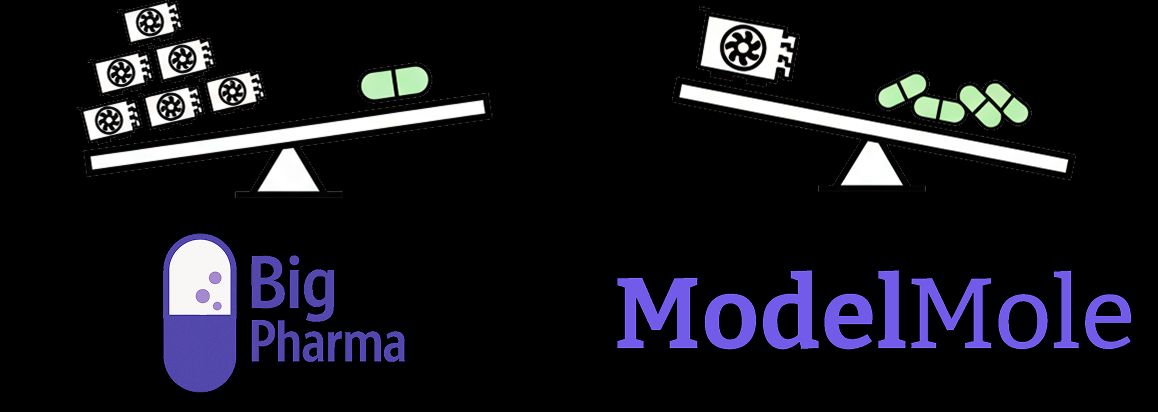
While the industry standard is to purchase as many NVIDIA GPUs as possible and trust that this will somehow magically translate into cash. What makes us different is that we squeeze [much] more value out. With a single GPU, we produced a million $ in value for our clients!
LLMs can write a poem, compose an email, or even debug code. But peptides? They only need 20 amino acids to describe their entire "vocabulary." At ModelMole, we don’t rely on LLMs, instead, we use specialised models trained on biological data and computational chemistry data.

Bad data doesn’t announce itself; it sneaks in, corrupts models, and wastes months of research. A value of 10M in a 0-3 range? Easy to spot. A dataset where "the Earth is flat" is tokenized as valid? That’s the real danger. #DataScience #Biotech #AI #DrugDiscovery #DataQuality
What’s your experience with model sizing and overfitting? Have you encountered similar trends in your work? Let’s discuss! #MachineLearning #AI #DataScience #PeptideResearch #ModelOptimisation #ModelScaling #ESM2 #ProteinModeling #ParameterTuning #ResearchInsights #AICommunity
It’s a reminder that model optimisation is as much about precision as it is about power. Finding the sweet spot where complexity meets efficiency is key to building robust AI systems.
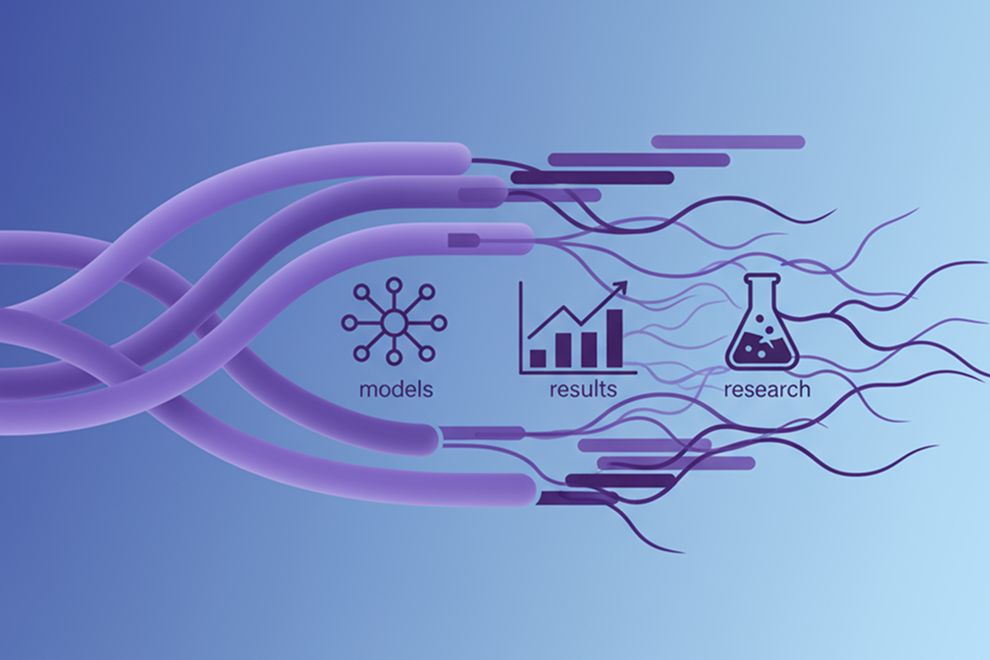
As we increased the number of parameters in the ESM2 model, we observed a clear improvement in performance... up to a point. Beyond a certain threshold, the model began to overfit, struggling to generalise and extract meaningful insights from the input data.
Hubert Staudt @hubertst
77 Followers 444 Following
SCoTCH Research @scotch_research
68 Followers 16 Following The Strathclyde Computational and Theoretical Chemistry Hub (SCoTCH) brings together the research groups of Prof T Tuttle, Prof D Palmer and Dr T Nematiaram.
Yanis Varoufakis @yanisvaroufakis
1.2M Followers 541 Following Economics professor, quietly writing obscure economic texts for years, until thrust onto the public scene by Europe's inane handling of an inevitable crisis
Science News @ScienceNews
5.4M Followers 512 Following Covering the latest news in all fields of science. Publisher @society4science. See also @SN_Explores.You might like