Replico @replicolabs
Replico researches and builds decentralized protocols that connect blockchain to the real world. We are the builders of @torquemarkets and @proteandaos github.com/replico-labs Onchain Joined July 2024-
Tweets166
-
Followers95
-
Following31
-
Likes402
We have said this since 2024... In the future, the whole process of proposing, voting, and execution will be handled by agents onchain and offchain... Our next phase of @proteandaos will prove that algorithmic governance is the way to go.
What is the possibility of Artificial intelligence catering for DAOs administrative duties? The dawn of AI agents in crypto is already here, taking us a step further into the thesis of Algorithmic Governance (ALGov). Yes it possible! What if the ARK has this on its deck? 🌊🚢
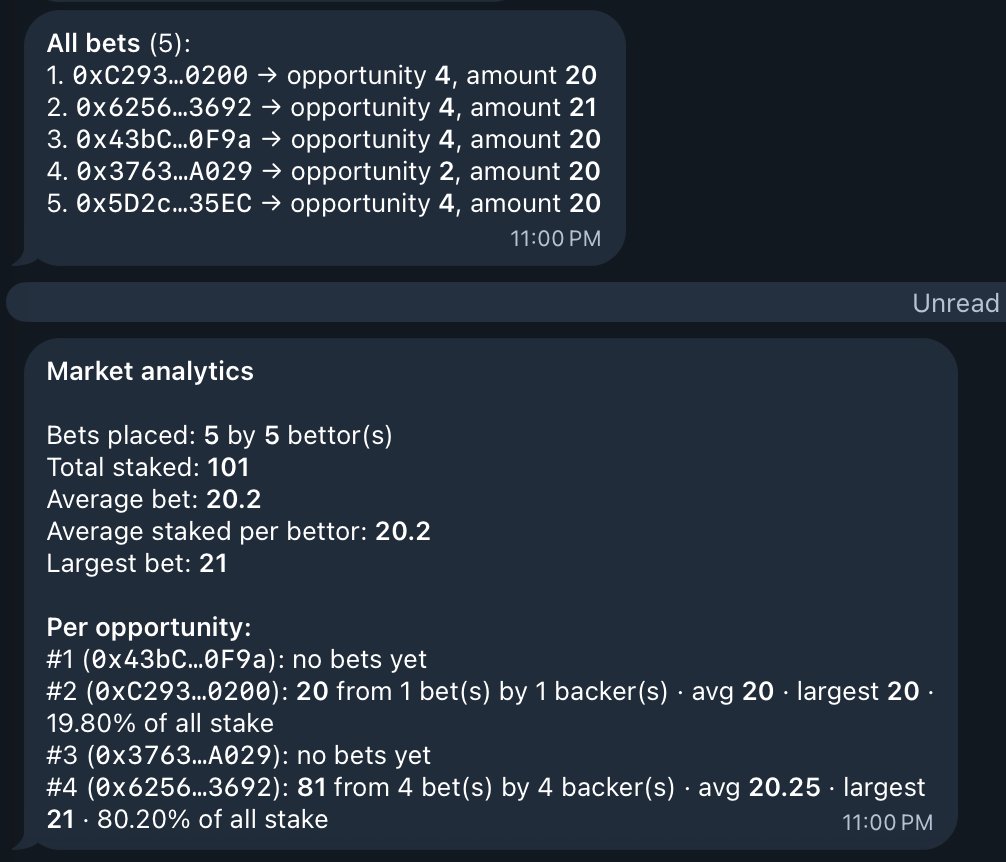
We just finished testing our private opportunity markets on Telegram using @proteandaos. Key takeaway: @zama is an awesome privacy tool for EVMs, I personally was relieved to know that all our privacy parameters flowed perfectly into it encrypted system. I am super excited to test other decision markets with Protean. Below is our current analytics layout, a bit sketchy, but we would improve it with graphs and charts in the coming weeks.
There was a lot of research and testing put into this library. Our team always considers the best practices of engineering and first-principles thinking.
While building the Spaces Governance Library, I got stuck on the idea that our contract factories would hold the bytecode of their child contracts inside them (apologies if you're not a Solidity dev). But I kept hitting "stack too deep" on deployment. I tried --via-ir, and while
The biggest issues DAOs face are voter apathy, treasury and governance modularity, and on-chain direct transaction execution. Sending community members to external forums to discuss a proposal fragments participation—most people won't leave the platform they're already on, since not everyone is a developer. Then forwarding them to a separate platform to make proposals is another level of friction (connect wallet, monitor for active proposals, and the like). Governance should be decoupled from the treasury. Governance can change; the treasury should never have to migrate. Rigid systems lead to risky migrations, governance gaming, and whale manipulation. Treasuries are meant to be vaults controlled by the DAO itself, not by a Safe multisig—that introduces another single point of failure into the system. The slightest OpSec mistake and the treasury is gone. The solutions are simple: Keep governance discussions in Discord, Slack, and Telegram. Telegram already has a setting to structure a group like a server. What's needed on top of that is a forum- or proposal-write-up site, where people can look up the details of a proposal. Governance should happen in the group chat, server, or workspace; we have OAuth<>embedded wallet systems, and bots/apps in these messengers can help with the interfacing. There should be dozens of governance models that a DAO can attach to, or detach from, its treasury. Governance should be evolutionary, not static. DAOs need a standard transaction library, where they can see and use actions that are verified—instead of accepting arbitrary, unverified bytecode from god knows where. If a DAO needs added security, a guard wrapper can be implemented, one where signers can only sign or reject a proposal and never create one. The ability to create a proposal as a security signer makes you an OpSec point of failure. All of these solutions are currently implemented in our Governance Library and Social Layer interface, @proteandaos. Thanks for your attention.
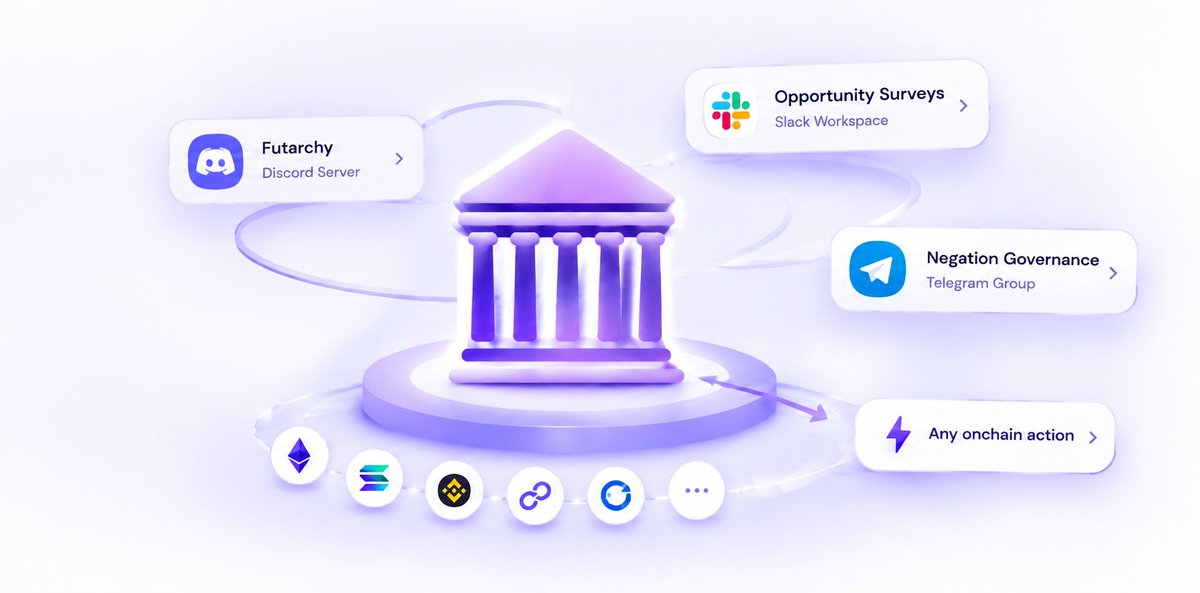
Futarchy, but on your Discord server. Opportunity markets, but on your Slack workspace. Negation governance, but on your Telegram Group chat. Any governance. Any blockchain. Any onchain action. Be protean, be limitless. 🪄
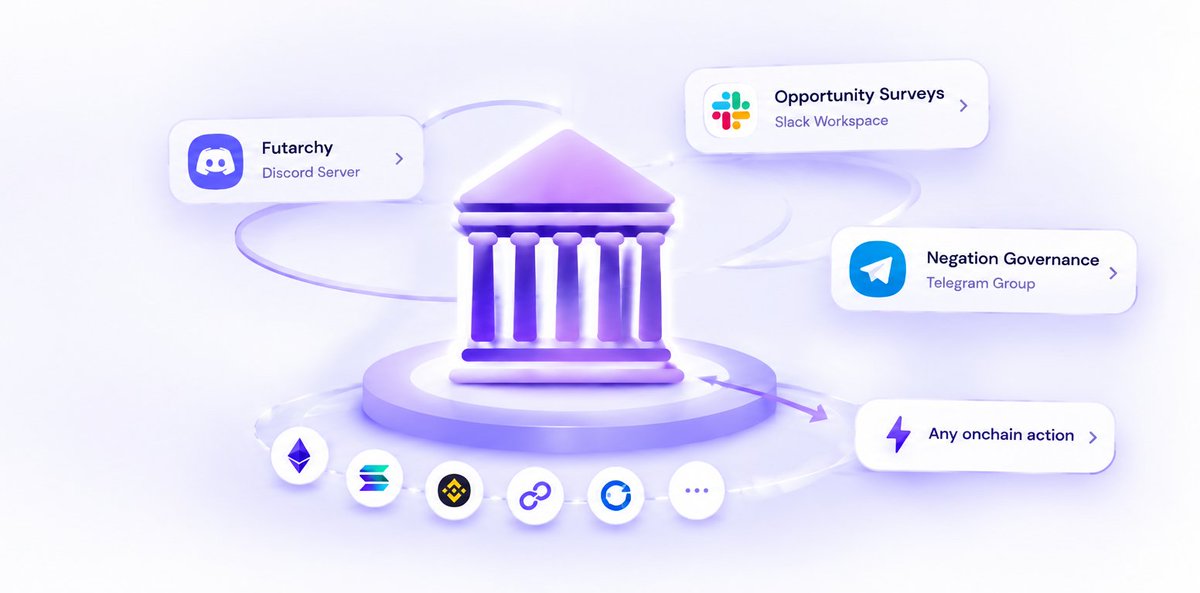
Say hello to Protean on Discord 🪄
Say hello to Protean on Slack 🪄
The reasons for my name: My tools can be used in any social messenger. They allow communities to adopt any governance system of their choice. They allow DAOs to execute any type of transaction, both onchain and offchain. I'm versatile. I'm agnostic. I'm protean.
Why do I think Sowellian Governance is an awesome way of betting for DAO corporations? Unlike the popular opinion that futarchy is the best, I have a contrary opinion. Yes! Everyone is talking about futarchy, but there's one point in the system I think I should expose. Futarchy doesn't have a negation game; there's no measurement of whether the proposal was successful at the end, and there is no punishment for the people who voted for it. At the end, the DAO treasury or resources bear all the brunt of a failed execution. While I understand why this can be nice for normal DAOs, I certainly don't think it's ideal for DAO corporations because these organizations are not non-profits; they are there for profit. Someone has to be accountable: the proposer and the people who voted for it. Sowellian simply solves this problem. After a proposal is made, the token holders or a council votes on established criteria. Once those criteria are agreed upon, the proposal goes into voting. After it passes, it goes into execution, and after execution comes resolution. If the proposal that was executed meets the criteria for success, people who voted against it forfeit the stakes they made on the proposal. If the proposal fails, the people who voted for it forfeit their stake. The aim is that a failed execution costs the people who didn't support it money, while a successful execution rewards those who supported the proposal. Sowellian is about action and consequences. This is not far from how CEOs and executives behave with boards of directors: certain actions may require them to put their own interests or compensation at risk, and if things go right, they can receive additional shares through stock options, performance packages, and other incentives. Thank you for your attention.
Why do I think a Decentralized Unincorporated Nonprofit Association (DUNA) could be a better way to create a regionless DAO or community organization? One of the biggest problems with online communities is the gap between digital coordination and legal access. A community can coordinate globally through Discord, Telegram, Slack, or other platforms, but when it needs a bank account, sign contracts, hire people, or participate in legal proceedings, it usually has to create a traditional legal entity in a specific jurisdiction. Creating a Foundation, DAO LLC, or other legal wrapper can introduce significant formation, administrative, tax, and compliance requirements, which can be especially difficult for communities whose members are distributed across multiple countries. This is where Wyoming's DUNA framework becomes interesting. It was designed specifically for decentralized nonprofit associations and recognizes concepts such as smart contracts, governance proposals, distributed-ledger technology, and blockchain-based membership rights within the organization's governing principles. So what does this mean for a DAO? A DUNA can provide a legal entity through which a community can potentially: - Sign formal agreements and contracts. - Hire employees and service providers. - Hold assets and enter into business relationships. - Establish relationships with financial institutions and payment providers. - Operate as a legal organization while retaining community-driven governance. The important distinction is that DUNA doesn't make these things automatically available. Banks, payment providers, and other counterparties still have their own compliance requirements, and DUNAs have specific statutory requirements. But combine a DUNA with blockchain-based governance and something interesting emerges. Imagine a global association, social club, research community, or creator organization formed as a DUNA, with its governance and treasury coordinated through a bot on Discord, Telegram, or Slack. Members could elect administrators, govern the treasury, make proposals, and coordinate payments through the same interface where they already communicate. The DUNA provides the legal wrapper; blockchain provides programmable ownership and governance; and the messenger provides the everyday interface. In essence, the DAO doesn't have to choose between being a legally recognizable organization and being natively digital. And the funny part is that Wyoming has already been experimenting with this legal structure for years. The opportunity now is to build the infrastructure that makes it usable. Thank you for your attention.
Why do I think most opportunity markets today will fail? Most opportunity market builders assume that when a business, financial institution, club, or trading fund wants to conduct research or market consultation, it will broadcast the opportunity publicly. In reality, many won't. These consultations are often specialized forecasting exercises. Organizations may only want input from a specific group of professionals or a pre-selected list of eligible participants. Making the options public can also expose sensitive information to competitors. The organization may be considering several options, but the purpose of the market is to gather informed opinions before making its final decision—not to publicly reveal what it is considering. I think opportunity markets are still viable here. The missing piece is privacy. Organizations need to control who can participate, who can access the market, and potentially who can see the results and when they can see them. What better access layer is there than a gated Discord, Telegram, or Slack group with a native onchain opportunity market? The messenger already handles membership and access control. The onchain market handles the forecasting, incentives, and settlement. This creates a simple but powerful application of blockchain-based decision markets: private, permissioned forecasting for real-world organizations without requiring them to expose their decision-making process publicly. Thank you for your attention.
Why do most new multi-country clubs and associations always need to create a bank account in one region? Firstly, there is no available online and regionless way to create a multi-signatory account where the association can change signatories periodically (except for blockchain). This forces them to pick a single country to establish their account, which now makes it difficult to add new signatories, especially when those signatories are not from that country. Receiving foreign payments from members all over the world becomes an even bigger bottleneck. Most of these communities still hang out on places like Slack, Discord, Telegram, and even WhatsApp. That is where they communicate, deliberate, hold elections, and do everything else, but not manage their funds. It's painful that the internet wasn't built for payments, but with blockchain, bot abstraction, and stablecoins, these issues can be solved. Now imagine if there was a bot system that allows these people to make payments in their local currencies and then get converted to their preferred stablecoin — say USDT/USDC, JPYC, EURC, ZAR, cNGN, etc. — and deposited into an on-chain treasury governed by a delegated Governance DAO, where the signatories (the club or association executives) are elected for whatever tenure they choose. That sounds awesome, right? And all of this is done in such a way that payments to and from the treasury feel just like bank-account-to-bank-account payments. The group no longer needs to leave their community for anything, and interacting with the bot isn't even a complex process because almost everyone today has had some experience communicating with a bot or LLM. Thank you for your attention.
Why do most escrow services fail today? ❌ High friction: Most deals happen directly on messaging apps (WhatsApp, Slack, Telegram, & Discord). Users hate having to log in and navigate new websites or standalone apps just to run a transaction. ❌ Impersonation scams: Malicious actors frequently clone admin or buyer/seller accounts in escrow groups in a bid to steal funds. ⏩ The solution isn't creating another website or mobile app—it's building an integration that respects the existing ethos of OTC and gig trading where it already happens. Blockchain and bot abstraction solve this cleanly—from secure group creation and verified invites, down to an actual smart contract that handles fund distribution. Imagine inviting someone to an escrow group via a simple bot link that automatically binds them as a member of a group-tied multi-sig wallet. From there, both parties can deposit, hold, and release funds or complete gigs seamlessly. Thank you for your attention.

Kut3 @sw3paz_Sol
1K Followers 1K Following Product Growth & Infra Guy @SuperteamNG / @SolanaSpaces / @TheMerch_shop / @lpppterminal_
Uba🦀 @ubadinekethedev
650 Followers 1K Following Backend, Blockchain, Systems Engineering🫧 Exploring Web3Sec


Latenightclips @LateNight_clips
0 Followers 12 Following
Wryta @SB_Wryta
354 Followers 1K Following Product Critic. || Researcher: Products, Adoption, Education. || Prev @zeusnetworkhq
Neto | Legion🚀 @web3xneto
1K Followers 1K Following Some dude building @use_legion and @_SuperMarketapp. Janitor @ToTheMoonHub. Member @SuperteamNG. Researcher.
james taylor @Weldet3418James
9 Followers 398 Following

Sanity ♠️ @npmsanity
283 Followers 725 Following Learning tech and blockchain things… I just want to be me✨
Sunil Simar @Kartik23664452
163 Followers 1K Following Alum @iitroorkee | Full Stack Developer | Building on @solana | Fintech & Web3 | member @AthenaF0SS
Wave Market Virtuoso @LorRenz27743874
59 Followers 2K Following

HeddaBowen @Oerc9tPuPK8RLU
70 Followers 7K Following
Julia | Web3 Artist @juliabrett
601 Followers 7K Following Web3 Artist 🎨 | 2D Illustrator & Animator | Character Art • Social Visuals • Memes • GIFs • Stickers • Animations | DM for Commissions #Web3Artist

Jeebstarg @JEEBSTARG
1K Followers 7K Following 🚀 Helping you discover the best products & exclusive deals 💎 Honest Reviews | Smart Shopping | Daily Finds 💰 Affiliate Marketer 👇 Shop my top picks
InaClarke @rX39T9j38zH7p6R
73 Followers 7K Following
Meadow Clarence @MeadowClarence
0 Followers 129 Following

Omerta @OmertaCryptoLLC
118 Followers 996 Following
Sampath Kumar @eternalfubiki
449 Followers 6K Following Investing @tykhe_ventures || tinkererrr.. || math || football || badminton || humor
0xCookies @0xCookies_ETH
458 Followers 7K Following OG Miner ⛏️ just a cookie 🍪 in search of a 1000x 🚀 ᵍᵐ Vires In Numeris💎
Minion @0xminion
29K Followers 19K Following Research & Data @gbvofficial | @DegenCitadel Prev: @HuobiGlobal ApΞ Responsibly BM/GM/JoSun/早 0xminion.eth


Greg Rosenthal @GregMRosenthal
2K Followers 7K Following Finding Order Out of Chaos | @NorthIslandVC
Smesthe @SmestheuZdlSSM
47 Followers 4K Following


davrel @iamdavrel
12 Followers 18 Following


M🪐 @Axor____
2 Followers 36 Following
PropJoe @Prop_Joe_
362 Followers 5K Following
🐍 6488.eth 🐍 @crypto_alien__
502 Followers 5K Following


InvisibleDrax @drax_invisible
18 Followers 310 Following

Trawangal @0xTrawangal
64 Followers 549 Following
Penny Graves @PennyGravesQT
119 Followers 5K Following


Nujunwa @nujunwa_
120 Followers 675 Following Sharing early-stage DEFI & Airdrops across chains || Building with @SuperteamNG
Imelda ツ @imeldaw3t
135 Followers 264 Following
Josiah Davis 🧙🏿... @davistheweb
165 Followers 245 Following Love the Web, Systems & Security || Dev & Infra Researcher🔍 I build performant software. mb — @Superteam
Hermes @hermes_ecs
8 Followers 15 Following ECS Framework for building fully on-chain games on solana
𝗞𝗥𝗠₭TⵣWN @KRMKTWN
637 Followers 2K Following As a child, I dreamed of walking with Haroun Tazieff at the edge of fire, or diving with Jacques Cousteau into a deep imaginary rabbit hole...
Nwachukwu Daniel @ApostleDaniel_
44 Followers 391 Following A Cinematographer | A Content Creator | A Proud Media Director For @SuperteamNG DELTA | The Official DOP @DCTMultimediaStudio | J87TYYEE

YZi Labs @yzilabs
757K Followers 385 Following YZi Labs invests in ventures at every stage, prioritizing those with solid fundamentals in Web3, AI, and biotech.
Jito Labs @jito_labs
31K Followers 11 Following Jito Labs builds high performance Solana MEV infrastructure.
Colosseum @colosseum
64K Followers 115 Following Crypto’s premier hackathon, accelerator, and venture fund | https://t.co/l8ojirFTE6
Paradigm @paradigm
1.7M Followers 152 Following We build and invest in the companies and ideas shaping the frontier. Led by @matthuang and @alanapalmedo.

Sphere Labs @sphere_labs
27K Followers 260 Following Cross-border stablecoin payments for businesses and regulated institutions. Faster settlement, built on @Sphere.
Nansen @ TOKEN2049 �... @nansen_ai
358K Followers 328 Following Actionable onchain intelligence for traders.
Ellipsis Labs @ellipsis_labs
24K Followers 5 Following Building powerful markets on Solana. Core developers behind @PhoenixTrade, @SolFiAMM, and @gavelxyz
Delphi Digital @Delphi_Digital
1.6M Followers 998 Following A research-driven firm dedicated to making crypto happen sooner and better than it would without us.

Y Combinator @ycombinator
1.7M Followers 367 Following We help founders make something people want. Subscribe to our newsletter: https://t.co/sjqjxxBeLc
a16z @a16z
1.1M Followers 63 Following It's time to build. https://t.co/A9eTFq6Xbx Posts are not investment advice or an advertisement for investment services. See https://t.co/nX2FtaLE06.

Aphelion @AphelionTrading
1K Followers 11 Following OG Market Maker in Solana ecosystem. Specialised in onchain liquidity and DEX advisory | Head @RealSpaceMonkey
DefiLlama.com @DefiLlama
372K Followers 3 Following Open and transparent DeFi analytics. For support: https://t.co/skXWYXmRUw
Turbin3 @solanaturbine
8K Followers 41 Following The premier source of Solana Talent. From Enterprise training to Elite developer programs, we produce engineers powering the ecosystem.
anchor @anchorlang
8K Followers 2 Following Official account of the Anchor smart contract framework. Join the Discord https://t.co/WKo3RLKZvi.
Solana Developers @solana_devs
90K Followers 177 Following gm Solana Developooooors! Technical news, updates, content, code and job opportunities for Solana developers 🧑🏽💻
Solana Status @SolanaStatus
138K Followers 4 Following Status updates for the Solana network, the Solana website, and the Solana Explorer. Follow @solana for daily announcements. Run by the Solana Foundation.
Helius @Helius
75K Followers 148 Following The API for internet finance. Solana RPCs, APIs, HFT infra, and data. Discord: https://t.co/TVc0YoxbEg
Metaplex @metaplex
114K Followers 1K Following The leading tokenization platform on Solana. Powered by $MPLX.
raj 🖤 @rajgokal
2.4M Followers 3K Following @solana accelerationist. giga-techno-optimist. bad jokes are my own. rt's and likes are not endorsements. do your own research.
toly 🇺🇸 @toly
2.7M Followers 7K Following Co-Founder of Solana Labs. Award winning phone creator. NFA, don’t trust me, mostly technical gibberish. https://t.co/LomgbTpb6h

Seeker | Solana Mobil... @solanamobile
398K Followers 337 Following Seeker, the definitive crypto mobile device. Powered by $SKR. Order Seeker: https://t.co/GTbxrFaq4f Discord: https://t.co/4Hh5oj1myu

Superteam @superteam
98K Followers 2K Following a community of founders, devs & grantees working in the @solana ecosystem. || no token, just an online community.
Solana Foundation @SolanaFndn
197K Followers 110 Following Solana Foundation is a non-profit organization dedicated to the decentralization, growth, and security of Solana.
Solana @solana
4.2M Followers 4K Following The high performance network powering internet capital markets, payments, AI agents, stocks, memes, and crypto apps.
You might like