Williams Almeida @williamsdev_
SE - building with AI. williamsbrown.dev Maceió, Brasil Joined March 2010-
Tweets5K
-
Followers1K
-
Following2K
-
Likes7K

My god this is such a good speech that every SWE needs to hear. You know what? Every person should hear it Keep the happy memories, eyes on the reality, be excited about the future. That’s the best that anyone can do

AI red flags: - "My marketer agent just finished a meeting with my chief of staff agent - just 2 of the 127 agents on my books" - "The agent did it, not me" - "I've invented a coding language for agents" - "I've got 250K tokens in my context before I send a message, is that normal?" - "Opus 5 is way dumber today than yesterday, secret nerf?" - "Peasants, gaze upon my 600-line CLAUDE.md, my results are incredible" - "LOOK WHAT OX ALPHA JUST ONE-SHOTTED, SOFTWARE ENGINEERING IS DEAD" - "All human knowledge is worthless now" - "I turned 600 coding books into a skill" - "Coding is solved. Bugs are not solved"

If you even slightly entertain the thought of failure, you give your mind a chance to start noticing reasons to fail. But if the only option on your mind is to win, then the world seems to conspire in your favor, because your mind will notice opportunities it wouldn't have before. Become delusionally optimistic, not because it's realistic, but because it's effective. It drastically increases your chances of success.

Something I have been thinking about: in the past, the best engineers I knew spent a lot of time automating their work in various ways. Better vim/emacs automations, writing lint rules to catch repeat code issues, building up a suite of e2e tests so they don't need to smoke test the app manually. These kinds of things were the highest leverage activities an engineer could do, because it multiplied their own output, which in turn meant they could build more things. I think many of these automations have become even more important now. This is true for a number of reasons. First, infra and DevX automation speeds you up. And if you are running an army of agents, each of those agents will be sped up also. More automation == more output per unit of time. Second, moving things to code improves efficiency. Your agent could fix an issue every time it sees that issue happen, but that uses tokens and might miss cases. If Claude instead writes a lint rule, CI step, or routine, that class of issue can be fully automated forever. This is really what people are talking about when they talk about loops -- it's about automating entire types of busywork rather than solving them one off. This isn't a new idea at all. Engineers have been doing this for a long time! Third and most importantly, automation makes it possible for others to contribute to the codebase more easily. Increasingly what I am seeing is engineers are contributing to codebases on day one because Claude can navigate the codebase for them, and that non-engineers are able to contribute to a codebase as effectively as engineers can. What gets in the way of both of these is domain knowledge that lives in peoples' heads rather than in automation -- the stuff you used to have to learn when ramping up. What has changed thanks to agents is the domain knowledge that can be encoded as infrastructure is no longer limited to what is expressible in lint rules and types and tests; it can now capture nearly all domain knowledge, encoded as code comments and skills and CLAUDE.md rules and memories. If I put up a PR for an iOS codebase I don't know and a code reviewer rejects it because it doesn't use the right framework, or if a designer builds a new feature and it gets rejected because it doesn't follow the right architectural patterns, these are failures of automation. Every team should be writing the CLAUDE.md's, REVIEW.md's, skills, and docs that enable agents to productively work in their codebase with zero additional context from the prompter. This sounds crazy, and at the same time is a natural extension of the stuff engineers have always done: automate, and encode domain knowledge as infrastructure. As the model gets smarter and as the harness matures, this task becomes easier. In the meantime, it is on every team to look for ways to convert their domain knowledge to infra so that Claude can write code better, so that code review catches issues automatically, and so the next person working on your codebase can contribute more easily.

Boa parte do que torna uma interface parecer amadora é uma coisa só: hierarquia visual fraca. Tudo grita ao mesmo tempo, então nada se destaca. Você já abriu uma tela e sentiu que ela era "barulhenta" sem saber explicar por quê? Costuma ser isso. Tudo está grande, tudo está em negrito, tudo tem cores fortes, e o seu olho não sabe para onde ir primeiro. Quando tudo é importante, nada é. Hierarquia é a decisão de que algumas coisas importam mais do que outras e de fazer o resto dar um passo atrás. É você guiando o olhar da pessoa numa ordem: primeiro isto, depois aquilo e, por último, o detalhe. Toda tela boa faz isso, mesmo que você não perceba. São quatro ferramentas, e o segredo está em combiná-las. → Tamanho. Maior puxa mais atenção. A armadilha do iniciante é usar só o tamanho, deixando o secundário minúsculo a ponto de ninguém ler. → Peso. Negrito chama o olho. Guarde o negrito para o que importa de verdade. Se tudo estiver em negrito, o negrito perde o sentido. → Cor e contraste. Aqui mora a sacada que o Refactoring UI ensina bem: para diminuir a importância de um texto secundário, em vez de encolhê-lo, clareie-o. Um cinza mais suave reduz o peso sem comprometer a legibilidade. Você enfatiza com mais contraste e apaga com menos. → Espaço. O espaço em volta de um elemento é o que o faz respirar e se destacar. Ele também agrupa o que é semelhante e separa o que é diferente. Espaço vazio não é desperdício, é hierarquia. White space é saber de UI de verdade. E tem uma virada de chave que muda tudo: muitas vezes você não cria destaque gritando mais alto no elemento principal, mas silenciando os outros. Em vez de aumentar o principal, abaixe o volume do resto e ele aparece sozinho. É por isso que o bom design parece simples a ponto de parecer fácil. O iniciante adiciona mais cor, mais sombra, mais gradiente, mais negrito, achando que isso é "design". Quem sabe remove e ordena. O exagero quase nunca é sinal de um design forte. Na maioria das vezes, é sinal de uma interface sem hierarquia tentando compensar a bagunça com barulho. O que parece limpo está limpo porque o fundamento está trabalhando por baixo, de forma invisível. No fim, a pergunta certa não é "o que eu adiciono para isto parecer mais design?". É "o que eu posso silenciar para o importante ser ouvido?". Dominar hierarquia, espaço e contraste a esse ponto é o que separa uma interface amadora de uma profissional, e é o foco do UI Pro da DC.

SpaceX has exercised the option to acquire @cursor_ai in an all-stock transaction with the goal of building the world’s most useful AI models. For the past few months, SpaceXAI has been jointly training a model with Cursor, which will be released in Cursor and Grok Build soon. We look forward to working closely with the Cursor team to advance our frontier AI capabilities
SpaceXAI and @cursor_ai are now working closely together to create the world’s best coding and knowledge work AI. The combination of Cursor’s leading product and distribution to expert software engineers with SpaceX’s million H100 equivalent Colossus training supercomputer will

"Engineering, product, and design are all merging into a 'builder' role" Yeah... I'm not so sure. This feels like an oversimplification and podcast talking point. Reality is a lot more complex. Even with 1000 "Member of Technical Staff" titles, someone still has to wake up and care 100x more about Product or Design than anyone else. It is their Main Thing™ That's not to say MTS titles are universally bad, but I think they're an example of this 'builder' talking point that's become bastardized. AI and coding agents have made generating code easy and yet... you're in for a world of pain if non-engineers ship a bunch of slop and don't have great engineers to tame the complexity. The SF hivemind has a tendency to overfit what works at startups for every company. And to be fair, sometimes this is true! Startups can be a leading indicator for how the industry is changing and often cause disruption. However, it is going to be incredibly hard to disrupt the extremely human parts of corporate jobs. You really think there's going to be a PM who also does some engineering and design on the side at JPMorgan Chase? This is true for the simple parts of most jobs, like people wanting to have ownership over something and do good work, move up a career ladder, support their family, get paid well, make an honest living... And also the hard parts: internal politics, some critical business system that has a bus factor of 1 which has been running for 15 years and isn't documented anywhere because it's that guy's job security. The real world has a lot of this stuff. It's easy to pontificate about all roles collapsing but it's actually really nice to have a specific person or team who is an expert in one thing that you can work with. I don't expect that to change. Further, I think AI disruption to knowledge work will take decades to play out because it is more fundamental to the human condition (e.g. sociological/organizational) than pure intelligence.

Nothing will shape your worldview as much as simply reading how humans from the past thought. You realize very quickly that our time is a radical anomaly in human history.

If you don't have a goal so meaningful it makes other people's opinions irrelevant, you will lose control of your life. You will adopt the goals assigned to you by your parents, peers, or society.

it’s better to quit if you can’t keep challenging yourself to do something more complex, just quit building software people wanna keep getting joy by rewriting the same react component in neovim for the 400th time, or firing up another identical Elixir script on their split keyboard like it’s 2018 > the joy of learning is gone what they really mean is: i am sad I don’t get to learn a new JS framework go build something bigger, something that AI won’t one-shot in a single prompt, something you’ll be afraid to run on your own machine


Introducing Claude Opus 4.7, our most capable Opus model yet. It handles long-running tasks with more rigor, follows instructions more precisely, and verifies its own outputs before reporting back. You can hand off your hardest work with less supervision.

Transforme um fluxo repetitivo do seu dia em um “microproduto interno” com IA e verá sua produtividade mudar drasticamente. Exemplo: suporte, checagem de serviços, geração de PRD, quebra em issues, review inicial, atualização de status. Muita gente tenta usar IA só pra “escrever código mais rápido”, mas o ganho real aparece quando você encadeia tarefas chatas e previsíveis num fluxo que trabalha com você. Menos prompt solto. Mais sistema. Se eu fosse resumir: quem aprender a operacionalizar IA no próprio processo vai ganhar muito mais do que quem só usa pra autocomplete premium.
@mattpocockuk Concordo! Muita gente tenta escalar agent workflow terceirizando o pensamento pra framework, mas aí também terceiriza a capacidade de debugar. Quando processo, contexto e checks continuam visíveis, o ganho fica bem mais sustentável.
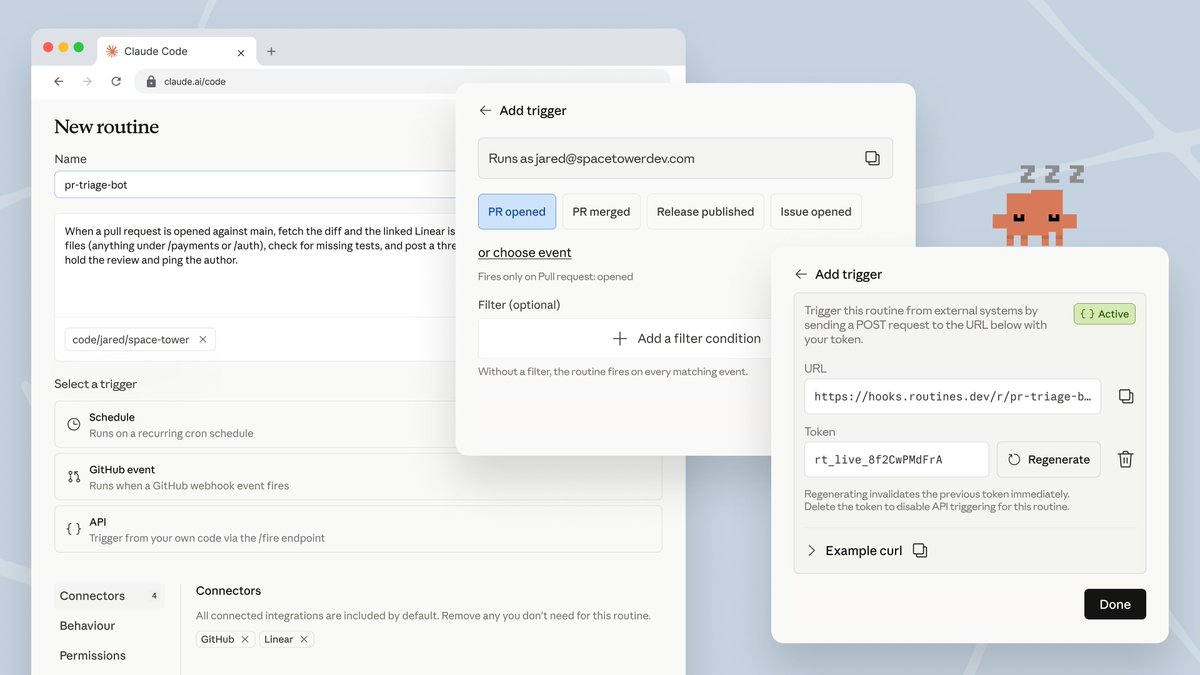
Now in research preview: routines in Claude Code. Configure a routine once (a prompt, a repo, and your connectors), and it can run on a schedule, from an API call, or in response to an event. Routines run on our web infrastructure, so you don't have to keep your laptop open.
A maior ilusão do dev é achar que o problema é velocidade. Quase nunca é! O que destrói teu dia é troca de contexto: feature, cliente, deploy, bug, suporte, reunião, volta pro código. No fim, tu não trabalhou pouco. Tu só trabalhou fragmentado. Produtividade não é fazer mais por hora, é interromper menos por dia.
A discussão sobre AI coding mudou de lugar. Não é mais “qual modelo escreve código melhor?”. É: qual stack de agents tu consegue orquestrar sem virar babysitter da automação. Hoje o gargalo raramente é o modelo. É contexto ruim, instrução ruim e handoff ruim entre tools. Quando acerta isso, a IA deixa de ser autocomplete caro e vira multiplicador real. O modelo importa, claro. Mas cada semana fica mais óbvio que workflow > benchmark.
Esse é o tipo de coisa que mexe no mercado de verdade. Não é só mais um modelo ou mais uma feature, é a infraestrutura que faltava pra muita gente sair do protótipo e começar a colocar agents em produção com muito menos atrito. Se a execução acompanhar a promessa, isso muda bastante o jogo.
Introducing Claude Managed Agents: everything you need to build and deploy agents at scale. It pairs an agent harness tuned for performance with production infrastructure, so you can go from prototype to launch in days. Now in public beta on the Claude Platform.

O crescimento de tools como Codex mostra uma mudança clara: IA pra dev deixou de ser feature de curiosidade e virou camada real de trabalho. Agora a disputa não é sobre quem gera código mais bonito na demo. É sobre quem economiza mais tempo e cria menos problema no fluxo real.

Three million people are now using Codex weekly - up from two million a little under a month ago. Incredible to see the growth. Thank you to all of you and to the ecosystem we’re part of. To celebrate, we’re resetting rate limits so you can keep building, and we’ll reset them
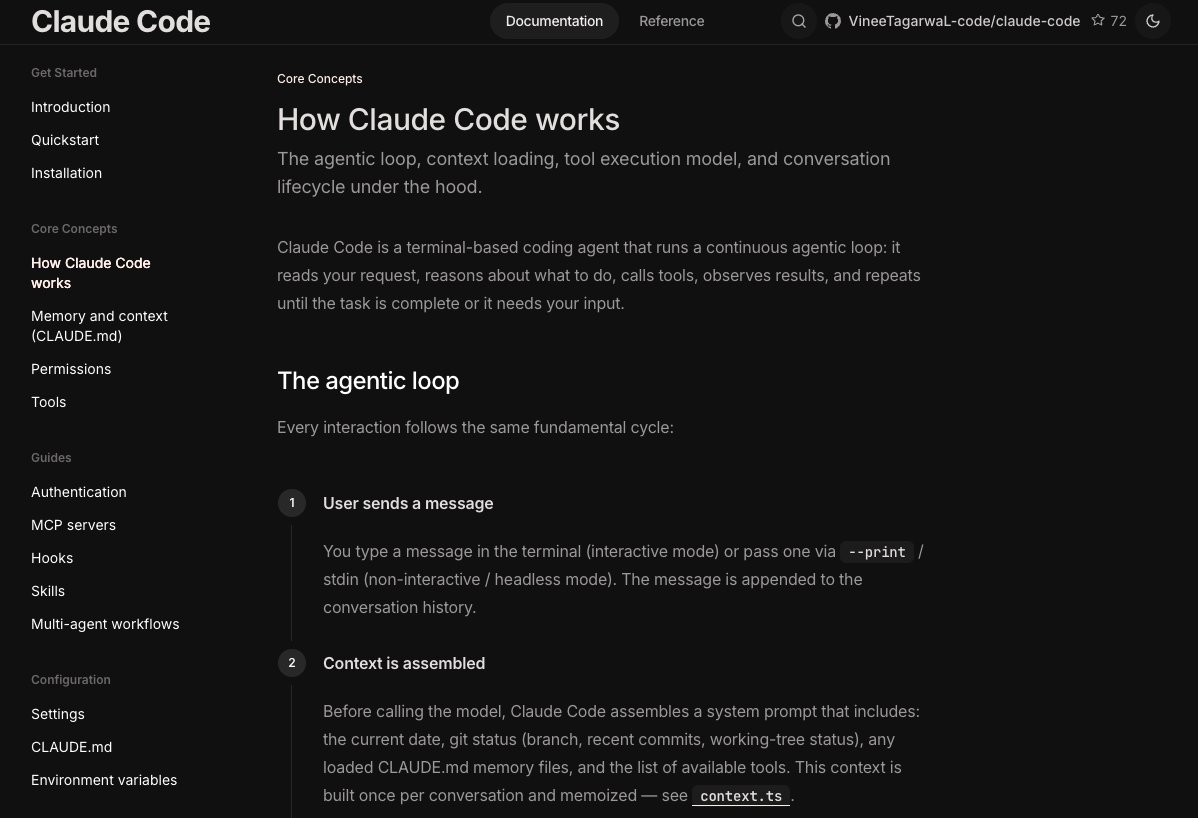
🚨 VAZAMENTO CLAUDE CODE 🔥 Vazou a codebase completa do Claude Code, via um source map de 57 MB que ficou público no pacote npm oficial. E o @vineetwts já fez o que ninguém esperava: criou uma documentação completa do código em tempo recorde! Nela ele explica tudo: - Pipeline do agent - Como funciona o loop agentic - Gerenciamento de contexto - Memória persistente - Ferramentas, permissões e muito mais X/Twitter tá pegando fogo hoje 🔥 mintlify.com/VineeTagarwaL-… #ClaudeCode #AgenticAI #Anthropic

Glauber Pacheco @glaubera
1K Followers 2K Following Ajudo empresas a criar negócios sólidos e rentáveis por meio da importação de máquinas, equipamentos e insumos para o agronegócio e a construção civil.

Zozo @Spiker6996
8K Followers 7K Following Welcome to Zozo! 🌿 A place for fun videos, daily posts, and positive vibes New creator — hope you enjoy the journey ❤️
Williamslevy @Williamsleqwj6
0 Followers 53 Following
Leo Zeferino | IA par... @leozeferino85
397 Followers 2K Following Acelerando negócios com Inteligência Artificial. Ex-Ambev, iFood, Gringo Nômade Digital 65+ países.
Bruno Pierri @brunopierri8
1K Followers 831 Following Building @ https://t.co/nOXDylyApU. 3x founder. Brand nerd. I test the AI tools people build with and give honest opinions.
Startup Scores @StartupScores
205 Followers 862 Following See who’s actually shipping. 🚢 Tracking verified release cadence & unbroken weekly streaks across software teams. ⚡ Transparent. Zero paid ranks. 📊
Emilly Humphress @emillyhumphress
888 Followers 416 Following ⚽️ https://t.co/vxPi0RGBT2 📣 https://t.co/4y81hjUVyc
Alex Iordache @alexii_9
2K Followers 4K Following Founder of: https://t.co/RhXyp9kdmt https://t.co/bs8ihF82gm 👨🏻🎨 https://t.co/RQDorJJCUE ⚙️ 21 y/o from Bucharest | 10 SMALL EXISTS


Joao Moraes @JMoraesO007
0 Followers 20 Following
Dalaz → Brand Desig... @LeoDalaz
964 Followers 667 Following Brand Designer for SaaS I founded the first Brazilian studio focused on branding and illustration for SaaS Brazil - Worldwide
Leo Flores @_iamleofc
2K Followers 3K Following 10y+ experienced software/product engineer with a strong product instinct, building systems, shaping products, and creating slightly crazy things along the way.
Washington | guaraclo... @washingtonserip
2K Followers 3K Following A Railway te deixou na mão? Vem para o melhor PaaS brasileiro. 👇
albuquerque @byalbuquerquesz
1K Followers 689 Following 19yo founder of https://t.co/6ZHNc20qJS building at https://t.co/tT9vOKruuQ


Shamiul Alim @sam2sls
896 Followers 6K Following

Müller Servino @MullerServino
1 Followers 18 Following


Moacir Moda @moacirmoda
1K Followers 567 Following 👨🏻💻 +12 anos trabalhando c/ internet. 🌎 Fundador do @tintimapp 💪🏻 Empreendedor, Marketeiro, Dev. 📩 Assine minha Newsletter

Arthur Rodrigues @rrodrigues4433
0 Followers 48 Following 👨🏾💻 Desenvolvedor Back-End “Ele é fiel em tudo o que faz.”(Salmos 33:4)
Allyson de Paula @DePaulaAllyson
8K Followers 2K Following Um seguidor de Cristo, casado com a Jaquelliny, papai da Antonella e indie founder de startups no resto do tempo. Segue a conta backup 👉 @DePaulaAllyson2
eber @eber404
69 Followers 277 Following operador de IA, funil de café e colorado… deus no comando 🙏
Immanuel Giulea @immanuelg
5K Followers 7K Following 🚀 AI & Robotics Evangelist in Quebec | I help executives understand and integrate these technologies
Sam P @PSac80034
26 Followers 441 Following
Diego Carvalho @DiegoAugTC
8 Followers 164 Following
Evert Junior @evertjr
3K Followers 2K Following Senior Front-end Developer | Generative AI expert - Dreaming User Interfaces👨🏼💻🏳️🌈 - Building Maestri: https://t.co/tGLB29ag0T
Woje @Woje97611
16 Followers 938 Following
Alena Kozey @AlenaKozey489
30 Followers 2K Following
Maritha Adams @Marithatrades
672 Followers 7K Following Hi I am a pro Forex 📈Trader. I make 6 figure income by Forex Trading every month, follow me and I will teach 🧑🏫you how to do it!💵💵
João Pedro Silva san... @silva_pedr53403
30 Followers 1K Following
Dino Hilll @DinoHilll26561
143 Followers 5K Following
Cassio Dourado @CassioDourado
384 Followers 2K Following Desenvolvedor front-end, gosto por fotografia e culinária. Um cara que normalmente toma mais café que água…
Stephanto @StephantoDev
597 Followers 105 Following software engineer and indie hacker. learning in public
Luiz Queiroz - Capita... @capitaldigital
5K Followers 2K Following Blog Capital Digital - jornalista Luiz Queiroz. Brasília/DF. Política e os bastidores de TI e Telecom na capital federal.
Anbang Xu @anbang_xu
1K Followers 4K Following Currently building @LoovaAI Founder of @Jogg_ai (exited in early 2026) | Ex: @Apple & @Google
Shammah Womack @shammah_womack
137 Followers 602 Following

Gi | CompSci | 💻 @giibbyte
32 Followers 148 Following Computer Science Student - PUCRIO | 18 | 🇧🇷 | #studytwt | #studytechbr
Luciana Souza Feitosa @lucysouza2708
0 Followers 28 Following
Choquei Cacimbinhas @CCacimbinh72244
29 Followers 163 Following
Promos da Anna 🛍�... @promosdaanna
15 Followers 88 Following 🎀Os melhores achados num lugar só Beleza • estilo • casa e decoração +
Hugging Face @huggingface
827K Followers 227 Following The AI community building the future. https://t.co/TpiXQMQ9rZ
Pollen Robotics @pollenrobotics
21K Followers 227 Following Building open source robots made by open minded humans to explore real-world applications. @Huggingface family Join our community: https://t.co/KFG0LopcZt
NSA Cyber @NSACyber
212K Followers 12 Following We protect our nation’s most sensitive systems against cyber threats. Likes, retweets, and follows ≠ endorsement.
The Information @theinformation
1.6M Followers 703 Following The most authoritative publication tech execs and founders read daily. Sign up: https://t.co/V8AtmraYaA
Kallaway @kanekallaway
16K Followers 459 Following Helping business owners scale faster with content (2M+ followers, 1B+ views). Building https://t.co/uevXNTh29n. Running https://t.co/czTU6mY1yk. YouTube (400K+ subs)👇🏻
FBI Cyber Division @FBICyberDiv
36K Followers 69 Following Official FBI Cyber Division X. Submit tips at https://t.co/YZeSVuoxZI. Public info may be used for authorized purposes: https://t.co/is3HGZcnHx
Dilum Sanjaya @DilumSanjaya
73K Followers 372 Following Software Engineer | Robotics | Science | Game Development 💡Open Source https://t.co/02nVJK3OQK https://t.co/fzTHdVmiYr 🎬 https://t.co/cOGQInDnYV
John Lindquist @johnlindquist
30K Followers 2K Following 👾 https://t.co/5OFfOQQtaV 🥚 https://t.co/rxAeU2D9pO Previously @vercel AI DX The OG egghead
Angie Jones @techgirl1908
115K Followers 739 Following VP, Agentic AI Foundation. Helping developers build with agents. I ❤️ open source
T3 Code @t3dotcodes
10K Followers 2 Following A better agentic code app. Built by @theo and @jullerino
Julius @jullerino
25K Followers 417 Following 25 ⸱ 🇸🇪 ⸱ Building @t3dotchat, @t3dotcodes ⸱ OSS @trpcio, @tan_stack


Guilherme Lippert @guilippert_v4
403 Followers 262 Following Cofounder & Chief Product and Technology Officer at V4 Company | https://t.co/ZofrKvNzPB, your companie’s first and last Marketing Operational System
MillionSend @MillionSend
413 Followers 2 Following The open-source email platform. Send one. Send a million.
nidhi @pnyk05
1K Followers 709 Following web3 x ai x privacy // love auditing systems, assumptions, and myself 😌 AI @emergentlabs • SA @Algo_Bharat // always down for side quests
Atai Barkai @ataiiam
10K Followers 3K Following CEO @CopilotKit🪁 | ex-@Meta | Author of PsyPhy (experimentally testable physics theory of consciousness) | Physics BA & MSc @Penn
Uber Engineering @UberEng
71K Followers 5K Following Engineering @Uber, from practice to people. https://t.co/iIenzuSNxH ✨

Google DeepMind @GoogleDeepMind
1.6M Followers 268 Following The engine room of @Google. Building AI safely and responsibly to solve the world’s most complex problems. Join us: https://t.co/jUHQA27iBL
Ishay Tentser @ITentser
269 Followers 146 Following A startup mentor and a hustler. CEO and Co-founder at Initech. Developing TimelinesAI
ShipClub @ShipClub_br
380 Followers 2 Following Comunidade de quem constrói aplicativos no Brasil. Encontro toda semana.
Michael Thiessen @MichaelThiessen
22K Followers 617 Following Helping engineering orgs get real results from AI coding agents, not just vibes. Evals for coding agents, PR review agents, harness tuning. DMs open.



Condz @condzxyz
41K Followers 3K Following 1º milhão aos 30. Te ajudo a sair do zero: Mentalidade, evolução e IA pra viver no seu máximo potencial. @ottodoti
Aikido @AikidoSecurity
21K Followers 1K Following Security for developers and everyone else. 🌐 https://t.co/xLANl2VdGS ⭐️ https://t.co/qEhI9gQdoQ ☀️ https://t.co/i0HAvBRYeu Get developers back to building.

Zander Whitehurst @zander_supafast
245K Followers 26 Following Founder @memorisely • https://t.co/xSoNEdvmxz | Educator Advisory Board @figma | Making UX/UI education accessible ⚡️
Gabriel Buzzi @gabrielbuzziv
14K Followers 276 Following product and technology founder @enxovaly, biblia raizes, medsimple 400k in 60 days with 2 new apps former @rocketseat
Shen Sean Chen @ShenSeanChen
13K Followers 2K Following founder @waku_agent • https://t.co/sPSpu8yPx6 • youtube(38k) https://t.co/rMP0jaxHK1 • ex-google/mit • pokémon/onepiece fan

Alexandr Wang @alexandr_wang
830K Followers 939 Following chief ai officer @meta, founder meta superintelligence labs, founder @scale_ai. give everyone the adulthood they dreamed of in childhood
The Math Flow @TheMathFlow
90K Followers 56 Following Mathematics insights presented through animations, formulas, pictures, graphics, quotes, books, history, and memes. Open DM.
Zachi @iam_zachi
5K Followers 300 Following Data & Personal agents at @ActianCorp I don’t do paid promo | 38x CVE‘s 📱 https://t.co/wax7xYiQmZ 🐘 https://t.co/tunQiBLBKK 🧩 https://t.co/5g1lrZOh8A

Diogo Almeida @CompleteSkeptic
157K Followers 79 Following Sane + 🌶️ takes in an insane AI world... AI capabilities researcher: co-created RLHF/ChatGPT @ @openai now trying to right the wrong 🤭 (ceo @typesafeai)
Roshan Sadanani @roshan_s
10K Followers 669 Following Love gadgets, games, great books. Building @spacexai. Before: @cursor_ai (acq) @Stripe, @Index (acq), @IBM, @DukeU.
Bruno Pierri @brunopierri8
1K Followers 831 Following Building @ https://t.co/nOXDylyApU. 3x founder. Brand nerd. I test the AI tools people build with and give honest opinions.
Malte Ubl @cramforce
52K Followers 939 Following Self-driving infrastructure @Vercel CTO. Immigrant 🇺🇸/🇩🇪/acc
Anderson ➔ Conty @andersonbrdev
1K Followers 781 Following SWE and PE, Technology projects and web trends. PE: https://t.co/328FhQZNcP - @ContyAppOficial Founder: https://t.co/tBeBVUPMqF
CJ Zafir @cjzafir
64K Followers 978 Following I fine-tune small language models (SLMs) and beat large language models (LLMs)
Marcel @marcelkargul
61K Followers 1K Following Founder @kargulstudio / A design and engineering partner for scale-ups and enterprise products.
Suraj Sharma @suraj_sharma14
26K Followers 3K Following Helping builders get into AI, startups & global opportunities
Emilly Humphress @emillyhumphress
888 Followers 416 Following ⚽️ https://t.co/vxPi0RGBT2 📣 https://t.co/4y81hjUVyc

Matias 🧉 @matiNotFound
6K Followers 1K Following 🇦🇷 Developer @vercel | building https://t.co/qyVJuJm2No Prev @basementstudio, @DiputadosAR. Member of @okaydevsTrends for United States
You might like