

Edvin Sjökvist @Alf088
Stockholm, Sweden Joined August 2010-
Tweets3K
-
Followers96
-
Following409
-
Likes14K
I wonder if in retrospect this will have been the biggest news of February 2025, rather than any of the political controversies most people are exercised about. History often turns out like that.

Huge cancer breakthrough! mRNA vaccine (similar to COVID vaccine tech) shows stunning results against pancreatic cancer! 75% of responsive patients STILL cancer-free at 3 yr, normally 80% recur. Could revolutionize treatment for one of deadliest cancers! Funded in part by @NIH

What kind of childhood makes a top scientist? Is it enough to have all the right traits (brilliance, grit, etc) or do you need the right family too? And why should we care? A 🧵 on our paper on the Nobel Laureates. A teaser: the income distribution of the laureates' fathers.1/N

Craziest (and most infuriating) chart I saw this past week: Germany's monthly exports of goods purportedly to Kyrgyzstan. From @robin_j_brooks.

Air purifiers in Finnish daycare reduced children's illnesses by 18% in a carefully controlled study. This implies huge potential for better public health and cost savings from sick leaves, with a simple intervention against airborne infections. yle.fi/a/74-20089670

Otrolig italiensk logistik nu. Nytt flyg om 34h. Alla ska m buss till nånstans. Dom för ut alla till bussen och där står vi mitt i solen (35 grader) i 20 min, tills dom kommer på att dom inte har chaufför. Nu letar dom febrilt efter nån med busskörkort medan vi alla bara STÅR här

An incredible letter written by a non-Jewish Scottish professor to his students who voted to boycott Israel It's a response from Dr. Denis MacEoin to the motion put forward by The Edinburgh Student's Association to boycott all things Israeli, in which they claim Israel is under an apartheid regime. Denis is an expert in Middle Eastern affairs and was a senior editor of the Middle East Quarterly. Here's his letter to the students. TO: The Committee Edinburgh University Student Association. May I be permitted to say a few words to members of the EUSA? I am an Edinburgh graduate (MA 1975) who studied Persian, Arabic and Islamic History in Buccleuch Place under William Montgomery Watt and Laurence Elwell Sutton, two of Britain 's great Middle East experts in their day. I later went on to do a PhD at Cambridge and to teach Arabic and Islamic Studies at Newcastle University . Naturally, I am the author of several books and hundreds of articles in this field. I say all that to show that I am well informed in Middle Eastern affairs and that, for that reason, I am shocked and disheartened by the EUSA motion and vote. I am shocked for a simple reason: there is not and has never been a system of apartheid in Israel . That is not my opinion, that is fact that can be tested against reality by any Edinburgh student, should he or she choose to visit Israel to see for themselves. Let me spell this out, since I have the impression that those members of EUSA who voted for this motion are absolutely clueless in matters concerning Israel, and that they are, in all likelihood, the victims of extremely biased propaganda coming from the anti-Israel lobby. Being anti-Israel is not in itself objectionable. But I'm not talking about ordinary criticism of Israel . I'm speaking of a hatred that permits itself no boundaries in the lies and myths it pours out. Thus, Israel is repeatedly referred to as a "Nazi" state. In what sense is this true, even as a metaphor? Where are the Israeli concentration camps? The einzatsgruppen? The SS? The Nuremberg Laws? The Final Solution? None of these things nor anything remotely resembling them exists in Israel , precisely because the Jews, more than anyone on earth, understand what Nazism stood for. It is claimed that there has been an Israeli Holocaust in Gaza (or elsewhere). Where? When? No honest historian would treat that claim with anything but the contempt it deserves. But calling Jews Nazis and saying they have committed a Holocaust is as basic a way to subvert historical fact as anything I can think of. Likewise apartheid. For apartheid to exist, there would have to be a situation that closely resembled how things were in South Africa under the apartheid regime. Unfortunately for those who believe this, a weekend in any part of Israel would be enough to show how ridiculous the claim is. That a body of university students actually fell for this and voted on it is a sad comment on the state of modern education. The most obvious focus for apartheid would be the country's 20% Arab population. Under Israeli law, Arab Israelis have exactly the same rights as Jews or anyone else; Muslims have the same rights as Jews or Christians; Baha'is, severely persecuted in Iran, flourish in Israel, where they have their world center; Ahmadi Muslims, severely persecuted in Pakistan and elsewhere, are kept safe by Israel; the holy places of all religions are protected under a specific Israeli law. Arabs form 20% of the university population (an exact echo of their percentage in the general population). In Iran , the Bahai's (the largest religious minority) are forbidden to study in any university or to run their own universities: why aren't your members boycotting Iran ? Arabs in Israel can go anywhere they want, unlike blacks in apartheid South Africa . They use public transport, they eat in restaurants, they go to swimming pools, they use libraries, they go to cinemas alongside Jews - something no blacks were able to do in South Africa . Israeli hospitals not only treat Jews and Arabs, they also treat Palestinians from Gaza or the West Bank. On the same wards, in the same operating theatres. In Israel , women have the same rights as men: there is no gender apartheid. Gay men and women face no restrictions, and Palestinian gays often escape into Israel, knowing they may be killed at home. It seems bizarre to me that LGBT groups call for a boycott of Israel and say nothing about countries like Iran , where gay men are hanged or stoned to death. That illustrates a mindset that beggars belief. Intelligent students thinking it's better to be silent about regimes that kill gay people, but good to condemn the only country in the Middle East that rescues and protects gay people. Is that supposed to be a sick joke? University is supposed to be about learning to use your brain, to think rationally, to examine evidence, to reach conclusions based on solid evidence, to compare sources, to weigh up one view against one or more others. If the best Edinburgh can now produce are students who have no idea how to do any of these things, then the future is bleak. I do not object to well-documented criticism of Israel . I do object when supposedly intelligent people single the Jewish state out above states that are horrific in their treatment of their populations. We are going through the biggest upheaval in the Middle East since the 7th and 8th centuries, and it's clear that Arabs and Iranians are rebelling against terrifying regimes that fight back by killing their own citizens. Israeli citizens, Jews and Arabs alike, do not rebel (though they are free to protest). Yet Edinburgh students mount no demonstrations and call for no boycotts against Libya , Bahrain , Saudi Arabia , Yemen , and Iran . They prefer to make false accusations against one of the world's freest countries, the only country in the Middle East that has taken in Darfur refugees, the only country in the Middle East that gives refuge to gay men and women, the only country in the Middle East that protects the Bahai's.... Need I go on? The imbalance is perceptible, and it sheds no credit on anyone who voted for this boycott. I ask you to show some common sense. Get information from the Israeli embassy. Ask for some speakers. Listen to more than one side. Do not make your minds up until you have given a fair hearing to both parties. You have a duty to your students, and that is to protect them from one-sided argument. They are not at university to be propagandized. And they are certainly not there to be tricked into anti-Semitism by punishing one country among all the countries of the world, which happens to be the only Jewish state. If there had been a single Jewish state in the 1930's (which, sadly, there was not), don't you think Adolf Hitler would have decided to boycott it? Your generation has a duty to ensure that the perennial racism of anti-Semitism never sets down roots among you. Today, however, there are clear signs that it has done so and is putting down more. You have a chance to avert a very great evil, simply by using reason and a sense of fair play. Please tell me that this makes sense. I have given you some of the evidence. It's up to you to find out more. Yours sincerely, Denis MacEoin


.@taylorswift13 becomes the first artist in history to occupy the entire top 14 spots of the #Hot100 simultaneously: No. 1, “Fortnight” ft. @PostMalone No. 2, “Down Bad” No. 3, “I Can Do It With a Broken Heart” No. 4, “The Tortured Poets Department” No. 5, “So Long, London” No. 6, “My Boy Only Breaks His Favorite Toys” No. 7, “But Daddy I Love Him” No. 8, “Florida!!!” ft. @florencemachine No. 9, “Who's Afraid of Little Old Me?” No. 10, “Guilty as Sin?” No. 11, “Fresh Out the Slammer” No. 12, “loml” No. 13, “The Alchemy” No. 14, “The Smallest Man Who Ever Lived”
Now confirmed with data. Forbes surveyed managers with hiring authority. When asked whether more/less likely to hire vs 5 years ago: Ivy League: 7% more likely; 33% say less likely Public univs: 42% more likely; 5% less likely Selective privates: 37% more likely; 5% less likely
Anecdotal, but I’ve had several conversations in recent years with people who hire undergrads for highly competitive jobs (tech, finance, consulting etc) that are moving away from the Ivies and towards flagship state universities, citing better cultural and professional fit.

One of the most common concerns about AI is the risk that it takes a meaningful portion of jobs that humans currently do, leading to major economic dislocation. Often these headlines come out of economic studies that look at various job functions and estimate the impact that AI could have on these roles, and then extrapolates the resulting labor impact. What these reports generally get wrong is the analysis is done in a vacuum, explicitly ignoring the decisions that companies actually make when presented with productivity gains introduced by a new technology -- especially given the competitive nature of most industries. The thinking generally goes that if a company could, say, be 50% more productive in a particular function, it would mean a commensurate reduction of jobs in that area. For instance, if a certain function (like engineering or sales) required 10 units of labor before, then with a 50% gain in productivity, in the future that same function would now only need ~7 units of labor. The challenge with this type of thinking is that it assumes that companies have maximized the amount of labor they wish they had for a particular function, when in reality many functions are only staffed at the level the company can afford. Further, it assumes that a company is not in a competitive field, and that the company would be complacent and happy about generating the same output as before, just with less costs. Finally, it ignores the fact that productivity gains in a market will lead to increased response from competition, which companies equally have to respond to with more productivity not necessarily more profit. Time and time again this is the type of flawed thinking that we tend to get out of broad economic studies on the labor needs in the economy. To break this down and make it practical, I thought I'd illustrate the point with the example of an engineering function -- one that already is seeing the benefits of AI starting to roll out. The numbers will all be kept simple, but you can change almost any variable and the point will remain the same. The key to thinking through job impacts is to think through what happens a step or two *after* the productivity gain of AI is experienced. So, imagine you're a software company that can afford to employee 10 engineers based on your current revenue. By default, those 10 engineers produce a certain amount of output of product that you then sell to customers. If you're like almost any company on the planet, the list of things your customers want from your product far exceeds your ability to deliver those features any time soon with those 10 engineers. But the challenge, again, is that you can only afford those 10 engineers at today's revenue level. So, you decide to implement AI, and the absolute best case scenario happens: each engineer becomes magically 50% more productive. Overnight, you now have the equivalent of 15 engineers working in your company, for the previous cost of 10. Finally, you can now build the next set of things on your product roadmap that your customers have been asking for. We can't assume it will be 50% more because there are new points of friction and coordination tax that emerge as you have 15 equivalent engineers, but let's say your output goes up meaningfully. Assuming you're acting in your best interests as a company, the features you build make your product that much more compelling, which means at some point (sooner or later) they should result in an incremental gain in revenue. Let's be somewhat conservative on what impact these new features will have on your product, but let's say they generate an incremental 10% of revenue over time or keep customers retained at a 10% greater rate (roughly the same financial benefit). Now let's assess the downstream impact. Firstly, any growth of revenue will often lead to some functions in the business growing as well to support these new customers, which will directly create new jobs. But further, the company now has to decide whether it remains satisfied with its 10 engineers that have the output of 15, or with their incremental revenue should they hire even more engineers to build the *next* set of features that will make them even more compelling to customers. Unless this company is in some rare monopoly position, they likely will want to build the next set of features even faster than the last set to grow even more quickly. This then means AI has caused the company --counterintuitively-- to hire more engineers than before, because the productivity of each engineer is much higher, allowing them to generate more return per engineer, and thus more revenue. What's interesting is this analogy works similarly for most functions in a business. In sales, if you could make sales reps 10% more productive (i.e. they sell 10% more of your products/services for the same cost), almost every company in the world would prefer to hire even more sales reps, instead of merely banking the incremental profit. That incremental sales productivity again would lead to downstream implications, like the need to deliver more features to customers, and thus more R&D hiring! Even back-office functions that don't as directly tie to revenue growth, often are a bottleneck to growth . If you can reduce the bottleneck -- say lawyers reviewing contracts, or people processing invoices-- cycle time in businesses accelerates, which almost always lets you serve more customers faster or grow more quickly, again letting a company reinvest those dollars. In the end, when you step out of the vacuum of just the specific productivity gain of a particular job function, and look at how the whole system will adapt and improve due to that productivity gain, a very different picture of AI's impact on jobs will emerge. Yes there will absolutely be changes to what jobs become more or less in demand in the future, but the competitive nature of companies inevitably ensures that across the whole system companies will be focused on leveraging AI to become more productive.
Sharing a bit more about Reflect Orbital today. @4TristanS and I are developing a constellation of revolutionary satellites to sell sunlight to thousands of solar farms after dark. We think sunlight is the new oil and space is ready to support energy infrastructure. This airborne test was the last piece needed before we launch above the atmosphere. 🧵🧵(1/6)

A few thoughts on the Tucker-Putin interview: Having watched the interview last night, I've been very interested in seeing the reaction here on this site. A lot of people have focused on 'Putin as an autistic history nerd' (good memes here), while others have stuck to variations on 'look how his history is a lie and bizarre and strange' or 'he whiffed the PR opportunity and didn't give MAGA anything.' Ok. The former is funny, the middle is standard signaling and positioning, and the latter is US politics brain. Fine! But there's really tremendous data in here if we want to look seriously. Some points below. First, the most important thing is indeed the half-hour history lesson. Not only did Putin start with this, and refuse to be interrupted, he even made a big show of gifting documents supporting his arguments to Tucker. What this tells us is that the history component to the Russo-Ukrainian War is not just a point of legitimation or a general casus belli, but the motivating factor for VVP personally. That's really big! I've argued for a year now that we should understand the proximate cause of the war to be Vladimir Putin's deepening historical obsessions, his sense of personal grievance, and the unique isolation that allowed this to fester in the runup to 2022. You can find an article making that case here: ridl.io/putin-s-agency…. If you've taken my undergraduate course on Russian Politics, it's there as well. This interview is strong supporting data for that framing. Note how often Putin dismisses NATO expansion as the reason for action, as well as how much he does not care about Ukrainian democracy qua democracy. He doesn't even think it is a democracy (note the coup discussions). Rather, he's clearly motivated - then and now - by historical concerns most of all. And this is important, which some observers may not quite get. He was not always like this! That is, the long rants about history that justify political action have become more and more common in the last ten years, and especially the last four or five. Which fits a model of growing obsession - which, incidentally, also aligns well with Putin's post-2012 sense that only he can stably rule Russia, and that he wants to bequeath a legacy. Tucker wasn't able to get an answer to the core question - why 2022 and not earlier - but this is good material for a obsession interpretation. Second, another element that came out strongly was Putin's sense of personal insult and snubbing. He is butthurt by his world leader colleagues. We have dozens of minutes of him talking about the Bushes, about documents signed by the French and Germans, about negotiations generally - all of which end with Russia not getting what was promised or it expected. That could be read simply as justification for Russia's actions (i.e., the hypocrisy of the West) but what is mostly communicated, verbally and through body language, is that Putin himself feels slighted, and that he does not understand why others do not see the world, and the consequences of events, as clearly as he does. This is also quite interesting. There is very little reason to believe this interview is anything less than the sincere views of Putin himself, as a smarter-than-average Russian boomer who is trying to explain why he's right, why he's been aggrieved, and why the other sides are just so stupid and shortsighted. He's booming really hard, it's very evident. He's not sharing everything, but he's telling you that he's not sharing everything with a knowing, paternalistic smile while he says it. And he really wants to get it through your thick skull what actually matters. Rurik, Yaroslav the Wise, 1654, Bohdan Khmelnitsky, the Soviet Union and the border changes, leaders just not being reasonable, etc etc. Third, I don't think we can understand this interview as some sort of functionalist strategic communication exercise at all. VVP clearly did not care to talk about US political issues, he did not "throw red meat to MAGA" or whatever, he did not rise to the bait several times to get on a cleaner messaging narrative that would sell with an international audience of illiberal or West-skeptical types. At all! It was the above, which means this interview was about what Vladimir Putin himself thought rather than what he thought would sell best. That's incredibly unusual for an interview like this. We didn't get anything about cancel culture, or gender ideology, or Biden being senile, or the US being this evil tentacled hegemon that threatens global peace. He was actually incredibly circumspect on that sort of thing. Much more so than in other venues in the recent past. This was Putin as pedagogue-in-chief, trying to educate Tucker not only about history, but also about how the world actually works. Look to the wandering discussion on the Orange Revolution, Yanukovych, the various negotiations, for that. The personal resentment comes out here in a distinct way, as disappointment and confusion as to why other international partners just don't get it the way VVP does. Truly, the most framed or set-up part of this interview was the point about the spring 2022 negotiations (note his arg that instead of the Battle of Kyiv being lost, it was a part of a negotiation that got cut short by Johnson's intervention - an interesting assertion). And Tucker got him to talk about future potential negotiations as well. That was also enlightening, as it reiterated Putin's world-weary points that the other side doesn't get it and is stubborn, and that there is a 'reasonable' way out if only leaders would be clear-eyed. This is important to keep in mind, especially as Putin seems quite confident the war is going well enough that he can just wait for negotiations to inevitably appear. Also note his regular recourse to proceduralism - negotiations are detailed, complicated, have many moving parts. The bureaucratic KGB and legal background always shines through with Putin at the end of the day. Finally, as I've noted, this interview was pretty strange. Tucker tried to move things in a way that fit his own views (NATO expansion, the 'who runs the US' question, demonic forces on earth (?)), which was pretty cringe. But he actually did a decent job overall (sorry!). He asked about Gershkovich and pushed fairly hard all things considered, he got steamrolled by VVP but managed to barely hold on given the very meandering discussion (Putin's framing of 2004 and 2013-14 is genuinely difficult to understand if you don't already know the events quite well), he didn't crash the interview so bad that it ended early, he figured out he had a unique opportunity to let Putin talk, and in doing so he provided us a unique window into VVP. It turns out that Putin says the same thing to Tucker as he does to Ru journos, with even more Putinsplaining. Which is illuminating! The history thing is the real deal, as is his belief that negotiations (in Russia's favor and in accordance with Putin's own sense of what is reasonable) are possible. Both of these things are really important for us to get at analytically. I'm still thinking about this, but those are some topline takeaways as I process it this morning.
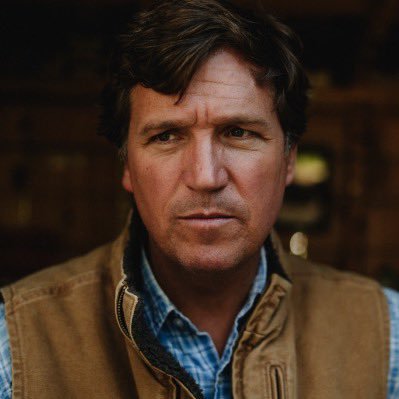
Ep. 73 The Vladimir Putin Interview
@MPrinParr @Freds_Mulligans @chiefaioffice English proficiency seems to be correlated to innovation.



This is truly miraculous. They're using highly-targeted ultrasound to open up the blood-brain barrier, administer drugs, and combat Alzheimers, other diseases, and even addictions. It's basically brain surgery without opening your skull. Wild.

“The day of the procedure, it was the best day of my life,” says Dave Martin, who was able to curb his drug addiction after undergoing ultrasound therapy. cbsn.ws/3O1Ev0F
These will be the most important cases for journalism and publishing in our lifetime. If AI companies have to cut deals with news organizations and publishers to license their content feeds for use as AI training data, that could save local journalism as well as magazines and publishing. It would provide a business model that supports people who report things, and it would place a financial premium on accurate, high-value journalism. AI systems will compete for which has the most valuable, reliable training data. Kudos to Axel Springer, Mathias Döpfner, and the @AP for leading the way and the @nytimes for making the legal case.

🧵 The historic NYT v. @OpenAI lawsuit filed this morning, as broken down by me, an IP and AI lawyer, general counsel, and longtime tech person and enthusiast. Tl;dr - It's the best case yet alleging that generative AI is copyright infringement. Thread. 👇


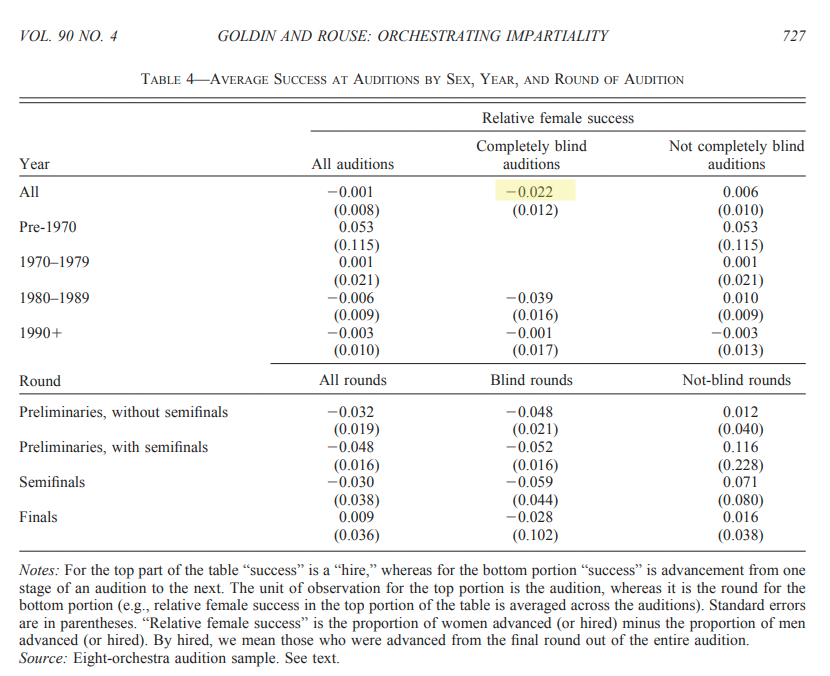
You may have heard that the introduction of blind auditions in orchestras resulted in a dramatic increase of women being hired. One day I decided to read the study the claim is from. It turns out that it doesn't support the claim at all. In the paper there is only one statistically significant result. It is this: The highlighted number shows that when auditions are blind, the relative female success (compared to men), is negative. Which means that women do worse in blind auditions. Not better, as is the claim. It should be stressed that this is observational data, and could be confounded in many ways. But it is noticeable that the only significant result in the paper is in the opposite direction of publicized claim. You can try and control for confounders, which they do in this table: You may notice that none of the p-values are significant. There is one marginally significant p-value, but it should be controlled for multiple testing, after which it is not close. Also, the non-significant results are in different directions for the different columns.


Why are companies fighting rules to eliminate hidden fees? Consider this case study from StubHub. In 2015, the company randomized 50% of their millions of customers to see the full price while shopping; the other 50% saw lower prices up front but were hit by added (junk) fees at checkout. The effect was enormous. Customers subject to the back-end fees spent 21% more money and were 14% more likely to make any purchase. Stubhub, which had started a transition to fully transparent pricing in 2014 in response to loads of customer complaints of hidden fees, reversed this policy and reinstated them after this A/B test. While customers hated the fees, many also (or maybe also some of the same) viewed StubHub's rivals that offered lower up front prices + back-end fees as cheaper. This shows the industry dilemna. Hiding the full price until the consumer has already invested time on the transaction is both profitable and a prisoners dilemna for any individual company with interest to be more transparent. Thus, government regulation is the only way to reverse the trend of less transparent pricing and companies will fight hard against it.

I deeply regret my participation in the board's actions. I never intended to harm OpenAI. I love everything we've built together and I will do everything I can to reunite the company.
We are going to build something new & it will be incredible. Initial leadership (more soon): @merettm @sidorszymon @aleks_madry @sama @gdb The mission continues.
@sama I’m super excited to have you join as CEO of this new group, Sam, setting a new pace for innovation. We’ve learned a lot over the years about how to give founders and innovators space to build independent identities and cultures within Microsoft, including GitHub, Mojang Studios,

wow. openai staff set a deadline of 5pm tonight for all board members to resign and bring sam and greg back, or else they all resign. the board agreed but is now waffling and its an hour past the deadline. this is all happening in real time, right now.


i love you all. today was a weird experience in many ways. but one unexpected one is that it has been sorta like reading your own eulogy while you’re still alive. the outpouring of love is awesome. one takeaway: go tell your friends how great you think they are.

CommodityCycles🇺�... @Okiaci369
63 Followers 2K Following 15-30% Monthly | 2 High-Conviction Stocks.Short-Term Gains: 15-20% in Days/Weeks.DM "JOIN" for WhatsApp Alerts. Live Trade Signals • Market Analysis
Seeshea @SeesheaIutO
40 Followers 4K Following
Fososlo @FososloQjJZ
40 Followers 4K Following
ElvaCrofts @nTB9m4UVZ44a0S
94 Followers 7K Following
Nerqueal @NerquealAibg7
37 Followers 4K Following
IrmaGeoffrey @2fly293oCyKId5F
67 Followers 7K Following
MartinaMalthus @7Tv7UaYWxZf77M
75 Followers 7K Following
DonnaPhilemon @7813JtyvJB06Vb
67 Followers 7K Following
Menere @MenereASgQ7f
50 Followers 5K Following
RitaVirginia @2sFzoP97nbv3gO
82 Followers 7K Following
Driscoll @shinsekiyu5780
91 Followers 7K Following
Renata @Q68mPRzb870ayB0
70 Followers 7K Following
ReginaKingsley @jRXJYLZ9W2mE6
70 Followers 7K Following

GemmaEllen @F207viQ37HunB3o
11 Followers 1K Following
AutoInkomster @Auto_Inkomster
9 Followers 540 Following Låt Automa jobba åt dig 💰 Tjäna upp till 25k kr per månad med automatisering 🎯
Fonden för Psykisk H... @fondenpsykisk
5K Followers 4K Following Ideell förening som samlar in medel till suicidpreventiv, psykiatrisk och psykologisk forskning. Grundad 1993. 90-konto. Länkträd: https://t.co/vEeWJNByNt

Börsposten @borsposten
1K Followers 2K Following Börsposten ger dig nyheter och analyser om bolagen på börsen.
Eve Mayer @EveMayerNYT
100K Followers 83K Following Co-Owner, https://t.co/bIQ5x27ThK. NYT Bestselling Author. The Braless Entrepreneur. More money. More time. Less AI overwhelm. #AI #Entrepreneurs
Niklas Svensson @niklassvensson
113K Followers 90K Following JOURNALIST & FÖRFATTARE. Instagram: @niklassvensson73 Email: [email protected]

Tasha @Tasha44960608
613 Followers 543 Following Hey Guys! I am just trying to blog my wedding planning experience and my journey to the big day. Please do check out my blog and give me your tips.
stockcess @stockcess_com
9K Followers 10K Following

Laurie McGrath @laurieamcgrath
317 Followers 664 Following Chief Marketing Officer, #bikramyoga addict and a perpetual learner
LINC R&A @LINC_RA
114 Followers 26 Following LINC R&A (Research & Analysis) är ett utskott i LINC (Lunds Universitets Finansförening) som ideellt skriver & publicerar analysrapporter om Aktier, Makro & TA.
a @oceanlatte
106 Followers 200 Following
Jordan Leaver @Jordi_Albatraoz
105 Followers 384 Following Following Football from all 55 UEFA Associations
VIDE @videuf_
19 Followers 609 Following VIDE är ett företag som säljer snygga streetkläder samtidigt som vi uppmärksammar depression. följ vårt instagramkonto @videuf
Robyn W. Fournier @Fourni100
35 Followers 104 Following

Mira Ekman @miraekman
6K Followers 209 Following
Moa Fins @finsmoa
6 Followers 30 Following
AW Podden @awpodd
213 Followers 2K Following Skönt häng med @ironafrican och intressanta gäster, finns på https://t.co/WGrlhUw5Ao och andra ställen för poddar!
Linnéa @linneaavander
78 Followers 75 Following

Sumit @hoodasumit24
1 Followers 19 Following
Leo Friberg @Leofriberg
101 Followers 899 Following Folk / Singer-Songwriter as Leo Friberg. Experimental / Ambient / Industrial Project as The Life Auction. Improvisations / Lo-fi Folk / Acid Folk as PLinteous

Matteo Franceschi @hipsterteo
79 Followers 103 Following

Sambla @SamblaSW
40 Followers 49 Following Sambla hjälper dig med dina lån, krediter och försäkringar. Twittrar ekonomiska nyheter och annat som påverkar din privatekonomi!
Sandra håkansson @Sandracoach91
10 Followers 510 Following

Zack K. @MusicCrystalC
176 Followers 2K Following
felicia zetterström @roffzor
36 Followers 41 Following
August Claesson @ClaessonAugust
30 Followers 217 Following
emil adestam @emiladestam
84 Followers 102 Following
Gappy (Giuseppe Paleo... @__paleologo
57K Followers 597 Following We live in weird and wonderful times. Even the ants started small. Sister account: @yogappygappy.
Dan Go @CoachDanGo
1.2M Followers 637 Following Health Performance Coach To Entrepreneurs | Tweets on Fat Loss and Optimizing The Body | On a Mission to Transform A Billion Lives Through Health and Fitness


Brett Adcock @adcock_brett
894K Followers 26 Following @figure_robot (AI robots) @hark_labs (AI lab) @cover_thz (weapon detection) @flyArcher (flying cars)
Together AI @togethercompute
65K Followers 276 Following Accelerate inference, model shaping, and pre-training on a research-optimized platform.
Carl Bildt @CBildt
126K Followers 287 Following Fri företagare i framtid och fred. Mest på engelska på @carlbildt
Startup Archive @StartupArchive_
157K Followers 1 Following Archiving the world's best startup advice for future generations of founders
Marcus Leifby @leifby
73K Followers 1K Following Frilans med bas på Aftonbladet/Sportbladet. Poddar i ”Snett inåt bakåt” https://t.co/OK8eIi3E5c
John Arnold @johnarnold
140K Followers 489 Following Co-chair of Arnold Ventures. Reality is more nuanced than the headline.

Rasmus Andersson @rsms
94K Followers 3K Following Adventures in software & design. Founder of @playbit_, designer of Inter, @Figma, @Spotify. Eng & design @Facebook
Gustav Söderström @GustavS
12K Followers 216 Following Co-CEO, CPO & CTO at Spotify. Love Science and Art - preferably intertwined.
Mikael Pawlo @mpawlo
14K Followers 4K Following Serial village idiot. Building George and Curlify. Free speech, free markets, free thinking. Alumni: Bokio, Mr Green. Your dream will come alive!

SpaceX Super Intellig... @SpaceXSI
2.1M Followers 6 Following
Richard H Thaler @R_Thaler
199K Followers 1K Following Behavioral Economist. Chicago Booth. Co-author of The Winner's Curse with Alex Imas, Nudge: The Final edition with Cass Sunstein, author of Misbehaving.
Lamini @LaminiAI
6K Followers 9 Following The LLM tuning & inference platform for enterprises. Factual LLMs. Deployed anywhere.
Sharon Zhou @realSharonZhou
28K Followers 0 Following Recursively self-improving | VP Eng & AI @AMD | Prev: Founder/CEO, Lamini. CS Faculty & PhD @Stanford. @Harvard | @MIT 35 under 35. Angel investor.
Shit Product Manager @shitPM
21K Followers 14 Following CPO at FTX previously Theranos, WeWork and Flappy Bird.
David Senra @FoundersPodcast
215K Followers 319 Following Learn from history's greatest entrepreneurs. Every week I read a biography of an entrepreneur and find ideas you can use in your work.
Prima Materia @PrimaMateria_
6K Followers 10 Following We are a European company that builds and develops new companies for the long term.
Maybe @maybe
13K Followers 383 Following Answer tough financial questions with Maybe, an AI-native financial decision making tool that connects the dots on your data, without a CFO.
Pinecone @pinecone
28K Followers 148 Following Pinecone is the trusted AI knowledge company. Pinecone's mission is to make AI knowledgeable.
Ethan Mollick @emollick
407K Followers 594 Following Professor @Wharton studying AI. New book, Co-Existence, is out now: https://t.co/hsDYf1xU9K My Substack: https://t.co/UIBhxu4bgq
Igor Babuschkin @ibab
112K Followers 898 Following CEO & Co-Founder @river_ai_inc. Previously @xAI, Research & Engineering
Chris Messina @chrismessina
98K Followers 9K Following In 2007, I invented the hashtag and retired from Twitter in 2023. DMs still work. Book time with me: https://t.co/xvXww6naVk
AI Pub @ai__pub
71K Followers 339 Following AI papers and AI research explained, for technical people. Get hired by the best AI companies: https://t.co/MySVjUGOQ3
Olof Hernell @olofhernell
883 Followers 1K Following Managing Director, Portfolio Operations at Investor AB. Tweets reflect my personal opinions.
Microsoft Research @MSFTResearch
556K Followers 2K Following We advance science and technology to benefit humanity.
Soren Iverson @soren_iverson
287K Followers 130 Following Idea guy. Building @iverson and @stompersapp
Hindenburg Research @HindenburgRes
849K Followers 0 Following Popped bubbles as we saw them, including our own. We expressed strong opinions. Not investment advice.

Tommy Collison @tommycollison
26K Followers 2K Following I tweet about great books & ideas. Also building @SpaceXSI. "It is not on you to finish the work, but neither are you free to desist." —Pirkei Avot ציוני
Keiji Kanazawa @gojira
1K Followers 859 Following AI Product at Microsoft. Helping builders everywhere with Claude & other models in Microsoft Foundry! Previously: AI Research at Berkeley/UBC/Brown


Logan Kilpatrick @OfficialLoganK
383K Followers 3K Following Member of technical staff, working on Gemini, @GoogleAIStudio, the Gemini API, & Kaggle. My views!

OpenAI @OpenAI
5.5M Followers 4 Following OpenAI’s mission is to ensure that artificial general intelligence benefits all of humanity. We’re hiring: https://t.co/dJGr6LgzPA

Adam Altmejd @adamaltmejd
3K Followers 725 Following Economist working on inequality, education, and health. Researcher at IFAU in Uppsala. Affiliate: @iza_bonn, @CESifoNetwork.

Romina Pourmokhtari @RPourmokhtari
28K Followers 998 Following Sveriges klimat- och miljöminister. Tror på AIK och friheten.

Trends for United States
You might like

