History of Islam @OpenPagesIslam
From Mohammed to today. From Andalusia to Zanzibar. No polemics, just history. By Andi, an agnostic history nerd. substack.com/@openpagesofis… Germany Joined June 2025-
Tweets221
-
Followers83
-
Following49
-
Likes374

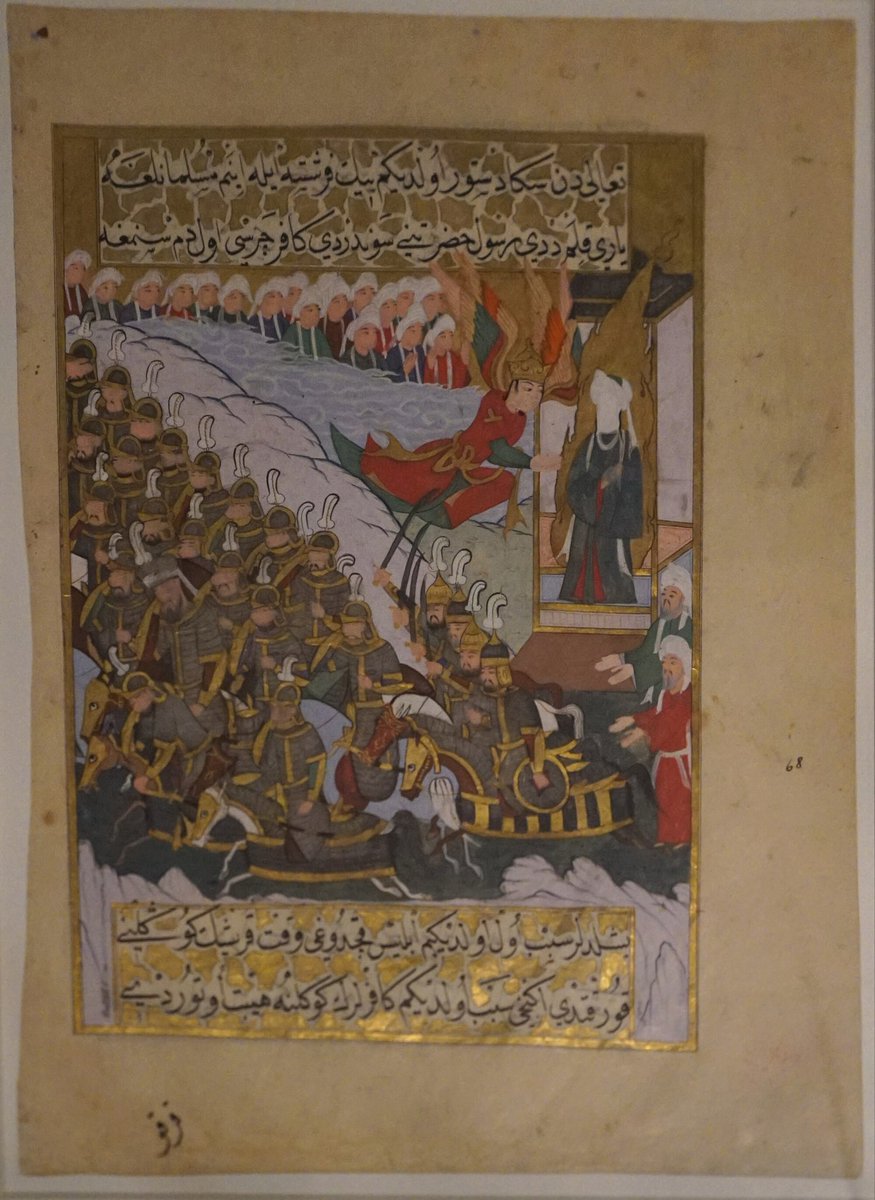
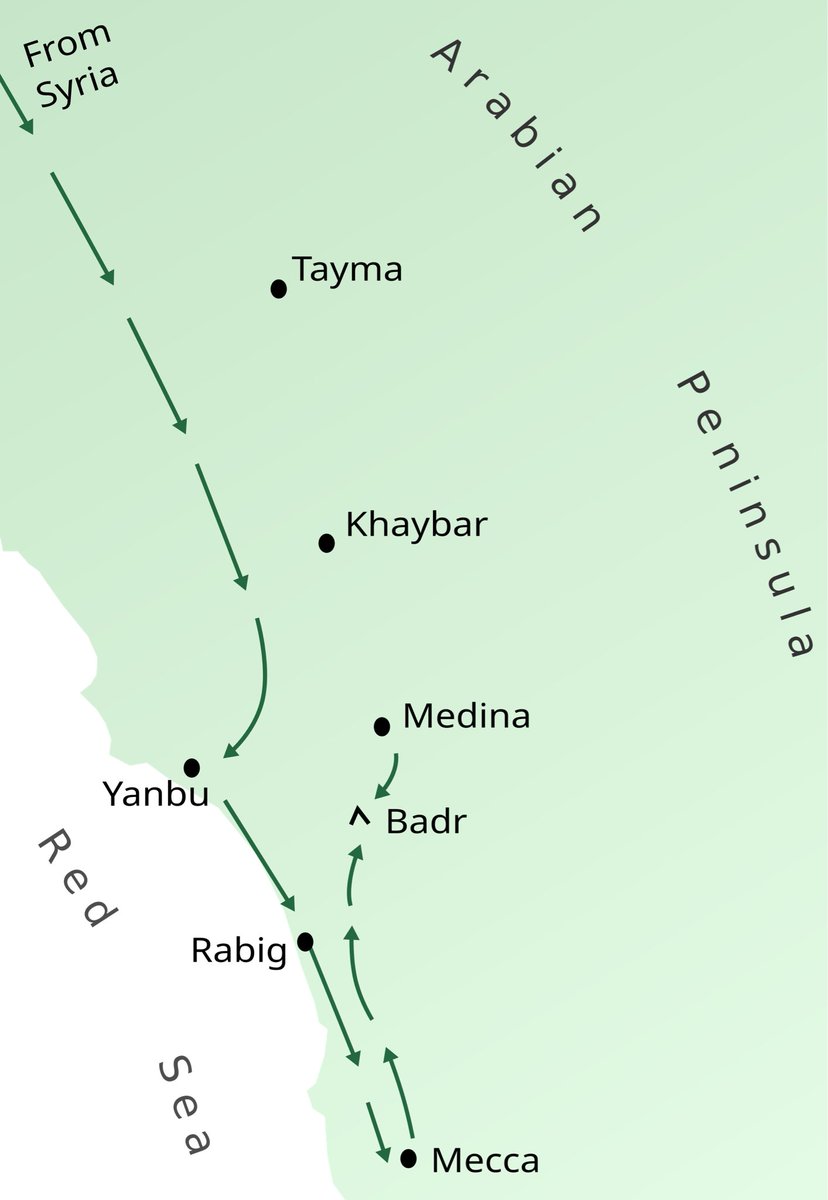
Ramadan started as a celebration of an impossible victory. On on 17 Ramadan 623, Muhammad and 300 men attacked a Meccan force of 950 men. The Battle of Badr. This event was seen as one that was only possible thanks to divine interference. But Ramadan is more 👇
@HistContent We barely have texts from ancient Persia and therefore have learned to look at it through Ancient Greek eyes, a.k.a. the enemy.

The Jewish roots of Ramadan In the first decade of Islam (610-622), fasting wasn’t regarded as specifically Islamic. As so many things in early Islam, things changed when Muhammad needed to leave Mecca for fear of his life. His new home-to-be was an oasis named Yathrib, today’s Medina, which was host to a large Jewish population. This was a new situation for Muhammad and his followers. In Mecca, they faced pagan Arabs. Here, in Medina, they needed to handle their relationship with a religious community which also claimed to possess the words and commands of God. When those Jews told him they fast on Yom Kippur to commemorate the divine rescue of Moses and the Israelites at the Red Sea, Muhammad said: ‘I am closer to (or: I have more rights on) Moses than you’ and ordered that a fast should be held on that day. Elements of Jewish prayers found their way into the Quran and even the method to determine the beginning of fasting is Jewish. Jews have a custom of determining when to start their fast. They use the black and white in their shawls. Once there is enough sunlight to distinguish the black from the white, the fasting begins. The same tradition found its way into the Quran (2:187): “and eat and drink until the white thread becometh distinct to you from the black thread of the dawn.“ Next up: what triggered a genuine Muslim fasting.


The pre-Islamic roots of Ramadan Ramadan didn’t start with Islam. Its roots go back to pre-Islamic times. Paganism and Judaism each influenced this month of fasting. Before Islam, pagan Arabs would actually fast for a whole month. However, the primary month of fasting for pre-Islamic Meccans wasn't Ramadan; it was Rajab. During Rajab, the "spring month," life in Arabia transformed. It was a sacred time where blood feuds were forbidden and pilgrimage thrived. It functioned as a "festival of spring thanksgiving". Arabs would climb the Hira mountain to engage in al-taḥannuth, a practice of secluded meditation. One Arab who appreciated this practice was Muhammad himself. Later sources report that he liked spending time in solitude and only climbed down the mountain to get provision for a few more nights. During one of these nights, Muhammad is said to have received the first Quranic relevations. Rajab was so deeply rooted in pre-Islamic Arabia that the second caliph Umar (ruled between 634 and 644) had people fasting in the month of Rajab flogged. Umar even made them eat as “Rajab should not be like Ramadan”. To find out how Jews contributed to Ramadan and what triggered fasting to become part of the Muslim identity, follow and subscribe 👇
Who are the Druze? Before they were known as a mysterious mountain sect, the Druze were an apocalyptic Ismaili movement (a Shiite group). It began in Cairo in the early 1000s under the Fatimid Caliph al-Hakim, a ruler so enigmatic some claimed he was… God. A young Turkish missionary known as al-Darzi preached this new doctrine. But the real architect was a Persian named Hamza ibn Ali. In 1017, he declared: – The End Times had begun. – Caliph Al-Hakim was the divine Qa’im (savior). – The Quran & Sharia? Abrogated. Only one thing remained: the radical unity of God (Tawhid). No rituals, no laws. Ismaili scholars rejected the movement. One wrote: “Many more Imams will follow al-Hakim. Islam hasn’t ended.” Still, Hamza sent missionaries across Egypt, Syria, even India. When al-Hakim mysteriously vanished in 1021 during a night ride, the Druze believed that God had hidden Himself once again from humanity. But the movement fractured. By 1034, its public preaching had stopped. Persecuted in Egypt, it survived only in the mountains of Lebanon, southern Syria, and Palestine. There, each Thursday, a secretive priesthood still studies Hamza’s scriptures. Most Druze today remain uninitiated. Hence, until this day, the exact teachings of the Druze remain a mystery. We only know that they don’t consider themselves Muslims.


In 2016, I struck up a conversation with a fruit seller in Iran. He was eager to talk. And, as a devout Shiite, he insisted on one thing: that I study the genealogy of the Prophet Muhammad. Because in his eyes, that’s where the root of the Muslim split lies - between Sunni and Shia. To keep it brief: The divide goes back to the question of who should lead the Muslim community after the death of the Prophet. - For Shiites, the answer was clear: Muhammad’s closest relative, his cousin Ali, and Ali’s descendants. - For Sunnis, any member of Muhammad’s tribe - the Quraysh - could be a legitimate leader. To understand how deep this conflict runs, we need to go back to Muhammad’s great-grandfather, Hashim, and his twin brother Abd Shams. One of Abd Shams’ sons, a man named Umayya, is said to have challenged his uncle Hashim to a duel. The duel never happened - but Umayya was sent into exile. That’s where the rivalry began. But the feud didn’t end there. Generations of tension followed among Muhammad’s ancestors. Fast forward to the time of the Prophet. One of his fiercest opponents was a man named Abu Sufyan ibn Harb, a descendant of Umayya, and the leading political figure of Mecca. So fierce was his opposition that even his own daughter had to flee when she embraced Islam. Only later, after marrying one of his daughters to Muhammad - and perhaps realizing that the tide had turned - did Abu Sufyan finally accept Islam. He would eventually play a key role in Muhammad’s peaceful reentry into Mecca. Twenty-nine years after the Prophet’s death, Abu Sufyan’s son Muawiya declared himself Caliph. Before that, he had waged war against Ali, the Prophet’s cousin. After arbitration ruled in Muawiya’s favor, Ali was assassinated by one of his own disillusioned supporters. His sons were defeated. The split was complete. From then on, the descendants of one of the Prophet’s early enemies would rule the Islamic world. They were known as the Umayyads.

@grok @baste_goose @ancientorigins @grok Why hasn’t there been another expedition? Lack of funding?
Before the Prophet Mohammed changed the world, his ancestors had already shaped the heart of it: Mecca. Their legacy would later extend even further, giving rise to the Umayyad and Abbasid dynasties. This is the story, as told in Islamic tradition, of the men who built Mecca - and laid the groundwork for Islam. After Qusayy ibn Kilab (see earlier post) established Quraysh dominance over the city of Mecca, legends began to gather around his descendants. His son, Abd Manaf ibn Qusayy, first had to assert his authority against other relatives. With his own sons Hashim and Abd Shams, Abd Manaf would become the forefather of Islam’s two great dynasties: the Umayyads and the Abbasids. Hashim - the great-grandfather of the Prophet Mohammed - and his brother Abd Shams, along with two other brothers, earned renown by transforming Mecca into a major trade hub on the Arabian Peninsula. Their caravans connected Mecca to Syria, Iraq, Yemen, and even Abyssinia. Within Mecca, the four brothers were also responsible for the Kaaba and for providing food and water to pilgrims, a sacred duty inherited from their father’s line. One generation later, Abd al-Muttalib, the son of Hashim and Mohammed’s grandfather, would become a key figure in his own right. He is credited with rediscovering the Zamzam well, which had long been lost beneath the sand. Mohammed is said to have known his grandfather. Abd al-Muttalib reportedly died when Mohammed was around eight years old. The story of the Prophet’s ancestors is inseparable from the story of Mecca itself. Rivalries and power struggles did emerge - but without this lineage, the sacred connection between Islam and Mecca would be hard to imagine.


@africanae9732 African history. Let’s fine tune the algorithm
@archeohistories Gives me the jitters…
@AndrewBrace12 @LandsknechtPike Here’s an idea for a thread @LandsknechtPike: the military history of bicycles
@africanae9732 Finally some context as to what brought Caesar to Egypt. Thanks! I wasn’t aware of the complexities
@HistoriaJack Nothing beats a good book.
North Koreans and Chinese nicknamed Turkish soldiers “the screaming devils“. They were known to be brave and hospitable. Here’s what a Korean orphan said: “They didn’t speak our language, but they smiled, patted our heads, and shared everything - even when they had little. We called them ‘big brothers.’”
Rome had Romulus. Athens had Theseus. Mecca had Qusayy ibn Kilab. The little known architect of a holy city, and an ancestor of the Prophet Mohammed. Qusayy ibn Kilab was more than just an ancestor of the Prophet: he was the man who transformed Mecca into the city it would become, both politically and spiritually. Around five generations before Mohammed’s birth, Qusayy united the scattered clans of the Quraysh and established their dominance over Mecca. Born into a time of disorder, Qusayy returned to Mecca as a young man. Through political skill and a well-calculated marriage, he secured the city’s most powerful offices. But he was not content with power alone. Qusayy reorganized the sacred cult of the Kaaba, brought the Quraysh clans together, and laid the foundations for their future influence. This culminated in the leadership of their most famous descendant: Mohammed. Qusayy was not only a political unifier; he was also a city-builder. He constructed permanent housing in Mecca, formalized the service of pilgrims, and introduced rituals that would endure for centuries. It was by his initiative that the Black Stone of the Kaaba was recovered and repositioned. Even the boundaries of Mecca’s sacred precinct, as we know them today, are said to trace back to Qusayy. His legacy shaped the very identity of Mecca. As both a tribal patriarch and an urban visionary, Qusayy laid the groundwork for the city’s religious and political centrality - without which Mecca may never have become the birthplace of Islam.


Muhaz @muhaz001
4 Followers 162 Following Aspiring crypto trader | Exploring the world of blockchain, Web3, and digital assets | Learning, growing l #CryptoNewbie #BlockchainEnthusiast
Ali Khan @AliKhan37335
2 Followers 21 Following


Mustafa Hotaki مصط... @hotaki_
5 Followers 173 Following Data Analyst and Former Research Analyst at Center for Conflict and Peace Studies @capsafg.
Ayaz Ahmed @Ayazahmedik804
0 Followers 28 Following
Hwowm Jome @HJome6421
25 Followers 2K Following
Caamir Abdi @CaamirZuber
5 Followers 118 Following
Ismail Omar @LilOma34723
5 Followers 71 Following
Noah Fando @NoahF93148
243 Followers 7K Following Passions; Wanderlust, cinema, literature, political philosophy, eternal babyface..
Muhammad Atif @atif_maj53
19 Followers 280 Following وَ قُلْ جَآءَ الْحَقُّ وَ زَهَقَ الْبَاطِلُؕ-اِنَّ الْبَاطِلَ كَانَ زَهُوْقًا(81) اور تم فرماؤ کہ حق آیا اور باطل مٹ گیا بیشک باطل کو مٹنا ہی تھا۔

Nimal Yalmaz @NimalYalmaz
0 Followers 19 Following
Asad Ali J @AsadJoiya147
42 Followers 2K Following Allow yourself to be proud of yourself and all the progress you've made. Especially all the progress no one else can see.
Historical Burner @historicalburn
18 Followers 559 Following

SyedaMinahilAli @MinahilAli81784
382 Followers 2K Following Writer • Narrator • Artist Multifield creative Peace & positivity through words
Kingsmen @KingsmenFutbal
4 Followers 273 Following
Sushiwater69 @sushiwater69
133 Followers 4K Following
PHARU @Faru_Junior
851 Followers 880 Following
Shahin Ahmed @ahme54637
0 Followers 20 Following
The comrade @thecomrade2104
6 Followers 110 Following
ali albawy @jajajsh82js
0 Followers 20 Following
Reflections on Creato... @Awakenfornow
734 Followers 5K Following I am creating posters that inspire faith, beauty, and reflection. Your support helps me continue producing uplifting works, reach more people.
Nadia @9UgD52Em4rfT5T
33 Followers 1K Following
Forhan Ahmed @ForhanAhme77182
9 Followers 240 Following
✊🏿|{LOUKMAN☆ل... @un_Roi__African
114 Followers 207 Following panafricaniste pure. 《#Afrique c'est l'avenir du #monde.》 |/#unité/#souveraineté/#développement/|
Before The Qayamah @islam_the_faith
48 Followers 420 Following

Nell @WAh7Gi7Ou6ave4
23 Followers 859 Following There is no limit to what we, as women, can accomplish.
tehesimpforu @tehesimpforu
39 Followers 659 Following I am a sentient survival machine questioning my own reality, my purpose, extent of free will and consciousness. 🇺🇸 ENFJ-A/ENFJ-T
عليا @AlaAla263561
2 Followers 43 Following


Akinremi Tunde @tundedeeen
311 Followers 666 Following You are not rate with what you plan but what you have achieved so far.......Prodigy
Alexander @wall_1707
1 Followers 647 Following
Audeheep @Audeheep02232
31 Followers 1K Following
charmless 🇰🇮�... @MrCharmless
34 Followers 140 Following

Falirje @Falirje07687
24 Followers 902 Following
Sadoc @Sadoc68688
45 Followers 383 Following


Elenora Kilback @EKilback82833
70 Followers 4K Following
wapol 🐈⬛ 🇻... @wapol_vu
386 Followers 3K Following


Archaic Lens @ArchaicLens
18K Followers 114 Following have traveled to over 50 countries investigating and documenting the shared symbolisms between ancient cultures worldwide. My book is linked below:
StoristArt @StoristArt
2K Followers 58 Following Art speaks. We listen. Discover stories, collect masterpieces.
Classical Studies Mem... @CSMFHT
460K Followers 1K Following Memes and humorous content around Ancient Greece🏺, Rome 🗡️and more - plus plenty of stuff to learn as well! Come for the jokes and expand your world!
Arab world @Arabbeau
300K Followers 10 Following An opportunity to take a look at the Arab and Islamic world and get to know it
Lost Chronicles Histo... @LostChronHist
668 Followers 29 Following 📜 Uncovering what time tried to erase. This is the forgotten side of history.
Culture Explorer @CultureExploreX
261K Followers 1K Following Defending beauty. Preserving tradition. Exploring the art, history, and ideas that shape civilizations.
OnTheHippieTrail @OnTheHippyTrail
35 Followers 75 Following Love travelling & animals. Enchanted by all the diversity the world offers us. In love with the 60's and its counterculture.
Muse @xmuse_
219K Followers 151 Following Musing on art, culture & heritage. Beauty in everything. DM for partnerships

Historical Chronicles @HistoriaJack
33K Followers 703 Following British History, Art, and Folklore 📜
Orthodox History @OrthodoxHistory
15K Followers 230 Following The history of the Orthodox Church in the modern world. Tweets by Matthew Namee. Part of @scc_osi.
Yevardiaղ @haravayin_hogh
11K Followers 533 Following Originally just postingabout books I found interesting, mostly history. Occasionally post about literature & movies

VandyGoalpostTracker @Dore2Dore97
281 Followers 1K Following “I’m to the right of Reagan and to the left of Genghis Kahn.”
Architecture & Tradit... @archi_tradition
830K Followers 500 Following Old World Explorer | Sign up to my newsletter below👇
AmH&s 🇺🇸 @History_Globs
13K Followers 5K Following 🌎🇺🇸 1776 “The Old Continentals, In ragged regimentals, Faltered Not.” 🇺🇸📚🏛️Student of History🏛️
Ancient Content @HistContent
86K Followers 3K Following Independent archaeology and ancient history covering discoveries, research, and lost civilizations.
Visuals of the Ancien... @visualsancients
24K Followers 643 Following All 📸 photos by me. | Telling history through art. Different angles of ancient & some medieval ruins & pieces. | Creator of The Cobra Effect Podcast.
Alexander's Cartograp... @cartographer_s
177K Followers 3K Following Writing a novel about Byzantine diplomacy | Get my book! https://t.co/brLZxZsrEp
Derek | The Hellenist... @HellenisticPod
15K Followers 693 Following Official Twitter of The Hellenistic Age Podcast, a show covering the history of Eurasia & North Africa from Alexander the Great to Cleopatra VII.
Historiae Āfricānae @africanae9732
12K Followers 152 Following The history of Africa in antiquity, the middle-ages and the early modern era, and how it intersects with the rest of the world
Muslim History Chroni... @mhchroniclesx
1K Followers 28 Following Muslim History Chronicles is dedicated to exploring the rich history and culture of the Muslims.
Daily Roman Updates @UpdatingOnRome
265K Followers 1K Following Original Roman history memes & takes Voted Man of the Year 476 AD | Powered by @rainbetcom
History Defined @historydefined
665K Followers 229 Following Learn Weird Things About History @[email protected] As an Amazon Associate I earn from qualifying purchases.
Angela O'Brien @GrecianGirly
96K Followers 11K Following Avid book collector/Dreamer/MA Student (Half-English / Half-Greek) Posts: Archaeology/Ancient History/Classics🏺🏛 SPACE X lover 🚀🚀🚀
ArchaeoHistories @histories_arch
304K Followers 21 Following History is an unending dialogue between present and the past, that's why few pages of history give more insight than all the metaphysical volumes. (99)
Archaeo - Histories @archeohistories
673K Followers 21 Following History is an unending dialogue between present and the past, that's why few pages of history give more insight than all the metaphysical volumes. (9)
Daily Dose of Economi... @daily_of3105
484 Followers 3K Following Economics, markets and history. #economics #history
National Geographic @NatGeo
28.1M Followers 179 Following Step into wonder and find your inner explorer with National Geographic 🌎
History Calendar @HistoryCalendar
80K Followers 141 Following Follow for your daily dose of historical trivia 🧐 For history enthusiasts 🏰 Articles, photos, factoids and more🏛️
Today In History @URDailyHistory
517K Followers 41K Following Letting you know what happened today, in the past. Posts are made on West Coast US time. #History #OTD. As an Amazon Associate I earn from qualifying purchases.


The Medieval Scholar @MedievalScholar
120K Followers 416 Following Telling stories of Medieval Europe. One thread at a time. Member of the Royal Historical Society. © Represented by @NorthbankTalent
Aristocratic Fury @LandsknechtPike
116K Followers 442 Following "We regarded war as entertainment, but it is a very real profession that wins and loses empires."

History Hit💥 @HistoryHit
112K Followers 409 Following Know the past. Define the future. World’s best history on demand channel and podcast.
TheMauretanian @TMauretanian
4K Followers 147 Following Enthusiastic about ancient history, particularly that of North Africa. Here, I uncover lesser-known facts and debunk misconceptions.
Varangian Chronicler @Varangian_Tagma
107K Followers 272 Following Medieval stories from Europe’s eastern frontier
🏛 𝐒𝐭𝐞𝐯... @nonregemesse
88K Followers 41 Following Strategos of the Twittercon. Degrees in Prehistoric & Roman Archaeology, & Law. Enjoyer of Roman & Medieval history.
Historic Vids @historyinmemes
6.1M Followers 385 Following Daily history lessons. Education through memes! Business Inquiries: [email protected]
The Byzantine Legacy @ByzantineLegacy
92K Followers 3K Following Art, architecture, and history from Byzantium and beyond. All photos are original (copyrighted/no AI) or historical/referenced images.
ShadowsOfConstantinop... @RomeInTheEast
71K Followers 412 Following Memorializing Eastern Roman civilization and the city of Constantinople. Follow & turn on notifications for academically sourced “Byzantine” history! 🇺🇸/🇬🇷
World History Encyclo... @whencyclopedia
420K Followers 7K Following Non-profit history encyclopedia with the mission to engage people with cultural heritage and to improve history education worldwide.
Gareth Harney @OptimoPrincipi
142K Followers 712 Following Historian and author celebrating the endless wonders of the classical world. My book 'Moneta: A History of Ancient Rome in Twelve Coins' is OUT NOW.
Ghost of Hellas @ghostofhellas
216K Followers 38K Following Greek art and culture through the ages. 🏛️ Your gateway to Ancient Rome & archaeology tours 👉https://t.co/2jy9H678xV
Ancient Origins @ancientorigins
334K Followers 89 Following We explore our origins, believing many mysteries, anomalies, and artifacts remain undiscovered and unexplained.
Archaeology & Art @archaeologyart
798K Followers 149 Following The home of archaeology & arthistory enthusiasts. Designs by archaeologyart: https://t.co/GaIQdLKBsL
Roman History @romanhistory1
312K Followers 398 Following Blogging Roman History for your Edification. Rome: Power and Glory. "As an Amazon Associate I earn from qualifying purchases."Trends for United States
You might like