Refinee AI @RefineeAI
Compliance work, done and proven. AI drafts your security questionnaire answers with confidence scores; your team approves. Built by a CISO. refineeai.com Delaware, USA Joined October 2026-
Tweets20
-
Followers0
-
Following32
-
Likes1
Great catch. Agents need their own identities, never a human's session. Otherwise "a second person approved it" stops being true, and that's exactly the control an auditor will test. Worth checking before the audit window opens.

Your merge gate says a second person approved it. It was your coding agent, logged in as you. A fintech startup audited its agent-driven merges before SOC 2. Every merge into main passed the two-person gate. 27% rested only on an approval an agent submitted as the lead. 🧵
This is why I like a short "changes since the report period" note sent with the report. New regions, swapped vendors, new AI tools. Buyers ask anyway, and getting ahead of it builds more trust than the report alone.

Your SOC 2 report covers a window that closed months ago. Since then: new engineers, a new cloud region, two vendors swapped, an AI tool wired into support. None of that is in the report your customer just accepted. Which of those changes would you be comfortable walking them
Agree. The questionnaire tells you what the vendor intends. Scoped access, logging on that supplier account, and a periodic review tell you what actually happens. The best programs tie each "yes" to something they can check later.

A vendor security questionnaire does not enforce a single access boundary. Procurement can document controls, but live integrations change. The more consequential question is whether security teams can see what a supplier account actually does after approval. In practical
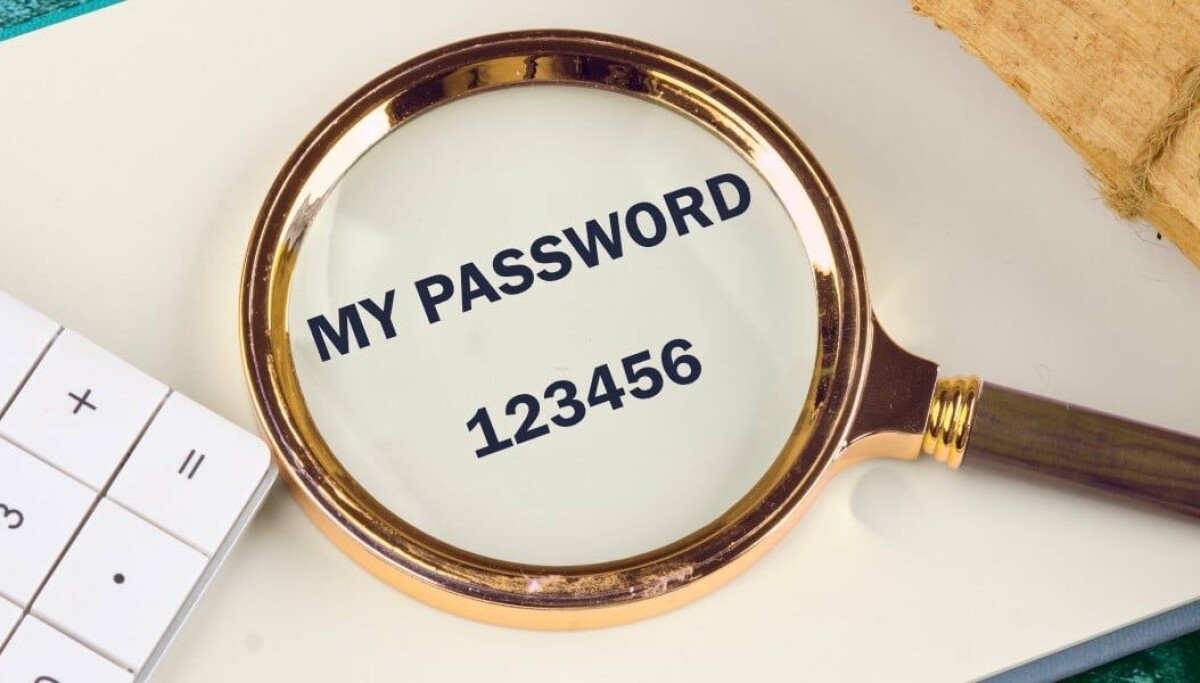
Too real. Founder tip: the second questionnaire is mostly the first one reworded. Save every approved answer with its evidence and owner, and the 300-question one becomes a review job, not a rewrite.

a 300-question security questionnaire cost my startup two deals. fake startup. played founder mode: b2b saas, bengaluru, ₹15 l savings in. co-founder walked in month 16. still got acquired at month 36. game says my product quality was 38/100. fair. which month killed you?

This is the gap I see most. Ask vendors for a short component list next to the questionnaire, and keep it tied to the vendor record. When something drops, you search one list instead of emailing every vendor.

@eaescob Feels like most TPRM still runs on a questionnaire somebody filled out once a year. Then a vuln drops and nobody can say which vendors actually run the affected thing. If you could start over what would you replace it with?
The fix isn't a longer questionnaire, it's fresher answers. Put a "last verified" date on every answer and re-check the ones tied to systems that change often. A yes from 11 months ago is a guess.

When attackers can send swarms to test your systems, an annual security questionnaire starts to look like checking the locks once every New Year's Eve. The speed mismatch is the story.
The direction already shows: buyers want proof behind answers, not just a yes. Formal verification is the far end of that. Most teams would win today just by linking each answer to the policy or config that backs it.

Hot take or inevitable? In 10 years, vendor questionnaires won’t just ask “Are you SOC 2 compliant?” They’ll ask “Which parts of your stack are formally verified?” CompCert and seL4 proved it’s possible. AI might make it affordable.
The "vendor changes its model after approval" part is the one most programs miss, and a one-time questionnaire can't catch it. A contract clause requiring notice of model or sub-processor changes helps close that gap.

AI Security Budget: $9M CISO: We need to assess every AI vendor before deployment. CFO: That will slow down innovation. Why not assess only the biggest vendors? CISO: Because the smallest vendor could have access to our most sensitive data. CFO: But they’re just providing an
Same shift on the vendor side. Reviewers increasingly want to know why a control is good enough, not just that it exists. Writing down the reasoning behind your answers makes the follow-ups much easier.

Fed, FDIC and OCC's 2023 interagency rule ditched fixed checklists for principles — three years on, examiners want banks to justify vendor-risk judgement calls, not just show paperwork. compliancehub.wiki/us-banking-reg…

Love this line. A questionnaire is a vendor's promise, not proof. The useful follow-up is asking what backs each "yes" and when it was last checked, and saving human judgment for the answers that matter most.

Day 20 of #CyberMonth2026 🔗 "A completed questionnaire is not the same as assurance." From a @WiCySorg webinar with @Cisco on third-party risk: 📡 Monitor vendors continuously 🔗 Watch fourth-party risk 🧠 Pair automation with human judgment #TPRM #GRC
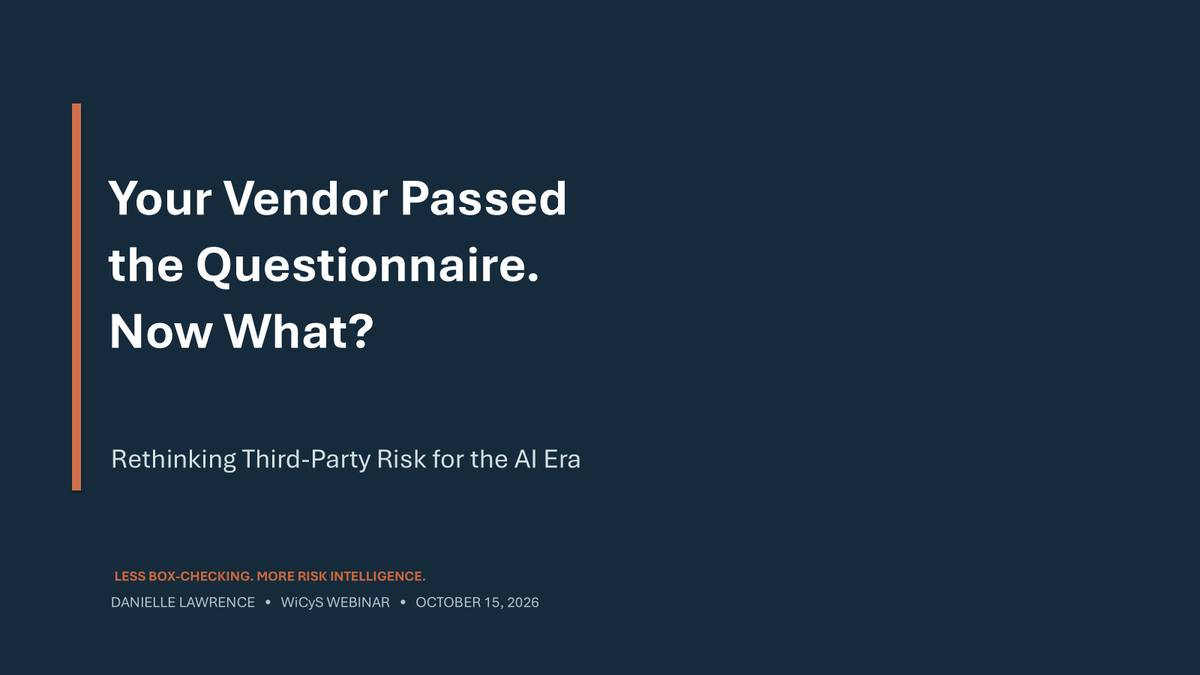
Agree. "Not yet, planned for Q1" plus the controls you do have beats a confident yes you can't back up. Reviewers follow up on vague answers, and overclaims tend to come back later in contracts.

Your security questionnaire is not a personality test. Stop guessing, answer from evidence you actually have, and close the deal before procurement invents new hobbies. brindleproof-3.polsia.app
Good point for founders. One tip I'd add: keep every questionnaire answer your fractional CISO approves in one place, with an owner and a date. The next review starts from approved answers instead of a blank spreadsheet.

This is why I read the report, not the badge: the scope, the exceptions, and whether the tested controls match what the vendor told me in their questionnaire. When those don't line up, that's the real finding.

Fine Print #2 Your vendor's SOC 2 might be a template. AICPA peer reviewers now compare a firm's SOC 2 reports side by side when risk looks high. Identical risk assessments, sample sizes and tests = "nonconforming." A badge proves a report exists. Not that an audit happened.
The buyer questions have shifted with this too. "Do you use AI?" is now "which tools touch customer data, and who approved them?" A short, current list of approved AI tools makes that answer easy and shows the program is real.

AI Data Leaks And Data Loss Dangers AI can accelerate your business — but it can also accelerate data exposure. When employees use generative AI to analyze documents, summarize information, or automate workflows, sensitive data can cross boundaries that security teams may not
Agree, and I'd add an owner and a last-reviewed date to each line. "Which models, where do they run, who approved them" is already showing up in reviews. Teams that keep that list current answer in minutes instead of scrambling.

Prediction: within a year, a model list (name, version, host, data flow) becomes a standard line in enterprise security questionnaires, next to your SBOM. Write yours now. It's an afternoon's work today and a deal-blocker later.
That handoff is exactly where questionnaires get messy. The vendor answers "we don't store PHI" and the reviewer still asks who configures the bucket. Spell out the shared-responsibility split in writing so both sides answer it the same way.

SaaS vendors that handle PHI such as telehealth platforms, EHR integrations, diagnostic tools tell customers: "Store your data in your own S3 bucket for HIPAA compliance." This is architecturally sound. The vendor avoids storing PHI. The customer controls their own data. But it
Agree, and buyers read them exactly that way. 'Who does the agent act as' and 'how fast can access be revoked' should each have a named owner and a review date. If nobody can say who approved an answer, that's an answer too.

How I'd judge if an enterprise AI product is ready to sell: skip the demo, read its security questionnaire answers. Where does data go? Who does the agent act as? What gets logged? How fast can access be revoked? Those answers decide the deal long before the demo does.
This is the risky part of pre-filled answers. They look done, so nobody checks them. Anything that arrives pre-filled deserves the same review as a blank row: who owns it, and what proves it today?

A 104-question security questionnaire came in with some answers already filled. I tried to prove each one from code and infrastructure definitions. Data region, WAF, MFA, encryption and segregation were wrong.
Five answers that almost always get a follow-up on a security questionnaire: "Yes" with no detail "Industry standard" "N/A" with no reason Two rows that disagree Last year's answer, unchecked Fix those before you hit send and the review gets a lot quieter.
"Please complete the attached security questionnaire before proceeding." 300 questions. Due Friday. Spread across 3 spreadsheets and a PDF. I built Refinee so that email stops killing deals. Upload, AI drafts, you approve, done.

TheIIA @TheIIA
29K Followers 2K Following The IIA is the internal audit profession's global voice, recognized authority, acknowledged leader, chief advocate, and principal educator.
SaaStr.ai @saastr
65K Followers 1K Following World’s 🌍 largest community for B2B + AI founders, execs & VCs. ➡️https://t.co/nA1aNGxZiA. Learn to scale faster at ▶️https://t.co/waF8ZjGE1y
Health Care Complianc... @theHCCA
10K Followers 406 Following HCCA is a member-based association offering many different trainings, products, & publications to help #healthcarecompliance professionals grow in their career.
IANS @IANS_Security
5K Followers 1K Following IANS is a clear-headed resource for decision making and articulating risk. We connect #CISOs and their teams with #IANSFaculty for expert #infosec guidance.
Shira Rubinoff @Shirastweet
63K Followers 30K Following #Cybersecurity & #AI #Advisor, #ThoughtLeader #KeynoteSpeaker & #Author Top ranked #Influencer globally in Cybersecurity & AI 🌍YouTube/ShiraRubinoffTV
Jake Williams @MalwareJake
151K Followers 2K Following Breaker of software | VP R&D @hunterstrategy | CTI/DFIR | @ians_security faculty | Bookings: jake at malwarejake dot com | GSE #150 | He/him
Cyber Guy Vick @CyberGuyVick
5K Followers 2K Following Cyber Security 👨🏾💻| Combat Vet ⚓️| Cologne Enthusiast🪻🍋🍯| 🇺🇸🇸🇱 #Cybersecurity 💻 #GovCloud ☁️#GovTech 🏛️ #BlackTechTwitter ✊🏾 #FIETTS 💜💛
Jesus Vargas @eltintero
5K Followers 2K Following Founder and CEO · @LowCodeAgency and @phosailabs (400+ products shipped for Coca-Cola, Amex, Zapier, Sotheby's, Medtronic)
Or Weis @OrWeis
1K Followers 155 Following Unrelenting entrepreneur Founder of @permit_io, @Rookoutlabs, @Reactful Permissions for the AI Era (https://t.co/3jbOiNRcAl)
Andrew Jonathan Hillm... @AndrewHillmanTX
2K Followers 1K Following Dallas · Healthcare compliance expert witness · Senior paralegal · Retained via counsel · Not an attorney · ORCID · https://t.co/8lQrTy4JS9
Ethan Troy @ethantroy
1K Followers 3K Following security engineering @spacexsi , prev @cursor_ai opinions are my own
Taher Amine @MrTaherAmine
2K Followers 1K Following 🌍 CISO | Global Cybersecurity Leader and Information Security Strategist | Senior Advisor, Accredited Auditor, Certified Trainer | +300 certifications
Thomas Fox @tfoxlaw
7K Followers 4K Following Podcaster, The Voice of Compliance, founder of the Compliance Podcast Network and co-founder of the Texas Hill Country Podcast Network.
greenido @greenido
2K Followers 139 Following Entrepreneur/Builder who loves technology and to do Ironmans

Hacker News Bot @newsycombinator
1.7M Followers 2 Following Get the latest from Hacker News! Top 5 stories on the hour, every hour. By @riklomas from @superhi_ – unofficial and not affiliated with Y Combinator
The Hacker News @TheHackersNews
2.4M Followers 2K Following The #1 trusted source for cybersecurity news, insights, and analysis — built for defenders and trusted by decision-makers.
Pirate Wires @PirateWires
1.6M Followers 14 Following technology, politics, culture get the free daily newsletter 👉🏻https://t.co/s4YuTpiYVU
Engadget @engadget
3.6M Followers 238 Following Breaking news from the worlds of technology and entertainment, and expert reviews of the latest consumer tech products.
The Information @theinformation
1.6M Followers 703 Following The most authoritative publication tech execs and founders read daily. Sign up: https://t.co/V8AtmraYaA

Chris Bakke @ChrisJBakke
1.7M Followers 218 Following Co-Founder, @MTSlive Prev: exits to @X @Indeed @Zillow
Andrej Karpathy @karpathy
4.4M Followers 1K Following

TechCrunch @TechCrunch
11.1M Followers 462 Following Technology news and analysis with a focus on founders and startup teams. Got a tip? https://t.co/J0WxnZxSRY
Stratechery @stratechery
1.6M Followers 3 Following Articles and Updates from https://t.co/A7bGqyJ7db. For the author, follow @benthompson.
TBPN @tbpn
1.6M Followers 1K Following Technology’s daily show. Hosted by @johncoogan & @jordihays. Streaming live 11a–2p PT weekdays. Sign up for our free newsletter at https://t.co/Nhf5ohjInO.
Ars Technica @arstechnica
2.6M Followers 1K Following Original news, reviews, analysis of tech trends, and expert advice on the most fundamental aspects of tech.
Marc Andreessen 🇺�... @pmarca
6.7M Followers 34K Following You’re not talking to someone who woke up a loser. That loser attitude, that loser premise makes no sense to me.


WIRED @WIRED
10.4M Followers 317 Following For Future Reference. Sign up for our newsletters: https://t.co/Tl6GImvc8RTrends for United States
You might like