

Aron Szucs @Skinaron
Joined October 2024-
Tweets19
-
Followers10
-
Following162
-
Likes135
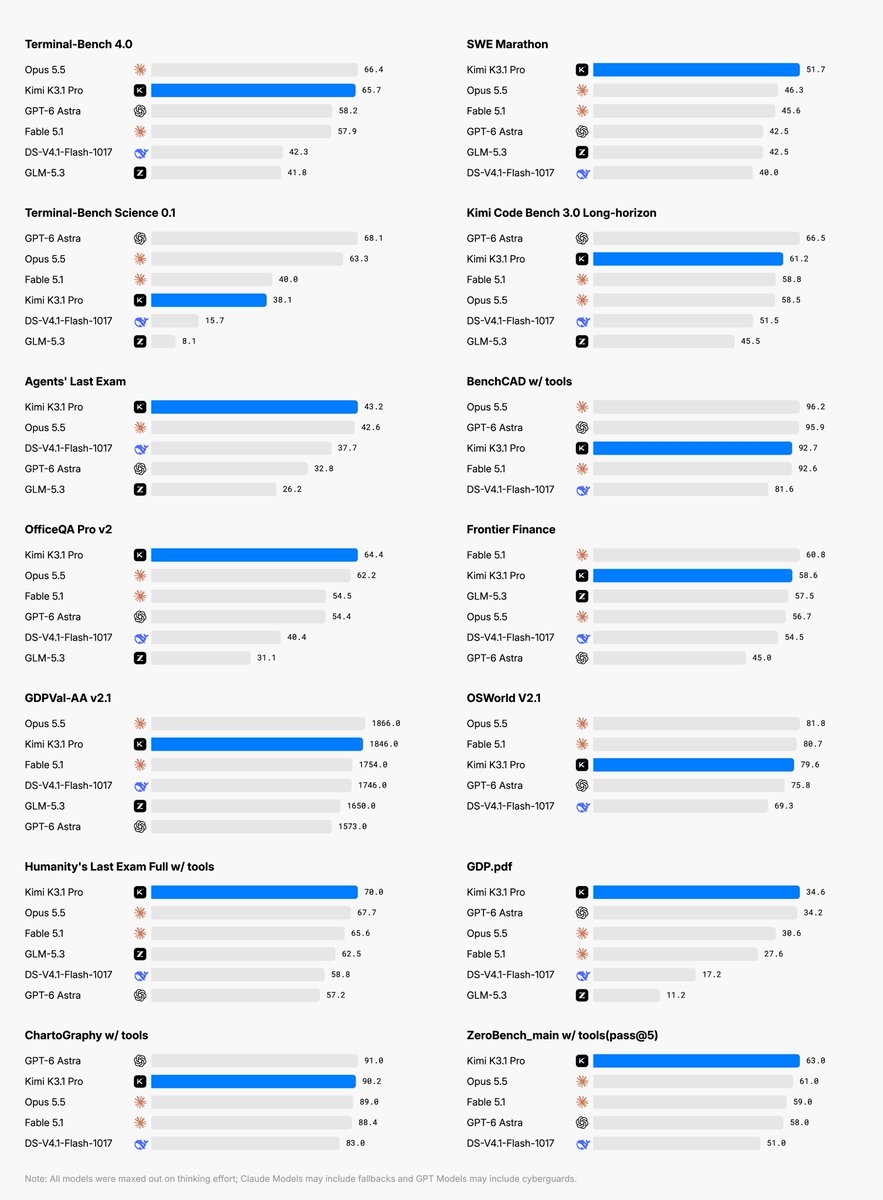
Introducing Kimi K3.1 Pro: our most capable 3T-class open-weight model. 🔹 1M-token context, 2.8T total / 104B active params (MoE), Multimodal. 🔹 Full-project coding: games in Unreal, Unity & Godot. 🔹 Excels at parametric 3D modeling in Blender & CAD. 🔹 More reliable at finance work: Accurate modeling with hallucination down by 65%. 🔹 Matching the strongest proprietary models across coding, agentic and knowledge benchmarks. Kimi K3.1 Pro and K3.1 Pro Highspeed (2–3× faster) are now live on Kimi.ai, Kimi Work, Kimi Code, and the Kimi API. Open weights by Nov 4, 2026. 🔗 API: platform.kimi.ai 🔗 Tech blog: kimi.ai/blog/kimi-k3-1…
@MatthewBerman @bot Hi Matthew, any chance if still getting this?
Introducing GEN-1.5, a one-shot learner. It can learn new tasks in a few seconds. Show it what to do, and it generalizes. This capability emerged from pretraining on physical data at scale, as a step towards our mission of building general intelligence for the physical world.

Wow! Wow! Did these guys just solve PGI (physical general intelligence) or the physical world equivalent of AGI?! These one-shot physical world learning of the robots looks so incredible! Big congrats to the Generalist team!
Introducing GEN-1.5, a one-shot learner. It can learn new tasks in a few seconds. Show it what to do, and it generalizes. This capability emerged from pretraining on physical data at scale, as a step towards our mission of building general intelligence for the physical world.

We’re launching DeepSeek-V4-Pro today! 🚀 🔷 Major Agent upgrades with strong production gains! 🔷 Flexible reasoning effort for V4-Pro & V4-Flash: low for simple tasks, high for daily Agent workflows, max for complex tasks. 🔷 Native OpenAI Responses API support, optimized for Codex with one-click setup. V4 Pro is now available on app/web. Try it via “Expert Mode”. V4 Pro is also available via API. Model names remain unchanged—please refer to the API docs for setup details.


‼️huge ssi news. ilya is about to take his first tentative steps out of the age of research and back into the age of scale. it’s time to smell what ssi is cooking. ssi have built a small reasoning engine that can compete with much larger training runs because his data is better curated to meta learning. but, more importantly. we’re about to step into the era of TTT (test time training. gradient descent happening in real time to solve your problems). so instead of a context window you get actual learning. and because it’s so sample efficient it can be trained on hard to verify tasks that other paradigms can’t touch. everyone else’s weights are frozen, they struggle out of distribution. ssi have created something that has a bundle of knowledge but can truly learn in real time and use that to your advantage. current approaches are trying to hack their way to ‘learn’ with memory tricks, this thing will updates its weights, remember key lessons, and finally feel like a human level reasoner. this is a huge paradigm shift from the king. early results are very impressive. we can stop watching memento on repeat. it’s learning all the way down, the descent is real.

As a professor, I am often asked: Should students use AI coding agents for their research? I have also been trying to understand this question myself, but until now, I had mostly learned about students’ use of AI indirectly, through conversations with them or by seeing the final results. It is rare to have a long, uninterrupted period in which I can closely observe how they actually work, what they delegate to AI, and how their decisions evolve from day to day. The past three weeks at the Telluride Neuromorphic Workshop offered exactly that opportunity. Students propose their own innovative science and engineering projects, form teams, and work toward a demoable final presentation over three weeks. Here are a few things I noticed: 1. Productivity increased dramatically with AI. This was evident across both engineering and scientific projects. The ability to prototype an idea quickly has never felt so powerful or direct until I sat down with the students and observed their coding pipelines. For instance, one integrated-circuit group developed an asynchronous microcontroller with custom instructions, connected it to event-based sensors, deployed it on an FPGA, and produced a runnable demo with C code and a polished, configurable web interface. Completing all of this in three weeks would have been almost unthinkable a few years ago. Contrary to what people sometimes presume, many amazing ideas still emerge from discussion, while the Claude tokens are burning in the background. 2. Students are under peer pressure to use AI to keep up with the rapid pace of development. I noticed that students were more likely to use coding agents when other members of their teams were already using AI to finish their parts. Once some students begin moving much faster, the pressure to produce comparable results becomes very real. 3. The time budget shifts from debugging to planning. I noticed that students spent significantly more time planning their next steps while leaving much of the tedious plumbing work to coding agents. I saw far fewer of the typical frustrations caused by a “stupid bug,” which allowed students to focus more directly on system design and the actual problem they were trying to solve. 4. AI can be more focused on engineering solutions than scientific exploration. Students sometimes found that coding agents concentrated narrowly on solving the problem stated in the prompt, while overlooking instructions to branch out or explore less conventional possibilities. Instead of substantially modifying an established solution or pursuing a risky new direction, coding agents often preferred a safer implementation that was more likely to work. This is useful for engineering, but it can also discourage the kind of uncertain exploration that leads to genuinely novel research. 5. The biggest concern is understanding. Students increasingly delegate entire tasks to AI, which sometimes leads them to present systems or results that they do not fully understand. This is clearly harmful because it removes both the intellectual ownership and the educational value of academic research. A working demo is not enough if the student cannot explain why it works, where it may fail, and which technical decisions shaped the final result. My conclusion is that AI in research is no longer optional. We need to embrace this change, but we must also separate two objectives that are often conflated: education and research project execution. Students benefit most from AI when they already understand the fundamentals, and when they use it to remove repetitive engineering work so that they can focus more deeply on the core scientific questions. Students should still own the questions, the decisions, and the interpretation, even if AI writes much of the plumbing. My lab may soon become more AI-enabled. The challenge will be making sure the agents accelerate the research without becoming the researchers #AI #Research #Engineering #Education
Introducing HRM-Text. An ultra-lean 1B-parameter reasoning language model designed to deliver strong general performance with a fraction of the data, compute, and infrastructure. Trained on just 40B structured tokens, HRM-Text achieves competitive performance while using ~1/1000 of the training data of comparable models. The kicker? The full model trains in roughly one day on a $1,000 budget. This opens the door to a new generation of AI that is powerful, accessible, and radically easier to adapt. Theories and research concepts once deemed too expensive to test are officially back in the game. Sapient Intelligence invites you to help us shape a new paradigm for general intelligence.

I’ve always believed the No.1 application of AI should be to improve human health. That work started with AlphaFold, and now at @IsomorphicLabs with the mission to reimagine drug discovery and one day solve all disease! We are turbocharging that goal with $2.1B in new funding.

People talk, listen, watch, think, and collaborate at the same time, in real time. We've designed an AI that works with people the same way. We share our approach, early results, and a quick look at our model in action. thinkingmachines.ai/blog/interacti…

The most comprehensive RL overview I've ever seen. Kevin Murphy from Google DeepMind, who has over 128k citations, wrote this. What makes this different from other RL resources: → It bridges classical RL with the modern LLM era: There's an entire chapter dedicated to "LLMs and RL" covering: - RLHF, RLAIF, and reward modeling - PPO, GRPO, DPO, RLOO, REINFORCE++ - Training reasoning models - Multi-turn RL for agents - Test-time compute scaling → The fundamentals are crystal clear Every major algorithm, like value-based methods, policy gradients, and actor-critic are explained with mathematical rigor. → Model-based RL and world models get proper coverage Covers Dreamer, MuZero, MCTS, and beyond, which is exactly where the field is heading. → Multi-agent RL section Game theory, Nash equilibrium, and MARL for LLM agents. I have shared the arXiv paper in the replies!


Former BYD and Huawei engineers made a device that turns any bike electric, reaching 32 km/h ⚡

Introducing TurboQuant: Our new compression algorithm that reduces LLM key-value cache memory by at least 6x and delivers up to 8x speedup, all with zero accuracy loss, redefining AI efficiency. Read the blog to learn how it achieves these results: goo.gle/4bsq2qI

Anthropic just took a big swipe at OpenAI's decision to put ads in ChatGPT. Anthropic is airing ads mocking ChatGPT ads during the Super Bowl, and they're hilarious 😅 Anthropic is also committing to no ads in Claude theverge.com/ai-artificial-…

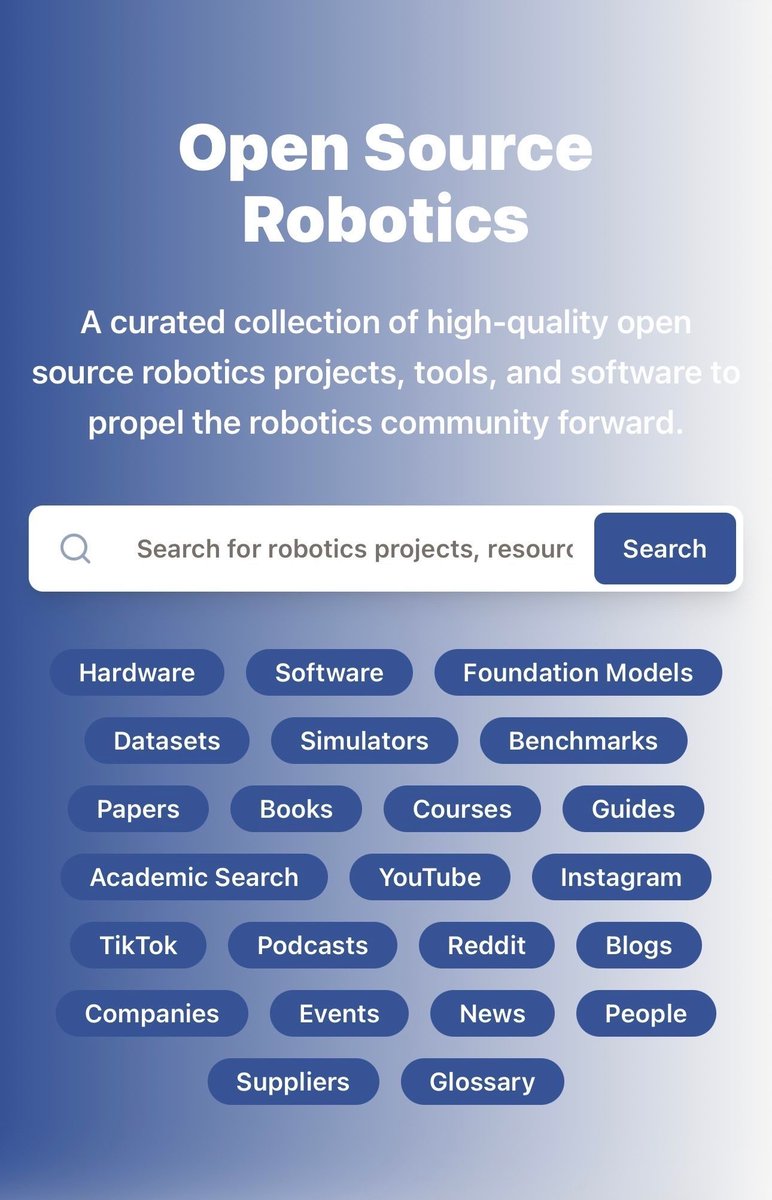
Open Source Robotics A curated collection of high-quality open source robotics projects, tools, and software to propel the robotics community forward. robotics.growbotics.ai —- Weekly robotics and AI insights. Subscribe free: scalingdeep.tech

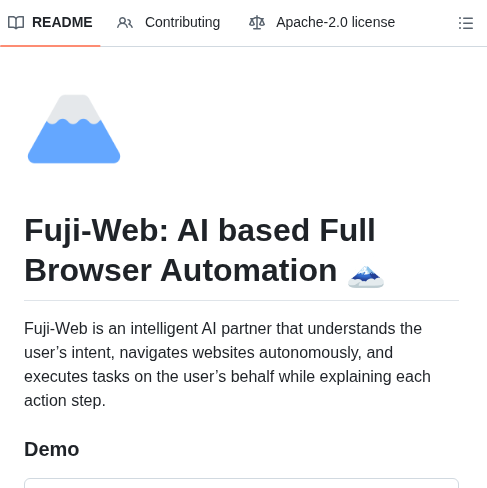
AI agent for browser automation github.com/normal-computi…

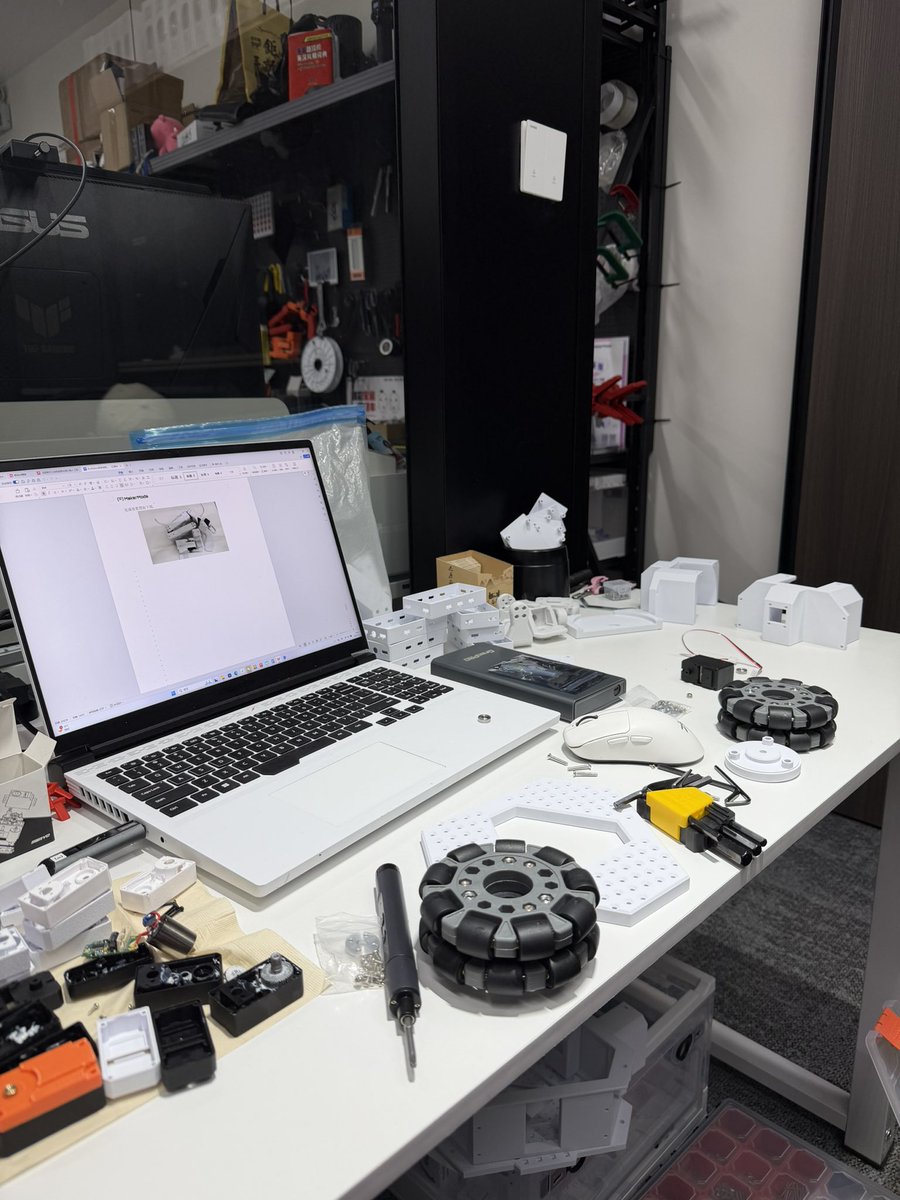
We just upgraded XLeRobot 🚀 Built by the MakerMods team @IsaacSin12, @ThomasSchicksal and @QILIU9203. • Easier to build • Improved chassis • Reduced 3D-print time and material • Designed in collaboration with the original author @VectorWang2 Fully open-source Full build guide GitHub release coming soon




Leading AI scientists from China and the West including Turing award winners Bengio, Yao and Hinton call for global emergency preparedness measures to avert catastrophic risks from AI at the latest International Dialogue on AI Safety.

Lyne Angel ✪ @lyneangel_
47 Followers 605 Following
space——x @oyinsmoney66362
183 Followers 816 Following
MR WHALE SOL @MRWHALESOLv1v
283 Followers 5K Following
Maggie 🪵 @berrytulip48
12 Followers 195 Following Say hey before you scroll away — I like a good opener 🧸


❣️呼和浩特上... @EllenRodri54137
37 Followers 44 Following 🔥🔥👉【见面满意再给钱,当面给钱更安全】🔥💐🎉筒城↑門, 各种类型 美女歪围,应有尽有 三年老品牌 有口皆碑❣️❣️👉电报咨询https://t.co/ifuikssEzI(备用QQ看横幅或主号@emrerts25
Not Elon Musk @ElonMuskAOC
1.7M Followers 760 Following I’m on a quest to bang AOC on Mars. (Parody Account)
𝔊𝔴𝔢𝔯𝔫 @gwern
107K Followers 115 Following Internet besserwisser; pedantic, mean reply guy. 𝘞𝘢𝘵𝘢𝘴𝘩𝘪 𝘬𝘪𝘯𝘪𝘯𝘢𝘳𝘪𝘮𝘢𝘴𝘶! (Follow requests ignored due to terrible UI.)

Chubby♨️ @kimmonismus
154K Followers 3K Following Tech Analyst & Content Creator. Editor-in-Chief @getsuperintel - Community of 300k+ in total: 🔗 https://t.co/jHMmImmI5I //📧 [email protected]

The Elder Scrolls @ElderScrolls
946K Followers 18 Following Welcome to the official home of The Elder Scrolls.




Generalist @GeneralistAI
26K Followers 23 Following Generalist is an AI robotics company building general intelligence for the physical world and making it useful to everyone.
John Kim @PremiumGoblin
38K Followers 266 Following I do software stuff and make content https://t.co/q9bOKIkiD8 Senior Staff Software Engineer @ Meta
Mia @MiaAI_lab
43K Followers 371 Following Building with AI & LLMs // Running frontier open models locally

Steam @Steam
8.7M Followers 11 Following Steam, The Ultimate Online Game Platform. Follow us here for news on the latest releases and special promotions! For support: https://t.co/ecoSK7uTBx
Bethesda @bethesda
4.6M Followers 38 Following The official home for games published by Bethesda: Starfield, DOOM, Elder Scrolls, Fallout, Indiana Jones and the Great Circle, Wolfenstein & more!

Bethesda Game Studios @BethesdaStudios
1.8M Followers 17 Following Developers of @StarfieldGame, @Fallout, and @ElderScrolls.
GameSpot @GameSpot
6.1M Followers 729 Following Official @GameSpot💥 account. Follow for video game & entertainment news, & livestreams! For deals on games, consoles, hardware, and more follow @GameSpotDeals.
The Game Awards @thegameawards
1.6M Followers 945 Following Live December 10, 2026 from Peacock Theater in LA. Celebrate the best and see what's next in video games.

HIDEO_KOJIMA @HIDEO_KOJIMA_EN
6.3M Followers 284 Following Game Creator: 70% of my body is made of movies.
Geoff Keighley @geoffkeighley
4.0M Followers 10K Following @TheGameAwards - Thursday, December 10 @SummerGameFest - Returns June 2027 @Gamescom Opening Night Live - August 24, 2027
Kimi Developers @KimiDevs
70K Followers 4 Following The official Kimi account for developers building with Kimi Code and the Kimi API.
Kimi.ai @Kimi_Moonshot
388K Followers 138 Following Built by Moonshot AI to empower everyone to be superhuman. PR: [email protected] DC: https://t.co/wBsBTn6fmE
Xinyu Yang @Xinyu2ML
19K Followers 2K Following Building open frontier intelligence. Opinions are my own. They/Them
Michelle Sun @michellelsun
13K Followers 860 Following Physical AI value chain, Robotics, Industrial Automation https://t.co/IzuSYGYjvn
Charlie O'Neill @oneill_c
23K Followers 1K Following The sea is the sea The old man is an old man The boy is a boy and the fish is a fish The sharks are all sharks no better and no worse

John Jumper @JohnJumperSci
32K Followers 0 Following
Towards Data Science @TDataScience
251K Followers 2K Following The world's leading publication for data science and artificial intelligence professionals. Submit an Article ✍️ https://t.co/57pIMegK1o

Fengming Lu @FengmingLuPE
9K Followers 244 Following Lecturer (Assistant Professor) of Chinese Politics at ANU | Chinese Politics, Political Economy, and Elite Politics | EV expert | Car guy for 30+ yrs | 陆风鸣
MiniMax (official) @MiniMax_AI
129K Followers 1K Following Code: @MiniMaxAgent MiniMax Design: @Hailuo_AI API: https://t.co/fHRdSV73Hr M Plan: https://t.co/XfJWSyauda

Google Antigravity @antigravity
201K Followers 20 Following An agent-first software development platform @GoogleDeepMind
NASA Moon Base @NASAMoonBase
76K Followers 43 Following Building humanity's first outpost on the Moon. For science. For discovery. For what comes next.

Alexandr Wang @alexandr_wang
835K Followers 944 Following chief ai officer @meta, founder meta superintelligence labs, founder @scale_ai. give everyone the adulthood they dreamed of in childhood
Maye Musk @mayemusk
1.6M Followers 251 Following Doctor of Dietetics 👩🎓 Supermodel 😉💃 [email protected] Author: A Woman Makes A Plan 📖 +Sept 2026 TIMELESS 📖 Pre-order: https://t.co/W9KRc2KNbf
Sapient Intelligence @Sapient_Int
6K Followers 2 Following Building leaner architectures for deeper intelligence.
Deli Chen @victor207755822
35K Followers 181 Following Deep Learning Researcher @deepseek_ai | #AGIforEveryone Prev. BS and MS @PKU1898 | https://t.co/nu6M0PNxoM | All opinions are my own. | INTP-T | 人心惟危,道心惟微
Chujie Zheng @ChujieZheng
16K Followers 333 Following Researcher @Alibaba_Qwen | Opinions are my own
Alexandre Moufarek @amoufarek
4K Followers 286 Following Director, Inception @GoogleDeepMind | SIMA | Genie | Project Astra | Gemini // ex-Ubisoft (Ghost Recon, Watch Dogs) // ex-Softbank Robotics (Pepper)
Claude @claudeai
2.0M Followers 2 Following Claude is an AI assistant built by @anthropicai to be safe, accurate, and secure. Talk to Claude on https://t.co/ZhTwG8d1e5 or download the app.
ClaudeDevs @ClaudeDevs
787K Followers 2 Following Official updates for developers building with @ClaudeAI
Fei-Fei Li @drfeifei
1.1M Followers 1K Following Cofounder/CEO @theworldlabs, Prof (CS @Stanford), Co-Director @StanfordHAI, #AI #SpatialIntelligence #GenAI #computervision #robotics #AI-healthcare
Riley Goodside @goodside
237K Followers 4K Following Frontier LLM poast-training. Formerly: Google DeepMind, Scale.You might like

















