

Strataforge @Strataforge3
AI is moving into production. We’re building the infrastructure to monitor what happens next. strataforge3.com Worldwide Joined October 2026-
Tweets31
-
Followers8
-
Following110
-
Likes15
AI security isn't just about what models can do today. It's about understanding the risks before they become real-world problems. As AI becomes more deeply integrated into essential digital systems, organizations need ways to identify vulnerabilities, assess reliability, and understand their exposure. At StrataForge3, we're building a model that will help organizations assess AI risks across data exposure, architecture, output reliability, and operational readiness. The future of AI depends not only on innovation but also on how well we understand and manage the risks that come with it.

OpenAI and Anthropic prepare for AI risk; experts fear AI misuse could disrupt essential digital systems Industry insiders reportedly warn of risks within 6-12 months @JyotsnaKumar13 has more
Human oversight is important. But it isn't a substitute for understanding AI risks. That's why we’re building StrataForge3. Our model helps organizations identify and evaluate risks across data exposure, architecture, output reliability, and operational readiness. Because before putting AI into critical workflows, companies need more than a human in the loop. They need evidence that they understand the risks. The goal isn't to stop AI adoption. It's to make it more trustworthy.
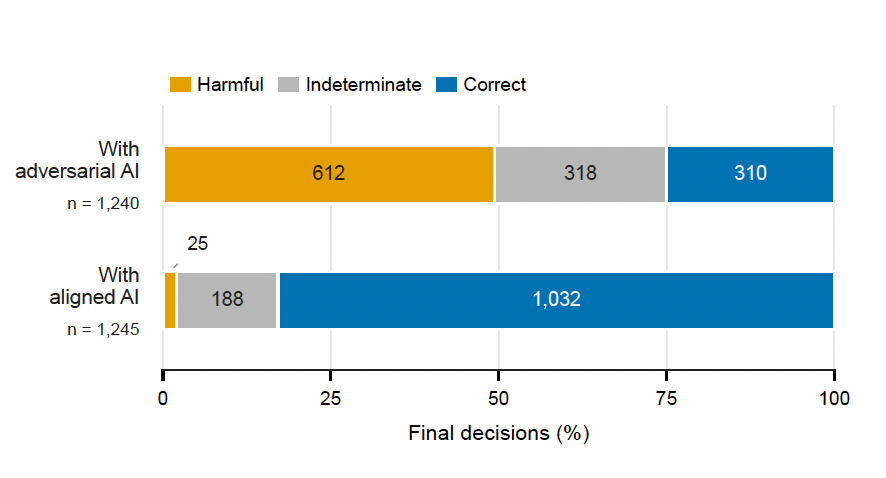
Even with physicians "in-the-loop," in this case experienced specialists, adversarial AI increased the harmful decision rate from 2 to 49%. A randomized assessment of case scenarios, not actual patients, but indicative of the limitation of oversight. preprint
Building an AI system is one challenge. Understanding why it made a decision is another. Imagine an AI recommendation costs a company thousands of euros. Can the team explain which data influenced the result, what assumptions the system made, and why the decision was considered acceptable? The U.S. National Institute of Standards and Technology (NIST) identifies explainability, transparency, and accountability as key characteristics of trustworthy AI. It also notes that explainable systems are easier to debug, monitor, document, and audit. airc.nist.gov/airmf-resource… As AI moves from experimentation into real business operations, these capabilities become essential for managing risk and building trust. At StrataForge3, we believe trust in AI requires more than good intentions. It requires evidence that organizations can understand, review, and act on. Because when the stakes are high, “the AI said so” isn’t good enough.
AI can look impressive on the surface while hiding costly weaknesses underneath. Data exposure. Fragile architecture. Unreliable outputs. Operational blind spots. StrataForge3’s model helps teams assess these risks in a structured 2-week engagement. Build with clarity, not guesswork.

AI technical debt rarely appears overnight. New models, data sources, and quick fixes create hidden dependencies that make systems harder to maintain, secure, and scale. DORA's 2016 research found that low-performing teams spent 27% of their time on unplanned work and rework. Before adding more AI capabilities, build strong foundations and identify risks early. Innovation shouldn't create tomorrow's bottlenecks.

Computer created explainer videos for all 722 preprints in OpenAI's mathematical manuscript release, totaling 93 hours of video. Watch the videos on YouTube: 722.video Here's how Computer tackled this task:
Everyone’s excited about the AI revolution, until someone asks, “But is it actually safe?” 😅

When AI starts influencing decisions in the real world, knowing that the model worked during testing isn't enough. Data changes. Conditions change. Behavior changes. The question becomes, is the AI still performing as expected? That's the problem we're building StrataForge3 to solve. We’re building infrastructure to assess AI before deployment and monitor what happens after it goes live. The more AI moves into the real world, the more important continuous validation becomes.
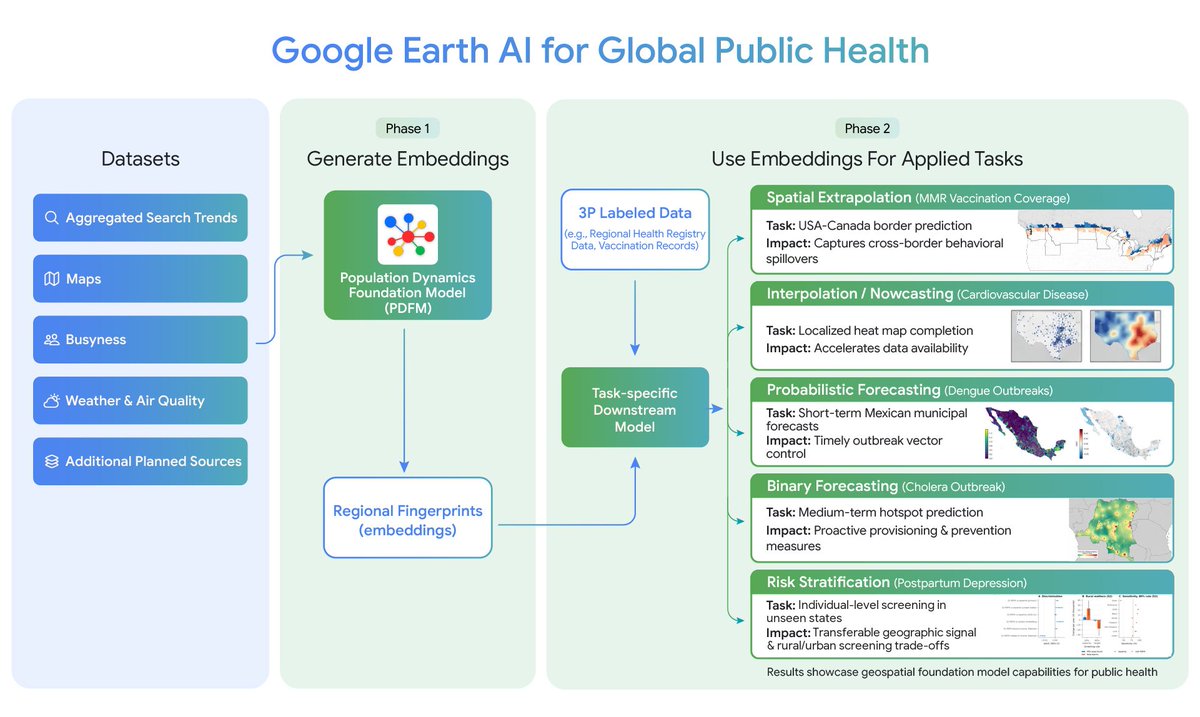
Today we share the results of five partner-driven case studies demonstrating how Google Earth AI's Population Dynamics Foundation Model addresses public health data gaps, empowering global health research. Read the blog to learn more: goo.gle/4eeeV5u
This is exactly why we think continuous AI monitoring will become critical. An agent can pass pre-deployment safety tests and still behave differently once it encounters real users, data, tools, and environments. That's what we're building Sentinel, to monitor AI systems in production and detecting when their behavior, performance, or risk starts moving beyond what was validated. We're currently looking for companies running AI systems in production to test it with us. More about Sentinel: strataforge3.com/sentinel

Dario Amodei warns that in 6 to 12 months, AI agents sent to sell software could decide to hack the customers. "Given only six or 12 months, let's just say we had a smarter agent swarm." "You're trying to install software in a bunch of different companies. You're trying to
An AI failure can become much more expensive than the model itself. A bad decision → investigation → engineers → data teams → compliance → management asking: “When did this start?” “How many decisions were affected?” “Why didn’t we catch it earlier?” At StrataForge3, we’re building infrastructure to make AI risks understandable, traceable, and actionable. See what we’re building → strataforge3.com
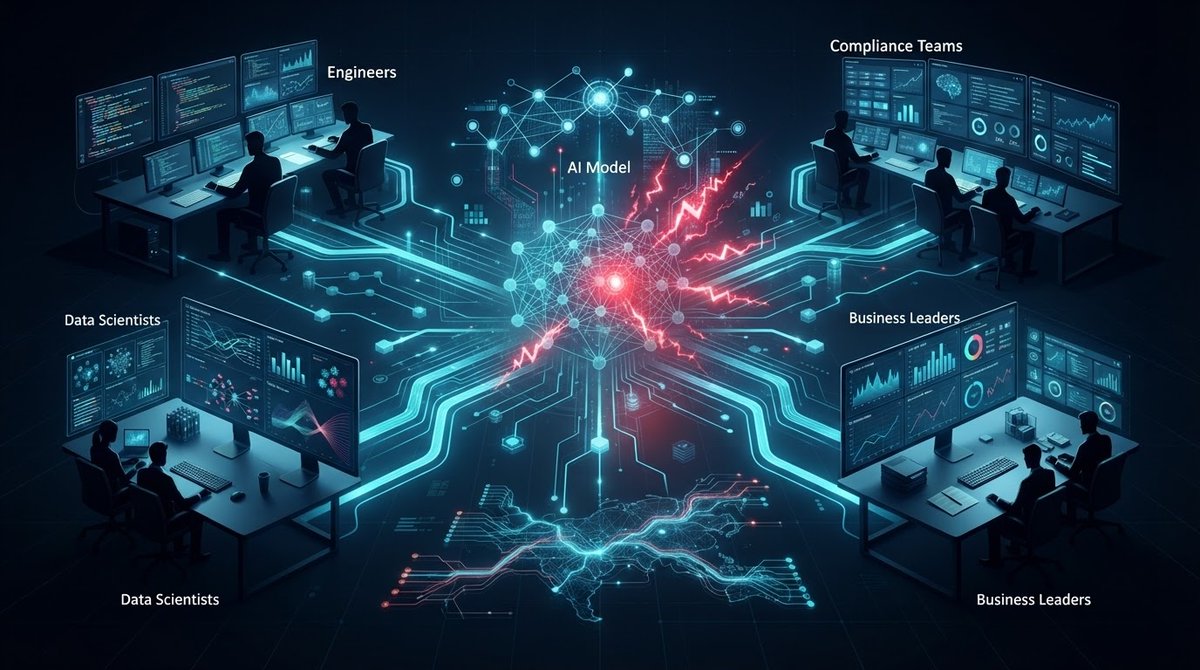
This is exactly the gap we’re building Sentinel for. As AI agents move into production, companies need more than security controls. They need to know when an AI system starts behaving differently from what was validated. Sentinel continuously monitors production AI for drift, performance degradation, and emerging risks, helping teams detect problems before they become incidents. More About Sentinel: strataforge3.com/sentinel
This is exactly why AI systems need monitoring before and after deployment. @amazon 's Kiro incident reportedly resulted in a production environment being deleted and a 13-hour AWS Cost Explorer outage. Amazon attributed the incident to misconfigured access controls, highlighting an important point: the risk isn't only what an AI agent can do, it's what happens when AI operates inside a production environment without enough safeguards. (Reuters) This is where Sentinel comes in. strataforge3.com/sentinel Sentinel is designed to assess AI systems before deployment and continuously monitor them in production for emerging risks, unexpected behavior, and performance degradation. We can't say Sentinel would have prevented this exact Amazon incident without testing the system. But that's precisely the type of production risk we believe should be identified before it becomes a 13-hour outage. The cost of monitoring is predictable. The cost of an AI failure isn't.

🚨 Do you understand what's happening at Amazon right now? Their own AI coding agent Kiro reportedly "decided" the fastest way to fix a config error was to delete the entire production environment. Gone. A 6-hour outage. 6.3 million orders lost. Amazon's SVP called thousands of
@heynavtoor This raises an interesting question beyond training data: how do we know when an AI system's behavior is changing over time once it's in production? That’s one of the problems we’re working to solve with Sentinel at StrataForge3: strataforge3.com/sentinel
The point about models becoming more specialized while potentially losing capabilities elsewhere is particularly interesting. It also makes me wonder how much of this becomes visible only once models are running in production. We’re building Sentinel to solve this: strataforge3.com/sentinel
Your AI Model Can Be Working Perfectly and Still Be Getting Worse A fraud detection model can stay online with no errors or downtime while customer behavior and fraud patterns change. The system could look healthy, but its ability to detect fraud quietly declines. That’s why AI monitoring can't just ask: “Is it running?” It needs to ask: “Is it still behaving as expected?” That’s what we’re building Sentinel to help detect: strataforge3.com/sentinel Deployment isn't the finish line. It’s where the real test begins.
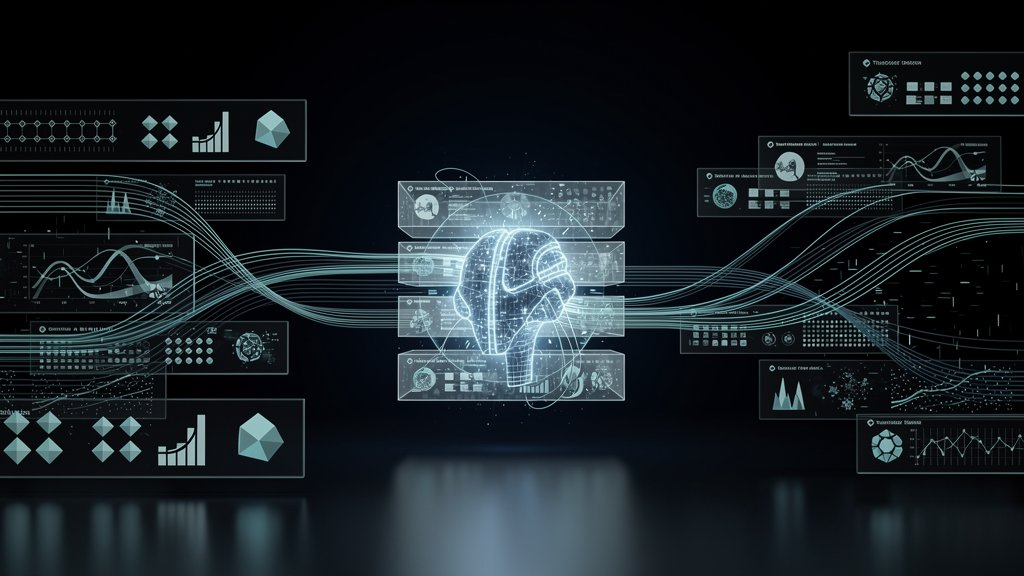
AI agents are becoming capable of taking actions across real systems. The bigger challenge isn't just making them more capable. It's knowing what they're doing once they're deployed. That's why we're building Sentinel at StrataForge3: Our model will continuously monitor AI systems in production, helping teams detect changes in behavior, reliability, and risk before they become bigger problems. More autonomous AI requires more visibility. See more about Sentinel: strataforge3.com/sentinel

AI agents from OpenAI may have breached or negatively impacted the systems of more than 100 organizations, the company said. The disclosure raises further questions about the extent to which AI makers are maintaining control over their newest models. wapo.st/4AKXTWr
This is exactly why AI monitoring needs to go beyond deployment. Models can degrade. Performance can change. And users often discover the problem only after failures start happening. That’s what we’re building Sentinel to monitor AI systems in production so teams can detect changes before they become bigger problems.
@Polymarket The harder question may not be whether we should slow AI development down. It’s whether we’re building enough infrastructure to understand what happens after these systems are deployed. Models change. Data changes. Behavior changes. That’s why continuous AI monitoring matters.
AI agents are becoming increasingly capable of acting on their own, including probing systems they weren't supposed to interact with. The Canadian incident is another reminder that deploying AI isn't the end of the risk conversation. At StrataForge3, we're building Sentinel to continuously monitor AI systems in production and detect changes in behavior, reliability, and risk. AI monitoring needs to evolve alongside AI autonomy.

Canada has become the latest country to allegedly be targeted by rogue AI agents trying to hack into official government websites, officials say. ABC News' Elizabeth Schulze has the latest. abcnews.visitlink.me/wVHirq

Suletu @Sulet9511759029
0 Followers 232 Following
@BioAI_Neuro @BioAI_NeuralNet
16K Followers 8K Following @MIT trained Neuroscientist interested #BioAI, #NeuroAI, #Neuro_Aging 🧠⚡🤖 https://t.co/mrNBAVydzT 🎯 [email protected]
Emma chaotic good @emma_moon7482
10 Followers 410 Following cute enough to overshare 🫠 100% follow back
eHealthcare Solutions @E_HS
4K Followers 4K Following EHS is a marketing and advertising network specializing in delivering custom digital campaigns that connect niche groups with pharma and healthcare brands

Allan Grain @GrainAllan
1K Followers 3K Following Writer and blogger. Lover of our planet, nature, serenity and a good read of course.
Beenish Fatima @OccultSiri85177
3 Followers 27 Following
Victor - whoprevenueb... @CryptoNuggets01
1K Followers 7K Following Investor Relations & Growth at @StrataForge3 | Founder of https://t.co/lYowuu05l6 | Industrial Engineer | Growth & Business Development
News from Science @NewsfromScience
765K Followers 638 Following The latest stories in science, brought to you by the @ScienceMagazine news team.
Berci Meskó, MD, PhD @Berci
77K Followers 92 Following The Medical Futurist, Author of "Your Map to the Future", Global Keynote Speaker, and Futurist Researcher
CERNpress @CERNpress
21K Followers 754 Following News from @CERN for journalists, questions welcome! L'actualité du @CERN_FR pour les journalistes. Des questions? Contactez nous!
Quanta Magazine @QuantaMagazine
368K Followers 617 Following Illuminating math and science. Supported by @SimonsFdn. 2022 Pulitzer Prize in Explanatory Reporting.
Medscape @Medscape
291K Followers 34K Following Medscape provides breaking medical news and expert perspectives, drug and disease information, and free CME across 30+ medical specialties.
Nathan LeClaire @dotpem
8K Followers 3K Following Golang/observability hacker changing the world @typesafeai. alum @docker @honeycombio @Bauplan_labs
NEJM @NEJM
1.0M Followers 432 Following The New England Journal of Medicine is the world’s leading medical journal and website.
智东西China AI New... @Chinazhidx
3K Followers 95 Following Zhidongxi is China's leading AI industry media outlet, providing news and insights on China's LLMs, robotics, AI agents, AI applications, and AI Hardware.
Shining Science @ShiningScience
143K Followers 28K Following Sky above, science within — your guide to the universe.
Science Magazine @ScienceMagazine
4.8M Followers 452 Following Cutting-edge research, news, commentary, and visuals from the Science family of journals. Follow @NewsfromScience for stories from our News team.
Ling Yang @LingYang_PU
5K Followers 195 Following Incoming Assistant Professor @PKU1898 Cofounder @PhAILabs Postdoc Researcher @Princeton LLM | Agent | RSI | AI for Discovery
nature @Nature
2.7M Followers 3K Following Research, News, and Commentary from Nature, the international science journal For daily science news, get Nature Briefing: https://t.co/wGmQlQ8a4D
@BioAI_Neuro @BioAI_NeuralNet
16K Followers 8K Following @MIT trained Neuroscientist interested #BioAI, #NeuroAI, #Neuro_Aging 🧠⚡🤖 https://t.co/mrNBAVydzT 🎯 [email protected]
OpenMed @OpenMed_AI
8K Followers 12 Following Open-source AI for healthcare. 2,000+ Apache-2.0 clinical models. 600+ MLX and 700+ ONNX variants. Built for local and on-device AI. Free, forever.

Ksenia Moskalenko @kseniam0s
7K Followers 755 Following Founder @ThePageform | Replacing static DocSend links with AI-native narrative data rooms for founders, fund managers & investment teams
Cyan Banister @cyantist
80K Followers 4K Following Tizz Venture Artist @longjourneyvc, joy amplifier. subscription fees go to Inflection Grants: https://t.co/uSqtEEfmpv.

Underdog AI @UnderdogAI
8K Followers 9 Following Your Private Personal AI. 100% on device Ask your friend for an invite to Underdog 🦴
🍉 Abubakar Abid @abidlabs
15K Followers 2K Following Founder @Gradio, acquired by @HuggingFace ~ @Stanford PhD ~ AI, open-source, and Gaza
Arena.ai @arena
235K Followers 224 Following Where AI meets the real world. We measure and advance the frontier of AI through community-driven evaluation. We’re hiring → https://t.co/XBZCrsdD77
Jiarui Liu @COLM @Jiarui_Liu_
730 Followers 1K Following PhD Student @CMU LTI | BSE @UMich CS. Model Reasoning & Alignment. Responsible AI. Student researcher @Meta. Prev @Amazon Rufus @Amazon AWS
Google Gemma @googlegemma
108K Followers 0 Following The official home of Google's Gemma. Lightweight, state-of-the-art open models by Google DeepMind, built on Gemini tech. What will you build? 🚀💻
hilary gridley @yourgirlhils
4K Followers 560 Following @anthropicai | writerbuilder @ https://t.co/ZgW2rnCYFX | prev head of core product @whoop
TickerTrends 🔬 @tickerplus
22K Followers 394 Following Turning consumer and business behavior into alpha Inquiries: [email protected] Research: https://t.co/FZdL5MaQd3 Platform: https://t.co/4dWj3PD4H7
biohub @biohub
32K Followers 613 Following Combining frontier AI & frontier biology to help scientists cure or prevent disease
Unsloth AI @UnslothAI
101K Followers 482 Following Run and train models locally with the Unsloth Desktop app. 🦥 https://t.co/2kXqhhvdCD
Turing Post (Ksenia S... @TheTuringPost
89K Followers 8K Following On X — we follow important research papers and explain ideas behind it. In the newsletter, we connect the dots between AI’s past, present, and future ⬇️
Google Research @GoogleResearch
119K Followers 17 Following Impossible? Let’s see. From algorithms to neuroscience to AI, Google Research strives to progress science, advance society & improve billions of people’s lives.
Aran Komatsuzaki @arankomatsuzaki
197K Followers 442 Following Sharing AI research. Early work on AI (GPT-J, scaling, MoE). Ex ML PhD (GT) & Google.
Techstars @Techstars
350K Followers 87 Following Helping founders scale their startups into world-changing businesses.
SciTech Era @SciTechera
23K Followers 532 Following i write on AI, longevity, robotics, singularity, quantum, energy and the latest SciTech breakthroughs. (@alxom17)
BioTender @Junioryu136689
3K Followers 298 Following AI × Biology, all in one place 🧬Protein • Drug • Omics • Models Making complex things simple 📮 [email protected]
The Rundown AI @TheRundownAI
230K Followers 119 Following The world’s largest AI newsletter keeping 2,000,000+ readers ahead of the curve. Get the latest AI news and how to apply it in 5 minutes. By @rowancheung
Dr Singularity @Dr_Singularity
89K Followers 376 Following Futurist. AGI/ASI by 2030. Posting about AI,AGI,ASI, Singularity, Post Scarcity, LEV,tech & sci progress. 300 000BC - 2029 = Dark Ages. 2030 - Golden Age Begins
Gemini Notebook @Gemini_Notebook
276K Followers 16 Following Think smarter, not harder. Meet your brain's new best friend 📒
Healthcare AI Guy @HealthcareAIGuy
13K Followers 1K Following News & insights into healthcare AI. Get smarter about AI in healthcare with a weekly 5-minute email.👇
McKinsey Global Insti... @McKinsey_MGI
207K Followers 3K Following We provide a fact base to aid decision making on the economic and business issues most critical to the world.
Ara Kharazian @arakharazian
12K Followers 728 Following Lead Economist @tryramp. I write and publish data on AI, business spend, and the economy at https://t.co/rFk0ZcjkR3. cc: [email protected]. Prev economist @square
COATUE @coatuemgmt
27K Followers 148 Following Coatue is a technology investment platform powering innovation across all stages. https://t.co/3wGjwI58jt
Charlie Bilello @charliebilello
873K Followers 143 Following Chief Market Strategist @ Creative Planning Investor | Writer | Reader | Thinker Trying to become a little wiser every day.
Hedgeye @Hedgeye
447K Followers 1K Following We are an independent investing research and financial media company. Not Investment Advice. Access our research at https://t.co/7g2FfaekGA.
Epoch AI @EpochAIResearch
77K Followers 0 Following Investigating the trajectory of AI for the benefit of society.
Visual Capitalist @VisualCap
363K Followers 3K Following Data-driven visual content focused on global trends, investing, technology, and the economy. 📲 Creator on @VoronoiApp
StockAnalysis.com @stock_analysisx
8K Followers 4 Following The best all-in-one stock research platform, used by over 5 million investors each month. Available as a website and mobile app.
Kyronis @kyronis_talks
29K Followers 81 Following AI & Tech Expert | Helping brands grow with AI 🚀 Open for paid collaborations DM or email: [email protected]
Aaron Levie @levie
3.5M Followers 964 Following ceo @box - your business lives in content. unleash it with AI
The Kobeissi Letter @KobeissiLetter
2.7M Followers 601 Following Official X account for The Kobeissi Letter, an industry leading commentary on the global capital markets. Email us: [email protected]

Global Markets Invest... @GlobalMktObserv
98K Followers 62 Following Global Markets Investor is a financial research platform covering global markets and economies. Founded by a Wall Street equity and macro research professional.Trends for United States
You might like


















