Beyond Venture Partners @beyondvp
A visual diary of how we are helping companies grow beyond their imagination. beyondvp.com Joined November 2020-
Tweets107
-
Followers9
-
Following27
-
Likes0
Building drones isn't owning the airspace. Hardware startups struggle because they manufacture pieces while software owns the board. DJI built the ecosystem. Tesla owns the network. Apple controls the platform. Hardware is the entry. Software is the lock-in.
Poll: What's your strategy? A) Chase the TAM B) Dominate the SAM Most pitch "$100B markets." But TAM is fantasy without SAM domination. Amazon: books first Facebook: college students first Stripe: developers first. Own the vertical before going horizontal. Which wins? A or B?
The ideas that feel impossible are usually worth backing. Most VCs chase proven models. We back founders building things so audacious, others call them crazy. If it feels impossible, it’s probably defensible. By the time competitors catch on, you’ve already solved it.
Comfortable ideas rarely change anything Airbnb: "Strangers in my home?" Tesla: "Electric cars won't scale." Stripe: "Developers don't care about payments." Every breakthrough started as something people rejected If your idea feels too comfortable, you're not thinking big enough
Conviction doesn't come from consensus. It comes from the work nobody sees. Rebuilding models at midnight. Saying no 99 times. Backing founders before they're famous. Holding when others sell. Conviction is built in silence — and proven in results.
The best ideas don't look big at first Airbnb was "renting air mattresses" Uber was "black cars for tech people" Stripe was "payments for developers" The ideas that change industries start small, specific, and dismissible Start narrow. Execute relentlessly. Expand strategically.
60% gross profit. 22% net profit. Where did 38% disappear? Gross margin shows pricing power. Operating margin shows efficiency. Net margin shows what's left after reality hits. High gross margins don't guarantee profitability. Track every layer.
AI isn't assisting teams. It's replacing junior roles. 85% of founders say AI handles tasks that used to go to interns. 72% plan to hire fewer entry-level roles this year. The question isn't whether this happens. It's how org design changes when learning curves disappear.
Does your business make money every time it sells? That's what unit economics measure. Revenue per unit − Variable costs = Contribution Margin If positive → scale makes sense. If negative → scale magnifies losses. Startups fail because they grow before unit economics work.
58% of pivots come from user signals. Only 26% from investor advice. Founders don't pivot because someone told them to. They pivot because churn, unit economics, and distribution bottlenecks force them to. Reality doesn't negotiate.
India’s consumer internet isn’t fragmented. It’s concentrated. A few platforms control distribution and distribution decides who wins. For founders, the real question isn’t just what you build, but who controls access to users.
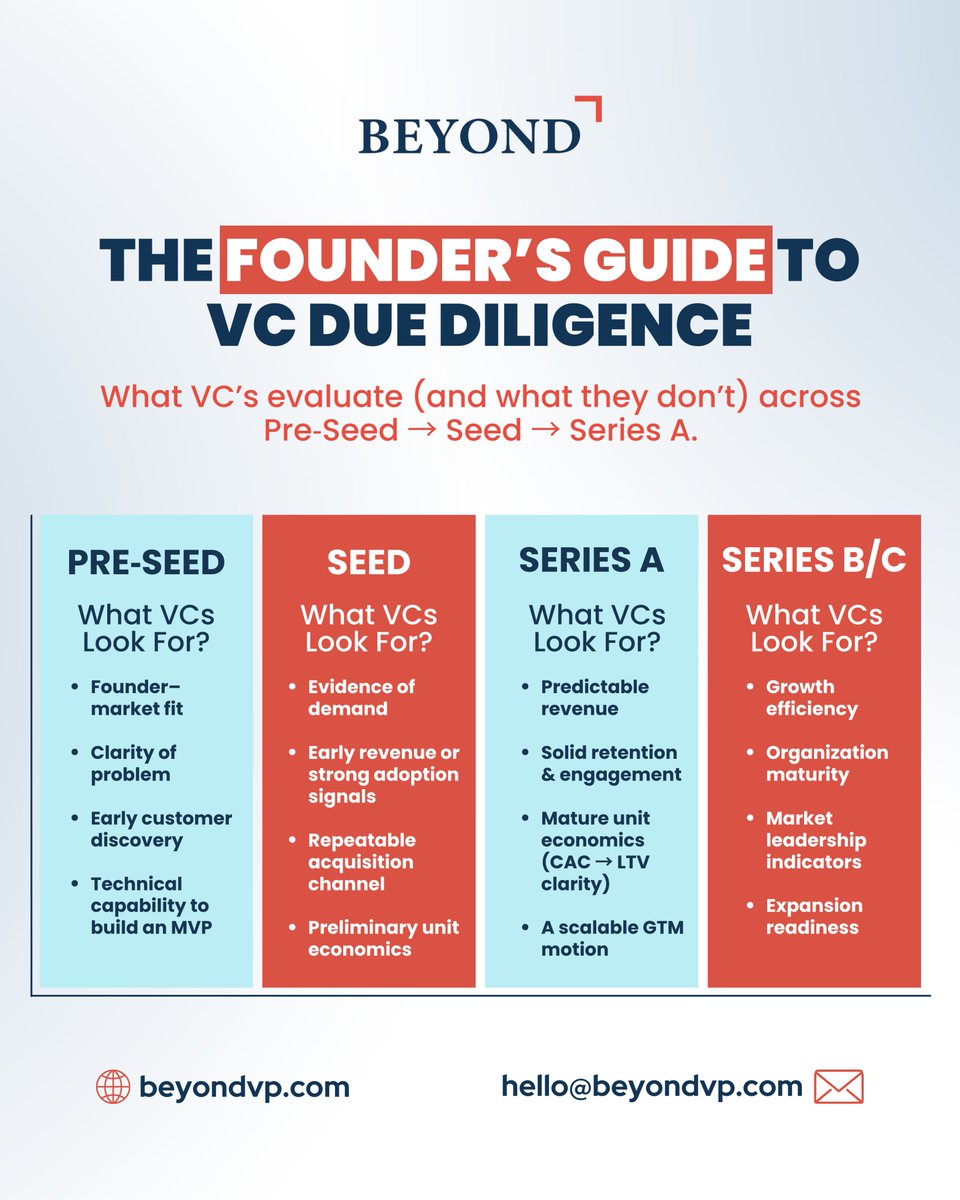
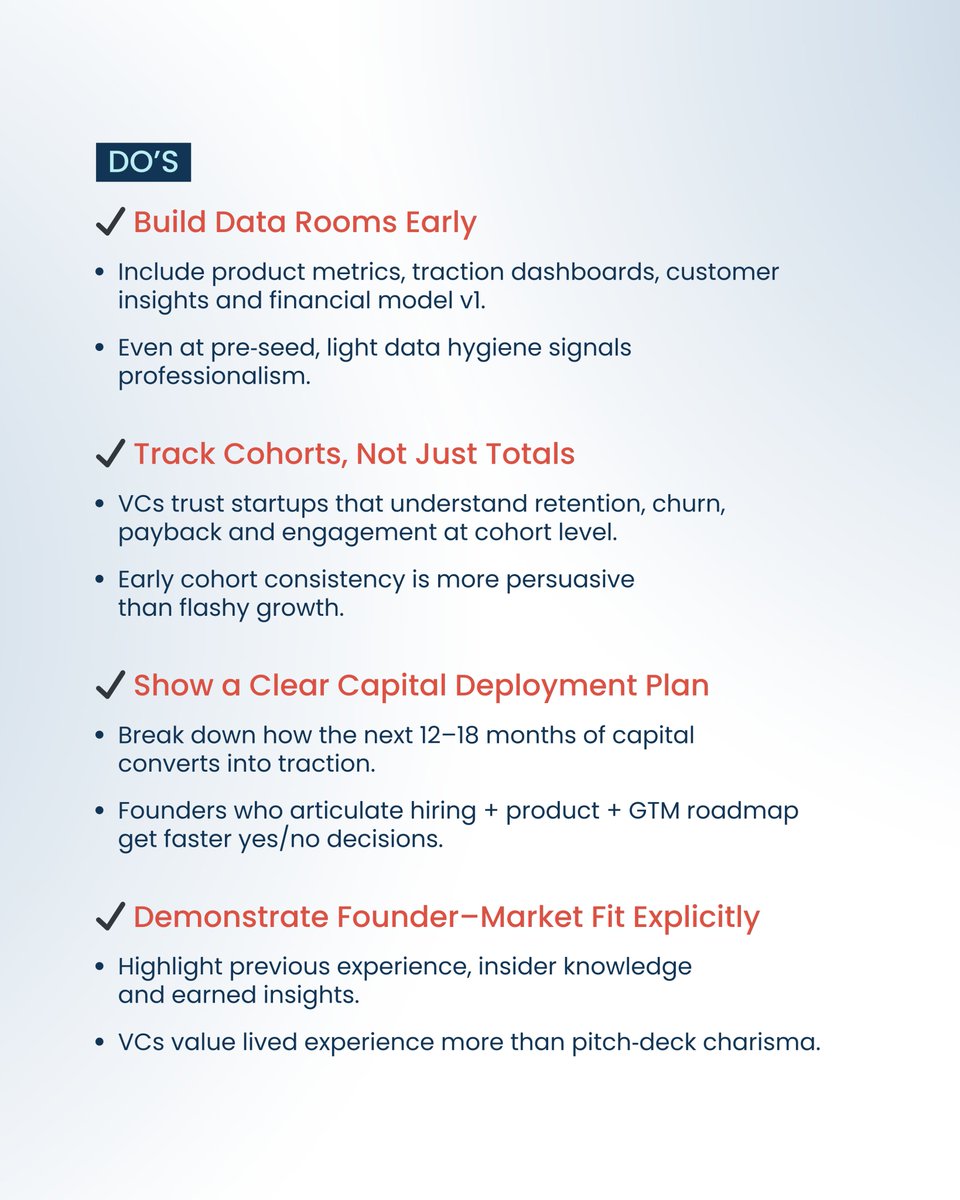
VC due diligence isn’t one checklist. What investors look for changes at every stage. Pitching scale before proving fundamentals is how founders get rejected. Answer the right questions for your stage.

1 in 10 startups survive long-term. Less than 1% ever reach real scale. Most don’t fail from one big mistake, they fade from weak fundamentals. Longevity is the real edge.
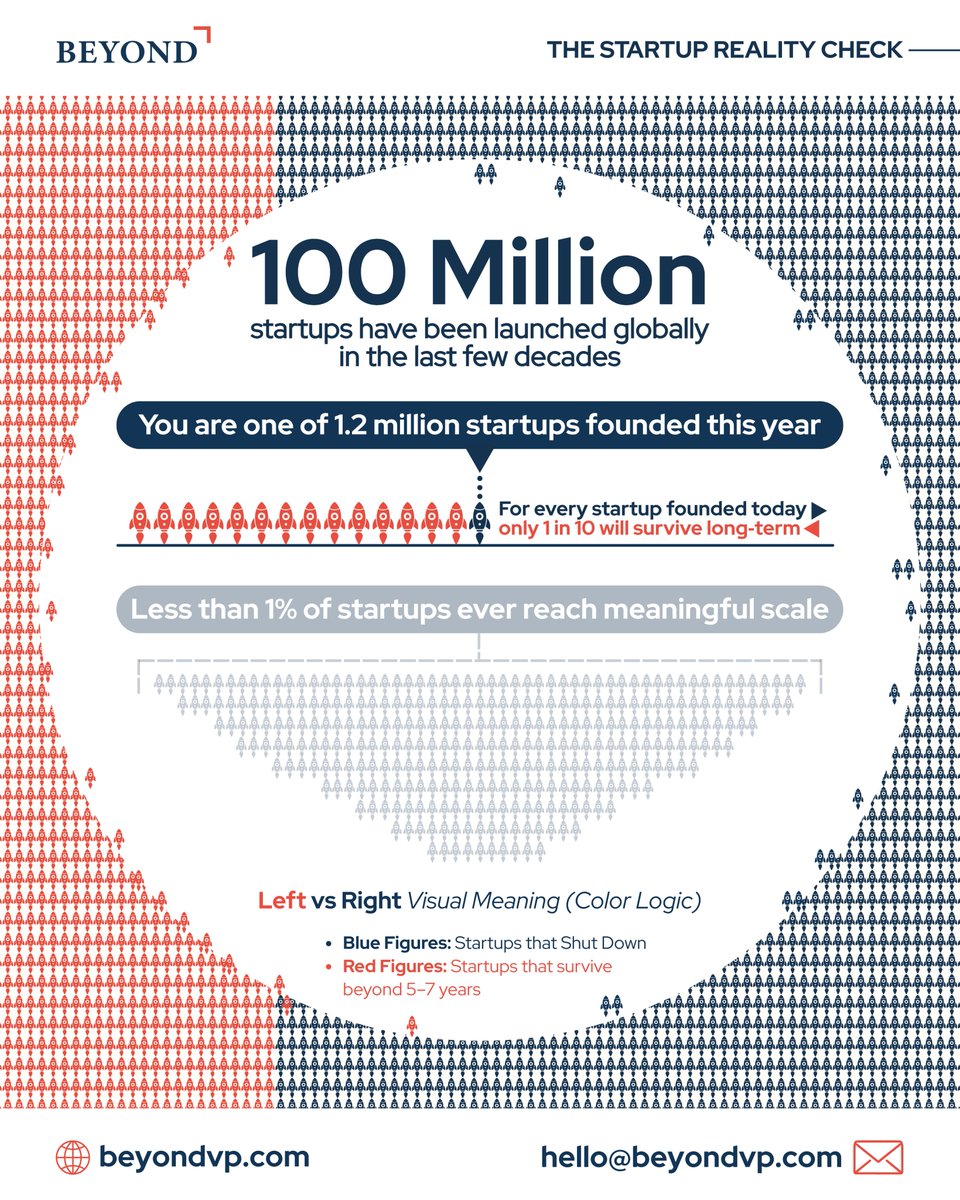
VC backing isn’t comfort. It’s pressure. Higher expectations. Fewer excuses. Every decision matters. Capital buys time, not success.

“Just raise money and scale.” That advice breaks more startups than it builds. Real scale = external growth and internal discipline. Capital accelerates what already works. Scale is a strategy, not a moment.

Capital doesn’t fix problems. It multiplies them. If fundamentals are weak, funding just makes failure faster. Raise money to grow what works — not to patch what doesn’t.
Burn rate doesn’t kill startups loudly. It kills them quietly. Most founders miscalculate it, scale too early, and lose runway faster than expected. If you can’t predict your burn, you can’t plan your future.

“Let’s add another revenue stream.” That sentence kills focus. Diversify after you have one killer offering, real demand, and clear unit economics. Build one thing that works. Then expand.

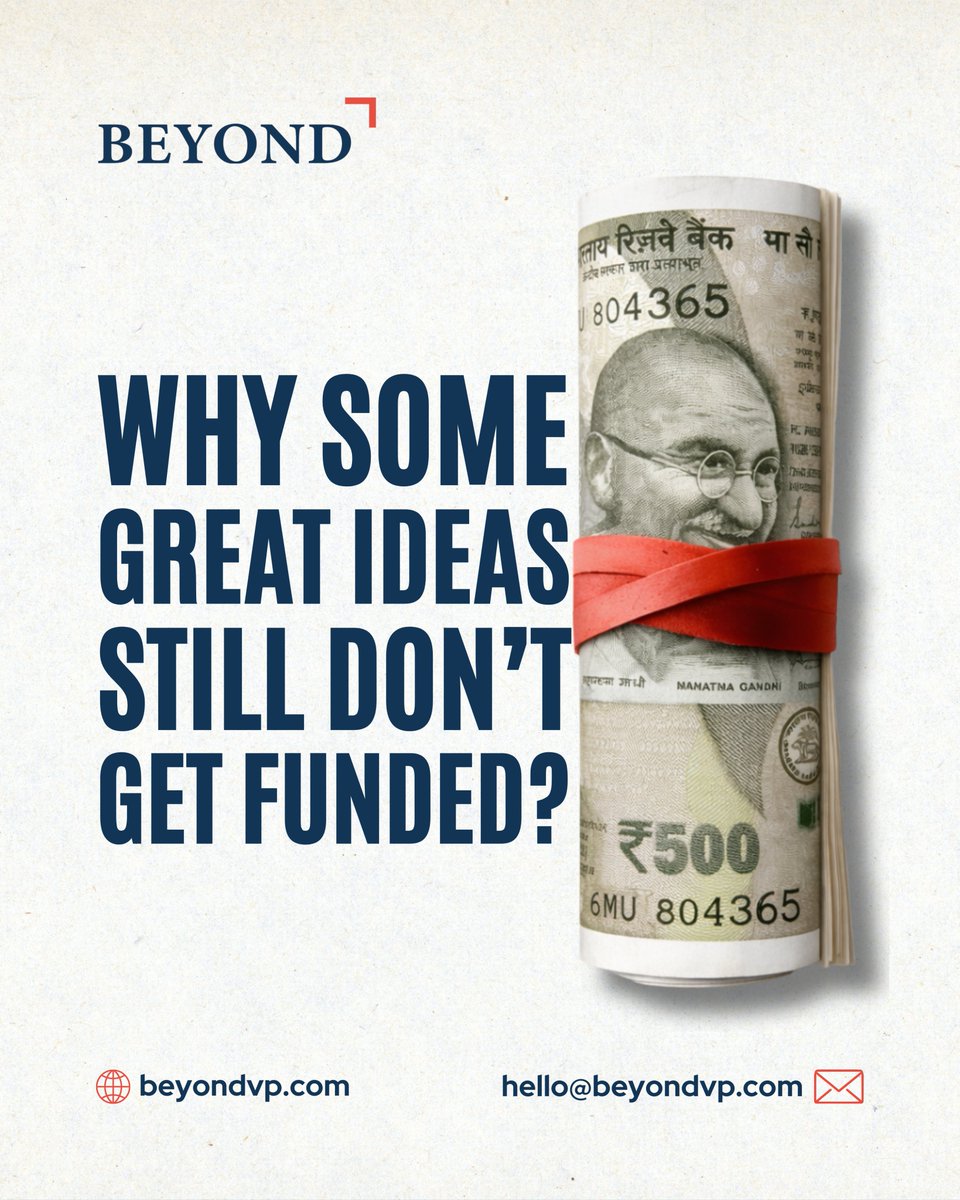
Great ideas don’t get funded by default. They don’t get funded when the business isn’t clear. Investors fund clarity — who it’s for, what problem it solves, and how it makes money. If it’s not obvious, it’s a no.
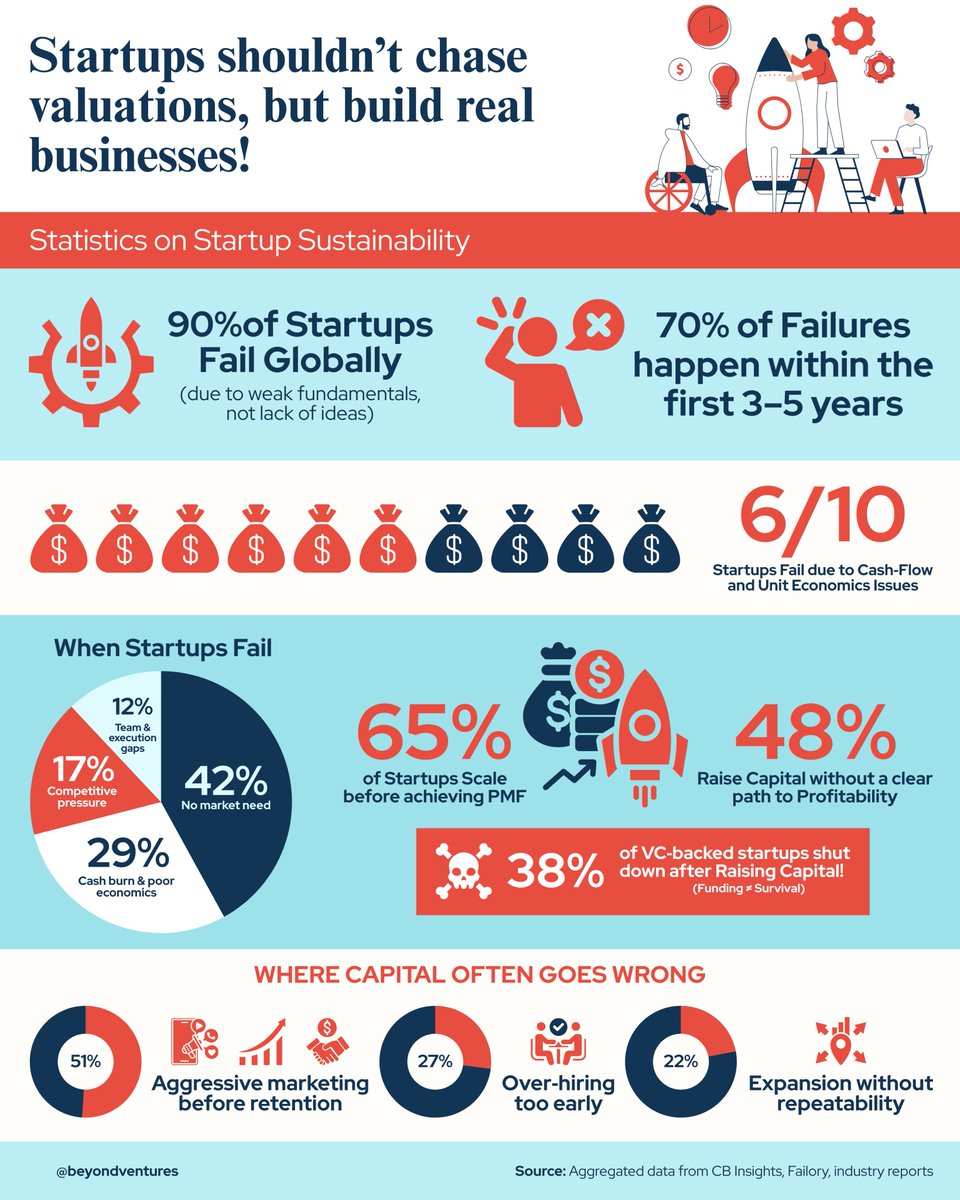
Most startups don’t fail from bad ideas. They fail from weak fundamentals. Capital doesn’t fix that. It amplifies it. Valuation is an outcome. Sustainability is the work.

Aarushi Satnalika @Aarushihihi
358 Followers 3K Following Personal diary with read-only access to everyone
Palak @Palakk_shahh
0 Followers 5 Following
Ayush Yadav @ayushyrbl
69 Followers 393 Following Founder - School Shooting Premier League #SHOOTINGINDIA🇮🇳 Proud Indian #SG11💭
Prem Sudheer @Premsudheer_
94 Followers 7K Following
Grace @kateygraceyi
175 Followers 4K Following Building a legacy of love and compassion. Leaving a positive impact on the world for generations to enjoy and thrive.
JAHNAVI B K @Jahnavi_BK
1 Followers 21 Following

Akshay Shah - Founder... @AkshayiWeb
6K Followers 6K Following We digitise universities (1M+ students, 900+ campuses) & build consent‑first AI credit scoring for the GenZ: https://t.co/ubcEhPAKfH @OrbitVenturesVC
Diwakar Chakravorty @diwakarcha
18 Followers 176 Following Investment Banking at Beyond Venture Partners (https://t.co/80eof5221O)
Tehseen Poonawalla Of... @tehseenp
246K Followers 18K Following Venture Capitalist •Political Analyst & Consultant • Atheist•
Ted Leonsis @TedLeonsis
63K Followers 951 Following Entrepreneur, Philanthropist, Venture Capitalist | Sports Team, Venue, Media Network Owner | WNBA Champion | Stanley Cup Champion | 2x NBA 2K League Champion
Business Insider @BusinessInsider
4.4M Followers 434 Following What you want to know about business. Love Business Insider? Add us as a preferred source on Google.
Harvard Business Revi... @HarvardBiz
5.5M Followers 195 Following The best ideas in business and management to help people, organizations, and economies work better.
Business Today @business_today
1.2M Followers 406 Following News, analysis & immersives from #BTMultiverse. Online I On Stands I On Air| Follow https://t.co/FJaEakFf2p
Bloomberg @business
10.5M Followers 104 Following The first word in business news | Watch Live: https://t.co/nHEpHOzHqv | Newsletters: https://t.co/nWaCxHSKuU | Podcasts: https://t.co/096e9xMbPz
IndiaToday @IndiaToday
6.3M Followers 83 Following Brings you news breaks: Exclusive political, entertainment, sports insight, unbiased-nonaligned. https://t.co/4QkZBcghRx| https://t.co/pmDGIBaLk1
The Times Of India @timesofindia
13.9M Followers 194 Following News. Views. Analysis. Conversations. Stay informed, stay ahead – Download the TOI app today https://t.co/ogFaRsUKyn
StarTalk @StarTalkRadio
233K Followers 2K Following Science, pop culture & comedy collide on StarTalk with @neiltyson. Keep looking up!
AWS Startups @AWSstartups
266K Followers 67 Following Get started, scale up. For founders and everyone in the build.
Google for Startups @GoogleStartups
256K Followers 1K Following Connecting startups to the Google people, products, and best practices they need to grow.
Startup Grind @StartupGrind
497K Followers 1K Following The leading community for people building, working with and investing in startups.
Startup India @startupindia
738K Followers 51 Following Startup India is GoI's initiative to build a strong ecosystem for entrepreneurship and innovation.


Anna Barber @annawbarber
6K Followers 3K Following coach, board member, investor, operator. Reader, New Yorker, Yalie, friend of Bill, mom.
Diwakar Chakravorty @diwakarcha
18 Followers 176 Following Investment Banking at Beyond Venture Partners (https://t.co/80eof5221O)
Business Standard @bsindia
2.2M Followers 493 Following Latest news on the economy, companies, markets, politics and technology from India's leading business daily. WhatsApp link: https://t.co/dOfKBRvS8s
Bill Gates @BillGates
65.2M Followers 573 Following Sharing things I'm learning through my foundation work and other interests.

Moneycontrol @moneycontrolcom
1.5M Followers 261 Following Sign up for #MCPro for the most useful insights on markets, companies, and the economy. https://t.co/wm1FjFCCPR
Economic Times @EconomicTimes
4.3M Followers 47 Following The Economic Times (Official) India's No. 1 Destination for Business News, Economy and Politics | A Times Internet Product 📧:[email protected]
BSE Corporate News @BSE_News
31K Followers 0 Following Bombay Stock Exchange is one of India’s leading exchange groups and has played a pre-eminent role in the development of the Indian capital market.

CNBC-TV18 @CNBCTV18Live
1.4M Followers 532 Following The CNBC-TV18 news ticker on Twitter. The news breaks here first. WhatsApp: https://t.co/7R212M4izlYou might like