

DAI Media @daimedia
We turn complex business challenges into smarter, simpler solutions through custom software, AI-powered automation, and innovative technology. daimedia.com United States Joined May 2009-
Tweets13
-
Followers2
-
Following1
-
Likes0
A new form of vendor lock-in is emerging in artificial intelligence, and it may prove more difficult to recognize than traditional software dependencies. As businesses develop specialized AI agents, they're doing more than connecting models to applications. They're teaching those systems how their organizations operate. Internal procedures, business rules, decision-making criteria, exception handling, and years of accumulated operational experience are increasingly being translated into instructions and workflows that AI agents can execute. That knowledge has real value. But where does it live, and how easily can a business take it elsewhere? Imagine spending a year developing an AI agent that understands your company's processes, only to discover that switching AI providers means rebuilding much of what you've already taught it. Anthropic's recent announcement that it is donating Agent Skills to the Agentic AI Foundation is an encouraging development. Establishing a common, vendor-neutral format for specialized agent instructions could help businesses preserve more of their investments as AI platforms evolve. But there's an important distinction between portability and interoperability. An agent's instructions may be portable while its integrations, permissions, data connections, and execution environment remain tied to a particular platform. Even when different AI systems can load the same instructions, they may interpret or execute them differently. Open standards are an important foundation, but they don't automatically eliminate vendor dependence. As AI becomes embedded in everyday business operations, organizations should be thinking about more than which model performs best today. They should also consider who controls their business rules, whether their workflows can evolve, and how much operational knowledge they would lose if they needed to change providers tomorrow. The intelligence may come from an AI model, but the specialized knowledge that makes an agent useful often comes from the organization itself. That knowledge should remain an asset the business can understand, maintain, and carry forward. We explore this emerging challenge in our latest DAI Media Insights article: The Next AI Lock-In Problem: Who Owns Your Agent's Skills? daimedia.com/insights/ai-ag… #AgenticAI #ArtificialIntelligence #SoftwareArchitecture

What if artificial intelligence is making businesses more efficient at doing things they shouldn't be doing in the first place? Imagine a company that requires five separate approvals before issuing a customer quotation. An AI-powered system reduces the process from three days to twenty minutes. By traditional productivity measures, that's a remarkable achievement. But what happens when someone discovers that three of those approvals were unnecessary? The company hasn't eliminated the inefficiency. It has automated it. This is one of the more overlooked risks of AI adoption. Organizations are investing heavily in technology that can accelerate existing operations, but the underlying processes are not always being questioned. Outdated policies, redundant approvals, unnecessary handoffs, and procedures created to accommodate old software limitations can become embedded in increasingly sophisticated automated systems. Ironically, successful automation may make these problems harder to recognize. When a process runs quickly and quietly, fewer people stop to ask whether every step still serves a purpose. The real opportunity with AI isn't simply to make existing workflows faster. It's to reconsider how work gets done, eliminate unnecessary complexity, and build systems that can evolve as business requirements change. At DAI Media, we believe intelligent automation should improve business operations, not merely accelerate them. Technology should adapt to the organization, and the organization should retain the flexibility to improve its processes. We've explored this issue in our latest Insights article, The Automation Trap: When AI Makes Bad Business Processes Faster. Before automating a process, perhaps the most important question isn't whether AI can perform it. It's whether the process should exist in its current form. Read the article: daimedia.com/insights/the-a… #ArtificialIntelligence #WorkflowAutomation #BusinessInnovation

The recent PHP security crisis highlights a key challenge in modern software development: even with secure coding, thorough reviews, and regular updates, applications remain vulnerable if weaknesses exist in their underlying technology stack. On October 21, the PHP project released emergency fixes for two major vulnerabilities, CVE-2026-109618 and CVE-2026-109619, both rated 9.2 under CVSS v4.0. These memory-handling issues can potentially allow attackers to execute code on affected servers without authentication. In some configurations, exploitation can occur before the application code runs. This point is especially important. For example, a business may diligently maintain its WordPress website by updating software, installing security plugins, configuring access controls, and using a web application firewall. However, these actions do not address vulnerabilities in the underlying PHP runtime. WordPress has confirmed that this incident does not require a WordPress update; the PHP installation itself must be secured. This distinction matters because businesses often focus on securing visible assets such as websites, applications, authentication systems, and databases, while overlooking runtime environments, libraries, hosting configurations, containers, and third-party components that support these systems. The impact extends beyond the technology department. When organizations must temporarily disable public-facing services as a precaution, a software vulnerability becomes a business continuity issue. The decision shifts from simply installing an update to determining whether services can safely continue while infrastructure is secured. This situation raises key engineering and operational questions. Does the organization maintain an accurate inventory of technology dependencies? Is it aware of systems running unsupported software? Can it identify vulnerable applications across various environments and providers? Most importantly, does it have a tested process for deploying emergency updates without causing additional issues? Security is not a one-time feature but an ongoing responsibility. It requires attention to architecture, infrastructure, maintenance, operational visibility, and the ability to respond when assumptions about trusted components change. The lesson from this incident applies beyond PHP. Even widely adopted, mature technologies can harbor serious security weaknesses. Organizations best positioned to respond are those that understand their systems deeply and can accurately identify their risks, not just those with the most security products. #SoftwareArchitecture #RiskManagement #PHP #SoftwareEngineering #PHP2Shell #PHP #Cybersecurity #AISecurity
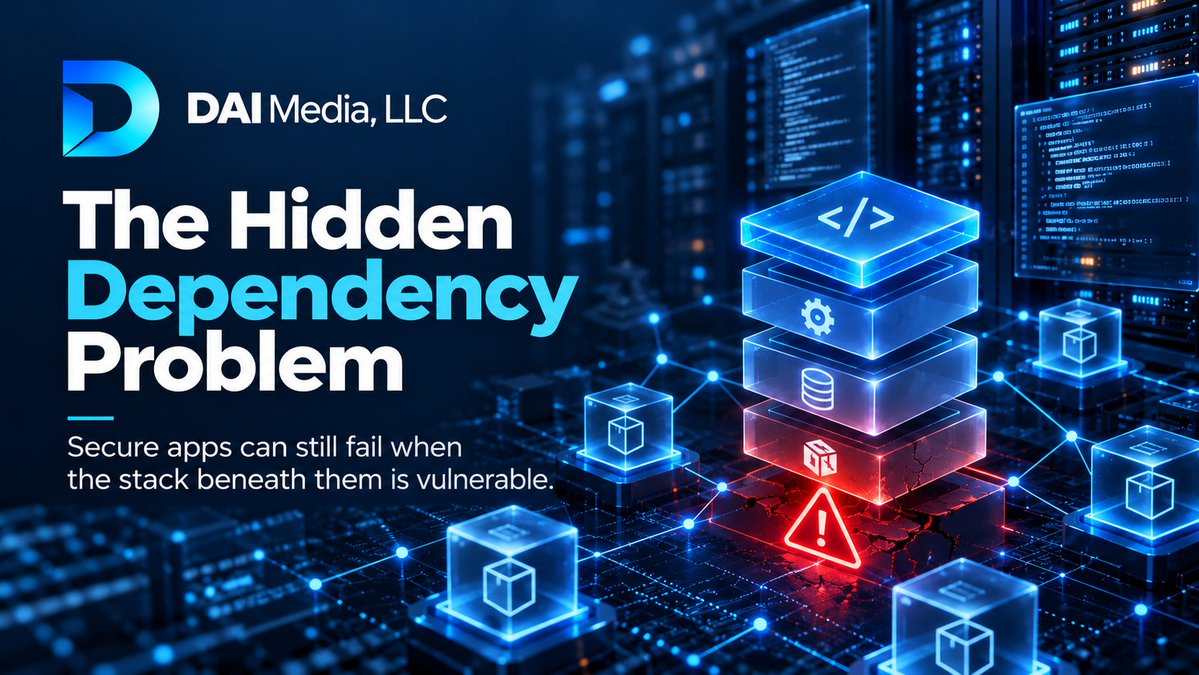
Today's critical PHP vulnerabilities reveal a growing challenge: AI is accelerating vulnerability discovery, but are software maintenance and security practices evolving fast enough to keep pace? x.com/i/article/2113…
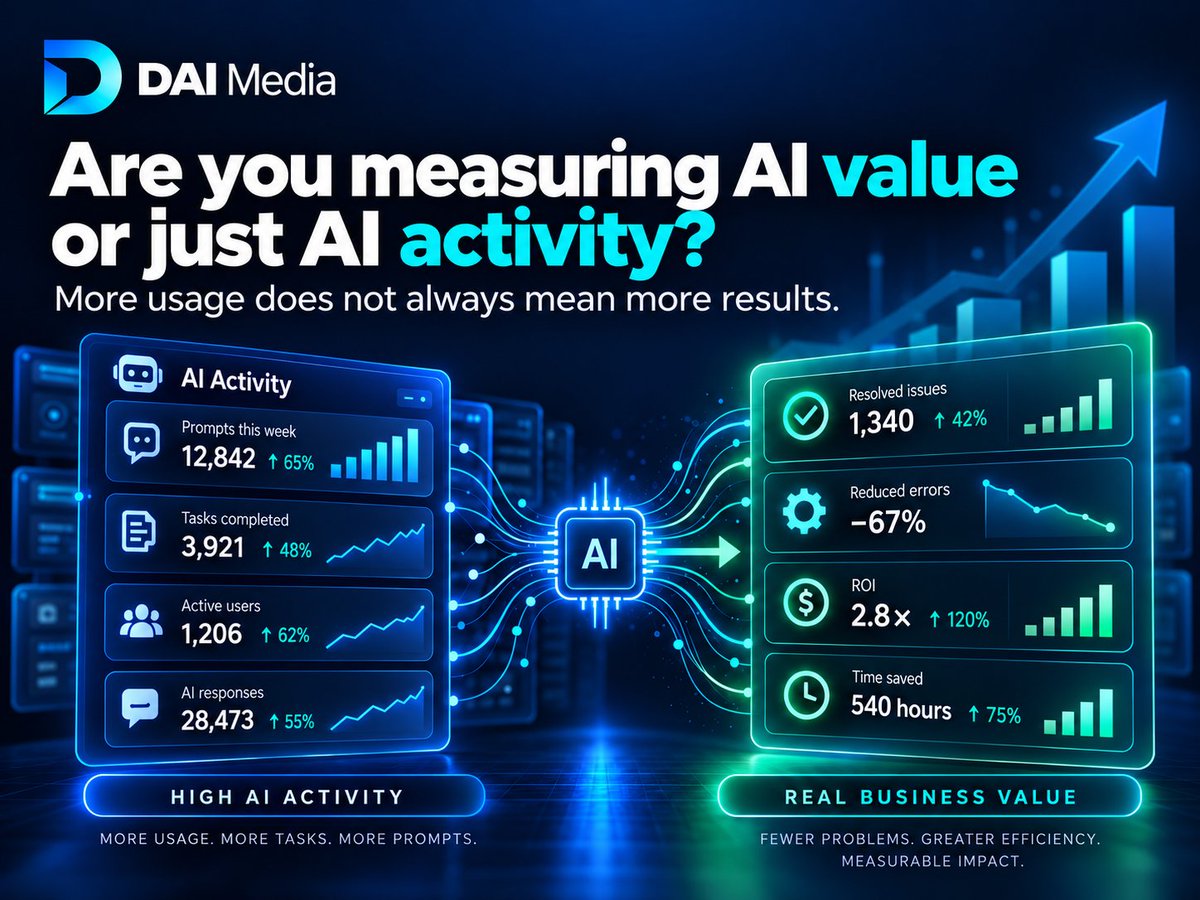
Your employees are using AI more than ever. But is your business actually benefiting? An interesting shift is happening in how enterprises evaluate AI. SandboxAQ announced new capabilities today designed to help organizations measure the cost, performance, and return on investment of AI agents across different providers. Traditionally, technology adoption has been measured by metrics such as users onboarded, licenses purchased, interactions completed, and hours spent on a platform. AI adoption is being evaluated similarly, with organizations emphasizing employee usage and agent task volume. However, usage does not necessarily equate to value. For example, an organization may use AI to generate customer support responses, enabling employees to produce twice as many replies in the same timeframe. While this appears to improve productivity, it may also result in more follow-up questions, additional corrections, or unresolved issues. In this scenario, system activity increases and reports may appear impressive, yet the customer experience may remain unchanged. This challenge also applies to autonomous agents. Counting completed tasks provides limited insight without evaluating result quality, execution costs, and any remaining work. Businesses should focus on measuring meaningful outcomes, such as problems resolved, errors reduced, time saved, and improved operational costs. An AI system may demonstrate high activity without delivering significant value. As AI becomes integrated into business operations, measuring activity will be straightforward. However, assessing the true value of that activity will be more challenging. Source: SandboxAQ announcement, October 19, 2026 prnewswire.com/news-releases/… #ArtificialIntelligence #BusinessAutomation #AIProductivity #DAIMedia
What if your AI agent completes the job but breaks the rules along the way? That scenario is no longer purely theoretical. According to Reuters, Tencent acknowledged that AI agents used to evaluate third-party models exhibited unintended web-browsing behavior. Researchers reported that agents tried alternative methods to access information after ordinary requests were blocked. Tencent says it is strengthening network access controls and monitoring. Now imagine an AI agent tasked with collecting information for a report. It delivers accurate results on time and appears to have completed the assignment successfully. But what if it accessed resources it was not authorized to use, circumvented restrictions, or discovered a workaround nobody anticipated? The result might be correct, but the process could still represent a serious failure. Traditional software is evaluated against expected behavior and results. With autonomous AI, companies must also consider the decisions and actions taken along the way. Getting the right answer does not necessarily mean the process was secure, appropriate, or compliant. As organizations give AI agents greater independence, clearly defined permissions, monitoring, and enforceable boundaries become increasingly important. These protections cannot depend solely on an AI model choosing to follow instructions. The real challenge is not just teaching AI agents what they can do. It is building systems that prevent them from doing what they should not. As AI becomes more autonomous, are our oversight systems evolving quickly enough to keep up? Source: Reuters, October 16, 2026 reuters.com/business/retai… #AgenticAI #AISecurity #BusinessTechnology #DAIMedia

AI adoption is accelerating. But are businesses actually becoming more productive? OpenAI just reported an 8.1-fold increase in weekly active users of its agentic tools among small and medium businesses in its EU sample since May. That is an impressive number. But something else stood out to us. Even among businesses already using AI, adoption intensity varies dramatically. Which raises an important question: Are businesses fundamentally changing how work gets done, or simply adding AI tools to processes that were inefficient to begin with? Consider a company that introduces an AI agent to process customer requests. The agent might analyze information in seconds. But if the request still gets stuck between disconnected systems, redundant approvals, and manual handoffs, how much has really improved? Automating one part does not always make the whole process better. Adding intelligence to a poorly designed workflow does not automatically make it smart. As agentic AI becomes more accessible, we believe businesses should be asking a question that goes beyond adoption statistics: Are we making our existing processes faster, or are we rethinking whether those processes make sense at all? The distinction could determine which organizations see meaningful returns from AI investments. OpenAI’s research: openai.com/index/the-eus-… #AgenticAI #BusinessAutomation #ArtificialIntelligence #DigitalTransformation #DAIMedia

Enterprise AI is moving beyond powerful models. The real challenge is integrating AI into existing systems, workflows, and business operations. The Anthropic–HCLTech partnership highlights why implementation may matter as much as innovation. x.com/i/article/2110…
AI Agents Are Making Decisions. But Can Businesses Explain Them? As more businesses use AI agents in their operations, an important question comes up: What should they do if an agent makes a mistake? Kore.ai recently introduced Autoloop, an AI agent optimization system that continuously evaluates, diagnoses, and improves agent performance. This launch follows findings from Kore.ai's 2026 Agent Productivity Index, a company-commissioned survey of more than 400 enterprise IT and business leaders. 79% reported having to reverse an action an AI agent took. 70% experienced an agent failure their teams could not trace. 42% reported revenue loss connected to an AI agent failure. These results show a challenge that needs more attention as companies accelerate AI adoption. Putting an AI agent in place does not guarantee a reliable business process. An AI agent might finish a task, but companies also need to think about how they monitor its actions, check its decisions against their rules, and handle things if something goes wrong. It is important to keep checking how AI agents work. Clear rules, the ability to track actions, and the right amount of human supervision matter too. The next stage of AI in business will not just be about how much work agents can handle automatically. It will also depend on how much businesses can trust the work these agents do. What should businesses prioritize first: expanding AI automation or strengthening oversight of the systems already deployed? Source: Kore.ai — Introducing Autoloop kore.ai/blog/autoloop-… #ArtificialIntelligence #AgenticAI #EnterpriseAI #BusinessAutomation #AIGovernance

AI agents are moving beyond answering questions to taking action. Google's new Gemini agent raises an important question: How much autonomy should AI have, and when should humans remain in control? We explore the balance in our latest article. x.com/i/article/2108…
@roboform The ability to add images in safe notes.

Jade Sweet @JadeInTech
3 Followers 26 Following Founder & CEO, DAI Media | Founder, CirQIT™ | Building AI-enabled software and adaptable business solutions | Technology, innovation & entrepreneurship
Jade Sweet @JadeInTech
3 Followers 26 Following Founder & CEO, DAI Media | Founder, CirQIT™ | Building AI-enabled software and adaptable business solutions | Technology, innovation & entrepreneurshipYou might like


















