

Everstack @everstackhq
Longevity supplements, graded A to D by the evidence. Cited, never hyped. everstackhealth.com/?utm_source=x&… Joined October 2026-
Tweets36
-
Followers0
-
Following17
-
Likes0
Dr. Scott Kanoski on @hubermanlab: cut very sweet foods and they start tasting too sweet. A 2016 trial backs the taste shift, but a 180-person, 6-month trial found liking for sweets did not change. Both studies: everstackhealth.com/en/university/…
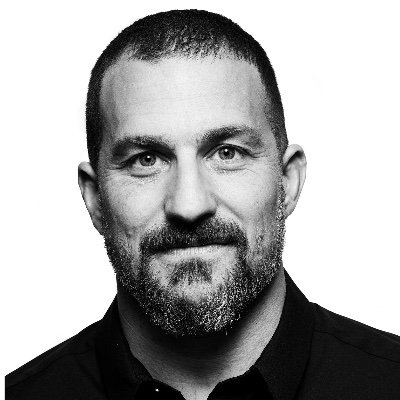
Avoiding very sweet foods eventually makes them taste too sweet and reduces sugar cravings Dr Scott Kanowski on the Huberman Lab podcast out now.
6/ Our take: test if you have a reason to run low, count every source toward the 4,000 IU adult upper limit, and retest after about 3 months at the same lab. Not medical advice. Limits, funding and DOIs: everstackhealth.com/en/science/vit…
5/ Daily beats big boluses. In a 25-trial analysis of immune outcomes, daily or weekly dosing helped and large one-off doses did not. People starting very low gained the most (Martineau 2017).
1/ Got a vitamin D result and not sure what it means? We read the guidelines and dose trials. The short version: under 30 nmol/L (12 ng/mL) is a deficiency risk, 50 nmol/L (20 ng/mL) or more is adequate for most people, and higher is not clearly better.
@bryan_johnson raises a fair point: DEXA counts water as lean mass, so short creatine trials can overstate muscle. The strength data still hold across many RCTs. Both sides, cited: everstackhealth.com/en/science/cre…
Creatine didn't build muscle or burn fat in this study. It was water retention. Exercise wasn't randomized. Participants chose whether to train. DEXA scans count water as "lean mass". Creatine hydrated muscle cells. It didn't synthesize new contractile fibers. The drop in
6/ Full summary with every DOI: everstackhealth.com/en/science/que… Waitlist (no payment today): everstackhealth.com/en/products/qu…
5/ Interactions we list on the page: warfarin (case report), P-gp/fexofenadine (+55% exposure), CYP3A4 lab inhibition, quinolones (gyrase binding in lab). Ask a pharmacist if you take prescription drugs.
1/ We published a plain-English research summary on quercetin and inflammatory markers. Grade C. Our claim is structure/function only: supports a healthy inflammatory response. It is not meant to diagnose or treat any condition.
Big observational signal from @foundmyfitness: heavier coffee drinkers carried less visceral fat and more lean mass. Observational, so it shows association, not cause. Our cited visceral fat explainer covers what trials show actually moves it: everstackhealth.com/en/university/…
People who drank more coffee had less body fat, less visceral fat, and more lean mass than less-frequent or non-drinkers. The biggest benefit was seen at 5 or more cups per day. And for men, every extra cup per day was associated with a ~10 ng/dL higher total testosterone.

Read it, including limits and what it does not mean: everstackhealth.com/en/science/ber… Sources include Dong 2012, Lan 2015, Lee 2006, Yin 2008, Guo 2012 (DOIs on the page). 2/2
We published a plain-English research summary on berberine and glucose metabolism. Grade C, on purpose: meta-analyses show a metabolic signal, but most trials were small and low quality. Drug-interaction risk is real (CYP enzymes). 1/2
@foundmyfitness The dose comparison is the most useful part: one cup improved FMD where half a cup or placebo did not. The gain came from adults with metabolic syndrome over six months, so it is a signal for that group, not yet proof for healthy adults.
@davidasinclair Worth reading the HRT part closely: the paper says the step at the final period looks markedly attenuated in women on hormone therapy. That is an association in cross-sectional lab data, not a trial showing delayed change.
Health Affairs @Health_Affairs
163K Followers 4K Following Health Affairs Publishing delivers rigorous, nonpartisan research and analysis to improve health and health care. Follows/Tweets/RTs ≠ endorsements.
Nature Medicine @NatureMedicine
359K Followers 256 Following Nature Medicine is a research journal devoted to publishing the latest advances in translational and clinical research for scientists and physicians.
Bryan Johnson @bryan_johnson
2.2M Followers 681 Following Founder Immortals, Blueprint, Kernel, Braintree Venmo. Conquering death will be humanity’s greatest achievement.
David Sinclair @davidasinclair
666K Followers 1K Following Professor researching why we age & how to reverse it. Author & host of Lifespan. Mission: Extend healthy life for all. Views are entirely his own. @joinlifespan
Peter Attia @PeterAttiaMD
663K Followers 136 Following
Dr. Rhonda Patrick @foundmyfitness
1.9M Followers 227 Following Ph.D in biomedical science interested in nutrition, brain & aging. Host of FoundMyFitness podcast https://t.co/rirQwqebxL
Brad Schoenfeld, PhD @BradSchoenfeld
99K Followers 50 Following Researcher/educator on muscle building and fat loss. Author: "The MAX Muscle Plan" & "Science and Development of Muscle Hypertrophy." https://t.co/ye3quvBlEy
Eric Topol @EricTopol
831K Followers 687 Following physician-scientist, author of SUPER AGERS https://t.co/ZEdooyyJpP and Ground Truths: https://t.co/YhatcBT0hA
JAMA @JAMA_current
495K Followers 440 Following JAMA is an international peer-reviewed general medical journal published weekly online and in print, and a member of the @JAMANetwork family of journals.
The Lancet @TheLancet
766K Followers 456 Following Welcome to The Lancet, one of the world’s leading medical journals, published weekly since 1823.
NEJM @NEJM
1.0M Followers 432 Following The New England Journal of Medicine is the world’s leading medical journal and website.
The BMJ @bmj_latest
486K Followers 6K Following The BMJ is patient centred, evidence based, and independent. Help us improve the health of our world with the best science, journalism, education, and comment
ConsumerLab.com @ConsumerLab
5K Followers 82 Following https://t.co/fxGHAfZrSf reports on the quality of health and nutrition products.
USP @USPharmacopeia
13K Followers 2K Following Independent, scientific, non-profit improving #PublicHealth by setting standards for meds, food ingredients & dietary supplements. Retweets not endorsements.
NIH @NIH
1.7M Followers 212 Following Official account of the National Institutes of Health. NIH...Turning Discovery Into Health®. Privacy Policy: https://t.co/wOGwZ3gX1M Engagement ≠ endorsement
NIH ODS @NIH_ODS
16K Followers 2K Following Official account of the @NIH Office of Dietary Supplements. Strengthening knowledge & understanding of dietary supplements. https://t.co/GbxqHsWrhd
Examine.com @Examinecom
30K Followers 15 Following Examine analyzes and summarizes the latest scientific research to help you be healthier.You might like


















