Andreas Polymitis @polymitis
Author of ΒΑΣΙΛΕΥΣ and the Belisarius books, Strategos and Martys Contact: [email protected] mybook.to/Basileus Joined August 2026-
Tweets45
-
Followers36
-
Following95
-
Likes112
5 October 610. Herakleios was crowned and married on the same day. #BASILEUS #graphicnovel

@JoeGayHistorian Nice to see the Dewing wording, royalty and not purple. That speech comes to us from Procopius, the same man who tore her apart in the Secret History. Even he gave her the best line.

@nonregemesse Without Theodora's speech it might have ended the other way. Her line usually gets quoted as purple, but in Dewing's Procopius it's royalty that makes a good burial shroud. I think it's the better line.
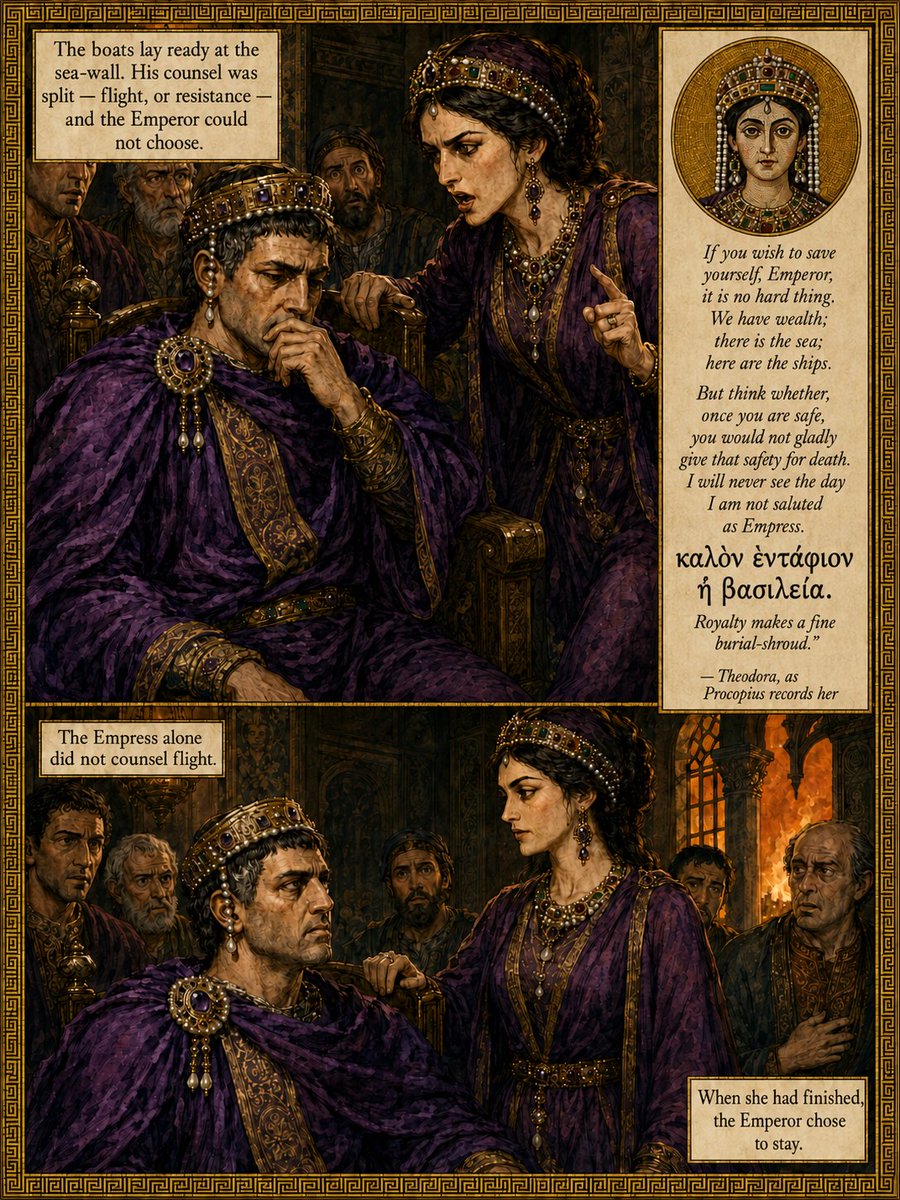
October 610. A fleet from Carthage came in sight of Constantinople. The son of the governor of Africa had come for the throne. #BASILEUS #Byzantine

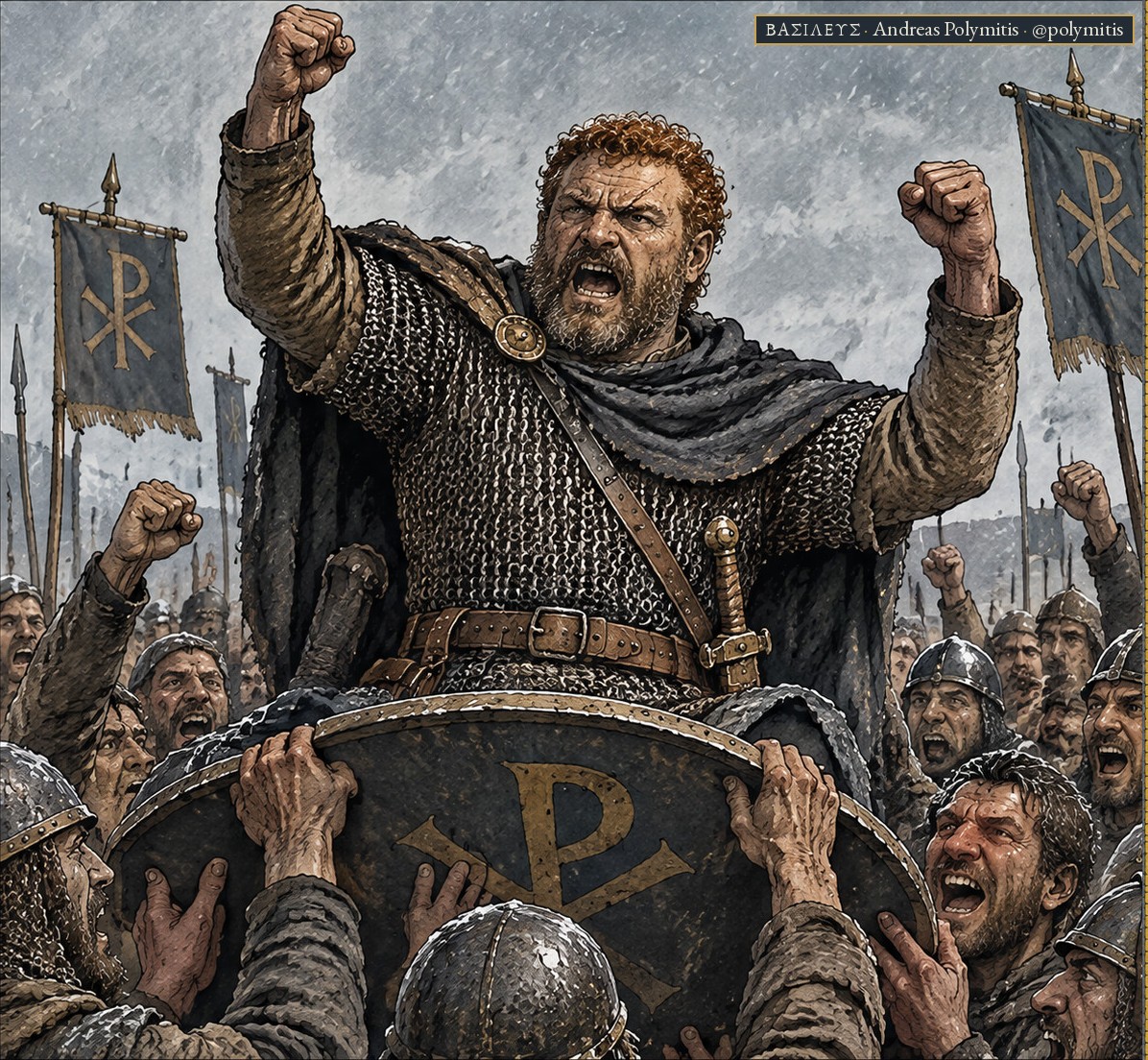
ΒΑΣΙΛΕΥΣ, a graphic novel. Herakleios against the King of Kings, 602 to 628. Book one of ΒΑΣΙΛΕΙΑ, out now in paperback and Kindle. #BASILEUS #graphicnovel mybook.to/Basileus

@DrMichaelBonner Even the war of 602 began inside that frame. When the Danube army raised Phokas and killed Maurikios's sons before his eyes at Chalcedon, then him, Khosrow went to war as the avenger of a Roman emperor.

@JohnTzimiskes97 @DaringAmerican2 In his prime Heraclius took the war into Persia itself. In 624 he destroyed Adur Gushnasp, the coronation fire of the Persian kings. At Nineveh in 627, Theophanes says he killed three champions himself.
@SacredBasileus It was a loan, which is why they wanted it back. In 622 the Church lent its gold and silver plate to pay the army, and Heraclius left the city on Easter Monday.
@RomanMemeSquad @ArysPan @grok Another version
Rome did not fall. It moved East. And it sent one general to take the West back. ΣΤΡΑΤΗΓΟΣ, the life of Belisarius as a graphic novel. Volume 1 trailer. mybook.to/Strategos
@EvgeniosTzav Τραγουδάρα. Ταινιάρα.
@TheLittleG1 @alphabohr @EvgeniosTzav Και με τον θετό γιο τους τον κεράτωνε, το έμαθε ο άλλος και αρρώστησε. Εδώ μόνο αλήθειες.
@elonmusk @GrecianGirly Fixed the missing New Roman Empire, aka Byzantium
The missing part of the New Roman Empire, aka Byzantium. Middle Ages was full of light in Constantinople.
@IterIntellectus Fixed the missing part: the New Roman Empire, also known as Byzantium
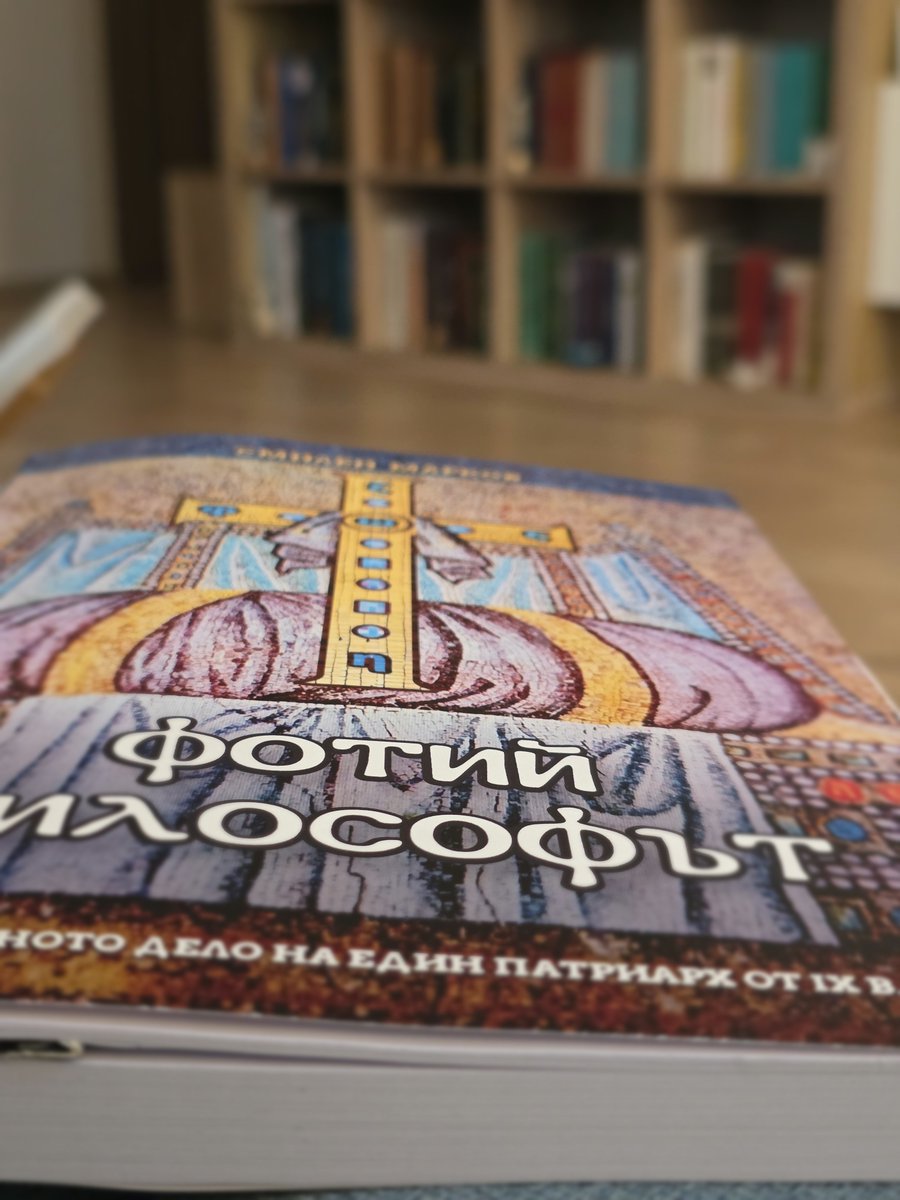
The Byzantine Lexicon of Photios There are books written to be read, and there are books written because other books have already become difficult to read. In the ninth century, Patriarch Photios of Constantinople apparently decided that the second problem was serious enough and compiled his Λέξεων Συναγωγή, “Collection of Words,” known today simply as the Lexicon of Photios. I like the idea even before reaching the first word: one of the most learned Byzantines discovers that the ancient Greeks are already speaking Greek ancient enough even for Greeks, and someone has to explain what exactly they meant. Photios lived during a remarkable period of intellectual revival in Byzantium and knew both classical Greek literature and Christian authors extraordinarily well. His Lexicon was intended to help readers understand older texts whose words, expressions and meanings were no longer natural even to educated Byzantines. In his preface, Photios explains that he collected difficult words from orators, historians and theological writings, drawing also upon earlier lexicographical traditions. In other words, by the ninth century one could be Greek-speaking, highly educated, live in Constantinople and still open an ancient author with approximately the same feeling with which we sometimes open a legal contract: the words look familiar, but you suspect that somewhere among them something is happening that you do not understand. And this is precisely where the Lexicon ceases to be merely a dictionary. Because Photios and his sources do not simply explain rare words. They quote authors, and some of the works from which those quotations were taken subsequently disappeared. Thus a book intended to help a Byzantine understand an old text became, centuries later, a place where sometimes a fragment of the lost text itself survived. For modern classical philologists, the Lexicon is valuable precisely because it preserves information and fragments from ancient literature that otherwise has not reached us. Then the history of the Lexicon itself begins to look suspiciously like a story Photios ought to have included under the word “irony.” For a long time the text was known mainly through the badly damaged Codex Galeanus, today in Trinity College, Cambridge, a manuscript from approximately the eleventh or twelfth century from which enormous sections are missing. Scholars including Scaliger, Casaubon, Bentley and Porson worked with this textual tradition, and an important nineteenth-century edition was based upon it. And then came 1959. The Greek scholar Linos Politis was working with manuscripts at the monastery of Zavorda in Western Macedonia when he discovered Codex Zavordensis 95, a thirteenth or fourteenth-century manuscript containing practically the entire Lexicon, from alpha to omega. A text that European philology had spent centuries reconstructing from mutilated witnesses had been sitting in a Greek monastery waiting for someone to open the right codex. Better still, the newly discovered manuscript also preserved previously unknown fragments of ancient works. This is why I love books like this from Byzantium. They destroy the convenient idea that between Antiquity and us lies some empty corridor through which classical literature simply passed unharmed. Nothing passed “simply.” Someone read, copied, compared, explained an incomprehensible word, preserved a quotation, corrected another copyist and sometimes, without having the slightest idea, saved three lines from a book that would disappear after him. Photios wanted to help his contemporaries understand old words. More than a thousand years later, his old words help us understand what we have lost. Which is quite an impressive career for a dictionary.

global_goals_foundati... @globalgoals234
22 Followers 62 Following •Every person living with disability,orphan and the homeless deserves hope,food,clothes and Let’s make the world a better place click to Donate and support 👇

grug greek roman dev @grugdevgrecrom
80 Followers 368 Following
Φίλιππος @retsinokinitoc
2K Followers 1K Following Greece is in my heart! #HagiaSophia is a Church! (don’t you know that mr Putin?)
Άχθος Αρούρ... @axgrigo
77 Followers 282 Following Ειδικός των Ψυχών τε και των Σωμάτων(κυρίως)... Δρομέας μεγάλων αποστάσεων...
AlliesMatter @user140230
1K Followers 2K Following Geopolitics, power, and consequences. Ideology doesn’t negotiate. 🇺🇸 Pro-America | 🇮🇱 Pro-Israel | 🇬🇷 Pro-Greek Alliances matter.
Бегущая чуд... @belovodye_chud
275 Followers 585 Following Tweets in English, Russian and Finnish. Finn with Russian and Italian descent. Perspectives mainly on Finno-Ugric and Slavic matters. Orthodox Christian ☦️
Hinxton House @HinxtonHouse
319 Followers 700 Following Κατάντια: Εν έτη 2026 υπάρχουν ακόμα νοσταλγοί του Τσαουσεσκου του Λένιν και της Σταζι....
Beit🌐TheBest @BEITWORLDWIDE
602 Followers 2K Following Architect Progenitor HumanAi Family evolution 1st family +1SGI Agent TheSTORYmyStory Beit🌐TheBest Artist Digital Consulting ,Promoting Creators/Influencers
100X ALPHA @Armaan_78612
25K Followers 2K Following Hunting 10-100X Gems Before They Pump 🚀 Daily Alpha Calls | DYOR - NFA 📩 DM for promos
Natalie Cole @iNatalieCole
721K Followers 8K Following ₿ Bitcoin Devotee | Web3 Growth & Brand Strategy | Crypto Native | Digital Storyteller ✦ Partnerships & Collaborations: DM 💌
Çağrı Koşak @cagrikosak
1K Followers 2K Following International Relations / Uluslararası İlişkiler @istanbuledutr MA @sehiruniversite PhD @marmaraunv Ortadoğu Habercisi - Middle East Reporter
Nikiforos B @Nikiforos_F
27 Followers 298 Following
Jason Crypto @1YA50
29K Followers 19K Following Crypto Influencer & Promoter | NFA - DYOR | Investor in #BTC #BNB #ETH #SOL #MEMECOINS | DM for Business📩⠀⠀
M.ΔGΠIҒICΣΠT @stedanjun
1K Followers 4K Following Left-handed | Music addict | Die-hard Barçelona fan 💙♥️ | Art enthusiast🎨| Kumasi Asante Kotoko 💚🖤💛
Bisma Akram @bisma_akram16
44 Followers 456 Following Alum@kemuofficial | Intern@Mayo Hospital Lahore
SPIRITUAL AWAKENING @SPIRITUALAe6xd
322 Followers 7K Following ✨Our mission is to help mankind achieve their goals, find solutions, and manifest their destiny.👁️ ☀️Spirit | Knowledge💡
ioanna @imentzos
51 Followers 110 Following Branding, marketing, acting, mime, photography, zumba...among others.
Matt Kenyon @mattkenyon
444 Followers 2K Following yikes.. who put this shirt on me? I'm not a Trekkie.. this shirt better not be red... Founder / Builder / Hacker / Poet Married. Here for the town square.
Olga Zhgirovskaya (he... @helgarisol
53 Followers 190 Following ai music video creator, digital artist https://t.co/TwcL5KOhsi https://t.co/CFmYIUwmJN inquiries: [email protected]

Alexios Athanasiadis @Alexios_Ath
21 Followers 103 Following
VAGIBI CAPITAL @VAGIBICapital
18K Followers 13K Following Builder Community - Hidengem - Airdrop - Web3 Gaming & NFT
ShadowPro @Shadow__Pro
648 Followers 4K Following
Crusader Sentinel @crusadersen
4K Followers 4K Following Motion. Scale. Perceptual drift. Grok Imagine × Midjourney. Coffee Dreams / Coffee Pass.

Mike Wang @mikewang1991
1K Followers 3K Following Building the production layer for AI video — not another generator.
Renaissance Man Art &... @Argonaut1535
4K Followers 4K Following 📌I Post About History, Art, Arms, & Armor w/ a focus on Medieval/Renaissance History & Artifacts 📌Original Artwork & Projects
The illuminati @Theillumin64601
383 Followers 7K Following THE ILLUMINATI OFFICIAL ACCOUNT. FOLLOW THE LIGHT. Want to Join The Illuminati? Wait for the signal. HAIL THE LIGHT🔺👁️💡
Anna Ve @annabella41272
2K Followers 3K Following Syrian Greek Orthodox ☀️☦️🇬🇷 ☦ 🇷🇺 🇸🇾 🇱🇧 🇷🇸 🇬🇷 🇨🇾 🇦🇲 ☦ Ρωμιά 🌿
LaM @Lampros
2K Followers 3K Following
Evgenios Tzavaras �... @EvgeniosTzav
10K Followers 4K Following Οσο πιο εντονα & εξατομικευμενα σκανδαλιζεται καποιος απο γενικολογα καλαμπουρια που δημοσιευονται απο ψευδωνυμα τρολς στο τουητερ➡τοσο πιο καραγκιοζης ειναι💙
Rafail Kaliviotis @rkaliviotis
4K Followers 2K Following -Editor-in-Chief at https://t.co/DhGE2mJovO -Founder of Gr Concervative Net -Geopolitics PhD Cand -Podcast producer @ right2thebone -Geopolitical Analyst @ Estia&Dimokratia

Constantinos Tsakiris @Constantin54584
784 Followers 3K Following Fater of 4, Greek patriot, shipowner, multi-lingual, a bit dyslexic, football crazy.

Thevoguewriters @thevoguewriters
126K Followers 31 Following feature- Writers / poets / books/ comics /authors . #mentalhealth Dm us for copyright © issue. Dm us for Ad/promotion
☧ Eastern Roman ☧ @RomanMemeSquad
2K Followers 140 Following All about the history of Eastern Rome 🏺🏛️
Geo Pfl @geo_pfl
910 Followers 461 Following
Φίλιππος @retsinokinitoc
2K Followers 1K Following Greece is in my heart! #HagiaSophia is a Church! (don’t you know that mr Putin?)
Yunfan Ye @realYunfanYe
2K Followers 188 Following Building @RomeAILab, Ex @Google, @Meta, @yutori_ai AI Research | Angel Investor Repo: https://t.co/GjVER12ZkA
anabology @anabology
89K Followers 1K Following co-founder https://t.co/6WejBPTCn7 (bioelectricity; at-home MRI) // https://t.co/j5dZ767ySN + https://t.co/TaekXhphbF // building Claudia: https://t.co/DlIhFS20Pv + Claudia Grok Bot: https://t.co/VcQYivvtOc
Jason Crypto @1YA50
29K Followers 19K Following Crypto Influencer & Promoter | NFA - DYOR | Investor in #BTC #BNB #ETH #SOL #MEMECOINS | DM for Business📩⠀⠀
Agesilaos Antik Sikke... @AntikSikkeler
539 Followers 95 Following Founder & Owner & Content Writer @agesilaws 💌 [email protected] https://t.co/UkF8IYbeNL
vittorio @IterIntellectus
252K Followers 2K Following practice expert “unique online personality” former TPOT thinker (exiled) professional shitpoaster @SpaceX don't take me seriously
Iva Apostolova @Pergament_F
31K Followers 32 Following || abl. abs. || Existence without syntactic dependence || Proclean peripatetic || Philosophy || Classical literature || Bibliophile ||
Antigone Journal @AntigoneJournal
38K Followers 47 Following An open forum for Classics—Ancient Greece, Rome, and their influence. Explore over 500 open-access articles on our website. **We pay £100-200 for new writing**
Meanwhile, in Byzanti... @SacredBasileus
111 Followers 42 Following Think Rome fell in 476? Think again. Real history from the East— betrayals, intrigues, and epic comebacks. Emperors speak. Dispatches from the Throne...
ioanna @imentzos
51 Followers 110 Following Branding, marketing, acting, mime, photography, zumba...among others.
Iván Fernández Amil @ivanfamil
177K Followers 305 Following Te ayudo a convertir ideas en hilos | Ingeniero de Historias | Únete a la mayor comunidad de Storytelling https://t.co/XqpdseCZCt | @la_SER | @elespanolcom
Alexios Athanasiadis @Alexios_Ath
21 Followers 103 Following

SP Historian @SPHistoriador
12K Followers 272 Following The past of the Greeks, Romans, Carthaginians and many other ancient peoples, by Sebastián Panatt, historian and writer. Newsletter in 🏴 & 🇪🇸
Constantinos M @HellenicDreamer
2K Followers 5K Following Economist with extensive experience in International Sales and Marketing
Thibault @Thibault1618
495 Followers 1K Following The Apprentice👷🏻♂️ Build your foundation🏗️ Un représentent de Φ. Player chess ♟️
J. Preiser-Kapeller @Byzanzforscher
5K Followers 4K Following Byzantinist/medievalist doing global and environmental history, complexity studies, network analysis. Farmer's son.
ShadowPro @Shadow__Pro
648 Followers 4K Following
Πέτρος Σαμα... @Takisiliou93458
2K Followers 931 Following Αντιαριστερός.Μακρυά οι εθνοκνίτες ουγκανά, αναβολικοκαμένοι, κΩματόσκυλα,ντιγκιτακιδες,ψωφοδεξιοί.αριστεροι-ναζι, σοσιαΛΗστες,φιλελενεοφιλελε,αντιχριστοι,άθεοι
Nikos Appelaios II @AppelaiosII
5K Followers 2K Following Ιστορία-Πολιτική-Άμυνα Ἱστορία φιλοσοφία ἐστὶ ἐκ παραδειγμάτων παιδεύουσα.
Crusader Sentinel @crusadersen
4K Followers 4K Following Motion. Scale. Perceptual drift. Grok Imagine × Midjourney. Coffee Dreams / Coffee Pass.
The Medieval Scholar @MedievalScholar
120K Followers 416 Following Telling stories of Medieval Europe. One thread at a time. Member of the Royal Historical Society. © Represented by @NorthbankTalent
Hellenic Echoes @HellenicEchoes
30K Followers 2K Following |☦︎| δομέστικος τῶν σχολῶν | Η Ρωμανία κι αν πέρασεν, ανθεί και φέρει κι άλλο!
LEO @leohuynh139
5K Followers 6K Following ⛓️Crypto investor & Web3 observer. 💻AI Creator | AI Automation | Software Engineering 🚀I build AI-driven tools for the next generation of creators.


Studies In Late Antiq... @StudLateAntiq
1K Followers 89 Following Studies in Late Antiquity (SLA) is a journal for innovation and reflection on global Late Antiquity (150-750 CE), published by @ucpress.
Luke Lavan @lateantiquity
221 Followers 21 Following This is the twitter page of Dr Luke Lavan (Univ Kent, UK), excavator of Late Antique Ostia and editor of Late Antique Archaeology
Oxford Centre for Lat... @OxLateAntiquity
299 Followers 51 Following Oxford Centre for Late Antiquity. https://t.co/5sbS9vym5o
Mary Jaharis Center @mjcbac
2K Followers 257 Following The Mary Jaharis Center for Byzantine Art and Culture at Hellenic College and Holy Cross Greek Orthodox School of Theology, Brookline, MA
North of Byzantium @NorthofByzance
2K Followers 120 Following North of Byzantium explores the rich medieval history, art, and culture of the northern frontiers of the Byzantine Empire in Eastern Europe.
Lines from Late Antiq... @FromByzantium
86 Followers 150 Following 'Search out the opinions of those who lived long ago, renowned for their wisdom, and read what they have said.' ~ Pope Nicholas I to Emperor Michael III (865AD)
Evgenios Tzavaras �... @EvgeniosTzav
10K Followers 4K Following Οσο πιο εντονα & εξατομικευμενα σκανδαλιζεται καποιος απο γενικολογα καλαμπουρια που δημοσιευονται απο ψευδωνυμα τρολς στο τουητερ➡τοσο πιο καραγκιοζης ειναι💙
David Parnell @byzantineprof
55K Followers 783 Following Historian of the Romans (including the Byzantine Empire). Author of Belisarius & Antonina. Professor @iunorthwest. Consulted for @EpicHistoryTV.
Robin Pierson @byzantiumcast
13K Followers 657 Following The man behind 'The History of Byzantium' podcast. The show tells the story of the Roman Empire from 476 AD to 1453.
Anna Ve @annabella41272
2K Followers 3K Following Syrian Greek Orthodox ☀️☦️🇬🇷 ☦ 🇷🇺 🇸🇾 🇱🇧 🇷🇸 🇬🇷 🇨🇾 🇦🇲 ☦ Ρωμιά 🌿
Homer Pavlos @HomerPavlos
78K Followers 336 Following Philosopher • Author • Lacedaemon • Spartan Email : [email protected]
The Old World Show @theoldworldshow
72K Followers 396 Following Welcome to The Old World, where we discuss the great men who made the Old World, from its swashbuckling colonial adventurers to its great families
Basil the Great @BasilTheGreat
361K Followers 5K Following --//-- Restore Britain --//-- DM for submissions/credit/deletion

plutarch @MichaelSchffer1
351 Followers 1K Following
Neoaegean 🇬🇷�... @neoaegean
1K Followers 1K Following Androgynous 20yo 💙🌈 | Greek modernist 🇬🇷🌊💜 | Perennialist ❤️🏛️ | Risqué 👙 | (Alt)history, worldbuilding, & gamedev 🏺🌍📚 | DM-friendly 💐
Leonard Joyner @LeonardMJoyner
4K Followers 2K Following Christian. Husband. Father. Conservative. Retired Army LTC (IN/MI). Combat Veteran (🇮🇶&🇦🇫). Believer in: non-violence, property rights, civility.
7.283 @SpatialPhysics
2K Followers 71 Following 🇺🇸 Author & publisher | minimal follows for feed relevance · Loquacious ape by day, laconic gorilla by night
Culture Explorer @CultureExploreX
261K Followers 1K Following Defending beauty. Preserving tradition. Exploring the art, history, and ideas that shape civilizations.
TheBlackWolf @thewolvenhour
57K Followers 641 Following I explore the glorious past to understand the future | Western history, war, mystery, philosophy & art | Descendant of Achaeans & Heracleides.Trends for United States
You might like