The State Policy Journal @TheStatePolicy
For global politics, economics & international affairs "𝐴𝓁𝓁 𝑖𝑠𝑠𝑢𝑒𝑠 𝑎𝑟𝑒 𝑝𝑜𝑙𝑖𝑡𝑖𝑐𝑎𝑙 𝑖𝑠𝑠𝑢𝑒𝑠". thespj.substack.com Joined July 2026-
Tweets198
-
Followers16
-
Following499
-
Likes133
@NewYorker’s account of Israel’s Qatargate scandal points to a form of foreign influence that doesn't require formal authority inside the state it's trying to affect. It requires access to people who already possess it, and a way to make privately generated messages appear to come from somewhere more authoritative. What the reporting documents is more specific than the claim that Qatar simply issued instructions inside Israel. The article documents Qatari financing of Perception and payments to lobbyist Jay Footlik. But when Footlik and Perception’s George Einhorn began to plan the campaign described in the article, the specific tactics of manufacturing stories and attributing them to senior U.S. officials are presented as the work of private intermediaries. Qatar’s government has denied the allegations. The evidence therefore supports a more limited proposition: foreign funding can create an influence channel without establishing that the foreign state directly authored every message carried through it. Access supplied the channel. Shaviv, the former Israeli official who advised Perception, described the firm as having been approached because of its access. Once that access existed, it became an asset that could be used to place claims inside networks where they might acquire the appearance of official knowledge. The campaign described by The New Yorker allegedly did this by presenting fabricated accounts as information from senior American officials, including a nonexistent meeting in Doha. The power didn't come from controlling those officials. It came from borrowing the credibility attached to them. Set beside Rubio’s case, the distinction becomes clearer. Rubio’s proximity to Trump is politically consequential precisely because its provenance is visible. When Rubio translates Trump’s position for officials, allies, or the bureaucracy, everyone understands whose signal he is carrying. In the Qatargate account, the alleged influence works in the opposite direction: a foreign-funded network uses local access to obscure the origin of a message while preserving the appearance of authoritative provenance. That changes the unit of analysis; the relevant asset isn't access alone, it’s access combined with attribution. A message becomes more powerful when the person receiving it can believe that it came from a source with institutional standing. The foreign sponsor doesn't need to exercise that authority directly if intermediaries can manufacture its appearance. Seen this way, the deeper strategic problem is one of provenance. Formal institutions can preserve their legal boundaries while their information environment is populated by messages whose real origin is difficult to see. The boundary between lobbying, political consulting, journalism, and foreign influence becomes harder to police when the decisive act isn't giving an order, but creating a credible impression about who has spoken. For an influence operation, the most consequential resource is therefore not command, it's the ability to borrow authority without visibly owning the message. Ultimately, the operation didn't need to own authority, it needed to borrow its appearance.

Washington has approved a possible $2.68 billion Foreign Military Sale to Ukraine for what the State Department calls Air Defense Development Upgrades. Read as a shopping list, the package is a large collection of missiles, radars, launchers, software, and support. Read as a system, it reveals something more important: modern air defense isn't an inventory of interceptors. It's the network that keeps them usable. The requested package includes S-300 clone missiles, GAM-67 missiles, range-extended air-defense laser-guided rocket systems, Improvised Transporter Erector Launcher 1.5, mobile launching-system modification kits, RPS 202 counter-UAS radars, mast trailers, spare parts, consumables, repair-and-return support, software, publications, transportation support, and U.S. Government and contractor engineering, technical, and logistics services. That list matters because each item solves a different part of the same problem. A missile without a launcher is stock. A launcher without a radar is limited. A radar without software, maintenance, spares, and repair capacity is a declining asset. The military value emerges only when the pieces remain connected long enough to keep generating interceptions. Its financing structure is equally revealing. Funding would come from European contributions and U.S. Foreign Military Financing appropriated during the prior administration. The State Department says that the U.S. FMF would count as a U.S. capital contribution to the Ukraine Reconstruction Investment Fund, with a 1:1 reimbursement. Security assistance is therefore being made part of a broader capital architecture rather than treated only as a recurring transfer of equipment. None of this means the package will immediately produce the capability described on paper. This’s a Congressional Notification for a possible Foreign Military Sale, not evidence that every item has been contracted, delivered, integrated, or made operational. The notice itself doesn't establish a delivery timetable, final quantities, or the resulting level of battlefield readiness. But its composition points to the real unit of analysis. What matters isn't how many missiles Ukraine receives, it's how long the system around those missiles can keep them firing, detecting, launching, repairing, and adapting. In a long war, stock is only the beginning of capacity. Sustainment is what turns stock into usable defense.

Has the spoils system returned? Find out in below ⤵️
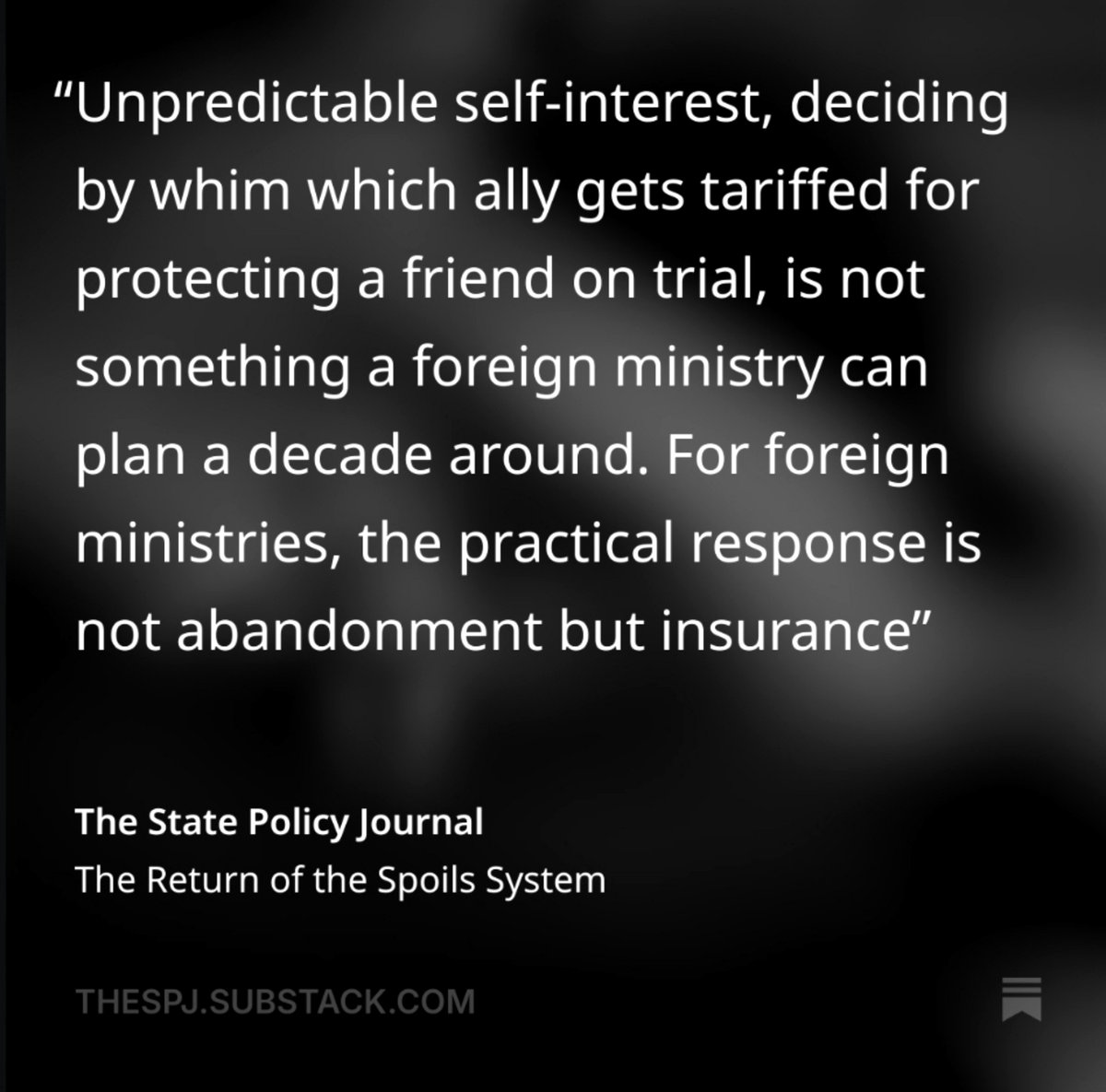
In an instant, new alliances were forged as the world moved on. Canada is turning away from a former ally and unreliable trading partner toward more dependable partners like the European Union. Trump sees this as a personal affront and labels it a ludicrous move by a detestable
Russia Absorbed the Pain. Washington Is Now Pricing the Elite. Russia has absorbed years of economic pressure without turning that pressure into a political constraint on the Kremlin. Washington is now testing a different route: instead of pushing only through the Russian economy, it’s considering whether future economic gains can create pressure inside the Russian elite. Congress has just passed a sanctions bill that would allow tariffs of up to 100% on leading buyers of Russian oil and gas, while expanding sanctions on Russian officials, businesspeople and financial institutions. The House vote was 262 to 159. The stated logic is familiar: raise the cost of the war and increase the pressure on Moscow to negotiate. At the same time, @nytimes reports that the White House is considering business agreements with Russia before the war ends. The administration’s stated logic is different. Economic deals could demonstrate that Washington is serious about a reset and create incentives for members of Russia’s elite to press for peace. Specific agreements haven't been disclosed. That's more than a choice between a carrot and a stick. It's a change in the location of pressure. Sanctions work through the economic environment in which the Russian state operates. The proposed deals would work through the expectations of people inside that environment who may have influence over the decision to continue the war. This distinction matters because the problem identified in Russia isn't the absence of pain. It's the absence of a functioning transmission channel from pain to policy. Public frustration, inflation, capital flight and demands for negotiations can accumulate without becoming a binding constraint on the Kremlin. The new American approach implicitly tests the reverse proposition: if costs cannot travel upward, can anticipated benefits travel sideways through the elite and then reach the decision-maker? The sequencing problem is familiar in sanctions-relief negotiations. A benefit can be offered as payment for verified behavior, or granted in advance in the hope of producing that behavior. Those are different mechanisms. In the first, the condition controls the benefit. In the second, the benefit is part of the bet. That distinction will matter here. A business agreement announced before a cease-fire wouldn't, by itself, demonstrate that Russian policy has changed. A staged, conditional arrangement would create a different test: whether a concrete benefit produces a concrete restraint that can be verified before the next benefit is delivered. Washington is therefore running two theories of pressure at once. One asks whether greater costs can make continuation less sustainable. The other asks whether future gains can make settlement more attractive to the people around the decision-maker. Neither has yet demonstrated that it can overcome the institutional structure that has kept Russian pain from becoming Russian policy. Sanctions push pressure through the economy. Deals attempt to push incentives through the elite. The decisive question is whether either route can reach the decision that sustains the war. @antontroian
I think the real point of disagreement is what happens at succession. A leadership transition may activate expectations, but expectations don’t automatically become political constraints. The harder question is whether the post-Putin system contains an institutional gateway
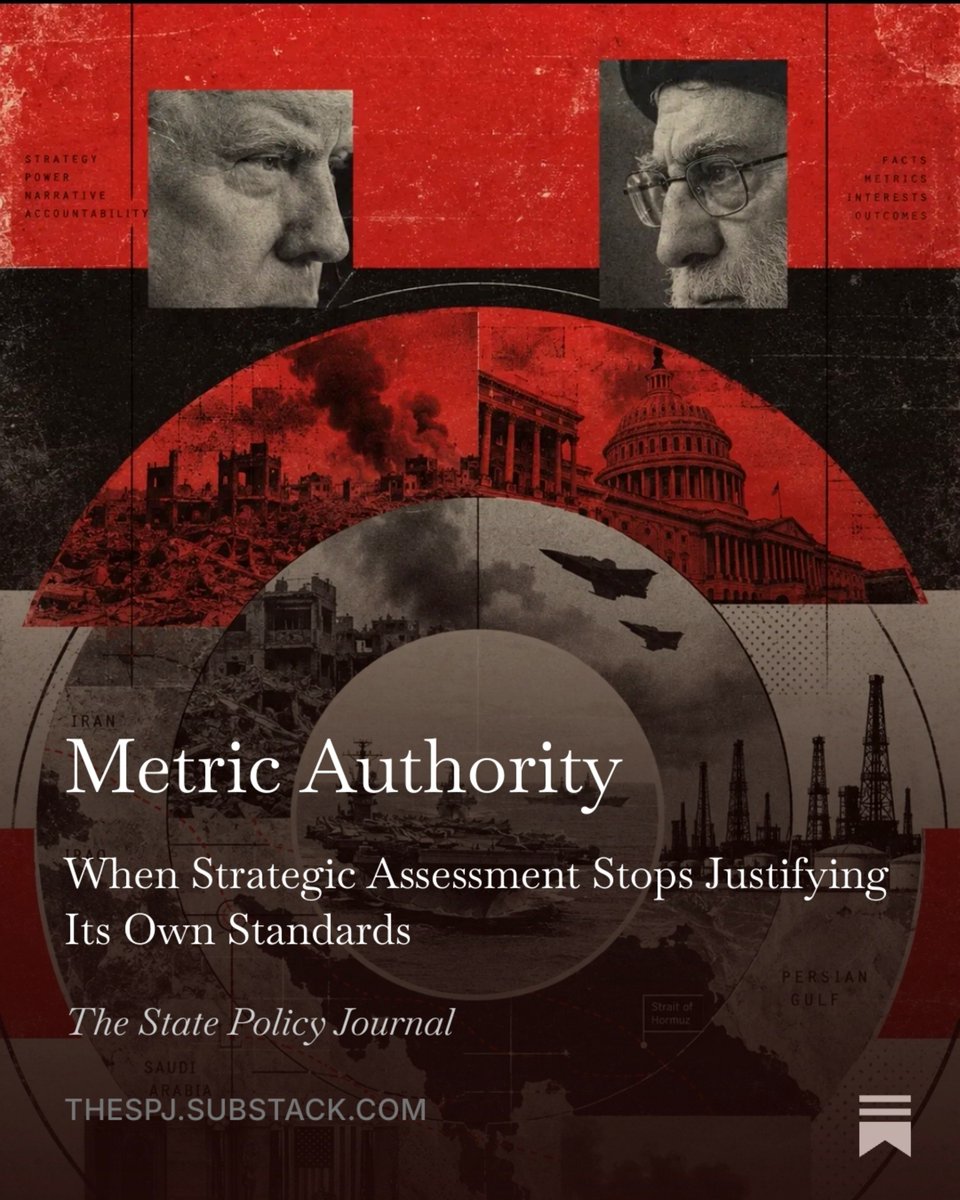
"Every belligerent can redefine victory for its own audience. Every legislature can redefine oversight for its own record. Very few of either can make that redefinition disappear as a redefinition". Read more ⤵️ tinyurl.com/Metric-Authori… @ForeignPolicy
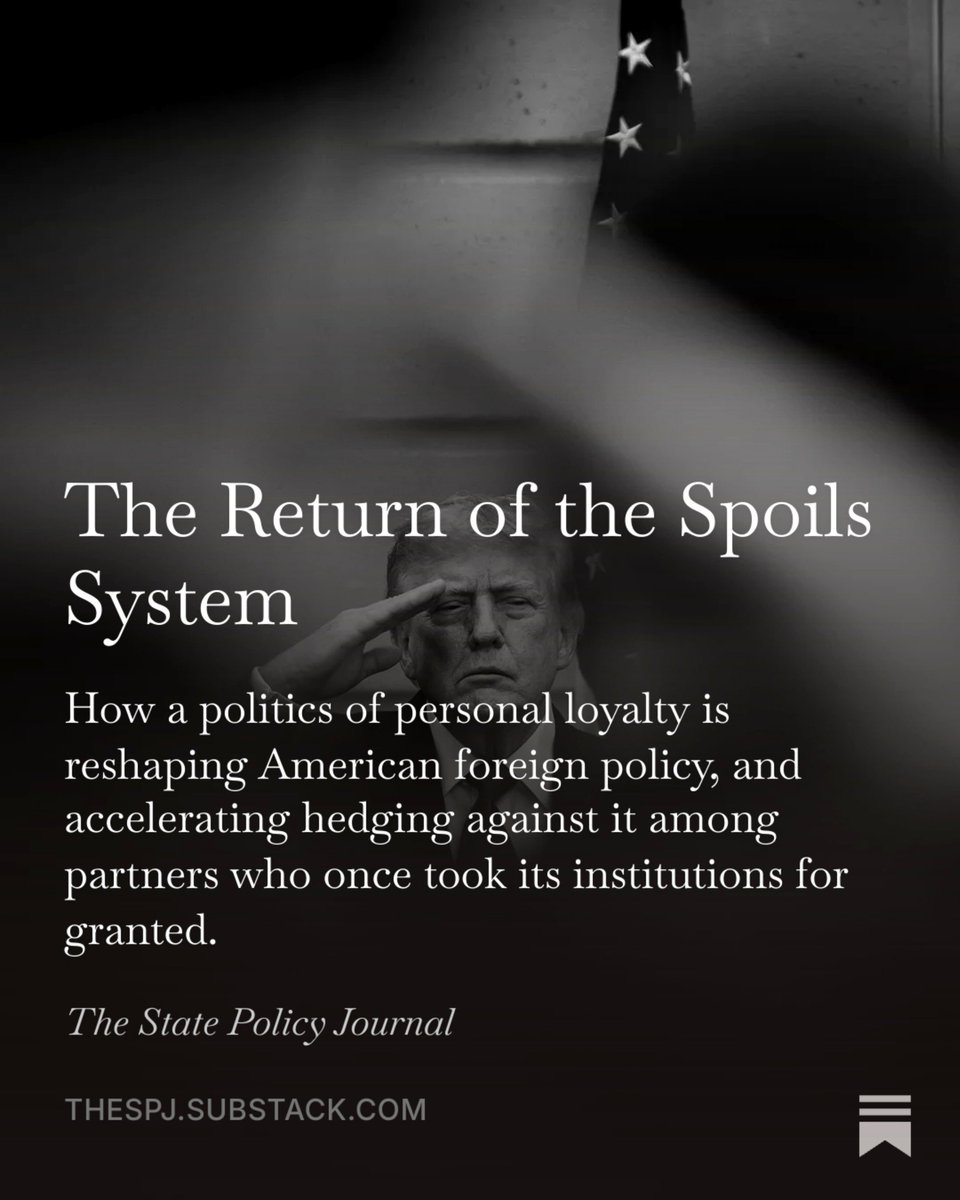
In an instant, new alliances were forged as the world moved on. Canada is turning away from a former ally and unreliable trading partner toward more dependable partners like the European Union. Trump sees this as a personal affront and labels it a ludicrous move by a detestable nation; he says he may halt some trade with the EU and/or impose further tariffs. Is the era of spoils returning? tinyurl.com/4ve77tzy
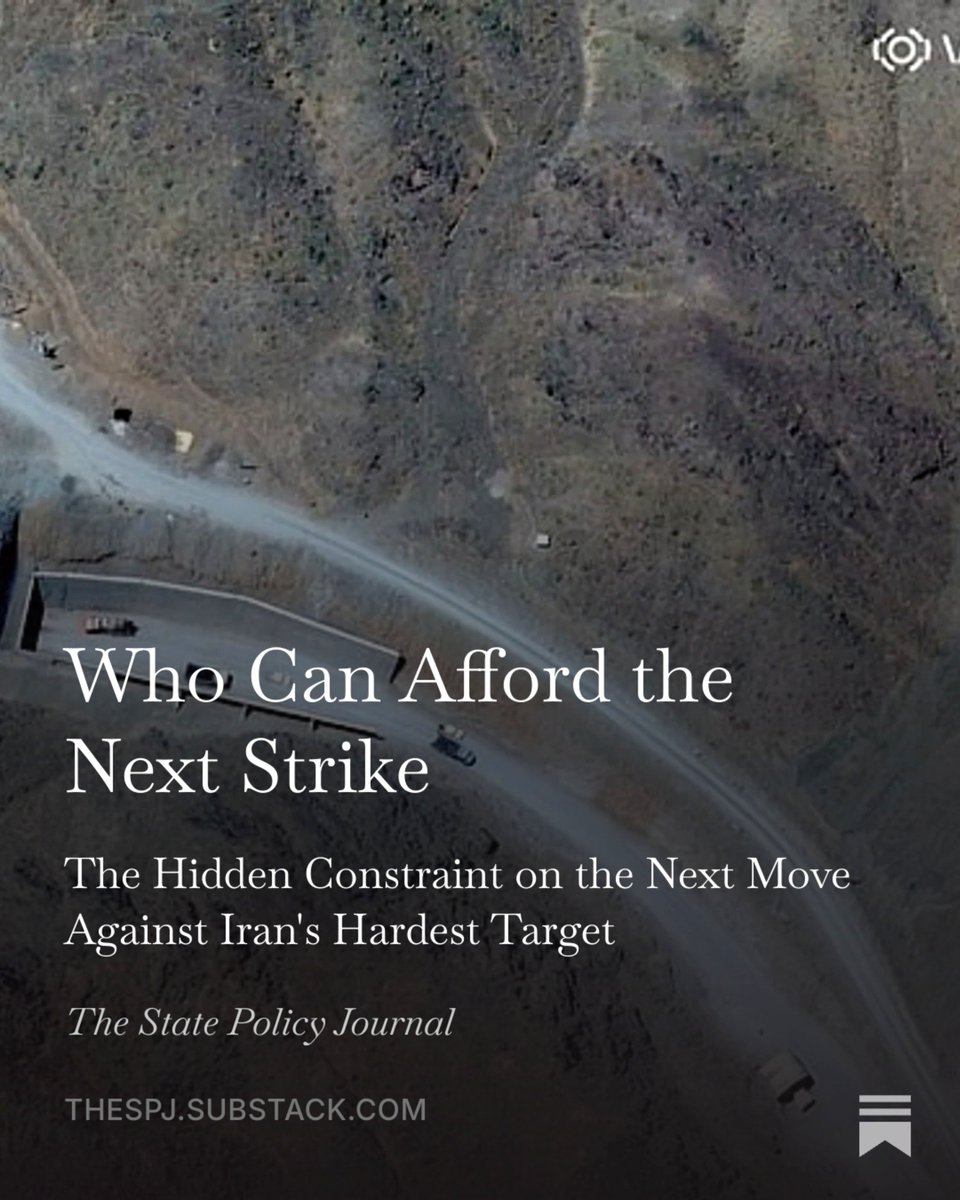
«Simply put, there is no fundamental vision of the US-Iran conflict, and no one will be able to model the end». Find out Who Can Afford the Next Strike? ⤵️ tinyurl.com/Who-can-afford…
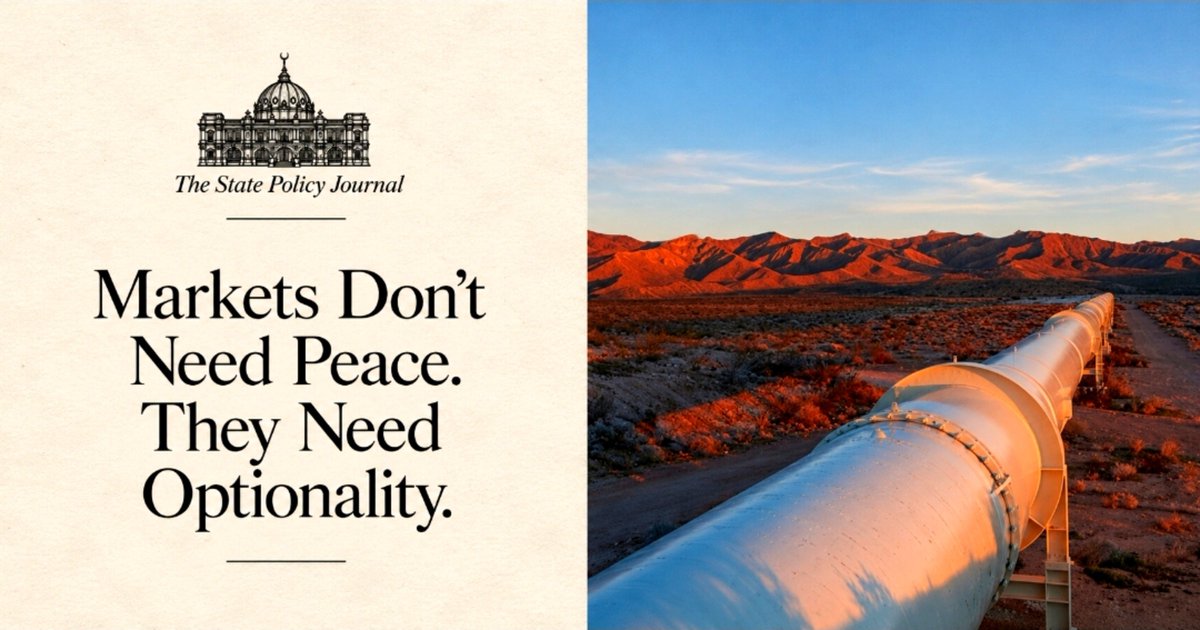
Oil prices fell this week without any peace agreement. Brent moved lower as Saudi Arabia began offering additional crude cargoes through Oman and as U.S. Energy Secretary Chris Wright suggested the kingdom’s East-West pipeline could return within days. The market wasn't pricing the end of the war. It was pricing the possibility that another route could carry some of the barrels the war had stranded. That distinction matters. Wright’s estimate was contested almost immediately: @Reuters reported that sources familiar with the damage put the repair timeline as long as five to six weeks, while another source expected a faster partial restart. The pipeline had been moving roughly 4 million to 5 million barrels a day before it was hit, according to Reuters. The market therefore reacted not to restored capacity, but to the possibility of restored capacity. The same logic appears on a smaller scale in Iraq; Baghdad has begun trucking crude from southern fields to Kirkuk in a pilot effort to feed the northern export system and move more oil through Turkey’s Ceyhan port. In two days, 209 trucks moved about 38,000 barrels. That volume is too small to change the market. Its significance is elsewhere: when the normal route is disrupted, states begin testing even inefficient alternatives; because an additional route has strategic value before it has commercial scale. China is now doing something similar at the diplomatic level. Reuters reports that Beijing has privately urged Iran to use its influence over the Houthis to contain threats to the Red Sea and Bab el-Mandeb after Saudi Arabia appealed to China for help. China publicly called for restraint, but its private message went further. Whether Tehran responds remains unclear, and there's no evidence yet that Beijing is prepared to attach meaningful consequences to its demands. The important point is that a chokepoint problem is beginning to generate pressure from actors whose primary interest is not the war itself but the continued availability of routes through it. This's why the oil market can move before the war does. Peace is one way to restore supply. It isn't the only one. A repaired pipeline, a reopened loading point, a rerouted shipment, an alternative export corridor, or a successful diplomatic intervention can each recover part of the system’s optionality without resolving the conflict that destroyed it. What matters strategically isn't simply how much oil has been lost, it's how many credible ways remain to move what is still available. Markets don't need peace to reprice risk, they need a route.
Read Chairman Warsh's full opening statement from the #FOMC press conference (PDF) ⤵️ federalreserve.gov/mediacenter/fi…
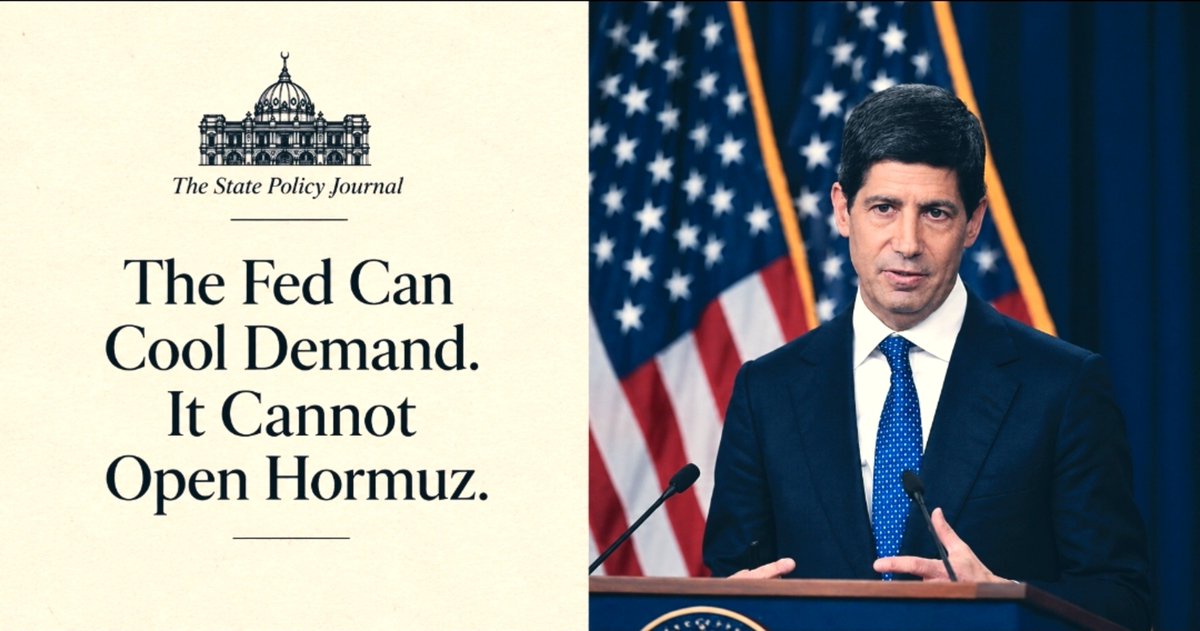
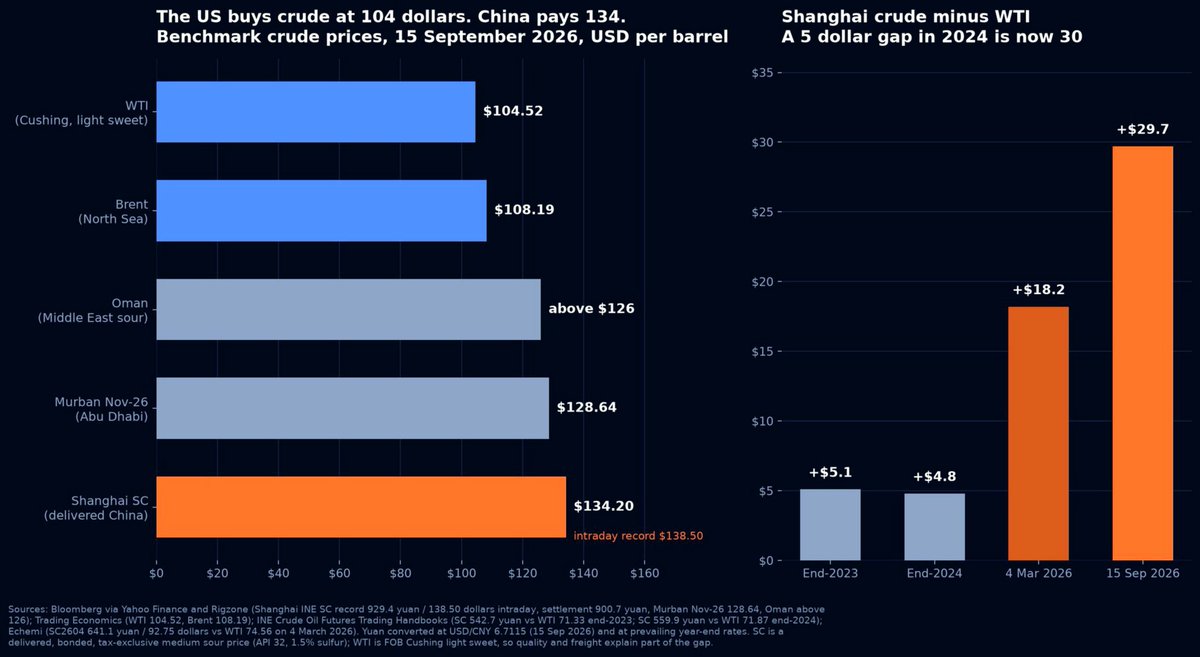
The Federal Reserve has raised its benchmark rate by 25 basis points to 3.75 to 4 %. The median FOMC projection puts the federal funds rate at 4.1 % at the end of this year and at the same level next year. Chairman Kevin Warsh’s explanation matters: inflation remains too high, underlying inflation hasn't moved toward 2 % fast enough, and broad financial conditions haven't been restrictive enough to deliver that result. Monetary policy faces a clear problem. The energy shock operates through a different mechanism. On Tuesday, only four vessels crossed the Strait of Hormuz, versus a 10-day average of 18. Saudi Arabia is rerouting crude through Oman after attacks damaged its East-West pipeline and halted loadings at Yanbu. At the same time, Ukrainian strikes and Russian export restrictions are tightening refined-product markets. The current energy shock is therefore not one broken valve, it's a network of damaged routes, refineries, ports and shipping channels. A rate hike can weaken demand, tighten credit and reduce the risk that higher energy prices become embedded in broader inflation and expectations. It can't reopen Hormuz, repair a pipeline, restart a refinery, or create a barrel that no longer reaches the buyer through its usual route. Price data show why the distinction matters. The benchmark chart accompanying this analysis puts WTI at $104.52 a barrel on September 15 and Shanghai crude at $134.20, with the Shanghai-WTI spread at $29.7, versus roughly $5 at the end of 2024. That gap shouldn't be read as a pure transportation or insurance premium. It's better understood as a sign of regional market dislocation: the same commodity is no longer carrying the same delivered price across markets. Against that background, the oil clock measures a physical buffer. The policy rate works through demand and financial conditions. They operate on different mechanisms. When a chokepoint is disrupted, the first problem isn't that consumers suddenly want too much oil. It's that the system has fewer reliable ways to move the oil it already has. History also argues for caution about the easy 1973 analogy. The Federal Reserve didn’t simply see the first oil shock and respond with immediate tightening; it initially lowered rates after the late-1973 price surge. Later research has found that the historical monetary response to oil shocks is difficult to identify cleanly and depends on the underlying source of the shock. Kilian and Lewis, in particular, argue that policy models should distinguish among different causes of oil-price movements rather than treat every oil increase as the same event. That's the more useful lesson for 2026. The Fed doesn’t need to repair Hormuz to perform its mandate. It needs to prevent an external supply shock from becoming a self-sustaining inflation process. Warsh’s own remarks make that distinction explicit: the Committee is watching whether relative price increases broaden and whether inflation expectations remain anchored while the underlying economy remains resilient. At best, the policy rate can contain the second-round effects of an energy shock. It cannot repair the physical system that produced the first-round shock. In the end, the Fed can slow demand. It can't put the lost routes, barrels, or time back into the system.
Your analysis is excellent, but allow me to make an important historical correction: 1973 wasn't a simple case of the Fed raising interest rates because of oil. The Federal Reserve was already tightening monetary policy before the October shock, in the context of a hot economy and inflationary pressures. Then the oil shock came along and further complicated matters. The Fed's historical record shows that the monetary tightening in 1973 and the oil shock were both significant factors behind the subsequent recession. Ben Bernanke later summarized the experience: the Fed's attempts to contain the inflationary effects of the oil shocks by raising interest rates led to a sharp slowdown in growth and a rise in unemployment, coinciding with the recession that began in 1973.
I think the real point of disagreement is what happens at succession. A leadership transition may activate expectations, but expectations don’t automatically become political constraints. The harder question is whether the post-Putin system contains an institutional gateway through which those expectations can actually force a change in policy? That's also where the distinction between Putin and Putinism matters. If the successor inherits the same coercive, administrative, and political instruments, the disappearance of Putin doesn't by itself establish that the war must end. It may create a new political opening, but whether that opening becomes binding depends on what replaces the existing system of control. So, I'd frame the disagreement less as “Putinism will survive Putin” versus “it won't,” and more as: will succession change who occupies the system, or change the system’s capacity to absorb pressure without changing policy? More precisely; What, specifically, would make a post-Putin succession produce policy change rather than simply a new occupant of the same institutional machinery?
Russia is taking the economic and social costs of the Ukraine war without converting those costs into political pressure on the Kremlin; that distinction matters because pain, war-making capacity, and political transmission are different things. Ukraine’s strikes have added to

Russia is taking the economic and social costs of the Ukraine war without converting those costs into political pressure on the Kremlin; that distinction matters because pain, war-making capacity, and political transmission are different things. Ukraine’s strikes have added to Russia’s civilian death toll, disrupted commerce, contributed to gasoline shortages, and exposed an economy marked by low growth and high inflation. Some Russian business owners and workers are increasingly frustrated, and polls cited by @ForeignAffairs indicate that many Russians would prefer peace talks to a continuing war. Yet none of this has produced a functioning political channel through which those costs can constrain the decision to continue fighting. Russia’s problem isn’t a lack of capacity to keep making war, the opposite is true; its military retains enough manpower to sustain a war of attrition, while its industrial base can still produce large quantities of missiles and drones. Moscow also controls the political instruments through which grievances might otherwise become bargaining power: opposition parties have been neutralized, independent media have been suppressed, and political competition has been hollowed out. The sharper distinction is between the presence of economic pain and its political transmission. Pain can accumulate without changing policy when the institution bearing the cost has no effective gateway to the institution making the decision. In Russia, the public can register the cost. It cannot reliably transmit that cost into a binding constraint on the Kremlin. A deeper feature of the system is its resistance to substitution. @ForeignAffairs notes that Putinism is positioned to survive its founder: a successor who retains the regime’s political and security tools could remain difficult to dislodge even without Putin’s personal mystique. That transmission problem is therefore institutional, not reducible to one man. That also changes what should count as evidence that pressure is working. Rising inflation, capital flight, public fatigue, or demands for negotiations establish that the war is imposing costs. They don't, by themselves, establish that those costs are reaching the decision that sustains the war; what matters is whether a functioning political gateway emerges through which those costs can alter the Kremlin’s available choices. Until that gateway opens, Russia can absorb substantial pain without passing it to policy. Pain is visible, capacity remains; the gate is closed.


Tony Guan @ECalifornians
3K Followers 5K Following Silicon Valley tech leader taking about agents, California politics(政经评论), Bay Area life (硅谷百态) & Taichi (休闲太极). Uninvited DM will get you blocked.

SRH Shofique @srhshofique
371 Followers 2K Following Rohingya Youth |Peace Seeker | Born to Rise| Big Dream |Fighting for Justice | Future with hope. ✌️✌️ | Gmail: [email protected]
The Tariff @The_Tariff
7 Followers 99 Following Law · Trade · Economic Power We follow the legal machinery behind tariffs, sanctions, trade & economic statecraft.
Linda @linda9318allen
1K Followers 7K Following soft, chaotic, and dangerously cute… don't test me 😏
Teodoro Obiang Nguema... @TeodoroObiang17
8K Followers 923 Following Vice-President of the Republic of Equatorial Guinea🇬🇶
Anas Akbar @edor24lahore
4 Followers 80 Following
Iran Flash News @FlashWireNews
13K Followers 1K Following Breaking News. Verified Updates. No Noise. Global Affairs|Economy|Security|Technology 📍 Updates as they happen ⚡
عاشق_السهم @Saffron79059044
10 Followers 284 Following The fun starts after the click 😉https://t.co/rzOS48u5th
The Global Desk @TG_desk69
13K Followers 14K Following A Pakistan based Unofficial Account. Exploring ideas and opinions 💡through Polls and hypothetical scenarios 💬 Every vote tells a story.
Marie-France @MarieFrancdmls
0 Followers 189 Following

Mohammad Mohsen @MohammdMohsn
55 Followers 2K Following Author & Founder of @TheStatePolicy Structural analysis of law, strategy & intel affairs View my research on my SSRN Author page https://t.co/o7KmGe8jtB
ذیشان یوسف @Zeeshan12178810
91 Followers 106 Following My heart boils with fury in the face of injustice!
Anne Applebaum @anneapplebaum
596K Followers 893 Following @TheAtlantic and @SNFAgoraJHU Author of Gulag, Iron Curtain, Red Famine, Twilight of Democracy and now AUTOCRACY INC find me more often on https://t.co/NzY0PRNaYd
Mike Pence @Mike_Pence
5.8M Followers 73 Following Christian, Conservative, Republican- In That Order. Husband, Father, Grandfather and 48th Vice President of the United States🇺🇸
Speaker Mike Johnson @SpeakerJohnson
1.2M Followers 749 Following 56th Speaker of the House | Christian, husband, dad, Constitutional law attorney & small biz owner.
Michael McCaul @RepMcCaul
66K Followers 605 Following Representing the 10th District of Texas | Chairman Emeritus of @HouseForeignGOP and @HomelandGOP
Phillips P. OBrien @PhillipsPOBrien
218K Followers 2K Following Professor of Strategic Studies, @univofstandrews; Author of War and Power (Summer 2025) https://t.co/al9SES8ncC
European Central Bank @ecb
826K Followers 126 Following The European Central Bank is the central bank for Europe's single currency, the euro. Its main task is to maintain the euro's purchasing power.
Treasury Department @USTreasury
1.2M Followers 195 Following Executive agency responsible for promoting economic prosperity & ensuring financial security of the United States. Led by 79th Treasury @SecScottBessent
محمدباقر قا... @mb_ghalibaf
686K Followers 5 Following سرباز امام شهید انقلاب | Speaker of Islamic Republic of Iran’s Parliament
Tom Wright @thomaswright08
36K Followers 2K Following Senior Fellow @BrookingsFP. Contributing writer @TheAtlantic, Formerly Biden NSC, Author of All Measures Short of War, co-author of Aftershocks. Views my own.
Democrats Deliver @DemzDeliver
44K Followers 184 Following Democrats are delivering — we're keeping the receipts.
Bulletin of the Atomi... @BulletinAtomic
73K Followers 19K Following Providing news on nuclear risk, climate change, and disruptive technologies. We set the Doomsday Clock. Receive updates: https://t.co/oxjCouHCYZ
aída chávez @aidachavez
61K Followers 2K Following Journalist / signal: 202-557-6620 / editor @capandempire, previous @thenation @theintercept @MorePerfectUS @migrantinsider @thehill. also @JJayEcon @justfp.
Just Foreign Policy @justfp
26K Followers 2K Following Working to reform U.S. foreign policy by mobilizing the majority of Americans who want a foreign policy based on diplomacy, law and cooperation.
Yasmine Farouk ياس... @YasFarouk
6K Followers 4K Following Expert & forever student. Typos. Retweets not endorsements. Project Director, Gulf and Arabian Peninsula
Jon Gambrell | جون @jondgambrell
54K Followers 5K Following A Mideast-based journalist and analyst with The Wall Street Journal in Dubai, United Arab Emirates, by way of Egypt, Nigeria, Arkansas and elsewhere.
McKinsey & Company @McKinsey
661K Followers 1K Following Since 1926, the trusted advisor to the world's leading businesses, governments, and institutions. 130+ offices in 65+ countries.
Tony Guan @ECalifornians
3K Followers 5K Following Silicon Valley tech leader taking about agents, California politics(政经评论), Bay Area life (硅谷百态) & Taichi (休闲太极). Uninvited DM will get you blocked.
CIA @CIA
3.8M Followers 56 Following We are the Nation's first line of defense. We accomplish what others cannot accomplish and go where others cannot go. https://t.co/yhjtYvG98h
Politics Global @PolitlcsGlobal
64K Followers 142 Following The Home of Global Political News. Follow & Notify for Impartial Coverage. For UK Politics, follow @PolitlcsUK. For US Politics, follow @PolitlcsUS.
U.S. Mission to the U... @usunvie
18K Followers 441 Following U.S. Mission to Int'l Organizations in Vienna. Working on nuclear non-proliferation, energy, drugs, crime, space & more. Terms of Use: https://t.co/fgs9Qg3NRM
Anna Kramer @anna_c_kramer
17K Followers 2K Following policy reporter @washingtonsun. Signal: annakramer.54. get my food emails👇
Missy Khamvongsa @MissyKhamvongsa
2K Followers 2K Following I'm a senior editor at The Washington Sun who is a connoisseur of sports, pop culture and all things Disney.
Joe Gould @reporterjoe
17K Followers 6K Following Defense reporter @thewashsun. DMs open. Signal: reporterjoe.01 Ex @politico @Defense_News, @ArmyTimes, @NYDailyNews. BK native.
Hamed Ahmadi @ahmadihamed_
15K Followers 2K Following Foreign Policy Reporter @washingtonsun | previously @Huffpost, @irworkshop | @FulbrightPrgrm @AU_SIS alum | Signal: hamedahmadi.99
Dana Milbank @Milbank
109K Followers 1K Following Political writer. Author. Country Mouse. Columnist with the @washingtonsun. Formerly with @washingtonpost.
The Washington Sun @washingtonsun
242K Followers 168 Following Shining a light on Washington. NOTUS is now The Washington Sun. Metro coverage: @washsunmetro Analysis, ideas and narratives: @washsunperspect
Vina Nadjibulla @VinaNadjibulla
3K Followers 312 Following Foreign Policy/Geopolitics/China/Indo-Pacific/Co-Founder & CEO @StatecraftOrg 🇨🇦 citizen/Global Soul
Institute for Law & A... @law_ai_
3K Followers 14 Following An independent think tank that researches and advises on the legal challenges posed by artificial intelligence.
CSIS Wadhwani AI Cent... @csis_ai
972 Followers 95 Following Official home of the Wadhwani AI Center @CSIS. Follow for the latest analysis on AI and national security. RTs ≠ endorsements
House Republicans @HouseGOP
1.8M Followers 671 Following We are the Republican Conference in the United States House of Representatives 🇺🇸 Led by Chairwoman @RepLisaMcClain
Oil & Gas Journal @OGJOnline
218K Followers 1K Following The premier source for international oil and gas news and technology exploration | drilling | production | processing | transportation

John Ratcliffe @DCIARatcliffe
58K Followers 1 Following Official Account of CIA Director John Ratcliffe.
Ed Miliband @Ed_Miliband
748K Followers 2K Following Foreign Secretary and MP for Doncaster North. Husband to Justine, Dad to Daniel and Sam.
gCaptain @gCaptain
97K Followers 2K Following The world's top-visited maritime news website. Founded in 2007 by @JohnKonrad Editor-In-Chief @MikeSchuler https://t.co/67rqS4lDzQ
Petroleum Economist @PetroleumEcon
67K Followers 1K Following Petroleum Economist is the authority on energy. Register here: https://t.co/Uba78MX3y5
Office of the Preside... @APUkraine
458K Followers 252 Following Офіс Президента України / Office of the President of Ukraine
The Kyiv Independent @KyivIndependent
1.8M Followers 38 Following Independent English-language journalism in Ukraine. Become a member: https://t.co/ZnSQWYU6Xx
The Guardian @guardian
10.6M Followers 982 Following This account has been archived. Follow us on https://t.co/KQIdrzRwCv or download our app.
Democrats @TheDemocrats
2.4M Followers 87 Following We’re fighting for a better, fairer, and brighter future for every American. Chair: @kenmartin73

Republicans @Republicans
3.5M Followers 996 Following Text TRUMP to 80810 to help us Make America Great Again! 🇺🇸
Cameron Hudson @_hudsonc
106K Followers 2K Following Tweets on US-Africa policy. I don't read comments. Signal: @ Muzungu.54
Former Fetterman Staf... @FettermanStaff
162K Followers 2 Following A group of former Fetterman staffers who are disgusted with what he's become. Here to share our stories & make sure Pennsylvanians know exactly who he is.
The Wilson Center @TheWilsonCenter
93K Followers 3K Following Congressionally Chartered. Scholarship Driven. Fiercely Nonpartisan. #WilsonSmart
The Kobeissi Letter @KobeissiLetter
2.6M Followers 598 Following Official X account for The Kobeissi Letter, an industry leading commentary on the global capital markets. Email us: [email protected]
SRH Shofique @srhshofique
371 Followers 2K Following Rohingya Youth |Peace Seeker | Born to Rise| Big Dream |Fighting for Justice | Future with hope. ✌️✌️ | Gmail: [email protected]
BBC News (UK) @BBCNews
15.2M Followers 85 Following News, features and analysis. For world news, follow @BBCWorld. Breaking news, follow @BBCBreaking. Latest sport news @BBCSport. Our Instagram: BBCNews
WSJ Markets @WSJmarkets
1.4M Followers 517 Following Breaking news, smart analysis and in-depth features on global markets and finance from The Wall Street Journal.
You might like