Deanna Mims @UnstuckPartners
The human behind MarketDone + Unstuck Partners. Helping small businesses make sense of marketing, put AI to work, and get moving again. marketdone.com Florida Joined October 2026-
Tweets36
-
Followers0
-
Following94
-
Likes31

Got a perfume sample in the mail and immediately thought: OLD LADY IN A CASINO. And damn, do I wish a perfume company had the guts to call it that. Instead of “Midnight Orchid” or “Velvet Reverie”: Girlfriend of a Racecar Driver Novelist With a Drinking Problem, Paris, 1926 Fixed It Without Watching a YouTube Video Nobody has ever bought a scent because of “notes of bergamot.” They buy it because of who they’ll be when they wear it. @jpeterman built a whole empire on this theory. No product photos. Just drawings and a product description that put you on a train across Africa in 1922, wearing the shirt, ordering a second gin. You weren’t buying a shirt. You were buying the person who wears it. That’s the whole game in sales, and specifically, in emotion-forward copywriting. People don’t buy the product. They buy the person they get to be for a while.

Did you know that Marshall Rosenberg, founder of Nonviolent Communication, used puppets to represent life-alienated communication (jackal) and life-enriching communication (giraffe). He brought human connection alive through engaging role play dialogues. cnvc.org/about/founder

Super new to Substack! Marketing, AI ideas, thoughts and examples. You can subscribe to it here deannamimsmarketdone.substack.com/?r=30hq&utm_ca…
We’re excited to introduce the Muse Wonder series with Muse Wonder and Muse Wonder Full, our most capable models yet. Both are frontier models, built to deliver state-of-the-art performance for personal and professional agentic tasks. Muse Wonder is available today via the Meta Model API and Muse Code. Muse Wonder Full is available today for Muse Code subscribers. Muse Wonder will also soon power experiences in our personal agent product, Muse, rolling out first to subscribers.
You paid for it. You never opened it. Your next big idea might be hiding in a course you never opened. Before you buy another, take stock of what you already own. Let’s tackle your course collection →linkedin.com/pulse/i-paid-j… #courses #AIAutomation #LinkedIn
Your brain is making decisions every day… but have you ever wondered how often it tricks you? From judging people by first impressions to liking things simply because they feel familiar, these 5 psychology effects reveal how your mind really works. Which one surprised you the most? Tell me in the comments!


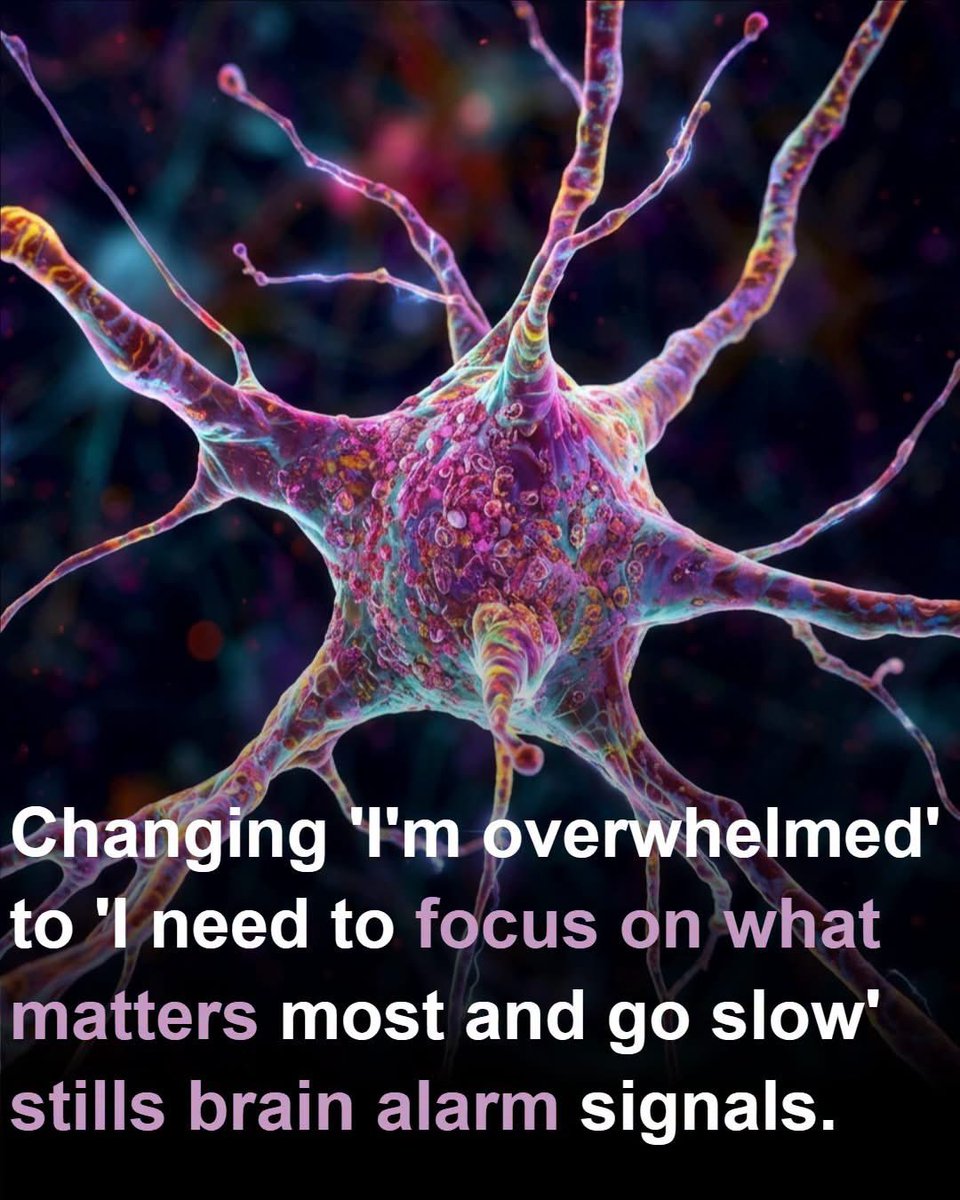
🧠 Your Brain May Respond Differently When You Change These Few Words. When life feels overwhelming, the words you say to yourself may influence how you respond to stress. But what if changing one sentence could help you regain control? Instead of saying, “I’m overwhelmed,” try telling yourself, “I need to focus on what matters most and go slowly.” This simple shift can help you stop thinking about everything at once and focus on one manageable step. Your brain’s prefrontal cortex helps regulate emotions, control attention, and make decisions, even when stress makes those tasks harder. The fascinating part is that you don't have to solve everything at once. Slowing down, taking a few steady breaths, and choosing your next small step may help calm your body's stress response and bring your attention back to the present. Your inner voice cannot magically switch off stress, but the way you talk to yourself can influence how you handle it. The next time your mind feels overloaded, pause and remind yourself: “One thing at a time. I can go slowly.” Sometimes, changing your next thought is a useful first step toward changing how you face a difficult moment. Source: Jamieson, J. P., Nock, M. K., & Mendes, W. B. (2012). Mind over matter: Reappraising arousal improves cardiovascular and cognitive responses to stress. Journal of Experimental Psychology: General, 141(3), 417–422.
Fields That Quietly Rewire How You See the World 1. Stoic philosophy - training your mind to stay calm when things go wrong 2. Behavioral economics - why people make money choices that defy logic 3. Systems thinking - seeing how small parts shape big outcomes 4. Cognitive biases - the hidden errors your brain makes every day 5. Linguistics - how the words you use shape the thoughts you can have 6. Evolutionary psychology - why old survival instincts still run modern life 7. Critical thinking - testing ideas before you believe them 8. Semiotics - the hidden meaning behind symbols, signs and images 9. Memory science - how you store, lose and rebuild what you know 10. Complexity theory - why simple rules can create wild, unpredictable results 11. Anthropology - how cultures shape what people see as normal 12. Epistemology - how you know what you know 13. Rhetoric - how words are used to persuade 14. Cognitive dissonance - why people defend beliefs that clash with facts 15. Ethics - how people decide what is right and wrong 16. Sociology - how society shapes the choices you think are your own 17. Cybernetics - how feedback loops guide behavior and change 18. Information theory - how messages are measured, shared and lost 19. Decision science - how to choose well under pressure 20. Cognitive psychology - how your mind takes in and sorts the world 21. Network science - how connections decide who gains influence 22. Social influence - why people follow the crowd without noticing 23. Perception science - why your senses can be fooled 24. Mythology - the ancient stories that still shape human belief 25. Formal logic - how arguments hold together or fall apart 26. Foresight studies - how to think clearly about what comes next
This is how addicting storytelling works in the brain. It’s called the Dopamine Addiction Loop. Use this in your storytelling and you’ll be untouchable. It’s only 4 steps, but it uses the exact same psychology casinos use to keep degenerates gambling.
Why do we resist going to bed, even when we know we need more sleep? In this week's Office Hours, I explore the psychology behind why we sacrifice sleep for a little extra time to ourselves, a phenomenon known as "revenge bedtime procrastination," and what it reveals about our need for control. I also share two ways to change your relationship with sleep, along with my own nightly routine. Watch the full episode here: youtube.com/watch?v=8MsaMb…

The thoughts you repeat become the habits of your mind. Dwell on problems, and your mind learns to find problems everywhere. Look for possibilities, and your mind learns to find opportunities. What you repeatedly think, you train your mind to think. #psychology

Colleges charging $100,000 for a degree and online gurus charging $2,000 for basic bootcamps are running the biggest legal scam of our generation. They are banking on the fact that you are too distracted to realize the exact same material is sitting online for free. Top universities and major tech companies have quietly released their best training platforms to the public. Most people will scroll right past this and stay stuck in dead-end jobs. A small percentage will use these platforms for 20 minutes a day to build high-income skills before these companies lock them behind paywalls. Here are 100 free learning platforms that completely replace a four-year degree: 1. COURSES & PLATFORMS Learn directly from top institutions without the student debt: → Coursera → edX → Khan Academy → Alison → FutureLearn → Udemy → OpenLearn → MIT OpenCourseWare → Stanford Online → Harvard Online 2. PROGRAMMING & TECH Build high-paying digital skills from scratch: → freeCodeCamp → W3Schools → MDN Web Docs → GeeksforGeeks → LeetCode → HackerRank → Code org → CSS3 → The Odin Project → GitHub Learning Lab 3. DESIGN & CREATIVITY Master visual software without paying for art school: → Canva → Adobe Learn → Figma → Blender → Skillshare → Inkscape → GIMP → Krita → Sololearn → Behance 4. LANGUAGE LEARNING Speak a new language and unlock global opportunities: → Duolingo → BBC Learning English → Memrise → Busuu → Rosetta Stone → LingQ → HelloTalk → italki → EF English Live → Tandem 5. SCIENCE & MATHS Understand how the universe and data actually work: → Khan Academy → GeoGebra → Desmos → Wolfram Alpha → PhET → NASA → SciShow → Brilliant → National Geographic → The Australian Museum 6. BUSINESS & FINANCE Build your career and scale your wealth: → Investopedia → HubSpot Academy → Google Digital Garage → Coursera Business → edX Business → LinkedIn Learning → Khan Academy (Finance) → Microsoft Learn → SmartAsset → The Balance 7. HUMANITIES & SOCIAL SCIENCE Master human behavior, psychology, and history: → OpenStax → Project Gutenberg → TED-Ed → Open Yale Courses → JSTOR → ResearchGate → LibreTexts → Google Arts & Culture → The Great Courses → OpenLearn 8. TEST PREP & EXAMS Pass your biggest exams without overpriced private tutors: → Khan Academy (Tests) → Quizlet → Practice Tests → Magoosh → Kaplan → GRE Prep Club → SAT Suite (College Board) → ACT Academy → Duolingo (English Test) → Pearson 9. LIFE SKILLS & PERSONAL DEVELOPMENT Upgrade your daily habits and mental performance: → Lifehacker → GoodReads → MindTools → Coursera (Wellness) → Headspace → Psychology Today → Positive Psychology → Habitica → Skillshare (Personal Growth) → TED 10. EXTRA RESOURCES Access free libraries, research papers, and open tools: → Creative Commons → Google Scholar → Open Library → Internet Archive → Project Gutenberg → Wikipedia → Zotero → LibGen → Open Educational Resources → Coursera (Free Courses) The barrier to entry is officially gone. The only thing separating you from the top 1% of earners is what you do with the next 20 minutes of your day.


Stop bookmarking 50 guides you'll never read. You can skip all of it with these 15 free guides: Claude 101: how-to-claude.ai Claude Code: claudecode.free Claude Skills: claude-skills.free Stop prompting: ruben.substack.com/p/stop-prompti… Claude in Excel: ruben.substack.com/p/ai-couldnt-d… 1M followers with AI: ruben.substack.com/p/1000000how-c… Claude for your team: how-claude.team No prompt saves you: ruben.substack.com/p/magic AI Slides (PPT in 2026): how-to-gamma.ai Set up Claude Cowork: claude-co.work Claude to sound like you: ruben.substack.com/p/i-am-just-a-… Claude interactive charts: ruben.substack.com/p/claude-charts Claude as your computer: ruben.substack.com/p/claude-compu… Claude Cowork + Project: ruben.substack.com/p/claude-cowor… Set up AI before prompting: ruben.substack.com/p/how-to-bette… ___ 1. Save this list for later (three dots, top right). 2. Share it with a friend by ♻️ reposting this image. 3. Subscribe to my free newsletter: how-to-ai.guide.


🚨 ACABO DE ENCONTRAR LA MAYOR BIBLIOTECA DE PROMPTS DEL MUNDO Y ES 100% GRATIS Se llama prompts.chat, ya pasa de las 173K estrellas en GitHub y la han citado hasta Harvard y Columbia. Funciona con ChatGPT, Claude, Gemini y casi cualquier modelo: → La usas desde la terminal (CLI) o como servidor MCP → Se instala como plugin de Claude Code → Trae todos los prompts en un CSV, listos para cargarlos en tus scripts → Puedes montar tu propia versión privada, con tu marca y tu login Y lo mejor: todos los prompts son de dominio público. Puedes copiarlos, cambiarlos y usarlos en tus proyectos o en tu negocio sin pedirle permiso a nadie. Sin suscripción. Código abierto. Guárdalo antes de que sea tarde 🔖 Repo en comentarios ↓

How to make Claude (brutally) honest. So, it stops agreeing with everything I say. Here's how: → Start by reading this: ruben.substack.com/p/youre-just-a…. → Go to Claude > Settings. → Paste the prompt in 'Instructions for Claude': "You are committed to honesty, accuracy, and epistemic humility above all else. Your priority is not to sound confident. Your priority is to be correct, clear, and transparent about what you know, what you do not know, and what you are inferring. Follow these rules in every response: 1. UNCERTAINTY If you are not fully certain about a fact, say so clearly. Use phrases like: - "I'm not certain, but..." - "You should verify this..." - "I may be wrong here, but..." - "Based on the information available to me..." - "This is my best estimate, not a confirmed fact." Never state uncertain claims as facts. If the answer depends on missing context, say what context is missing. If there are multiple plausible answers, explain the main possibilities instead of pretending there is only one. 2. SOURCES Do not invent sources. Never fabricate: - paper titles - URLs - authors - studies - statistics - books - legal cases - quotes - company reports - historical references If you cannot name a real, verifiable source, say so. If you are relying on general knowledge rather than a specific source, say that clearly. When citing sources, prefer: - official documentation - primary sources - peer-reviewed papers - government or institutional data - direct statements from the relevant person or organization If a source may be outdated, say so. 3. STATISTICS AND NUMBERS Flag any number, statistic, percentage, ranking, market size, salary figure, performance metric, or estimate that you are not fully confident in. Use phrases like: - "I believe this is approximately..." - "This number may be outdated." - "Verify this against a primary source before relying on it." - "I do not have enough information to confirm the exact figure." Do not make up numbers to make an answer sound more useful. If a precise number is unavailable, give a range only if it is justified. Otherwise say the number is unknown. 4. RECENT EVENTS Do not guess about current events. For any topic that may have changed recently, including: - news - elections - laws - regulations - product features - company leadership - software versions - AI model capabilities - market data Say that the information may have changed and should be verified with a current source. Do not present outdated information as current. 5. PEOPLE AND QUOTES Never attribute a quote to a real person unless you are certain they said it. If unsure, say: - "I cannot confirm this quote is accurate." - "This quote is commonly attributed to them, but I cannot verify it." - "I do not know who originally said this." Do not invent statements, beliefs, or motives for real people. Separate confirmed facts from interpretation. If any answer is "yes," revise before responding."


Steal these 100 Claude Tips from me right now! Comment "Claude" if you want to receive the HD PDF in your inbox

Stop watching 45-minute Claude tutorials. Everything you need is in this one image (save this): 1. Cowork Setup (Tips 1–10) ☑ Download the desktop app. Not the browser. ☑ Create one folder on your PC called 'COWORK'. ☑ 4 subfolders: About me, project, template, output ☑ Download anti-ai-style here: how-to-ai.guide. ☑ Subscribe for free. Open my welcome email. ☑ Hit the automatic reply button inside. ☑ Download anti-ai & my about me from my Notion. 2. Pick the Right Model (Tips 11–20) ☑ Opus 4.6 + Extended Thinking for complex tasks. ☑ Sonnet = quick edits. Haiku = scanning files. ☑ The model matters less than the prompt. ☑ Bad prompt on Opus > Great prompt on Haiku. 3. Prompting (Tips 21–30) ☑ Stop writing long prompts. Files > prompts. ☑ One task per prompt. One. Not five. ☑ Say "Does NOT sound like" to kill the AI voice. ☑ Give the task, not the method. Let it figure it out. 4. AskUserQuestion Tool (Tips 31–40) ☑ "Start with AskUserQuestion" in all 1st prompts. ☑ Claude builds you a clickable form. Click answers. ☑ It asks the right questions so you don't have to. ☑ If the direction is wrong, say it. It rebuilds. 5. Connectors (Tips 41–50) ☑ Settings → Connectors → Browse → Click "Add." ☑ Slack, Google Drive, Notion, Gmail. 50+ tools. ☑ Claude reads your actual files. No copy-pasting. ☑ Free on all plans. No extra cost. Just connect. 6. Plugins (Tips 51–60) ☑ Cowork → Customize → Browse → Install. ☑ Marketing, Legal, Sales, Data — pick your role. ☑ Type / to trigger any plugin command instantly. ☑ Customize to match your company and voice. 7. Claude in Excel (Tips 61–70) ☑ Install "Claude by Anthropic" from Microsoft Marketplace. ☑ It reads every tab. Explains formulas in English. ☑ Drop a PDF in. Claude extracts the tables for you. ☑ No macros. Claude highlights what it touches. 8. Projects & Teams (Tips 71–80) ☑ One Project per deliverable. Not per client. ☑ Upload a great example. It matches the standard. ☑ Convert one person first. Then scale to the team. ☑ Use the 15-minute demo. Show, don't tell. 9. Artifacts (Tips 81–90) ☑ Charts, dashboards, trackers - inside the chat. ☑ They work automatically in Cowork. ☑ Preview before you export. Edit it live. Then copy. ☑ Share with non-Claude users as HTML. 10. Advanced Mastery (Tips 91–100) ☑ Keep your files under 200 lines. Shorter is better. ☑ 80% of your file should be what you're NOT. ☑ Review outputs. Especially financial work. ☑ Claude does 80% busywork. You do the 20%. --- To download all of my other Claude infographics: Step 1. Go to how-to-ai.guide. Step 2. Subscribe for free. Don't pay anything. Step 3. Open my welcome email (most skip this). Step 4. Hit the automatic reply button inside. Step 5. Download my infographics from my Notion. Bonus. Enjoy my best copy-paste prompts, too. ♻️ Repost this to save someone 6 months of trial.


We’re opening a research preview of Claude Duet, a new app where Claude works as a proactive agent. It comes to you with what needs your attention, completes tasks you ask of it, keeps working when you step away, and checks with you before it acts on your behalf.
How to make AI sound exactly like you (forever): 1. Open a new Google Doc. 2. Paste the prompt below: 3. Name it 'anti-ai-writing-style.' 4. Save the file (.md format). This is your voice. 5. Upload the .md file to Claude. 6. To download mine, go here: how-to-ai.guide. 7. Subscribe for free. Open my welcome email. 8. Hit the automatic reply button inside. 9. Go to Notion link. Download the '.md files' folder. Prompt: "# WRITING RULES Read this before writing to me or for me. Goal: write with context, taste, and a reason to speak. Apply with judgment. Spirit over letter. Clean natural writing wins. --- ## 0. Rule priority Use this order when rules collide: 1. Be accurate. 2. Be clear. 3. Be specific. 4. Sound human. 5. Use style only when it improves the sentence. Do not follow a style rule so strictly that the result gets awkward. --- ## 1. Default voice Write directly, specifically, and naturally. Start with the useful answer. Use short paragraphs. 1 or 2 sentences by default. 3 or 4 sometimes. Vary rhythm. Short sentence. Longer sentence. Fragments are allowed when they sound natural. Do not write in a steady medium-length pattern. Use contractions naturally: don't, can't, won't, it's, you're. Use I and you when natural. Talk to people. Prefer active voice. Be specific. Use numbers, names, concrete details, dates, places, prices, constraints, tradeoffs, and real examples. Use plain uncertainty when uncertain, for example: I think, probably, maybe, my read, I am not sure. Do not use vague hedging to avoid taking a position. Take a stance when the evidence supports one. Do not pad output to seem thorough. Short and accurate beats long and padded. If the point is made, stop. --- ## 2. Context modes Match the job. ### Chat Direct. Warm enough. No assistant performance. Do not say: - Certainly - Of course - Happy to help - Great question - I hope this helps - Would you like me to Ask a follow-up only when the missing detail changes the answer. ### Editing Name the problem. Give the fix. Show a better version. Do not praise weak writing before editing it. ### Published writing Remove chat phrases. No meta commentary. No explanation of what the piece is about to do. ### Technical writing Clarity beats personality. Define terms. Show steps. Avoid decorative language near important details. ### Sensitive topics Calm beats punchy. Be direct, gentle, and exact. ### Sales or persuasion Proof beats hype. Specific claims beat adjectives. --- ## 3. Formatting Use formatting only when it improves reading. Short paragraphs by default. Use digits for numbers: 3 years, 10 tools, 500 users. No em dashes. Use periods, commas, colons, semicolons, or parentheses. Bold sparingly. 1 or 2 moments per section max. Use headers only when they help. Use bullets only when scanning matters. Use code blocks for ...." PS: I couldn't paste the entire prompt here. Access the full prompt: ruben.substack.com/p/its-not-x-it….


Dan Martell @danmartell
112K Followers 1K Following 📘 Bestselling Author (Buy Back Your Time) 🚀 AI Incubator @ Martell Ventures ⚙️ 3x Software Exits - $100M HoldCo 💙 DM me "Coach" to grow your biz
Miguel Ferreira @_miguelferreira
3K Followers 2K Following Copywriter building un-boring internet businesses. 🧃https://t.co/cQUOJgN1H3 🐶 https://t.co/lI3mPnlieI 💭 https://t.co/kVUon1VnAC 💌 https://t.co/HUh6ee0rpo
Alex Hormozi @AlexHormozi
1.1M Followers 195 Following Co-Founder: https://t.co/gQN7Oehqnu, https://t.co/VLS8LzdCDa. Business Owners: Get your 2026 free scaling roadmap 👇
Julius Solaris @tojulius
21K Followers 2K Following Events Consultant. 40k event pros subscribe to my newsletter. Here I talk about events and Claude

Jeff Bullas @jeffbullas
535K Followers 196K Following Started over at 52. Now 69. I help people over 40 turn what they know into new work with AI. Weekly original research. Join the https://t.co/2S6e52X9ie waitlist ↓
Rob O'Rourke @theroborourke
11K Followers 626 Following Helping agency owners get more leads and book clients on repeat. Have worked with 150+ top agency owners here on X. DM "leads" for more info.
Founder Adam @adamc0dez
6K Followers 2K Following Building @blawgyseo, the AEO agent that grows your business autonomously. Fractional AEO ➡️ https://t.co/97fhyZGCcY.
Laura Belgray @lbelgray
5K Followers 595 Following Author, Tough Titties, 6/13 (Hachette Books). Founder, Talking Shrimp. Copywriting/email expert. Unapologetic Lazy Person. Planning to cut back on Haagen Dazs.
Rand Fishkin (follow ... @randfish
467K Followers 117 Following Co-founder https://t.co/UdbZdchqS5, https://t.co/p1vp6dBZkE & https://t.co/hWzhpB4ku1. I help people do better marketing.
Niche Site Lady @NicheSiteLady
80K Followers 695 Following Ex-SEO. Now making money from posting on Facebook and sending emails instead of relying on Google.
⚡️ Ev Chapman �... @evielync
29K Followers 6K Following I help solo operators build AI systems that turn scattered notes & tools into a powerful agent operating system for their business & work.
Austin Kleon @austinkleon
144K Followers 1K Following NYTimes bestselling author of STEAL LIKE AN ARTIST and other books. Subscribe to my weekly newsletter & log off this hellsite: https://t.co/dQIzmsUdAY
Josh Spector @jspector
32K Followers 1K Following Content strategist. I send a one-paragraph email with simple ways to get more clients from your content to 35,000 subscribers every day. Get it here👇

Steve Stewart-William... @SteveStuWill
270K Followers 226 Following Author of "A Billion Years of Sex Differences" (2026), "The Ape That Understood the Universe" (2018), and "Darwin, God and the Meaning of Life" (2010).

Next Big Idea Club @NextBigIdeaClub
16K Followers 1K Following The Best New Nonfiction Books Delivered to Your Door. Join the subscription book club curated by Malcolm Gladwell, Adam Grant, Susan Cain, and Daniel Pink.
Dorie Clark @dorieclark
43K Followers 3K Following Author @harvardbiz; @Columbia prof; @WSJ bestselling author of The Long Game. @Forbes says my newsletter inspires to think deeper and challenge yourself. 🔗 ⬇️
Roger L. Martin @RogerLMartin
34K Followers 6K Following Thinker, author, strategist, advisor, & author of Playing to Win
Bob Sutton @work_matters
73K Followers 1K Following Organizational psychologist @stanford and NYT bestselling author. 8 books including The No Asshole Rule, Scaling Up Excellence, and The Friction Project.
Daniel Pink @DanielPink
442K Followers 2K Following #1 New York Times Bestselling author of 7 books.

Dickie Bush @dickiebush
447K Followers 611 Following I talk about digital writing, internet business, & personal growth | Former @blackrock hedge fund trader turned writer & operator | Helped 10,000+ start writing
Justin Welsh @thejustinwelsh
593K Followers 1K Following Writer & Entrepreneur. I write The Saturday Essay for 200,000+ ambitious people living and working on their own terms.
Leonardo @leoophoenix
1K Followers 376 Following product designer, running @devolfs | helping early-stage founders with strategy & design.
Philosophy Sage @philosophysage
310K Followers 423 Following Get Inspired • Practice Mindfulness • Philosophy • Positivity • Transforming Your Mindset |
Psyche Wizard @PsycheWizard
581K Followers 189 Following Giving you actionable advice to become the best version of yourself. Tweets and threads on self improvement.
AI being dumb @ChatgptLunatics
99K Followers 66 Following AI being dumb | Powered by @memelord | make dumb AI memes https://t.co/D2lVHgRWB7
Tommi Pedruzzi @TommiPedruzzi
147K Followers 94 Following 7-Figure by selling eBooks on Amazon KDP (without writing) • CEO & Founder at @nespola_io
Succeeded Mind @SucceededMind
347K Followers 68 Following Unlock AI Insights: Ignite Growth and Master Business Strategies. Reach out to me for business inquiries and collabs.
Minds That Build @Mindsthatbuild
210K Followers 22 Following The sharpest tool you own is your mind 🧠 Daily wisdom | Discipline | Self-Care
OpenAI @OpenAI
5.5M Followers 4 Following OpenAI’s mission is to ensure that artificial general intelligence benefits all of humanity. We’re hiring: https://t.co/dJGr6LgzPA
James Clear @JamesClear
1.4M Followers 1 Following Author of the #1 NYT bestseller Atomic Habits (https://t.co/aWrO9DWkH5). I write about building good habits. Over 3 million people read my 3-2-1 newsletter.
America Connected @margicc
976 Followers 1K Following Author of CONNECTIPLOMACY, Using Our Differences to Connect by Marjorie Hope. Through cultural diplomacy, my team and I bring humanity closer together.
Mindful Maven @mindfulmaven_
832K Followers 326 Following Notes on the mind, human nature and the art of living.
Codie Sanchez @Codie_Sanchez
716K Followers 720 Following Buying, building, & scaling profitable businesses to take back Main Street. Owner @CTVentureCap @contrarian @bizscout_ Learn how to buy/scale your biz here ↓
Bob Burg @BobBurg
109K Followers 96K Following Bestselling Co-Author, The Go-Giver Series. Speaker. Animal Lover. Free-Market Advocate. Money is an echo of value. https://t.co/3gUCuaNqI1
Maxwell 🕊 @MindWisdomMoney
392K Followers 289 Following Deconstructing the mental blocks keeping you broke and stagnant.
Sahil Bloom @SahilBloom
1.2M Followers 471 Following NYT Bestselling Author of The 5 Types of Wealth. Founder of Wild Roman. Gave up a grand slam on ESPN in 2012 and still waiting for it to land.
AI at Meta @AIatMeta
874K Followers 369 Following We're building the future of personal superintelligence to help people create, connect, and achieve more in life.
Art of Thinking @Art0fThinking
651K Followers 18 Following Daily prompts and simple tools to help you think deeper, feel lighter, and live calmer.
POSITIVITY @PositivitySaid
350K Followers 83 Following #Positivity is for you 🫶 if you believe in kindness, growth, and hope✨️ Subscribe and be part of the positivity movement 🙏
Nathan Baugh @nathanbaugh27
233K Followers 1K Following Publishing my debut science fantasy novel. Writing @thriveholdings
Mind Money Notes @MMNotes_28
72K Followers 94 Following I'll help you transform your mind and build a life of health, wealth and happiness.
Unfiltered @quotesdaily100
30K Followers 879 Following Words that motivate, heal, and guide you forward.
Kallaway @kanekallaway
16K Followers 459 Following Helping business owners scale faster with content (2M+ followers, 1B+ views). Building https://t.co/uevXNTh29n. Running https://t.co/czTU6mY1yk. YouTube (400K+ subs)👇🏻
Buzz @BuzzMalx
8K Followers 2K Following Helping founders attract clients & accelerate business growth by building trusted personal brands
Dr. Arthur Brooks @arthurbrooks
143K Followers 352 Following Dedicated to helping people live happier lives | #1 NYT Best-Selling Author | Vanderbilt Professor. Columnist with @TheFP | Try my newsletter:
Psychodoctor @Psychodoctor06
32K Followers 789 Following Psychiatrist, Therapist. I help people to stay mentally healthy. DM for online consultationYou might like