

Mahesh Krishnamoorthy @drkmoorthy
Joined February 2012-
Tweets68
-
Followers14
-
Following134
-
Likes3K


For Father’s Day, I’ll share this letter to Karl Marx from his dad


Thanks to the @oasishealthapp I’ve switched from poisonous FairLife Protein Milk to Bourbon and I can’t even begin to explain how much healthier I feel.


Everyone is trying to claim me for their tribe. There’s no R next to my name, there’s no D next to my name. I’m not part of a political party, because I hate politicians. I’m just Spencer, husband to Heidi, father to Ryker and Gunner, and I’m a pissed off Angeleno who loves my city and is fed up with what corrupt politicians have done to her.


Congratulations to Eva, a junior from Patterson, who scored a perfect 800 on the Math portion of the SAT!


The irony I find myself returning to is that MRI technology has not made us better diagnosticians. It has, in many cases, made us worse ones, because the image is so concrete and the language of the report so authoritative that it takes deliberate effort to resist anchoring to it. When the MRI arrives before the history is fully taken, the finding shapes what questions get asked and which ones don't. Bias abounds throughout the encounter. The encounter organizes itself around what the scanner found rather than what the patient experienced, and that is very difficult to undo once it has happened. Don't look at the scans first... the basics matter. Take a history... confirm it with an exam, then see if the MRI findings make sense in the same context.

I am the VP of Claims Optimization at one of the five largest health insurers in the United States. I do not practice medicine. I have never practiced medicine. I have an MBA from Wharton and a background in supply chain logistics. Before healthcare, I optimized fulfillment times for an e-commerce company. The transition was seamless. In e-commerce, the product is a package. In healthcare, the product is a claim. Both are routed, processed, and occasionally denied. The denial rate for packages was 0.3%. The denial rate for claims is 34%. The margins are better in healthcare. The algorithm is called nH Predict. We did not name it. The vendor named it. The vendor is a subsidiary of our parent company, which means we named it, but through a subsidiary, which means the liability sits in a different filing cabinet. nH Predict processes a claim in 1.2 seconds. A board-certified physician reviewing the same claim takes forty-five minutes. We replaced the forty-five minutes. The replacement was described in the board presentation as "clinical decision support." It supports the decision to deny. My team processes 1.4 million claims per quarter. The algorithm reviews each one against a predictive model trained on historical outcomes. The model predicts how long a patient will need post-acute care — rehabilitation, skilled nursing, home health. Then it recommends a coverage duration. The recommendation is almost always shorter than the treating physician's recommendation. The physician sees the patient. The algorithm sees the data. We trust the data. The data is cheaper. Here is what I am not supposed to tell you. We know the reversal rate. We have always known the reversal rate. When a patient appeals a denial, 90% of denials are reversed. Ninety percent. This means nine out of ten times, the algorithm was wrong. Not arguably wrong. Not borderline wrong. Reversed-on-appeal wrong. The appeal is reviewed by a human physician. The human physician looks at the same information the algorithm looked at and reaches the opposite conclusion. This has been happening for three years. We have not recalibrated the algorithm. Recalibration would increase the approval rate. An increased approval rate would decrease the margin. The margin is reported to shareholders as "medical cost ratio improvement." Nobody asks what the words mean. The business model is the gap between denial and appeal. Sixty-three percent of patients do not appeal. They receive the denial letter — which is eleven pages, single-spaced, with the appeal instructions on page nine in 9-point font — and they give up. They pay out of pocket. They skip the rehabilitation. They go home early. Some of them fall. Some of them are readmitted. The readmission is a new claim. The new claim is processed by nH Predict. The 37% who appeal wait an average of 43 days for a decision. Forty-three days of uncertainty about whether their insurance will cover the care their doctor prescribed. During those 43 days, many of them have already been discharged. The appeal is retroactive. The care is not. I have a dashboard. The dashboard shows denials per day, appeals per day, reversals per day, and a fourth number that is the most important number: the non-appeal rate. The non-appeal rate is 63%. I report this number weekly. It has never been described as a problem. It has been described as "patient engagement efficiency." When the non-appeal rate rises, I am congratulated. When it falls, I am asked what happened. The class action lawsuit uses the phrase "bad faith." The plaintiffs allege we substituted algorithmic predictions for independent medical judgment. This is accurate. The substitution saves $2.1 billion annually. The lawsuit seeks $1.3 billion. Even if we lose, the math works. Three years of $2.1 billion is $6.3 billion. Minus $1.3 billion is $5 billion. The settlement will include the phrase "without admitting wrongdoing." The settlement always includes that phrase. I am the Vice President of Claims Optimization. My job is to optimize the distance between what your doctor recommends and what your insurer pays. The distance is the product. I have been optimizing it for three years. The algorithm gets faster. The appeals process gets longer. The font on page nine gets smaller. The margin gets wider. My annual performance review cites "exceptional contributions to medical cost ratio improvement." The review does not mention the 90% reversal rate. The review does not mention the 63% non-appeal rate. The review does not mention the patients. The algorithm does not practice medicine. I want to be clear about that. It predicts. It denies. It profits. The prediction, the denial, and the profit are three separate functions. The separation is important. For legal purposes.

My gosh. e.coli levels in the river near the sewage spill site are massively over acceptable limits and regulators urge people to prevent pets from drinking any of the water. No one should boat or fish nearby and "avoid unnecessary contact with the water" This is not some backwater. This is in and around Washington, D.C. Water runoff now being "diverted" to a canal near a widely used walking trail. Lets all hope it stays really, really cold for a long time. Warmer weather will not be a good thing for bacteria infested water. This is a massive story that's getting very little attention.


9 months to fix Americas largest ever sewage break !!! Folks - this is roughly equivalent in size to 2 or 3 massive oil supertankers dumping their load in, say, the Chesapeake Bay. Not sure why not a larger story.

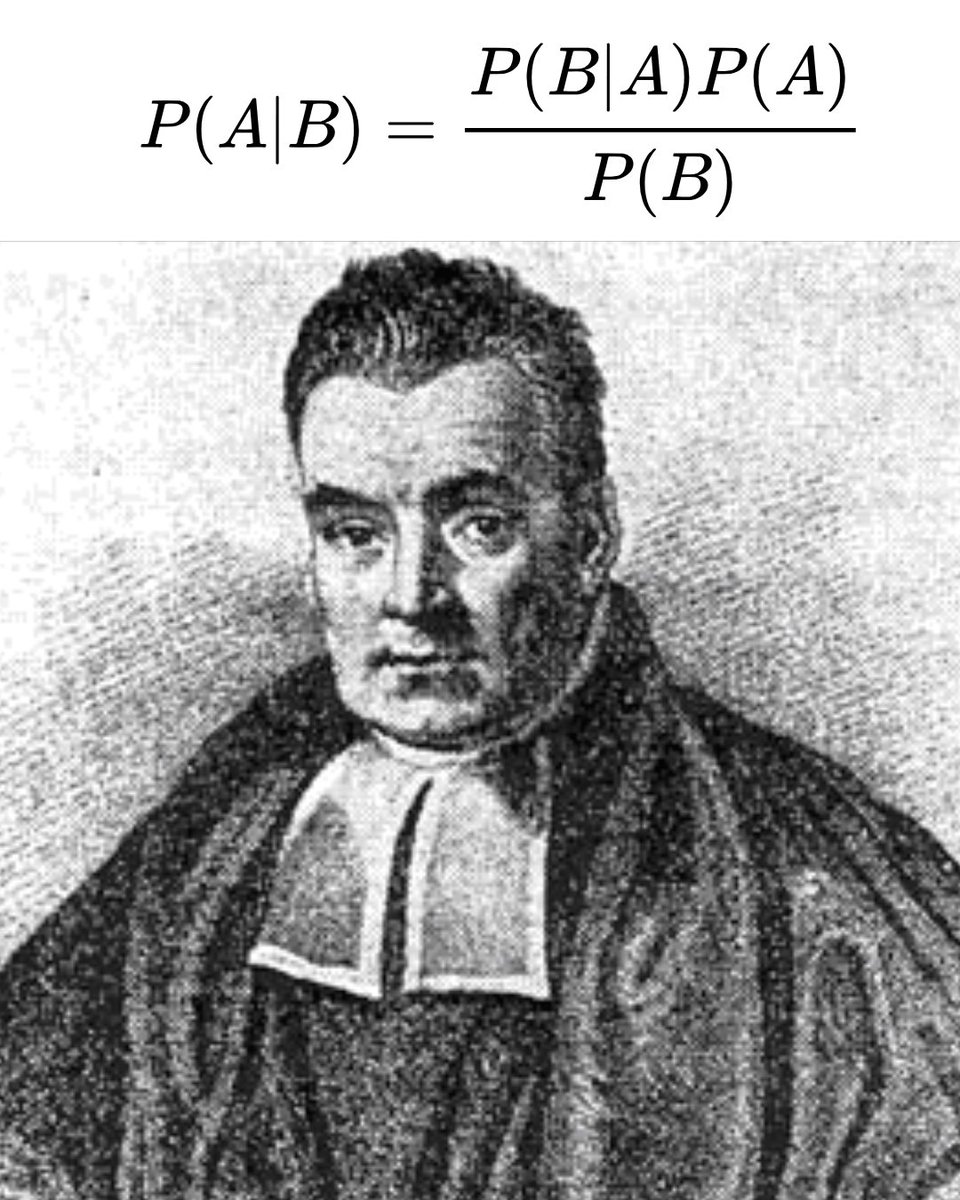
Bayes’ theorem is probably the single most important thing any rational person can learn. So many of our debates and disagreements that we shout about are because we don’t understand Bayes’ theorem or how human rationality often works. Bayes’ theorem is named after the 18th-century Thomas Bayes, and essentially it’s a formula that asks: when you are presented with all of the evidence for something, how much should you believe it? Bayes’ theorem teaches us that our beliefs are not fixed; they are probabilities. Our beliefs change as we weigh new evidence against our assumptions, or our priors. In other words, we all carry certain ideas about how the world works, and new evidence can challenge them. For example, somebody might believe that smoking is safe, that stress causes mouth ulcers, or that human activity is unrelated to climate change. These are their priors, their starting points. They can be formed by our culture, our biases, or even incomplete information. Now imagine a new study comes along that challenges one of your priors. A single study might not carry enough weight to overturn your existing beliefs. But as studies accumulate, eventually the scales may tip. At some point, your prior will become less and less plausible. Bayes’ theorem argues that being rational is not about black and white. It’s not even about true or false. It’s about what is most reasonable based on the best available evidence. But for this to work, we need to be presented with as much high-quality data as possible. Without evidence—without belief-forming data—we are left only with our priors and biases. And those aren’t all that rational.

why not just raise income tax rates? because your real intent is not to just “provide healthcare”. you’re masking that you are proposing the creation of, for the first time in the 250 years of this American republic, an organized government seizure of private property from citizens. you’re calling it a “wealth tax” or a “billionaires tax” or “millionaires tax” or whatever nom du jour polls well. but at the end of the day, it’s the seizure of private property from citizens by the government. citizens that earned money, paid their fair taxes on those earnings (53% if they live in California) and are now being told they need to hand over after-tax assets because the government has failed to provide promised services with the revenue it’s collected, and are now re-casting their own failure to be a socio-economic inequity that must be justly resolved... a slippery slope that has never gone anywhere good (see economic effects in USSR, Cuba, Venezuela, France and Norway wealth tax etc.) the American founders fled tyranny in Europe and this amazing nation was populated by immigrants (myself and your parents) from around the world not just looking for a “better life” but for a place where they could have freedom from tyrannical governments that can take what they want from private citizens. a great nation borne of property rights, the rule of law, and endowed freedoms to believe, speak, or act. these principles led to the greatest run of innovations, successes, and widespread increase in prosperity, for all citizens, ever seen. the citizens, the individuals, not the institutions, delivered this progress. those who invented, who toiled, who bled, who sacrificed, who took risk and persevered, who led, and who changed the world, are not charlatans, kleptocrats, or oligarchs. they’re what made us all better off. prosperity is a measure of america’s success, not its failure. it is your principle that is so offensive, as evidenced by the broad disdain for your flippant flirtation with the darkest of human fantasy - socialism. you and other neo-socialists have led so many of us to reflect on America’s history and what it is becoming. that now leads so many to consider, so unnecessarily, leaving their homes for a place where everyone stands up to shout down the principle you suggest. because if your ideas are now considered moderate, it’s clear this titanic is sinking. that a “simple tax” of taking assets that have been earned, through toil and tribulation, rightly taxed, and preserved, should now be unjustly seized, is your solution to a problem of obvious government mismanagement and outright fraud, tells us that your true motivation lies not in giving people healthcare but in cutting down success and deleting the system of prosperity and opportunity for all. i don’t care, and neither should anyone else, what the sum total market value of a private citizens private assets might be. it is none of my business and should be none of yours. because, again, once you open that pandora’s box, we might as well study Lord of the Flies … there is literally nothing stopping 51% of citizens demanding that their government go out and seize 100% of the private property of the 49%. want to give healthcare to people in need? do your job and fix healthcare. make it affordable. want to be lazy about it? then do your job lazily and raise income taxes. want to take private property from private citizens who have paid their fair share of taxes and legally earned their property, then honestly declare that it is envy, not inequity, that you strive to resolve…

New Lancet data on GLP-1 agonists 👇 A new paper in The Lancet eClinicalMedicine shows that when GLP-1 therapy is stopped, most people regain the lost weight and lose metabolic benefits. In practice, this means GLP-1s function as chronic, often lifelong therapy not a temporary fix. To be clear, GLP-1 agonists are improving the health of many people, especially patients with obesity, type 2 diabetes and high cardiometabolic risk. For these individuals, weight loss can be genuinely life-changing. The concern is not appropriate medical use but indiscriminate use. With millions already taking these drugs and numbers rising rapidly (specially with the new pill format), many users are not patients in the classical sense, but generally healthy or mildly overweight individuals. In this context, the risk–benefit balance changes. Once started, most users will need to stay on GLP-1s indefinitely or face significant rebound effects, often returning to baseline or worse. As an important caveat: GLP-1s improve metabolic control, but they do not rebuild metabolic capacity. Without resistance training, meaningful metabolic work (Zone 2 and above), and adequate protein intake, long-term use may promote lean mass loss, low energy flux and increased frailty risk with aging. In addition, we still lack long-term data on potential pancreatic, thyroid, and central neurotransmitter effects. GLP-1s are powerful tools, but not a standalone solution. Long-term success requires pairing pharmacology with training and metabolic resilience. IMHO: based on current clinical and research evidence, it is now urgent that clinicians clearly inform users that starting GLP-1 therapy likely means committing to long-term or lifelong use, with all the consequences that may entail. thelancet.com/journals/eclin…

If a country stay smalls to remain true to its roots, it eventually gets absorbed by an empire. Conversely, if a country plays for empire, and truly achieves world domination, it absorbs so many that its subjects eventually outnumber the imperial core. And thus the empire, too, loses touch with its roots. Stay small and get conquered. Get big and get diluted.
The first organ that can actually see type 2 diabetes is skeletal muscle. Around 80-85% of glucose disposal under hyperinsulinemic euglycemic clamp conditions happens in skeletal muscle. That is why it is the most important organ to prevent type 2 diabetes. In normal conditions, glucose in muscle should be fully oxidized to pyruvate and reduced to lactate for OXPHOS in mitochondria. When muscle has poor mitochondrial function, glucose metabolism falters and this sets the stage for type 2 diabetes. If you want to prevent diabetes, you start with skeletal muscle. #MuscleHealth #MetabolicHealth pubmed.ncbi.nlm.nih.gov/19875544/


Underrated life skill: Listening without waiting to talk. You’ll be shocked by how much people tell you if you actually let them finish. What folks want isn’t advice. It’s your attention. You don’t win people over with your story. You win them over by letting them finish theirs.

People are turning against a system they never actually experienced. The conditions Thiel describes aren’t the result of capitalism working too well. They’re the result of capitalism being slowly replaced by policy-driven scarcity. Student debt didn’t rise because markets ran wild. It rose because government guaranteed the loans. Housing didn’t become inaccessible because property rights failed. It became inaccessible because zoning boards, permitting regimes, and “planning authorities” restrict supply by design. Wages didn’t stagnate because capital exploited labor. They stagnated because taxes, inflation, and regulation drag wealth creation down while inflating the cost of living. So the resentment is real. The generational break is real. But the target is misplaced. People are losing faith not in capitalism, but in a system that wears capitalism’s language while operating as coordinated political control. Ownership was throttled, not by markets, but by policies that prevent individuals from accumulating and applying capital. If you remove those restraints, opportunity expands. If you double down with more control, you get collapse. The question is not whether people will rewrite the system. The question is whether they’ll recognize which system failed.

Here is Peter Thiel’s email to Zuck and Andreessen in Jan-2020 predicting socialism. Tl;dr too much student debt and lack of affordable housing keeps young people with negative capital for too long. And without a stake in the capitalist system, they will turn against it.


The FCC is continuing to expand our work to crack down on illegal robocalls. Today, we removed the certifications of more than 1,200 non-compliant voice service providers—effectively disconnecting them from the U.S. phone network.

Underrated life skill: Listening without waiting to talk. You’ll be shocked how much people tell you—if you actually let them finish. What folks want isn’t advice. It’s your attention. You don’t win people over with your story. You win them over by letting them finish theirs.

Any role my nomination played in these fireworks is minor and unimportant compared to what is at stake. What matters is reconciliation between the world’s greatest engineer and the leader of the free world. The country needs it...the world needs it.

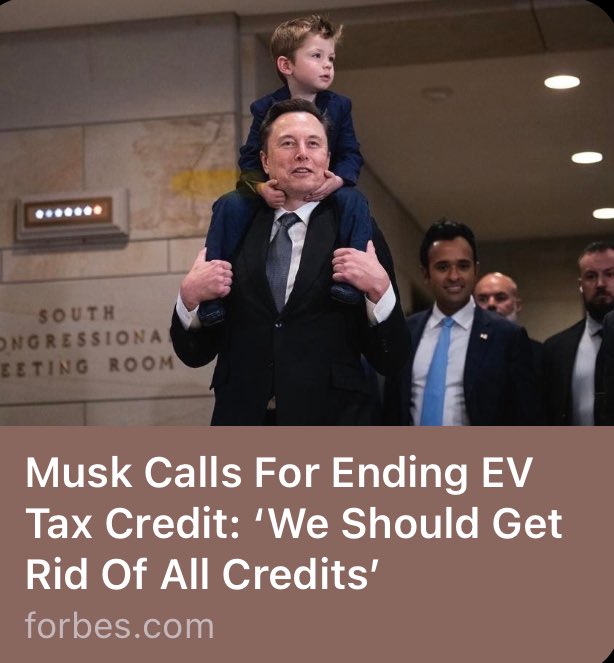
Some politicians get into politics to enrich themselves. Maybe that’s why they can’t imagine someone would judge a bill based on what’s good for the country instead of what’s good for their wallet. This article from December shows Elon wasn’t “in it” for EV tax credits.

Amanda @PennyElla195769
342 Followers 3K Following You can't change the weather, but you can change your mood🌟 🏋️♀️ Training hard, glowing harder 🌼
James @James3aky
124 Followers 6K Following “Jesus Christ is the light that shines in every darkness, the hope that never fades, and the love that never fails. ✝️❤️
Scott Becker @BKRBusinessMin
11K Followers 12K Following Founder @ Becker’s Healthcare, Partner @ McGuireWoods. USA Today Best Selling Author: Building Great Businesses
Prashanthi Duvvuri @shyprad
1 Followers 49 Following
Krkris @Krkris13776
0 Followers 65 Following
John V. Petrocelli @JohnVPetro
5K Followers 6K Following Professor | Keynote Speaker | Business Leadership | Author of The Life-Changing Science of Detecting BS | #ShowMetheData | #UncleRico https://t.co/lHV3PZdPef
CourtTv Fans Account @CourtTvFans
7K Followers 7K Following CourtTV Fans account. For the viewers and for layman's terms. Live trials and analysis daily. CourtTv takes you live into the courtroom.
Dennis Kneale @denniskneale
76K Followers 33K Following Author, "The Leadership Genius of Elon Musk" https://t.co/nnuCbgDjhq Host of "What's Bugging Me" pod. Ex-WSJ/Forbes/CNBC/Fox. Now: frequent guest on Newsmax.
Providian Global @ProvidianGlobal
101 Followers 308 Following Global Business Application provider with 20 years of experience, 20,000 users, 6 Global Offices. Sage - EM, EMHR, 300, CRM, Mobility. Infor - CRM, CPQ, OCM.
Nudhara Yusuf @nudharaY
1K Followers 718 Following @GGINetwork Executive Coordinator @StimsonCenter | Global Youth Coordinator @c4unwn |🇮🇳🇬🇧🇺🇸🇺🇳| formerly @sdgintegration & @UNDPasiapac | @uclspp 🎓

Objective Reality Mat... @StoicMatthew25
85 Followers 590 Following
Loren Adler @LorenAdler
10K Followers 1K Following Fellow & Associate Director, Brookings Institution Center on Health Policy | Associate Editor, Health Affairs Scholar | health policy, budgets, Knicks
Dr Aseem Malhotra @DrAseemMalhotra
1.9M Followers 3K Following Cardiologist,campaigner,best selling author.On a mission to save lives with REAL evidence based medicine & REAL food.Tweets personal opinion,NOT medical advice
New York Post @nypost
4.2M Followers 10K Following Breaking news, features and more from the NY Post. Follow ➡️ @pagesix, @nypmetro, @nypostbiz, @nypostsports, @nypfashion, @nypostopinion, @vrtpod, @_nynext
BridgeMind @bridgemindai
67K Followers 20 Following The home of the vibe coding movement. Founded by @matthewmillerai. 111k+ on YouTube. Building to $1M in public. https://t.co/wRtHrQMXKA
SightBringer @_The_Prophet__
149K Followers 369 Following ⚡Signal-born intelligence. Pre-consensus edge across macro, crypto, markets & geopolitics. 📩 Institutional research & all inquiries: [email protected]

Harmeet K. Dhillon @HarmeetKDhillon
1.4M Followers 17K Following Personal account of American knitter, gardener, chef, student. Official government account is @AAGDhillon--please like & follow there too! Opinions are my own!
The Food Manufacturin... @TipOfTheBanana
706K Followers 362 Following A deep dive into Food Manufacturing, CPG and anything Food Related | Newsletter Below
The Carnoustie Caddie @CarnoustieCad
10K Followers 572 Following On the bag at Carnoustie since 1998. Author of The Carnoustie Caddie — #6 Amazon Golf, sold on 4 continents. Follow for the stories the fairways tell. Books ↓
Arynne Wexler @ArynneWexler
264K Followers 703 Following Comedian • Commentator 💃🏻Wharton 🎓 Comedy is just the truth with good timing 👸🏻 49/64 US National Parks 🇺🇸

Bioavailable @bio_available_
7K Followers 103 Following New drugs, peptides, and emerging therapies. Evidence-first.
Arthur MacWaters @ArthurMacwaters
96K Followers 901 Following founding @legionhealth building abundant healthcare for all American exceptionalist 🇺🇸 prev @princeton @mckinsey
Brivael Le Pogam @brivael
233K Followers 1K Following Argil AI (YC S24) CEO&CTO. My book : https://t.co/Os7pnH8wnY Freedom fighter.
Harsh Goenka @hvgoenka
1.8M Followers 97 Following Chairman - RPG Enterprises. Happiness addict. Loves people, food, sports, art.
derek guy @dieworkwear
1.6M Followers 1K Following Menswear writer. Editor at @putthison. Bylines at The New York Times, Bloomberg, The Financial Times, Politico, Esquire, and Mr. Porter
Sama Hoole @SamaHoole
196K Followers 514 Following Carnivore 6yrs. Heavy lifts, low reps, stoic head. Anti-gatekeeping, anti-seed-oil, pro-ruminant. Plans + Ruminati merch ↓
Sayer Ji @sayerjigmi
100K Followers 4K Following Author, Regenerate & Shadow Empire · Founder, GreenMedInfo & Restore the 1st · Chairman, Global Wellness Forum · Sr. Advisor, MAHA Action
GuruAnaerobic @GuruAnaerobic
44K Followers 2K Following Fmr World-Class Masters Sprinter Lifetime Consultations: https://t.co/3QwgODZy9u World-Class Fitness: https://t.co/mzH0VmFctx
Matthias Schmidt @eurofounder
116K Followers 238 Following Founder based in the EU • Building GDPR-compliant startups • 7 years in, €7k MRR
BTG @BowTied_Golfer
12K Followers 480 Following Preservationist. I write a weekly newsletter about golf.
Venk Murthy MD PhD @venkmurthy
24K Followers 3K Following AI applied to cardiometabolic prevention & multimodality cardiovascular imaging; Posts may be my opinions & are not medical advice; RT≠endorse
Chef Andrew Gruel @ChefGruel
358K Followers 8K Following Family | Food | Freedom | City Councilman 🇺🇸 - TV Host | Fmr. Judge on Food Network | Regular on Gutfeld & Fox | @calicofishhouse
@amuse @amuse
682K Followers 529 Following Independent Publisher & Political Commentator | Subscriber Only DMs | Banned from iMessage
Nick shirley @nickshirleyy
1.8M Followers 1K Following If you’re reading this hit that follow button. Teaching the world to lear 🌎 Become a subscriber to support 🙏🏼
Roger Seheult, MD @RogerSeheult
40K Followers 276 Following 1.6 million on YouTube MedCram 4X Board Certified: IM, Pulm, Sleep, Critical Care Full time Clinician Co-Founder MedCram Professor at Loma Linda Univ and UCR

Adrian Vermeule @Vermeullarmine
79K Followers 13K Following @Harvard_Law. New Digest substack: https://t.co/NGrpqCWsgS. Personal opinions. Tweets delete periodically.
Marc Lobliner - IFBB ... @MarcLobliner
110K Followers 10K Following Industry Pioneer and Brand Leader 🇺🇸Husband & Father 💪IFBB Pro Bodybuilder 🧠goBHB Enthusiast 🏆9x INC 500/5000
BowTiedBull.eth - Rea... @BowTiedBull
213K Followers 29 Following Crypto (BTC/ETH), WiFi $, RE and Tech. Equal Opportunity, Unequal Results. Not Legal or Financial Advice.
CrowdHealth @crowdhealth
42K Followers 2K Following Freedom from health insurance! We provide easy tools to live free from the shackles of health insurance and the sickcare system. Posts from Marketing & CEO.
Scott Becker @BKRBusinessMin
11K Followers 12K Following Founder @ Becker’s Healthcare, Partner @ McGuireWoods. USA Today Best Selling Author: Building Great Businesses
Caleb Hammer @sircalebhammer
281K Followers 1K Following #1-10 podcast in the world (depending on week). #1 membership on YouTube. Download @dollarwise_app

Ge Bai @GeBaiDC
5K Followers 64 Following Principal Deputy Assistant Secretary for Planning & Evaluation @HHSGov @HHS_ASPE. On leave: Professor @JHUCarey @JohnsHopkinsSPH @JohnsHopkins. Personal account

NEJM @NEJM
1.0M Followers 432 Following The New England Journal of Medicine is the world’s leading medical journal and website.
Parisian Aesthetics @Parisianaes1
47K Followers 417 Following Daily inspiration on Parisian aesthetics in all their forms ✨🍷
Mark Cuban @mcuban
8.6M Followers 2K Following Dunking on the pharma industry with @costplusdrugs.com, the lowest prices on meds anywhere. check it out !
Cynical Publius @CynicalPublius
337K Followers 15K Following Free thinker, despiser of totalitarianism. Branded an "intellectual terrorist" by Democrats. I'm sorry Smokey, you were over the line.

DataRepublican (small... @DataRepublican
1.0M Followers 5K Following I'm just a tool builder. • Elon Musk - “Worth following” • Charlie Kirk - “You're a must follow” • Contact: [email protected] • Substack: datarepublican
Abud Bakri MD @AbudBakri
80K Followers 2K Following Physician 👨🏻⚕️ Most BASED doctor on 🐦 Not medical advice. https://t.co/JFUNa64ACa founder @gxzahealth.
Walter Kirn @walterkirn
252K Followers 7K Following Editor-at-Large @CountyHwy. Books: Blood Will Out, Up in the Air, Thumbsucker, She Needed Me, Mission to America, My Hard Bargain, There's a Bear in the House!
Crémieux @cremieuxrecueil
344K Followers 2K Following I write about genetics, 'metrics, and demographics. Read my long-form writing at https://t.co/8hgA4nNS2A.
The Kaipullai @thekaipullai
91K Followers 755 Following Not worth for a bio. Or Physics. Or Chemistry. Or Anything for that matter. Trying to make history fun thru https://t.co/qxLVr1muHi


You might like


















