wsb2infinity @wsb2infinity
wind solar battery Joined January 2021-
Tweets221
-
Followers16
-
Following36
-
Likes5K
@niccruzpatane and no tip and having to negotiate AC or windows down with the driver!
@EmmetPeppers @akirathedon Thanks. I love the Akira the Don recommendation. I immediately followed the artist.
Here are some notes on the anti-billionaire ideology - and why it might do more harm than good: At the heart of the frustration with wealth inequality - especially among younger people - are several overlapping ideas. Broadly, they stem from the following premises: 1. Zero-Sum View of Wealth: Many who rail against “billionaire greed” subscribe to an implicit zero-sum assumption that if the rich are gaining wealth, it must be coming at the direct expense of everyone else. This perspective sees the economic pie as fixed; a bigger slice for billionaires means a smaller slice for ordinary people. 2. Moral Indictment of Profit: There is also an underlying moral stance that profits at very high levels are inherently exploitative. Under this view, earning billions can only happen through unethical means - mistreating workers, hiking prices, or bending regulations. 3. Suspicion of Capitalism Itself: An increasingly vocal segment of young people critiques market economies as rigged or fundamentally unjust. They note that, in their eyes, capitalism privileges capital (ownership) at the expense of labor (wages), and perpetuates a system that traps people in lower socioeconomic strata. 4. Focus on “Equality of Outcome” Over “Equality of Opportunity”: The critique often goes beyond wanting fair chances for everyone. Instead, it emphasizes the relative gap between the top and bottom, rejecting the idea that big disparities can exist even when upward mobility is possible. 5. Conflation of Net Worth With Liquid Cash: A common misconception is that billionaires have all their “net worth” in spendable forms. In reality, most wealth is tied up in assets (stock in a company, real estate, etc.). This fuels the anger because it appears that billionaires “hoard” money and choose not to share it. Why These Ideas Can Be Misleading or Harmful 1. Zero-Sum Thinking Overlooks Wealth Creation In many industries—think technology, medicine, communications—total wealth isn’t static. When someone creates a product or service that millions of people value (like smartphones, software, or life-saving drugs), it grows the economic pie. That’s not to say exploitative practices don’t exist, but simplistic zero-sum frameworks gloss over the dynamic, generative nature of innovation. 2. Misplaced Moral Indictment Painting all (or most) large-scale profit as immoral doesn’t address nuances: there are ethical ways to build wealth (improving supply chains, investing in local communities, fair business practices) and unethical ways (sweatshops, unfair contracts, environmental destruction). Lumping all billionaires into the “bad guy” category overlooks differences between, say, a biotech founder who develops critical medicines versus a predatory lender. 3. Ignoring the Benefits of Investment Much billionaire wealth can be tied to investments that themselves foster economic growth and job creation. When venture capitalists fund startups, they often take on significant risk. While it can lead to high personal returns, it also creates industries (and jobs) from the ground up. The ideology that all returns on investments are undeserved fails to account for the role that investment plays in building healthy economies. 4. Weakening Incentives Kills Innovation When the system heavily penalizes individuals who become extremely successful, it removes the natural “carrot” that drives ambitious endeavors. Launching a startup or spearheading a major breakthrough usually involves massive risks — entrepreneurs sacrifice time, money, and personal stability on a venture that might fail. If the potential rewards are cut off or capped too drastically, fewer people will bother to take the leap. This doesn’t just affect a handful of hopeful billionaires; it reverberates throughout society as whole industries and transformative ideas (whether in medicine, clean energy, or technology) never get off the ground. In other words, when wealth creation stops being worthwhile, everyone loses out on progress, jobs, and critical innovations that improve lives. 5. “Taxing Billionaires Out of Existence” Derails Society This approach doesn’t just strip personal fortunes; it severs the capital fueling innovation, startups, and major philanthropic efforts. Without high-stakes investments, lifesaving research and transformative technologies often stall. A scorched-earth method of “leveling wealth” might sound fair, but it ultimately starves society of the breakthroughs and funding necessary for widespread progress. Yes, young adults face serious economic pressures - from soaring housing costs to student debt - but framing every concern as “wealth inequality” injects a needless negativity that can distort the real issues. A more constructive focus is keeping living costs down and creating a robust, opportunity-rich economy. That means controlling inflation - primarily through efficient government spending and lower national debt - while removing barriers to innovation and enterprise. By prioritizing stable monetary policy, competitive markets, and better education, we give more people the tools to thrive, rather than just harping on “inequality.”
Idea: use generative multimodal AI to answer can I afford this and use spending habits, current debt, future debt, etc to answer it

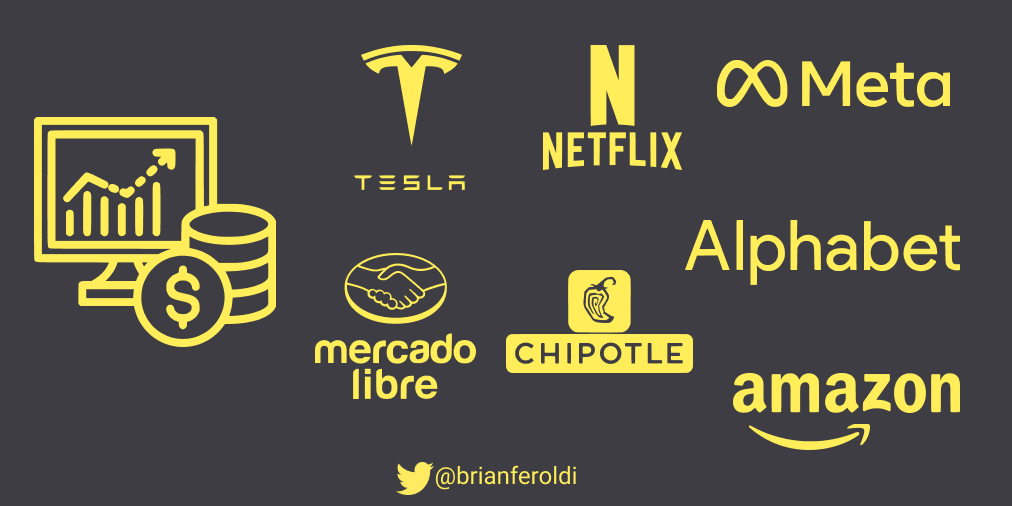
I own 7 stocks that are 15+ baggers and counting. Here are 10 traits they all have in common (visualized):
This thread will be my observations of the various animals and how they win their daily battles.
The corporate jungle book. An organization especially whose sizes are above the thousands requires constant negotions like it's the wild animal kingdom where only a select few thrive. Resources are scarce and battles for dominance and more territory are constant.
I own 7 stocks that are 15+ baggers and counting. Here are 10 traits they all have in common (visualized):


A Masterclass in Marketing 4 years of Marketing Degree in 7 minutes One of a kind. Bookmark and come back to this often.

Thread (dads, bookmark this and read it every day):


my private account @Tesla_investme0
31 Followers 490 Following
🌸Val🤝🏠ue_Inv... @CalebCliff63947
0 Followers 90 Following S2🎀F model enthusias⌛️t tracking the👍 next price floor. 📈 Predicti💡ng BTC mile📌stones with precision. Join me on Drama3 and claim💡 your 1 USDC welcom🎀e bonus.
REEVES @reeves867532346
28 Followers 399 Following
Poser @Poser4950764
38 Followers 1K Following
Essays & Assignment H... @homework__HQ
127 Followers 4K Following Hmu for professional Writing services-: Essays/Papers/Assignments/Psci/Discussions/Case study/Dissertation/Nursing/Law/English/Psychology/Math/ History
BingX Sign Up Bonus 5... @ethereumccnews
27 Followers 1K Following 🍁Use BingX Referral Code 2024 to Claim 5125 USDT worth of Rewards Today! https://t.co/aokLw0FSjq

TV Feeder @WatchTVFeeder
163 Followers 3K Following Supercomputer telecommunications company. @TVFeederInc @JasonPGilbert87
John Stevens @abc1234690
99 Followers 947 Following
Screenshot News @screenshot_news
11K Followers 4K Following We scour the internet for the most relevant tech / stock market headlines. Follow us for the most efficient way to stay up to date.
killacamtrades @killacamtrades
36 Followers 211 Following Picky with the set ups, Flippin racks on the nasdaq.
GC @GC27269858
284 Followers 6K Following

Falconwings @Falconwingsnj
5K Followers 4K Following 2024 Tesla Model X FSD 2024 Tesla Mode Y FSD 2020 Tesla White LR+ Model X 99 FSDBeta Tester $TSLA

Alessandro Palombo @thealepalombo
139K Followers 2K Following Mapping the world: where to live, invest & pay tax Residencies & citizenships @Bitizenship Investing at Bitizenship Capital *not always serious here
ClaudeDevs @ClaudeDevs
786K Followers 2 Following Official updates for developers building with @ClaudeAI

The Kobeissi Letter @KobeissiLetter
2.7M Followers 603 Following Official X account for The Kobeissi Letter, an industry leading commentary on the global capital markets. Email us: [email protected]
Alex Xu @alexxubyte
295K Followers 613 Following Co-Founder of ByteByteGo | Author of the bestselling book series: ‘System Design Interview’ | YouTube: https://t.co/9gPSJSrtPU
Claude @claudeai
2.0M Followers 2 Following Claude is an AI assistant built by @anthropicai to be safe, accurate, and secure. Talk to Claude on https://t.co/ZhTwG8d1e5 or download the app.
Anthropic @AnthropicAI
1.8M Followers 2 Following We're an AI safety and research company that builds reliable, interpretable, and steerable AI systems. Talk to our AI assistant @claudeai on https://t.co/FhDI3KQh0n.
Startup Archive @StartupArchive_
157K Followers 1 Following Archiving the world's best startup advice for future generations of founders
Stan Druckenmiller @standuquesne
47K Followers 20 Following
Tesla Super Intellige... @TeslaSI
526K Followers 19 Following
Rowan Cheung @rowancheung
602K Followers 589 Following Founder of the world’s most read daily AI newsletter @therundownai. Sharing the latest developments in the world of artificial intelligence.
Beth Kindig @Beth_Kindig
184K Followers 5K Following Investor with higher returns than Wall Street's Old Boys Club. Audited portfolio, automated hedge and free weekly analysis.
Redwood Materials @RedwoodMat
31K Followers 101 Following Securing U.S. critical minerals. Powering America’s energy future.
Starlink @Starlink
1.9M Followers 31 Following Fast, affordable internet available all around the world. Engineered by @SpaceX
@jason @Jason
1.8M Followers 6K Following Host: @twistartups @theallinpod @thisweeknai; I invest in 100 startups a year @launch & @founderuni [email protected] for life
This Week in Startups @twistartups
108K Followers 665 Following Your thrice weekly deep dive into startups, markets, & tech | Hosted by @jason and @lons We're hiring! Apply: [email protected] or [email protected]!

NHC Storm Surge @NHC_Surge
118K Followers 71 Following Official X account for the National Hurricane Center's Storm Surge Unit. Details: https://t.co/aBXns7S1IO
Tesla Energy @teslaenergy
270K Followers 41 Following Produce & store your own energy with Solar Panels & Powerwall
National Hurricane Ce... @NHC_Atlantic
1.4M Followers 82 Following Official operational X account of the National Hurricane Center for the Atlantic basin. More details: https://t.co/zaFMQs6z7j

Tesla Asia @Tesla_Asia
220K Followers 53 Following Our mission is to build a world of amazing abundance.
Knox Ridley @knox_ridley
29K Followers 927 Following Portfolio Manager at @IOFundOfficial. Tweets are not advice.
Ripster @ripster47
472K Followers 537 Following Trading & Investing Education Inventor : Ripster Cloud System Founder: Tenet Trade Group https://t.co/0qpaN2fM0W https://t.co/GP2vE0fon3
Lex Fridman @lexfridman
5.6M Followers 697 Following Host of Lex Fridman Podcast. Interested in robots and humans.
Sawyer Merritt @SawyerMerritt
1.2M Followers 501 Following EVs/space/tech. Bringing you the latest news in a single, easy-to-read feed. $TSLA & $SPCX investor, Model Y owner.
RethinkX @rethink_x
20K Followers 727 Following Independent research organization forecasting speed & scale of technology driven disruption I Co-founded by @tonyseba & @jamiearbib I
vitalik.eth @VitalikButerin
8.0M Followers 551 Following I choose balance. First-level balance. mi pinxe lo crino tcati https://t.co/gCQrmCby7P
Tony Seba @tonyseba
42K Followers 61 Following Author, Educator, Speaker | #RethinkingHumanity 👤 🌏 — Co-Founder @AutonomyStellar @webuildstellar @rethink_x
Dave Lee @davelee
636K Followers 470 Following Host of YouTube channel Dave Lee on Investing, TSLA investor since 2012, building with AI. Shift or Noise - new series of 3-minute AI news videos with my take
Emmet Peppers @EmmetPeppers
96K Followers 420 Following Fallibilist | Founder - Good Soil Investment Management | @GoodSoilInvest https://t.co/ZXVsLwZSTN | Interests: Investing, Tesla, New Tech, Ketosis, Podcasts

SpaceX @SpaceX
41.9M Followers 127 Following SpaceX designs, manufactures and launches the world’s most advanced rockets and spacecraft
TESLARATI @Teslarati
935K Followers 242 Following Tesla, SpaceX, Elon Musk, and #FutureTech Go behind the scenes @TeslaratiTeamTrends for United States
You might like